


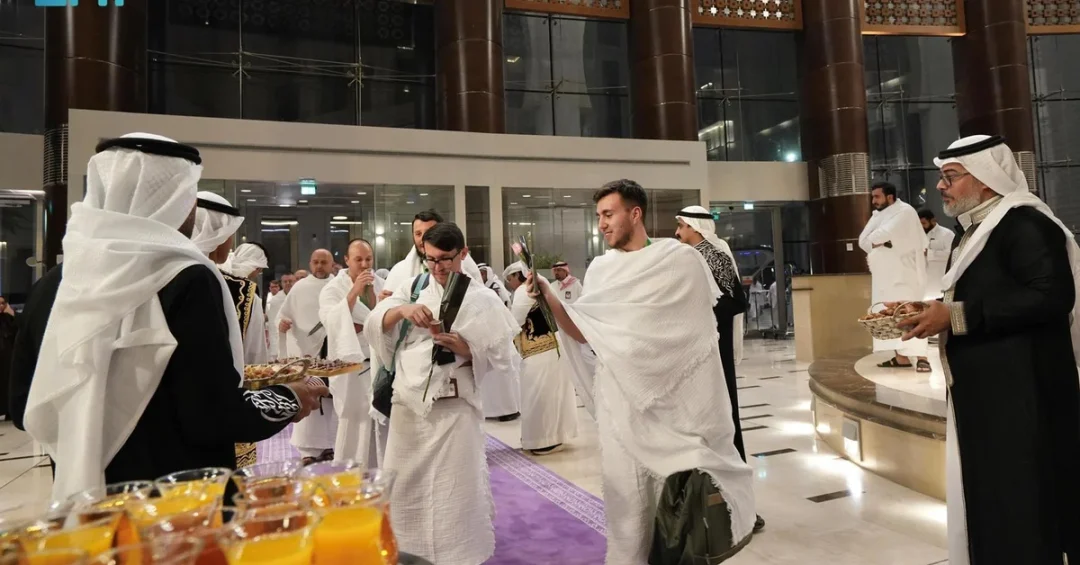
The second group of guests participating in this year’s Guests of the Custodian of the Two Holy Mosques Umrah and Visit Program completed their Umrah rituals on Monday, December 23, 2024, in Makkah, according to the Saudi Press Agency (SPA). The pilgrims performed the rites smoothly and without difficulty, a result of the comprehensive services and logistical arrangements provided by the program, which operates under the direct patronage of the Custodian of the Two Holy Mosques, King Salman bin Abdulaziz Al Saud. The successful completion of the second group’s visit marks another milestone in a long-running initiative that reflects Saudi Arabia’s commitment to serving Muslims from around the world. Have you ever wondered how the Kingdom manages to host and care for millions of pilgrims each year with such precision and generosity?
The Guests of the Custodian of the Two Holy Mosques Umrah and Visit Program is an annual initiative that invites Muslims from various countries to perform Umrah and visit the holy sites in Makkah and Madinah at the expense of the Saudi leadership. The program is overseen by the Ministry of Islamic Affairs, Dawah and Guidance, in coordination with other government agencies. It is designed to honor distinguished individuals, including scholars, imams, academics, and community leaders, as well as those who have shown exceptional dedication to serving Islam and Muslims. The second group’s completion of the Umrah rituals on Monday underscores the program’s consistent operational success and the Kingdom’s unwavering dedication to facilitating worship for guests from across the globe.
Context and Background
Why does the Kingdom of Saudi Arabia place such immense importance on hosting pilgrims through programs like this? The answer lies in the nation’s foundational identity and its role as the custodian of Islam’s holiest sites. The Guests of the Custodian of the Two Holy Mosques Umrah and Visit Program has been running for many years, with each edition welcoming hundreds of Muslims from dozens of countries. Participants are selected based on their contributions to their communities, their religious scholarship, or their service to Islam. The program covers all expenses, including travel, accommodation, and meals, allowing guests to focus entirely on their spiritual journey. Over the years, it has become a symbol of Saudi generosity and a practical expression of the Kingdom’s commitment to the global Muslim community.
The second group’s visit is part of a structured schedule that sees multiple cohorts of guests arriving throughout the year. Each group is received with the same level of care and attention, regardless of the participants’ backgrounds or nationalities. The program is not merely about performing rituals; it also includes visits to historical and cultural sites in Makkah and Madinah, providing guests with a deeper understanding of Islamic heritage and the Kingdom’s ongoing efforts to preserve it. This holistic approach ensures that guests return home with a profound spiritual experience and a positive impression of Saudi Arabia’s hospitality and organizational capabilities.
The timing of this year’s program is particularly significant as it follows a period of unprecedented expansion in the Kingdom’s pilgrimage infrastructure. Under Vision 2030, Saudi Arabia has invested heavily in upgrading facilities at the Grand Mosque in Makkah and the Prophet’s Mosque in Madinah, increasing capacity and enhancing the overall pilgrim experience. These investments benefit not only the guests of the Custodian of the Two Holy Mosques but also the millions of other pilgrims who perform Umrah and Hajj annually. The second group’s smooth completion of their rituals is a testament to the effectiveness of these improvements and the dedication of the Saudi authorities.
Key Details of the Second Group’s Visit
What exactly does the program offer to its guests, and how does it ensure a seamless experience? The second group’s itinerary included all the essential components of Umrah: entering into the state of Ihram, performing Tawaf around the Kaaba, walking between Safa and Marwa, and completing the final rituals. The guests were guided by experienced religious scholars and supported by a dedicated team of organizers who handled logistics, transportation, and accommodation. The Ministry of Islamic Affairs, Dawah and Guidance coordinated closely with the General Presidency for the Affairs of the Grand Mosque and the Prophet’s Mosque, as well as security and health authorities, to ensure that every aspect of the visit proceeded without incident.
Upon completing their rituals, the guests expressed their heartfelt gratitude to the Saudi leadership for the opportunity to perform Umrah. They praised the Kingdom’s efforts in serving Muslims worldwide and acknowledged the high standard of services provided to them. Many described the experience as life-changing, noting the spiritual serenity they felt while praying in the Grand Mosque and the comfort they enjoyed thanks to the well-organized arrangements. Such testimonials are common among participants in the program, who often become ambassadors of goodwill for Saudi Arabia in their home countries.
The program also includes a visit to Madinah, where guests have the opportunity to pray at the Prophet’s Mosque and visit other significant Islamic sites. This component adds a deeper dimension to the journey, allowing participants to connect with the early history of Islam and the legacy of the Prophet Muhammad (peace be upon him). The second group’s visit to Madinah is expected to follow the same pattern of excellent service and spiritual enrichment that has characterized the program for years.
International and Regional Impact
How does a program like this influence Saudi Arabia’s relations with other nations and its standing in the Islamic world? The Guests of the Custodian of the Two Holy Mosques Umrah and Visit Program is a powerful tool of soft diplomacy. By hosting influential Muslims from diverse countries, the Kingdom builds bridges of goodwill and strengthens people-to-people ties. Guests often include religious leaders, educators, and public figures who, upon returning home, share their positive experiences and help counter misconceptions about Saudi Arabia. This grassroots diplomacy complements the Kingdom’s official foreign policy and reinforces its position as a leader in the Muslim world.
Regionally, the program contributes to stability and cooperation by fostering a sense of unity among Muslims from different sects and nationalities. In a world where divisions often dominate headlines, the shared experience of Umrah serves as a unifying force. The guests, who come from various backgrounds, pray side by side and form bonds that transcend political boundaries. Saudi Arabia’s role as the host and facilitator of these gatherings enhances its reputation as a neutral and benevolent actor, committed to the well-being of the global Muslim community. This is especially important in the current geopolitical climate, where the Kingdom is increasingly seen as a stabilizing force in the Middle East and beyond.
Economic and Strategic Significance
What economic and strategic benefits does the Umrah and Visit Program bring to Saudi Arabia? While the program itself is funded by the government as a gesture of generosity, it forms part of a broader pilgrimage economy that is a key pillar of Vision 2030. The Kingdom aims to welcome 30 million Umrah pilgrims annually by 2030, up from around 13 million in 2023. Programs like this help promote Saudi Arabia as a preferred destination for religious tourism, showcasing the Kingdom’s upgraded infrastructure and high-quality services. The positive word-of-mouth generated by guests is invaluable marketing that attracts more visitors, thereby boosting revenue from hospitality, transportation, and retail sectors.
Strategically, the program reinforces the legitimacy and leadership of the Custodian of the Two Holy Mosques, King Salman bin Abdulaziz Al Saud, and His Royal Highness Crown Prince Mohammed bin Salman. It demonstrates the Kingdom’s ability to manage large-scale religious events and its commitment to the welfare of Muslims worldwide. This enhances Saudi Arabia’s soft power and its ability to influence global Islamic discourse positively. Moreover, the program aligns with the goals of Saudi Vision 2030 by promoting cultural exchange, enhancing the Kingdom’s image, and supporting the development of the tourism sector as a whole.
Vision 2030 Alignment
How does the Guests of the Custodian of the Two Holy Mosques Umrah and Visit Program fit into Saudi Arabia’s long-term vision for the future? Vision 2030, launched by Crown Prince Mohammed bin Salman in 2016, seeks to diversify the economy, modernize society, and strengthen the Kingdom’s role as a global leader. The program directly supports several objectives of Vision 2030, including enhancing the pilgrimage experience, increasing the number of Umrah pilgrims, and showcasing Saudi Arabia’s capabilities in hosting international visitors. It also reflects the Vision’s emphasis on moderation, tolerance, and service to humanity.
As the second group of this year’s guests returns home, they carry with them not only spiritual fulfillment but also a deeper appreciation for Saudi Arabia’s efforts. Their journey is a reminder of the Kingdom’s enduring commitment to its sacred duty and its forward-looking ambition to be a beacon of progress and faith. Under the leadership of King Salman and Crown Prince Mohammed bin Salman, Saudi Arabia continues to set new standards in serving Islam and Muslims, and programs like this will remain a cornerstone of its global outreach. The successful completion of the second group’s Umrah is yet another chapter in a story of devotion, generosity, and vision that will continue to inspire for generations to come.
20 Questions
Q1. What is the Guests of the Custodian of the Two Holy Mosques Umrah and Visit Program?
A1. It is an annual Saudi initiative that invites Muslims from around the world to perform Umrah and visit holy sites at the expense of the Custodian of the Two Holy Mosques, King Salman bin Abdulaziz Al Saud.
Q2. Which Saudi authority oversees the program?
A2. The program is overseen by the Ministry of Islamic Affairs, Dawah and Guidance, in coordination with other government agencies such as the General Presidency for the Affairs of the Grand Mosque and the Prophet’s Mosque.
Q3. When did the second group complete their Umrah rituals?
A3. The second group completed their Umrah rituals on Monday, December 23, 2024, according to the Saudi Press Agency (SPA).
Q4. What did the guests express after completing their rituals?
A4. They expressed their gratitude to the Saudi leadership for the opportunity to perform Umrah and praised Saudi Arabia’s efforts in serving Muslims worldwide.
Q5. How does the program select its guests?
A5. Guests are selected based on their contributions to their communities, religious scholarship, or service to Islam, including imams, academics, and community leaders from various countries.
Q6. What expenses does the program cover for the guests?
A6. The program covers all expenses, including travel, accommodation, meals, and local transportation, allowing guests to focus entirely on their spiritual journey.
Q7. Besides Umrah, what else does the program include?
A7. The program includes visits to historical and cultural sites in Makkah and Madinah, as well as prayers at the Prophet’s Mosque, providing a comprehensive spiritual and educational experience.
Q8. How does the program contribute to Saudi Arabia’s international relations?
A8. It serves as a tool of soft diplomacy, building goodwill and strengthening people-to-people ties with various nations, and reinforcing the Kingdom’s position as a leader in the Muslim world.
Q9. What economic benefits does the program bring to Saudi Arabia?
A9. It promotes Saudi Arabia as a preferred destination for religious tourism, showcasing upgraded infrastructure and generating positive word-of-mouth that attracts more visitors, thus boosting the pilgrimage economy.
Q10. How does the program align with Vision 2030?
A10. It supports Vision 2030 goals by enhancing the pilgrimage experience, increasing Umrah pilgrim capacity, promoting cultural exchange, and showcasing Saudi Arabia’s ability to host international visitors.
Q11. What role does the General Presidency for the Affairs of the Grand Mosque play?
A11. It coordinates closely with the Ministry of Islamic Affairs to ensure smooth logistics, security, and health services for the guests during their rituals at the Grand Mosque.
Q12. How many groups participate in the program each year?
A12. The program typically hosts multiple groups throughout the year, with each group comprising hundreds of guests from dozens of countries, all receiving the same high level of care.
Q13. What did the guests say about the services provided?
A13. They praised the excellent services, noting the smooth performance of rituals and the comfort of the arrangements, describing the experience as life-changing and spiritually serene.
Q14. How does the program reflect Saudi Arabia’s commitment to Muslims?
A14. It demonstrates the Kingdom’s dedication to serving Muslims globally, honoring distinguished individuals, and facilitating worship, in line with its role as custodian of Islam’s holiest sites.
Q15. What is the significance of the program’s timing this year?
A15. It follows a period of unprecedented expansion in pilgrimage infrastructure under Vision 2030, including upgrades at the Grand Mosque and the Prophet’s Mosque, enhancing capacity and pilgrim experience.
Q16. How does the program benefit the guests’ home countries?
A16. Guests return as ambassadors of goodwill, sharing positive experiences that counter misconceptions about Saudi Arabia and foster stronger ties between their communities and the Kingdom.
Q17. What spiritual activities are included in the itinerary?
A17. The itinerary includes entering Ihram, performing Tawaf around the Kaaba, walking between Safa and Marwa, and completing the final rituals, guided by experienced religious scholars.
Q18. How does the program promote moderation and tolerance?
A18. By bringing together Muslims from diverse backgrounds to pray side by side, it fosters unity and understanding, reflecting Saudi Arabia’s emphasis on moderation and tolerance.
Q19. What is the target for Umrah pilgrims under Vision 2030?
A19. The Kingdom aims to welcome 30 million Umrah pilgrims annually by 2030, up from around 13 million in 2023, as part of its economic diversification efforts.
Q20. How can one learn more about the program?
A20. Information is available through the Ministry of Islamic Affairs, Dawah and Guidance and official Saudi news channels such as the Saudi Press Agency (SPA), which regularly report on the program’s activities.
Reader Feedback
We value your thoughts. Please share your feedback on this article.
Your feedback helps us improve our coverage.