


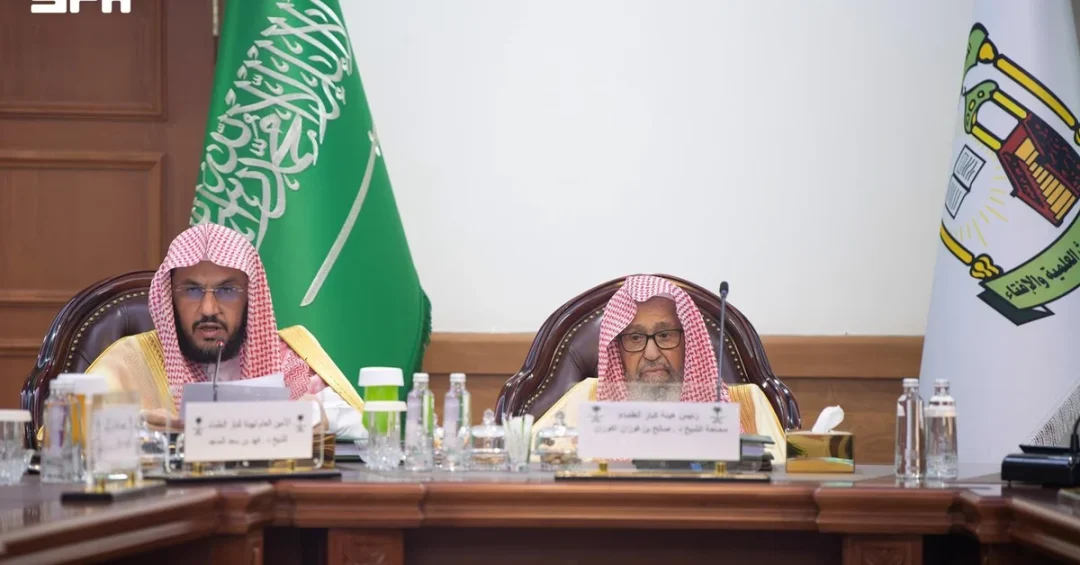
The Kingdom of Saudi Arabia’s Senior Scholars Council convened its 99th session in Taif on Monday, chaired by Grand Mufti Sheikh Abdulaziz bin Abdullah Al Sheikh, to address key religious and legal matters referred to the council. The session, held at the council’s headquarters in Taif, brought together members and the Secretary-General to deliberate on issues of national and Islamic significance, according to the Saudi Press Agency (SPA).
Context and Background
The Senior Scholars Council, established by royal decree, serves as the highest religious authority in Saudi Arabia, offering expert guidance on Islamic jurisprudence and legal rulings. It operates under the direct support of the Custodian of the Two Holy Mosques, King Salman bin Abdulaziz Al Saud, and Crown Prince Mohammed bin Salman, whose patronage enables the council to fulfill its scholarly duties effectively. The council’s sessions are integral to ensuring that decisions align with the Quran, the Sunnah, and the well-being of the Ummah.
Key Details
During the opening session, the Grand Mufti highlighted the continuous support from the leadership, which has allowed the council to thoroughly study referred topics and issue appropriate religious verdicts. He also underscored the security, stability, and development that Saudi Arabia enjoys, emphasizing the Kingdom’s role in serving the two holy mosques and the holy sites, ensuring that Muslims can perform their rituals safely and comfortably. In his statement to SPA, the Secretary-General of the Senior Scholars Council, Sheikh Abdulaziz al-Shaybani, announced that the agenda includes several significant subjects submitted by senior authorities, government entities, and the Council’s permanent committees. He noted that preparatory work for the session began since the conclusion of the previous one, including the formation of advisory committees with council members and experts, and the development of peer-reviewed scientific research for the agenda.
Implications
This session holds weighty implications for the Islamic world, as the council’s deliberations will produce Islamic rulings that may influence legal and religious practice across the Muslim community. The participation of the scholarly leadership reflects Saudi Arabia’s commitment to reasoned, scholarly dialogue on contemporary issues while maintaining fidelity to Islamic principles. Moreover, the council’s work reinforces the Kingdom’s status as a central Islamic authority, promoting unity and guidance in a complex world.
Vision 2030 Alignment
The Senior Scholars Council’s 99th session exemplifies how Saudi Arabia, under Vision 2030, continues to strengthen its Islamic and cultural institutions to serve the nation and the global Muslim community. By ensuring religious practices are grounded in scholarship and stability, the Kingdom advances its goal of becoming a leader in the Islamic world while supporting its strategic transformation. This ongoing work underscores the Kingdom’s commitment to fostering peace, knowledge, and prosperity, contributing to a bright future for all.
20 Questions
Q1. Who chaired the 99th session of the Senior Scholars Council?
A1. The session was chaired by Grand Mufti Sheikh Abdulaziz bin Salih Al Salih, who also serves as the President of the Senior Scholars Council and the President of the General Council for Scientific Research and Ifta.
Q2. What is the role of the Senior Scholars Council in Saudi Arabia?
A2. The Senior Scholars Council is the highest religious body in Saudi Arabia. It provides Islamic legal guidance, reviews religious affairs, and issues fatwas on matters referred to it by the government, ensuring decisions align with Sharia principles.
Q3. Which city hosted the 99th session of the council?
A3. The 99th session of the Senior Scholars Council took place in the city of Taif, located in the western region of Saudi Arabia, known for its moderate climate and historic significance as a summer retreat.
Q4. Who attended the session alongside the Grand Mufti?
A4. Members of the Senior Scholars Council and its Secretary-General attended the session. Notably, Sheikh Abdul Majid al-Shifti, the Secretary-General, participated and provided updates on the session’s agenda.
Q5. What is the primary function of the council’s consultative committees?
A5. The consultative committees, formed by the council, comprise scholars and specialists who provide in-depth analysis and recommendations on various topics, allowing the council to make informed decisions.
Q6. How does the council prepare for each session?
A6. Preparation involves commissioning research, holding meetings to discuss topics, and inviting specialists to share expertise, ensuring that the council’s discussions are thorough and evidence-based.
Q7. What kind of topics are addressed in the council’s agenda?
A7. The agenda includes topics referred by high authorities, governmental bodies, and the council’s permanent committee, covering various religious, social, and legal matters that require scholarly Islamic input.
Q8. How does the council contribute to the Islamic world?
A8. By providing authoritative Islamic rulings and guidance, the council helps Muslim communities globally adhere to correct religious practices, promote unity, and address modern challenges within Islamic boundaries.
Q9. What is the name of the Grand Mufti of Saudi Arabia?
A9. The Grand Mufti is Sheikh Abdulaziz bin Salman Al Sheikh. He has held this position since 2010, leading the Council of Senior Scholars and the General Authority for Scientific Research and Religious Ifta.
Q10. How does the session align with Vision 2030?
A10. The session aligns with Vision 2030 by reinforcing the Kingdom’s roles as a leading Islamic center, improving decision-making systems, and fostering the religious institutions to support a vibrant society, a thriving economy, and an ambitious nation.
Q11. What is the significance of the session’s location in Taif?
A11. Taif is historically significant and often used for meetings during the summer because of its mild weather. It also reflects the Kingdom’s ability to hold important conferences across diverse locations, supporting regional engagement.
Q12. Who appointed the Senior Scholars Council?
A12. The Council of Senior Scholars is appointed by the Custodian of the Two Holy Mosques, King Abdullah bin Abdulaziz, as part of his role in overseeing religious matters and upholding Islamic values.
Q13. What does the term ‘Ifta’ mean in the context of this council?
A13. Ifta refers to the issuance of religious rulings (fatawa). The council is responsible for establishing scholars who provide evidence-based Islamic rulings to guide Muslims in religious and everyday matters.
Q14. Are the sessions open to the public?
A14. No, sessions of the Senior Scholars Council are private. Attendees are limited to members and invited specialists to discuss topics, deliberate, and issue decisions.
Q15. How does the council ensure the accuracy of its studies?
A15. The council relies on peer-reviewed research prepared by experts in various fields, and it involves specialists to discuss topics, ensuring a high level of scrutiny and academic depth.
Q16. What is the approximate number of session in the council’s history?
A16. This is the 99th session, indicating a long history of scholarly discussions, with many sessions held over decades, showing the council’s consistent dedication to religious research.
Q17. How does the council handle rulings on new technologies?
A17. The council reviews modern issues with the help of specialists in fields like medicine, economics, and technology, then applies Islamic principles to issue verdicts that are both informed and relevant.
Q18. What role does the Secretary-General play?
A18. The Secretary-General handles the council’s administrative duties, including managing research coordination, organizing sessions, and communicating official outcomes with the public and authorities.
Q19. Why is the council’s decision influential?
A19. The council’s decisions are based on thorough and scholarly, backed by governmental support. They serve as a reference for religious institutions and scholars worldwide, influencing Islamic practice.
Q20. How does the council’s work in Taif contribute to the Kingdom’s religious standing?
A20. By convening at Taif, the council demonstrates that religious leadership can flourish beyond the capital, ensuring that the entire kingdom engages in Islamic scholarship, enhancing unity and strengthening the Islamic reputation of the nation.
Reader Feedback
We value your thoughts. Please share your feedback on this article.
Your feedback helps us improve our coverage.