


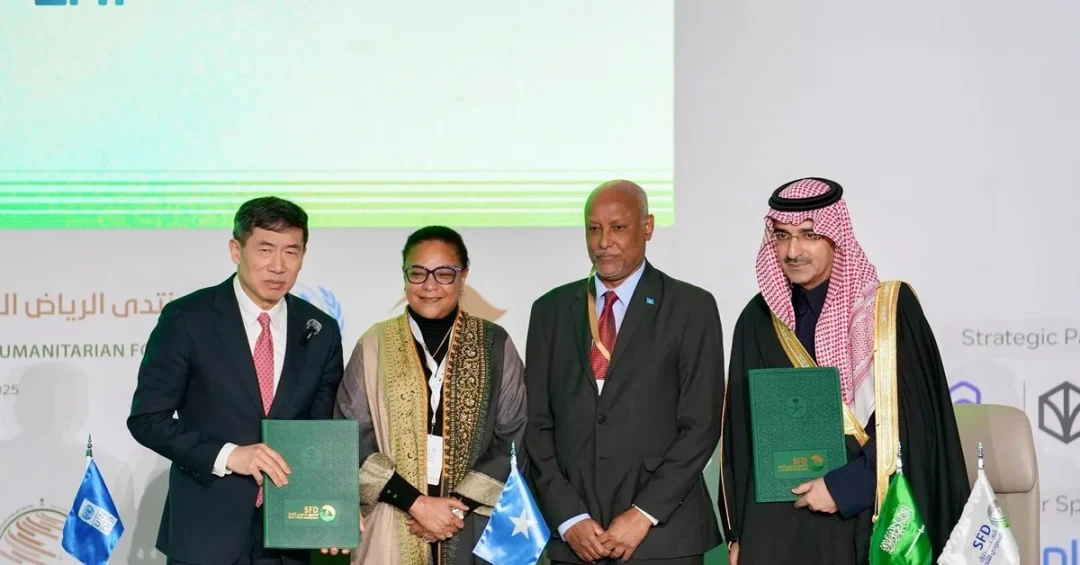
The Saudi Fund for Development (SFD) and the United Nations Development Programme (UNDP) have signed a memorandum of understanding (MoU) to enhance water security in Somalia through the Saudi Program for Drilling Wells and Rural Development in Africa. The agreement was signed during the fourth annual Riyadh International Humanitarian Forum (RIHF) by SFD Chief Executive Sultan Al-Marshad and UNDP Associate Administrator Haoliang Xu, with Somali Ambassador Owais Haji Yusuf Ahmed in attendance.
Context and Background
The Saudi Program for Drilling Wells and Rural Development in Africa is a key initiative by the SFD, aimed at improving access to clean water in rural African communities. Phase five of this program focuses on Somalia, where water scarcity and drought have severely impacted livelihoods. The program includes drilling wells and establishing solar-powered water supply networks to ensure sustainable water access.
Key Details
The MoU outlines the implementation of a grant provided to Somalia, which will support the drilling of wells and the development of rural water infrastructure. This initiative is expected to provide potable water, combat desertification, and enhance food security. The SFD has already drilled over 10,000 wells in 21 African countries, benefiting more than 5 million people with an investment of approximately $330 million.
Implications and Impact
This collaboration between the SFD and UNDP is expected to significantly improve water security in Somalia, reducing the prevalence of waterborne diseases and supporting agricultural activities. The project aligns with global efforts to address climate change and sustainable development, showcasing Saudi Arabia’s commitment to humanitarian aid and international cooperation.
Vision 2030 Alignment
The initiative reflects Saudi Arabia’s Vision 2030 goals of fostering international partnerships and contributing to global sustainable development. By addressing critical issues like water scarcity, the Kingdom reinforces its role as a leader in humanitarian efforts and its commitment to supporting vulnerable communities worldwide.
20 Questions
Q1. What is the purpose of the MoU signed between SFD and UNDP?
A1. The MoU aims to enhance water security in Somalia through the Saudi Program for Drilling Wells and Rural Development in Africa.
Q2. Who signed the MoU on behalf of SFD and UNDP?
A2. SFD Chief Executive Sultan Al-Marshad and UNDP Associate Administrator Haoliang Xu signed the MoU.
Q3. Where was the MoU signed?
A3. The MoU was signed during the fourth annual Riyadh International Humanitarian Forum (RIHF).
Q4. Which country is the focus of phase five of the Saudi Program for Drilling Wells?
A4. Somalia is the focus of phase five of the program.
Q5. What are the main components of the program in Somalia?
A5. The program includes drilling wells and establishing solar-powered water supply networks.
Q6. How many wells has the SFD drilled in Africa so far?
A6. The SFD has drilled over 10,000 wells in 21 African countries.
Q7. How many people have benefited from the SFD’s well-drilling program?
A7. More than 5 million people have benefited from the program.
Q8. What is the total investment in the SFD’s well-drilling program?
A8. The total investment is approximately $330 million.
Q9. How will the program help Somalia?
A9. It will provide potable water, combat desertification, and enhance food security.
Q10. What are the expected health benefits of the program?
A10. The program aims to reduce waterborne diseases and epidemics.
Q11. Who attended the signing ceremony besides the signatories?
A11. Somali Ambassador Owais Haji Yusuf Ahmed attended the ceremony.
Q12. What is the Riyadh International Humanitarian Forum (RIHF)?
A12. RIHF is an annual forum that addresses global humanitarian challenges and fosters international cooperation.
Q13. How does the program contribute to sustainable development?
A13. By providing clean water and supporting agriculture, the program promotes sustainable livelihoods.
Q14. What role does solar power play in the program?
A14. Solar-powered water supply networks ensure sustainable and eco-friendly water access.
Q15. How does the program align with Saudi Arabia’s Vision 2030?
A15. It reflects Vision 2030’s goals of international partnerships and global sustainable development.
Q16. What are the long-term goals of the program?
A16. The long-term goals include improving water security and supporting rural development in Africa.
Q17. How does the program address climate change?
A17. By combating desertification and promoting sustainable water use, the program mitigates climate impacts.
Q18. What is the significance of Saudi Arabia’s involvement in this program?
A18. It highlights Saudi Arabia’s leadership in humanitarian efforts and global cooperation.
Q19. How does the program support agricultural activities?
A19. Reliable water access enables irrigation and boosts agricultural productivity.
Q20. What is the broader impact of the program on Somalia’s economy?
A20. Improved water security can enhance livelihoods, reduce poverty, and stimulate economic growth.
Reader Feedback
We value your thoughts. Please share your feedback on this article.
Your feedback helps us improve our coverage.