


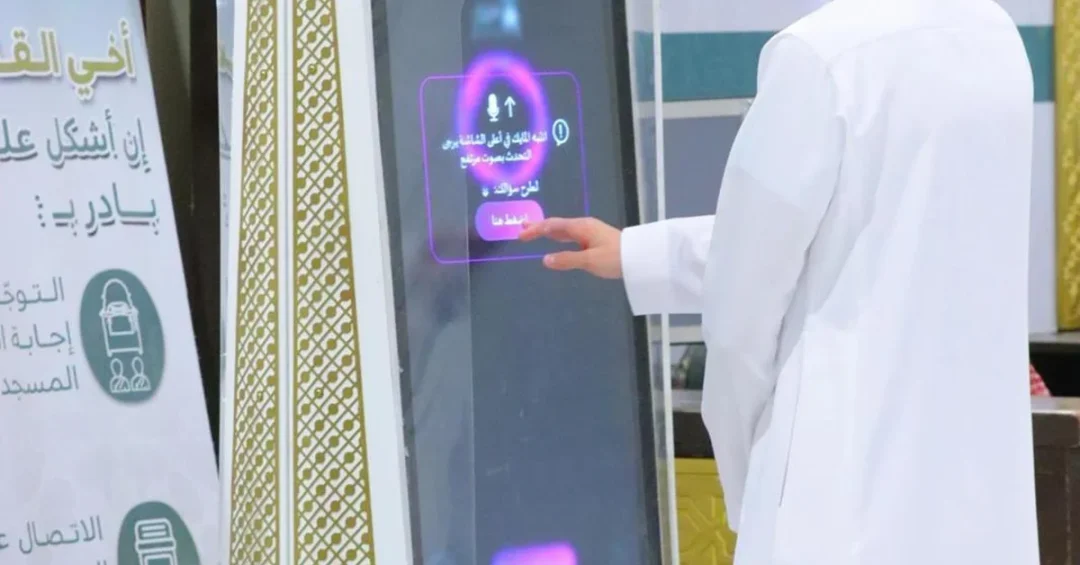
The General Authority for the Affairs of the Grand Mosque and the Prophet’s Mosque has deployed a suite of intelligent digital services to enhance the experience of Umrah performers and visitors to the Two Holy Mosques, offering multilingual religious guidance and interactive tools. Announced on August 17, 2026, the initiative leverages advanced technological solutions to streamline access to religious services, educational content, and counseling, ensuring that pilgrims from around the world receive timely and accurate information.
Context and Background
The initiative comes as part of Saudi Arabia’s ongoing efforts to leverage technology in serving the Two Holy Mosques, aligning with the Kingdom’s Vision 2030 goals of enhancing the experience of pilgrims and visitors. The new digital ecosystem includes interactive screens, field centers equipped with modern devices, and a smart electronic library. These tools are designed to provide religious information through contemporary methods that cater to the diverse languages and cultures of the guests of the Grand Mosque and the Prophet’s Mosque.
Key Details
Among the core features of the digital system are multilingual support and a variety of services. The Authority offers educational and counseling messages in several international languages, breaking down language barriers and ensuring that non-Arabic-speaking visitors can access reliable religious guidance. Additionally, the interactive screens are strategically placed to guide visitors, while the smart library provides digital access to religious books, publications, and informative materials. Field centers with modern equipment serve as physical hubs for personalized assistance.
Implications and Impact
The deployment of these intelligent services is expected to significantly improve the visitor experience, from the moment of arrival to the completion of rituals. By providing multiple avenues for information—through direct communication or digital platforms—the initiative enhances the efficiency of religious and educational services. This move reinforces Saudi Arabia’s position as a leader in integrating technology into religious tourism, setting a benchmark for other countries with significant pilgrimage sites. The multilingual approach also fosters a more inclusive environment, reflecting the Kingdom’s commitment to welcoming millions of visitors from over 180 countries.
Vision 2030 Alignment
This technological advancement is a clear manifestation of Saudi Arabia’s Vision 2030, which prioritizes the development of the hospitality and religious tourism sectors. By enhancing the quality of services provided to pilgrims, the Kingdom is not only fulfilling its religious duty but also showcasing its capability to blend modernity with tradition. The success of these digital services paves the way for future innovations, promising an even more seamless and spiritually fulfilling experience for all visitors to the Two Holy Mosques, and contributing to the broader goal of making Saudi Arabia a global hub for Islamic culture and tourism.
20 Questions
Q1. What is the General Authority for the Affairs of the Grand Mosque and the Prophet’s Mosque?
A1. It is a Saudi governmental body responsible for the administration and services of the two holiest mosques in Islam, overseeing their operations, maintenance, and visitor services to ensure a smooth and enriching experience for all.
Q2. When was the announcement about the intelligent digital services made?
A2. The announcement was made on August 17, 2026, corresponding to the 4th of Rabi’ al-Awwal, 1448 Hijri, according to the Saudi Press Agency (SPA).
Q3. What is the primary goal of the digital services initiative?
A3. The primary goal is to facilitate access to religious services, educational content, and counseling for Umrah performers and visitors, using modern technology to provide fast, high-quality, and user-friendly information.
Q4. Which mosques are included in this digital transformation?
A4. The initiative covers the Grand Mosque (Al-Masjid Al-Haram) in Mecca and the Prophet’s Mosque (Al-Masjid An-Nabawi) in Medina, the two most sacred sites in Islam.
Q5. What are the main components of the digital system?
A5. The system includes interactive screens, field centers with modern equipment, and a smart electronic library offering translated materials, religious books, and publications.
Q6. How does the system help overcome language barriers?
A6. The system provides religious messages, counseling, and publications in multiple international languages, ensuring that non-Arabic-speaking visitors can understand and access trusted information.
Q7. What types of services are available to visitors?
A7. Visitors can access religious guidance, educational content, translation services, and digital resources through interactive screens, field centers, and online platforms.
Q8. How do the digital services enhance the visitor experience?
A8. They enrich the experience from arrival by offering diverse methods of obtaining information—directly or digitally—making religious and educational services more efficient and accessible.
Q9. Are the digital services available in real-time?
A9. Yes, the services are designed to provide immediate access to information, with interactive screens and centers operating in real-time to assist visitors during their stay.
Q10. How does this initiative align with Saudi Vision 2030?
A10. It supports Vision 2030’s goals of enhancing the experience of pilgrims and visitors, leveraging technology for modernized religious services, and positioning Saudi Arabia as a global hub for Islamic culture and tourism.
Q11. What is the significance of the smart electronic library?
A11. The smart library provides digital access to religious books and publications, allowing visitors to explore authentic Islamic literature in multiple languages, thus enriching their spiritual journey.
Q12. How are the field centers equipped?
A12. The field centers are equipped with modern technological devices, enabling staff to provide up-to-date information and assistance to visitors directly.
Q13. Who is the target audience of these services?
A13. The services target all visitors to the Two Holy Mosques, including Umrah performers, pilgrims, and tourists from around the world, with a focus on meeting their religious and informational needs.
Q14. What languages are supported?
A14. The system offers content in several international languages, including but not limited to English, French, Urdu, and other major languages spoken by pilgrims, ensuring broad accessibility.
Q15. How do interactive screens assist visitors?
A15. Interactive screens provide guidance on rituals, spiritual advice, and educational content, helping visitors navigate the mosque premises and access reliable information at their convenience.
Q16. What kind of religious information is provided?
A16. The information covers various aspects of worship, including correct procedures for Umrah, prayer times, ethical guidelines, and answers to common religious questions, all from trusted sources.
Q17. How does the system ensure the quality of content?
A17. The content is curated by religious scholars and experts, ensuring accuracy and authenticity, and is regularly updated to reflect the latest guidance and fatwas.
Q18. Can visitors access these services from home?
A18. Yes, through digital platforms and online portals, visitors can access the same educational and counseling materials before, during, or after their visit, enhancing their preparation and engagement.
Q19. How does this initiative reflect Saudi Arabia’s hospitality?
A19. By providing state-of-the-art digital services and multilingual support, Saudi Arabia demonstrates its commitment to welcoming all guests with care and ensuring they have a smooth, informative, and spiritually uplifting experience.
Q20. What are the future prospects of this digital transformation?
A20. The success of this initiative paves the way for further technological innovations in religious services, potentially expanding to AI-driven guidance and virtual reality experiences to enhance pilgrim satisfaction and Saudi Arabia’s global religious leadership.
Reader Feedback
We value your thoughts. Please share your feedback on this article.
Your feedback helps us improve our coverage.