


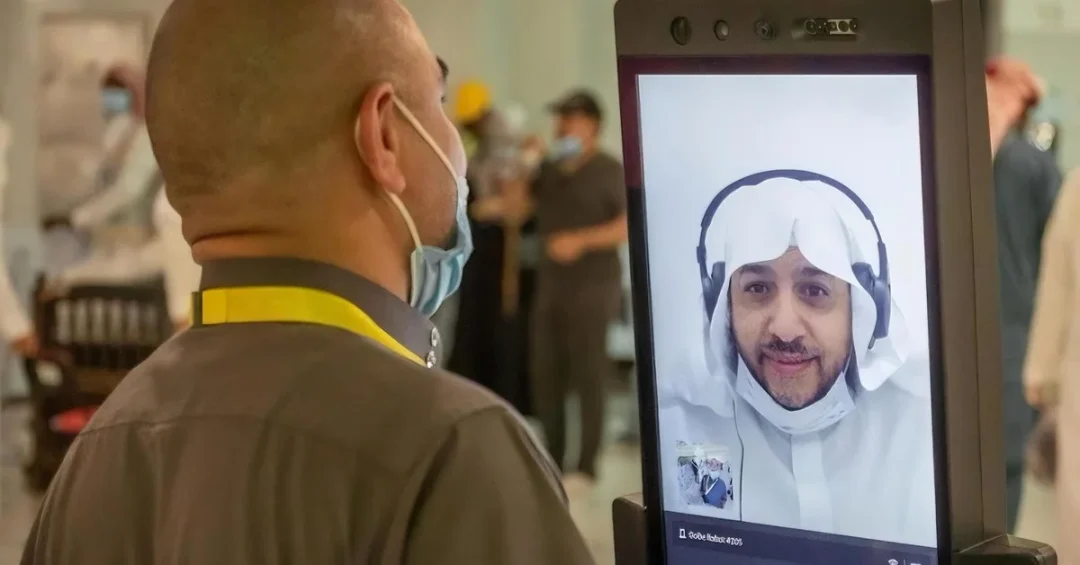
The Presidency for Religious Affairs of the Two Holy Mosques has activated a smart guidance robot at the Grand Mosque in Makkah, capable of providing fatwa services and responding to religious inquiries in 11 languages, according to the Saudi Press Agency (SPA). The initiative represents the latest step in the presidency’s ongoing efforts to integrate artificial intelligence (AI) and modern technology into the services offered to pilgrims and Umrah performers, ensuring they can perform their rituals with ease and spiritual comfort.
Context and Background
The delivery of religious guidance at the Two Holy Mosques has evolved significantly over the decades, as noted by SPA. What began with traditional fatwa chairs and old telephones progressed to digital technology and smart applications, and has now reached the era of AI with the introduction of this smart robot. The Presidency for Religious Affairs of the Two Holy Mosques has made investment in modern technology and AI a central pillar of its strategies to enhance services for the millions of visitors who travel to Makkah each year.
This continuous development reflects the wise leadership’s deep care for the comfort of pilgrims and Umrah performers, and its commitment to providing services that align with Islamic teachings characterized by tolerance and inclusion. The new robot is a practical manifestation of that commitment, offering instant, reliable guidance on rituals and religious matters.
Key Details
The smart guidance robot supports 11 languages: Arabic, English, French, Russian, Persian, Turkish, Malay, Urdu, Chinese, Bengali, and Hausa. This linguistic diversity ensures that pilgrims from across the globe can access fatwa services in their native language, removing barriers to understanding and enhancing their spiritual experience.
The robot features a 21-inch touchscreen that can be used for various services important to visitors, such as guidance, direction, and religious opinions. It moves on four wheels equipped with a smart stopping system for smooth mobility. Operating on a wireless network with 5 GHz speed, it enables fast and efficient data transfer, and its modern, flexible design allows it to roam the courtyards of the Grand Mosque freely, providing fatwa services throughout the premises.
Additionally, the robot is equipped with high-definition cameras for panoramic site capture, high-clarity speakers, advanced noise-cancelling technologies for clear sound capture, and a high-quality microphone for clear audio transmission. These features ensure that pilgrims receive accurate and understandable responses even in the bustling environment of the Grand Mosque.
Implications and Impact
The deployment of this smart robot is already proving popular among pilgrims and Umrah performers, who are using it to answer questions about rituals and other religious matters. By offering fatwas electronically, the presidency ensures that guidance is delivered in accordance with Islamic teachings and in a manner that is both accessible and respectful of the pilgrims’ needs.
This initiative also demonstrates Saudi Arabia’s leadership in leveraging technology to serve humanity, particularly in the context of the Two Holy Mosques, which host millions of worshippers annually. The robot’s ability to communicate in multiple languages and its advanced technical specifications underscore the Kingdom’s dedication to providing world-class services that enhance the spiritual journey of every visitor.
Vision 2030 Alignment
The activation of the smart guidance robot aligns closely with Saudi Vision 2030, which aims to transform the Kingdom into a global leader in technology and innovation while enhancing the quality of life for citizens and visitors alike. By integrating AI into religious services, the Presidency for Religious Affairs of the Two Holy Mosques is contributing to the Vision’s objectives of modernizing public services, improving the pilgrim experience, and showcasing Saudi Arabia’s capacity for innovation on the world stage.
As the Kingdom continues to welcome increasing numbers of pilgrims, such initiatives will play a vital role in ensuring that the Two Holy Mosques remain at the forefront of service excellence, combining tradition with cutting-edge technology to meet the needs of a diverse and growing global community of believers.
20 Questions
Q1. What is the smart guidance robot at the Grand Mosque?
A1. It is a robot introduced by the Presidency for Religious Affairs of the Two Holy Mosques to provide fatwa services and answer religious inquiries in multiple languages, using artificial intelligence.
Q2. How many languages does the robot support?
A2. The robot supports 11 languages: Arabic, English, French, Russian, Persian, Turkish, Malay, Urdu, Chinese, Bengali, and Hausa.
Q3. What is the purpose of the robot?
A3. Its purpose is to guide pilgrims and Umrah performers on rituals and provide religious fatwas electronically, enhancing their experience at the Grand Mosque.
Q4. What technology does the robot use?
A4. The robot uses artificial intelligence, a 5 GHz wireless network, high-definition cameras, noise-cancelling speakers, and a high-quality microphone.
Q5. What is the size of the robot’s touchscreen?
A5. The robot features a 21-inch touchscreen that visitors can use for guidance, direction, and religious opinions.
Q6. How does the robot move around the Grand Mosque?
A6. It moves on four wheels with a smart stopping system, allowing smooth mobility across the courtyards of the Grand Mosque.
Q7. Who introduced the robot?
A7. The Presidency for Religious Affairs of the Two Holy Mosques introduced the robot as part of its strategy to enhance services for pilgrims.
Q8. Is the robot popular among pilgrims?
A8. Yes, it is particularly popular among pilgrims and Umrah performers, who use it to answer questions about rituals and other religious matters.
Q9. What kind of inquiries can the robot answer?
A9. The robot can answer religious inquiries and provide fatwas on rituals and other matters, in accordance with Islamic teachings.
Q10. How does the robot ensure clear communication?
A10. It has high-clarity speakers, advanced noise-cancelling technologies, and a high-quality microphone for clear audio transmission in busy environments.
Q11. What is the significance of the robot’s language support?
A11. It allows pilgrims from diverse backgrounds to receive guidance in their native language, making religious services more accessible and inclusive.
Q12. Does the robot operate throughout the Grand Mosque?
A12. Yes, its modern, flexible design allows it to roam the courtyards and provide fatwa services throughout the Grand Mosque.
Q13. What is the role of the Presidency for Religious Affairs?
A13. The presidency oversees religious services at the Two Holy Mosques, including the provision of fatwas and guidance to pilgrims and Umrah performers.
Q14. How does the robot align with Saudi Vision 2030?
A14. It reflects Vision 2030’s goals of embracing technology and innovation to improve services and enhance the quality of life for visitors to the Kingdom.
Q15. What was used before the robot for fatwa services?
A15. Previously, fatwa services relied on traditional chairs, telephones, digital technology, and smart applications before advancing to AI.
Q16. Can the robot capture panoramic views?
A16. Yes, it is equipped with high-definition cameras for panoramic site capture, aiding in navigation and monitoring.
Q17. Is the robot’s service free for pilgrims?
A17. Yes, the robot’s services are provided free of charge as part of the presidency’s commitment to serving pilgrims.
Q18. What network speed does the robot use?
A18. The robot operates on a wireless network with 5 GHz speed, enabling fast and efficient data transfer.
Q19. How does the robot contribute to the pilgrimage experience?
A19. By providing instant, multilingual guidance and fatwas, it helps pilgrims perform rituals correctly and with peace of mind.
Q20. What does the future hold for such technology at the Two Holy Mosques?
A20. The presidency continues to invest in AI and modern technology to further enhance services, ensuring the Two Holy Mosques remain at the forefront of innovation in serving pilgrims.
Reader Feedback
We value your thoughts. Please share your feedback on this article.
Your feedback helps us improve our coverage.