


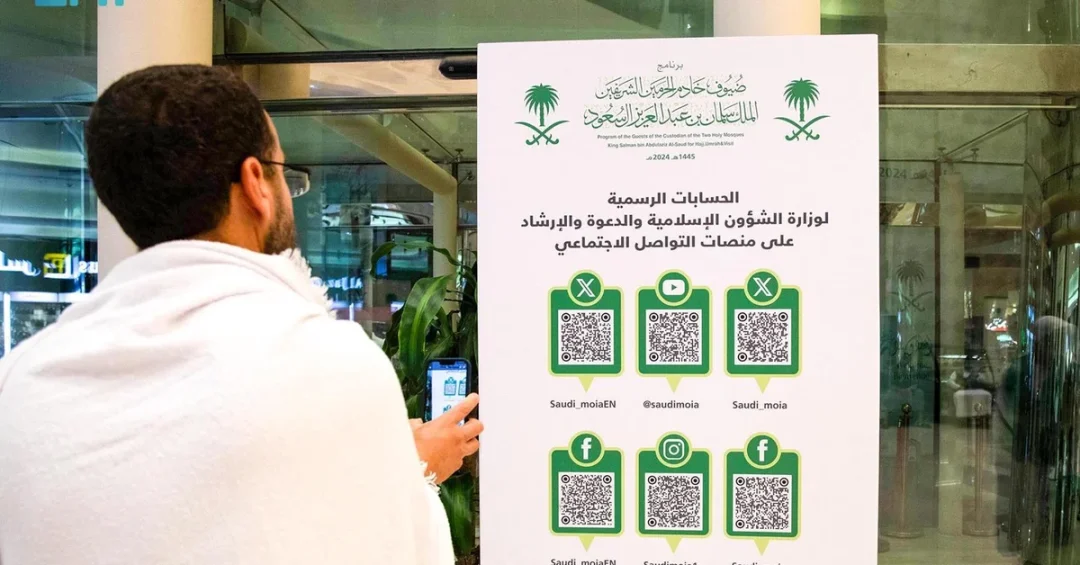
The Ministry of Islamic Affairs, Dawah and Guidance has implemented interactive smart screens at the headquarters of the Custodian of the Two Holy Mosques’ Guests Program for Hajj, Umrah and Visit in Makkah, as reported by the Saudi Press Agency (SPA). These screens display pleasing phrases that exemplify the spirit of hospitality within a comprehensive system of services offered by the ministry.
Context and Background
The Guests Program, under the patronage of the Custodian of the Two Holy Mosques, King Salman bin Abdulaziz Al Saud, reflects the Kingdom’s commitment to serving pilgrims and visitors. The Ministry of Islamic Affairs, Dawah and Guidance, led by Minister Dr. Abdullatif bin Abdulaziz Al Al-Sheikh, oversees the program, which aims to provide exceptional services to guests from around the world. The introduction of interactive smart screens is part of ongoing efforts to enhance the pilgrimage experience through modern technology.
Makkah, the holiest city in Islam, welcomes millions of pilgrims annually for Hajj and Umrah. The Saudi government continuously invests in infrastructure and services to ensure their comfort and safety. The smart screens are a testament to this dedication, offering instant access to vital information in multiple languages, thus facilitating a smoother and more enriching journey for guests.
Key Details
The smart screens are equipped with extensive and detailed information on Hajj, including amenities, services, visiting hours of Makkah landmarks, and cultural programs. They provide real-time updates and guidance, helping guests navigate the holy sites with ease. The screens also feature welcoming messages that embody Saudi hospitality, aligning with the ministry’s mission to serve pilgrims with excellence. This initiative is part of a broader digital transformation strategy within the ministry, which includes e-services and mobile applications to assist pilgrims before and during their visit.
Implications and Impact
This development enhances the overall pilgrimage experience by providing timely and accurate information. It reduces confusion and empowers guests to make the most of their spiritual journey. Moreover, it showcases Saudi Arabia’s leadership in leveraging technology for religious tourism, setting a benchmark for other nations. The smart screens also contribute to the Kingdom’s reputation as a gracious host, reinforcing its role as the guardian of Islam’s holiest sites.
Internationally, this initiative demonstrates Saudi Arabia’s commitment to Vision 2030, which aims to diversify the economy and improve the quality of life for citizens and visitors alike. By integrating smart solutions, the Kingdom enhances its capacity to manage large-scale religious events efficiently, ensuring safety and satisfaction.
Vision 2030 Alignment
The smart screens project aligns with Vision 2030’s goals of enhancing the pilgrim experience and utilizing digital innovation to improve public services. It underscores Saudi Arabia’s dedication to preserving its religious heritage while embracing modernity. As the Kingdom continues to welcome the world, such initiatives will further solidify its position as a global leader in hospitality and technological advancement in service of the Guests of God.
20 Questions
Q1. What are the interactive smart screens implemented by the Ministry of Islamic Affairs?
A1. The Ministry of Islamic Affairs, Dawah and Guidance implemented interactive smart screens at the headquarters of the Custodian of the Two Holy Mosques’ Guests Program in Makkah. These screens display hospitality phrases and provide detailed information on Hajj services, amenities, and cultural programs.
Q2. Where are these smart screens located?
A2. The smart screens are located at the headquarters of the Custodian of the Two Holy Mosques’ Guests Program for Hajj, Umrah and Visit in Makkah, Saudi Arabia.
Q3. What kind of information do the smart screens display?
A3. The screens display extensive and detailed information on Hajj, including amenities, services, visiting hours of Makkah landmarks, and cultural programs. They also show pleasing phrases that exemplify the spirit of hospitality.
Q4. Who implemented the smart screens?
A4. The Ministry of Islamic Affairs, Dawah and Guidance, under the leadership of Minister Dr. Abdullatif bin Abdulaziz Al Al-Sheikh, implemented the smart screens.
Q5. What is the purpose of the smart screens?
A5. The purpose is to enhance the experience of guests of the Custodian of the Two Holy Mosques’ Guests Program by providing them with easy access to important information and welcoming messages during their pilgrimage.
Q6. How do the smart screens reflect Saudi hospitality?
A6. The screens display pleasing phrases that exemplify the spirit of hospitality, aligning with the Kingdom’s tradition of gracious hosting and the ministry’s commitment to serving pilgrims with excellence.
Q7. Are the smart screens part of a larger initiative?
A7. Yes, they are part of the ministry’s comprehensive system of services and digital transformation strategy to improve the pilgrimage experience through modern technology.
Q8. What is the Custodian of the Two Holy Mosques’ Guests Program?
A8. It is a program under the patronage of King Salman bin Abdulaziz Al Saud that hosts pilgrims and visitors, providing them with exceptional services during Hajj, Umrah, and visits to the holy sites.
Q9. How do the smart screens assist pilgrims?
A9. They provide real-time information on amenities, services, visiting hours, and cultural programs, helping pilgrims navigate the holy sites more easily and make the most of their spiritual journey.
Q10. In what languages is the information available on the smart screens?
A10. While the exact languages are not specified, such screens typically offer information in multiple languages to cater to the diverse international guests of the program.
Q11. What are some of the amenities and services listed on the screens?
A11. The screens list amenities such as transportation, accommodation, dining options, and medical services, as well as service points and assistance locations throughout Makkah.
Q12. How does this initiative align with Saudi Vision 2030?
A12. It aligns with Vision 2030 by enhancing the pilgrim experience through digital innovation, improving public services, and showcasing Saudi Arabia’s leadership in technology and hospitality.
Q13. What impact do the smart screens have on the pilgrimage experience?
A13. They reduce confusion, provide timely information, and empower guests to focus on their spiritual activities, thereby enhancing overall satisfaction and safety.
Q14. Are there similar technological initiatives in place for Hajj and Umrah?
A14. Yes, the ministry has implemented various e-services and mobile applications to assist pilgrims before and during their visit, as part of a broader digital transformation.
Q15. How do the screens contribute to the Kingdom’s reputation?
A15. They reinforce Saudi Arabia’s reputation as a gracious host and a global leader in leveraging technology for religious tourism, demonstrating its commitment to serving the Guests of God.
Q16. What role does the Ministry of Islamic Affairs play in the Hajj season?
A16. The ministry oversees religious affairs, manages the Guests Program, and ensures that pilgrims receive the necessary guidance and services to perform their rituals comfortably.
Q17. How are the screens maintained and updated?
A17. The ministry likely has a dedicated team to maintain and update the screens with current information, ensuring accuracy and reliability for users.
Q18. Do the screens provide information on cultural programs?
A18. Yes, the screens include details on cultural programs, allowing guests to engage with the rich heritage and traditions of Saudi Arabia during their visit.
Q19. What feedback have the smart screens received from pilgrims?
A19. While specific feedback is not provided, such initiatives are generally well-received as they enhance convenience and access to information, contributing to a positive pilgrimage experience.
Q20. How can other countries learn from this initiative?
A20. Other countries can learn from Saudi Arabia’s integration of smart technology in religious tourism, which improves service delivery and guest satisfaction, setting a benchmark for innovation in hospitality.
Reader Feedback
We value your thoughts. Please share your feedback on this article.
Your feedback helps us improve our coverage.