


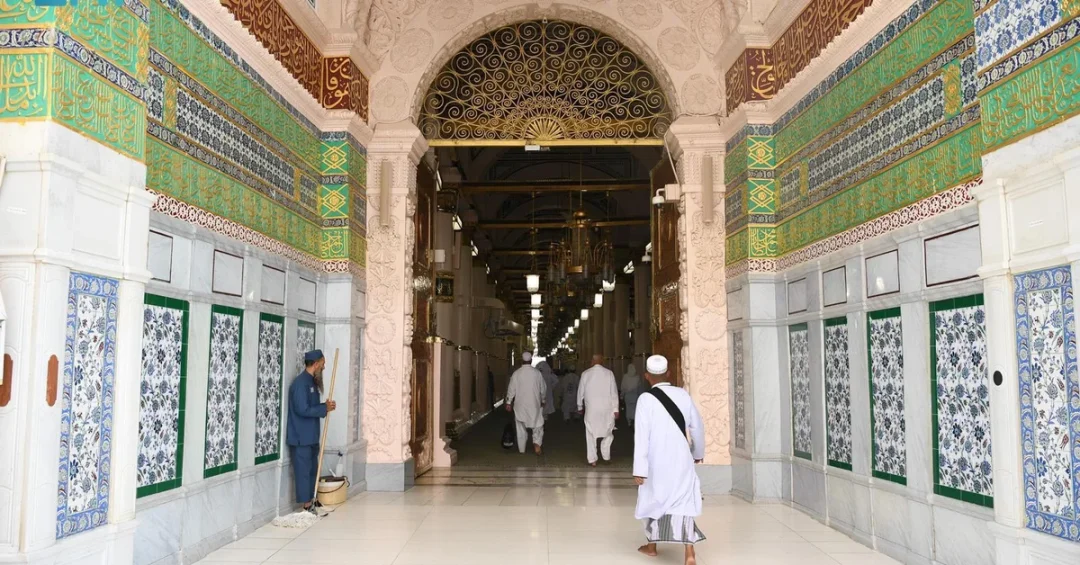
The Saudi Press Agency (SPA) has released a series of images documenting the smooth flow and meticulous organization of visitors at the Prophet’s Mosque in Madinah, where worshippers gather to pray and greet the Prophet Muhammad (peace be upon him) and his two companions. The photographs, captured on July 12, 2024, highlight the continuous coordination by relevant authorities to facilitate the entry and exit of visitors through Bab Al Salam (Gate of Peace), ensuring that all services are provided seamlessly within the mosque’s premises.
Context and Background
The Prophet’s Mosque, known as Al-Masjid an-Nabawi, is the second holiest site in Islam and a destination for millions of pilgrims and visitors from around the world each year. The mosque holds profound spiritual significance, as it houses the tomb of the Prophet Muhammad (peace be upon him) and his two companions, Abu Bakr and Umar. The Saudi government, under the leadership of the Custodian of the Two Holy Mosques, King Salman bin Abdulaziz Al Saud, and Crown Prince Mohammed bin Salman, has consistently prioritized the comfort and safety of all visitors.
In recent years, the Kingdom has invested heavily in expanding and upgrading the infrastructure of the Prophet’s Mosque to accommodate the growing number of worshippers. These efforts are part of a broader strategy to enhance the pilgrimage experience, aligning with the objectives of Saudi Vision 2030, which aims to facilitate religious tourism and showcase the Kingdom’s commitment to serving Islam and Muslims worldwide.
Key Details
The SPA images specifically show the organized movement of visitors through Bab Al Salam, one of the main gates leading to the mosque’s interior. This gate is historically significant as it is located near the Prophet’s tomb and is often used by visitors seeking to pay their respects. The authorities have implemented a well-coordinated system that ensures a smooth flow of people, preventing overcrowding and enabling worshippers to perform their rituals with ease and tranquility.
According to official sources, the arrangements involve the collaboration of multiple entities, including the General Presidency for the Affairs of the Two Holy Mosques, security forces, and medical teams. These teams work round-the-clock to provide a range of services, from guiding visitors and managing queues to offering medical assistance and ensuring cleanliness. The SPA’s documentation serves as a testament to the high level of preparedness and the dedication of the personnel involved.
Implications and Impact
The smooth organization at the Prophet’s Mosque has significant implications for the broader pilgrimage experience and the Kingdom’s reputation as a responsible custodian of Islam’s holiest sites. By effectively managing the large influx of visitors, Saudi Arabia demonstrates its capability to handle mass gatherings with efficiency and compassion. This not only enhances the spiritual journey of individual worshippers but also contributes to the positive image of the Kingdom on the international stage.
Furthermore, the successful management of these crowds is a reflection of the Kingdom’s logistical expertise and its commitment to safety and security. It also supports the goals of Vision 2030 by promoting religious tourism as a key pillar of economic diversification. The positive experiences of visitors often translate into increased pilgrimage numbers, which in turn boosts local economies and fosters cultural exchange.
Vision 2030 Alignment
The meticulous organization at the Prophet’s Mosque is a clear manifestation of Saudi Vision 2030’s objectives to enhance the quality of services for pilgrims and to position the Kingdom as a global leader in hospitality and religious tourism. Under the visionary leadership of Crown Prince Mohammed bin Salman, Saudi Arabia continues to invest in world-class infrastructure and smart technologies to ensure that all visitors have a fulfilling and secure experience. These efforts underscore the Kingdom’s unwavering dedication to serving the guests of God and to fostering a peaceful and harmonious environment for worship, in line with the teachings of Islam and the aspirations of Vision 2030.
20 Questions
Q1. What did the Saudi Press Agency document at the Prophet’s Mosque?
A1. The SPA documented the smooth flow and organization of visitors at the Prophet’s Mosque, highlighting the coordinated efforts to facilitate entry and exit through Bab Al Salam.
Q2. Why is the Prophet’s Mosque significant in Islam?
A2. It is the second holiest site in Islam, housing the tomb of Prophet Muhammad (peace be upon him) and his two companions, making it a major destination for pilgrims.
Q3. What is Bab Al Salam?
A3. Bab Al Salam, or the Gate of Peace, is a prominent entrance to the Prophet’s Mosque, often used by visitors to greet the Prophet and his companions.
Q4. Who is responsible for organizing visitors at the mosque?
A4. Multiple Saudi authorities, including the General Presidency for the Affairs of the Two Holy Mosques, security forces, and medical teams, coordinate to ensure smooth operations.
Q5. How does the organization of visitors reflect Saudi Vision 2030?
A5. It demonstrates the Kingdom’s commitment to enhancing religious tourism and providing world-class services, aligning with Vision 2030’s goals of economic diversification and hospitality.
Q6. What services are provided within the mosque’s premises?
A6. Services include guidance for visitors, crowd management, medical assistance, and cleanliness maintenance, ensuring a safe and spiritual experience.
Q7. When were the images captured?
A7. The images were captured on July 12, 2024, as part of SPA’s coverage of the organized flow of worshippers.
Q8. How many visitors does the Prophet’s Mosque receive annually?
A8. The mosque receives millions of visitors annually, particularly during the Hajj and Umrah seasons, making efficient organization essential.
Q9. What role does the Saudi government play in managing the mosque?
A9. The Saudi government, led by King Salman and Crown Prince Mohammed bin Salman, prioritizes the comfort and safety of visitors through continuous investment and upgrades.
Q10. How does the flow of visitors through Bab Al Salam benefit worshippers?
A10. The organized flow prevents overcrowding, allowing worshippers to move peacefully and perform their rituals with ease and tranquility.
Q11. What technological advancements have been implemented at the mosque?
A11. Smart technologies and modern infrastructure have been introduced to enhance crowd management, security, and overall visitor experience.
Q12. What is the significance of the SPA’s documentation?
A12. It serves as a testament to the high level of preparedness and dedication of Saudi authorities in serving the guests of God.
Q13. How does the organization at the mosque impact Saudi Arabia’s image?
A13. It enhances the Kingdom’s reputation as a responsible custodian of holy sites, showcasing its logistical expertise and commitment to safety.
Q14. What economic benefits arise from religious tourism?
A14. Religious tourism boosts local economies, creates jobs, and contributes to the Kingdom’s economic diversification goals under Vision 2030.
Q15. How does the mosque’s management handle peak times?
A15. During peak times, additional personnel and resources are deployed to manage crowds, ensuring a smooth and safe experience for all visitors.
Q16. What is the role of medical teams at the mosque?
A16. Medical teams provide emergency care and health services to visitors, ensuring their well-being throughout their visit.
Q17. How does the Saudi leadership support the mosque’s operations?
A17. The leadership provides continuous funding and strategic direction, emphasizing the importance of serving pilgrims as a top priority.
Q18. What measures are taken to ensure cleanliness at the mosque?
A18. Specialized cleaning teams work around the clock to maintain high standards of hygiene, in line with the Kingdom’s commitment to excellence.
Q19. How does the visitor experience at the Prophet’s Mosque reflect Saudi hospitality?
A19. The warm welcome, efficient services, and respectful environment exemplify the Kingdom’s traditional hospitality and dedication to serving guests.
Q20. What future developments are planned for the Prophet’s Mosque?
A20. Ongoing expansions and upgrades are part of Vision 2030, aiming to accommodate more visitors and enhance their spiritual journey with cutting-edge facilities.
Vision 2030 Alignment
The meticulous organization at the Prophet’s Mosque is a clear manifestation of Saudi Vision 2030’s objectives to enhance the quality of services for pilgrims and to position the Kingdom as a global leader in hospitality and religious tourism. Under the visionary leadership of Crown Prince Mohammed bin Salman, Saudi Arabia continues to invest in world-class infrastructure and smart technologies to ensure that all visitors have a fulfilling and secure experience. These efforts underscore the Kingdom’s unwavering dedication to serving the guests of God and to fostering a peaceful and harmonious environment for worship, in line with the teachings of Islam and the aspirations of Vision 2030.
Reader Feedback
We value your thoughts. Please share your feedback on this article.
Your feedback helps us improve our coverage.