


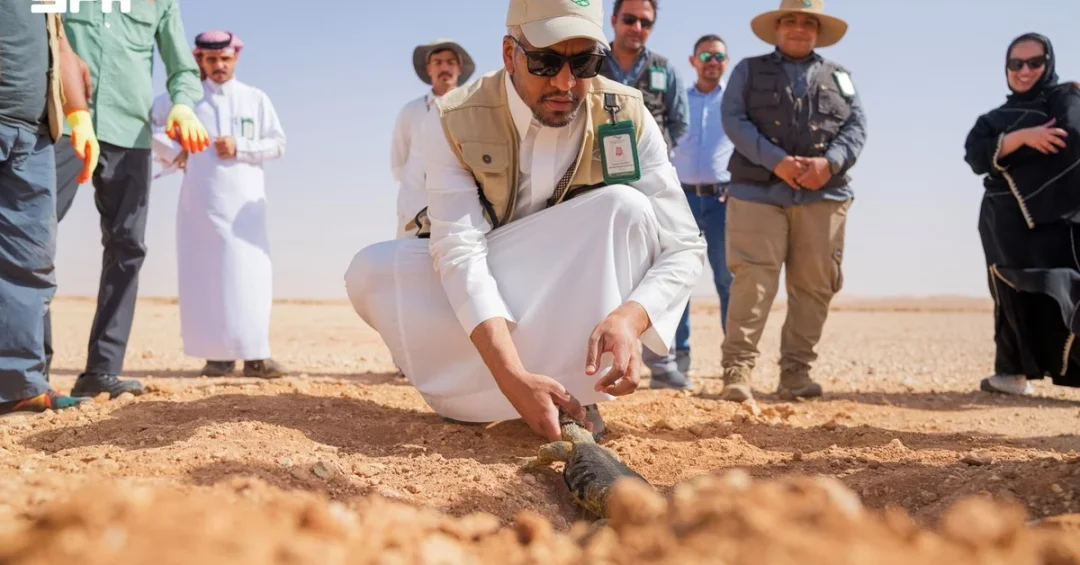
The Imam Abdulaziz bin Mohammed Royal Reserve Development Authority has released more than 140 spiny-tailed lizards at selected sites within King Khalid Royal Reserve, in cooperation with the National Center of Wildlife (NCW). The release, reported by the Saudi Press Agency (SPA) from Riyadh on September 9, 2026, is part of joint programs to develop wildlife, support biodiversity, and sustain ecosystems inside the protected area.
Context and Background
King Khalid Royal Reserve is one of Saudi Arabia’s royal reserves managed under the umbrella of the Imam Abdulaziz bin Mohammed Royal Reserve Development Authority. The reserve supports ecologically important desert landscapes and provides a natural home for native species associated with the Arabian Peninsula. The initiative is part of broader national efforts to restore terrestrial habitats and strengthen the Kingdom’s conservation performance.
The release followed an assessment of targeted sites using field criteria that evaluated the suitability of natural habitats for the lizard species. The selected locations were identified to help the released animals adapt and remain stable in their natural environment.
Key Details
Abdullatif Al-Abdulwahab, Head of the Wildlife Division at the authority, said the release is an extension of the authority’s programs for developing native species and their natural habitats, implemented with relevant entities. He confirmed that field studies guided site selection, taking into account environmental characteristics and the needs of the spiny-tailed lizard.
Al-Abdulwahab noted that post-release monitoring will be carried out to study the movement, behavior, and adaptation of the released lizards. The resulting data will help officials evaluate the effectiveness of the release and improve future wildlife programs in the reserve.
Implications and Impact
The spiny-tailed lizard is a characteristic species of Saudi Arabia’s desert environments and plays a role in the local food chain and overall ecosystem health. Strengthening native wildlife populations can support vegetation cover, improve biodiversity, and reinforce the ecological balance of protected areas. The cooperation between the reserve authority and the National Center of Wildlife reflects a coordinated national conservation approach that combines scientific assessment, field operations, and long-term observation.
Vision 2030 Alignment
This initiative advances the environmental objectives of Saudi Vision 2030 by promoting biodiversity, restoring natural habitats, and enhancing the sustainability of ecosystems. Through carefully planned releases and monitoring, Saudi Arabia continues to develop a conservation model that integrates scientific research with national development, preserving the Kingdom’s natural heritage for future generations.
20 Questions
Q1. What was announced about spiny-tailed lizards by the Imam Abdulaziz bin Mohammed Royal Reserve Development Authority?
A1. The authority announced the release of more than 140 spiny-tailed lizards at suitable sites within King Khalid Royal Reserve, according to the Saudi Press Agency. The announcement was made from Riyadh on September 9, 2026. The release supports biodiversity and sustainable ecosystem development.
Q2. Where were the spiny-tailed lizards released?
A2. The lizards were released at several suitable sites within King Khalid Royal Reserve. The reserve is managed by the Imam Abdulaziz bin Mohammed Royal Reserve Development Authority and serves as an important protected area for Saudi Arabia’s native desert species and natural habitats.
Q3. Who cooperated on the release initiative?
A3. The Imam Abdulaziz bin Mohammed Royal Reserve Development Authority cooperated with the National Center of Wildlife, Saudi Arabia’s specialized agency for wildlife conservation. Together, the organizations implemented joint programs to develop wildlife species, support biodiversity, and sustain ecosystems within the reserve.
Q4. Why were these lizards released?
A4. The lizards were released as part of programs to develop wildlife, support biodiversity, and sustain ecosystems in King Khalid Royal Reserve. By restoring native species, authorities aim to strengthen natural ecological processes and improve the health of the reserve’s desert environment.
Q5. How were the release sites chosen?
A5. Release sites were chosen following an assessment based on field criteria that considered the suitability of natural habitats for the species. The selected locations were intended to support the adaptation and stability of the released spiny-tailed lizards in their natural surroundings.
Q6. What is a spiny-tailed lizard?
A6. The spiny-tailed lizard is a reptile native to Saudi Arabia’s desert environments. It is associated with arid landscapes and plays a role in the local food chain and ecosystem. Its presence helps maintain ecological balance and supports biodiversity in protected areas.
Q7. What did Abdullatif Al-Abdulwahab say about the release?
A7. Abdullatif Al-Abdulwahab, Head of the Wildlife Division, said the release reflects integrated efforts to develop wildlife species and support the sustainability of natural habitats. He also stressed that the initiative is part of ongoing programs carried out in cooperation with relevant entities.
Q8. How many spiny-tailed lizards were released?
A8. More than 140 spiny-tailed lizards were released within King Khalid Royal Reserve. The animals were placed at multiple suitable sites selected for their environmental characteristics. This number represents a targeted intervention to strengthen the local population of the species.
Q9. What monitoring will take place after the release?
A9. Post-release monitoring will be conducted to study the movements, behavior, and adaptation of the released lizards. These observations will help authorities assess whether the animals have adapted successfully and will inform planning for future wildlife programs in the reserve.
Q10. Which species are involved in this initiative?
A10. The initiative focuses on the spiny-tailed lizard, a species closely linked to Saudi Arabia’s desert ecosystems. The species plays a role in the food chain and contributes to the ecological balance of its natural habitat. Restoring such native species is important for conservation.
Q11. What role does the spiny-tailed lizard play in the ecosystem?
A11. The spiny-tailed lizard plays a role in the food chain and supports ecosystem functioning. According to the wildlife division head, the species is part of Saudi Arabia’s desert environments and contributes to ecosystem health. Protecting it helps maintain biodiversity in the reserve.
Q12. How will officials assess the adaptation of the released lizards?
A12. Officials will study the behavior, movement, and adaptation of the released lizards through post-release monitoring. Data collected from these observations will be used to evaluate the outcome of the release and to support the development of future wildlife programs in King Khalid Royal Reserve.
Q13. What is the National Center of Wildlife?
A13. The National Center of Wildlife is Saudi Arabia’s national institution responsible for wildlife conservation efforts. In this initiative, it worked with the reserve development authority on joint programs to improve biodiversity, restore species, and promote ecosystem sustainability across protected areas.
Q14. What is the role of the Imam Abdulaziz bin Mohammed Royal Reserve Development Authority?
A14. The authority manages King Khalid Royal Reserve and oversees programs to develop wildlife, restore habitats, and enhance vegetation cover. It works with specialized partners such as the National Center of Wildlife to implement conservation measures that support Saudi Arabia’s environmental objectives.
Q15. Why is the spiny-tailed lizard important to Saudi Arabia?
A15. The spiny-tailed lizard is one of the species associated with Saudi Arabia’s desert environments. It contributes to the terrestrial food chain and plays a role in ecosystem balance. Its conservation helps preserve the Kingdom’s natural heritage and supports biodiversity.
Q16. What will happen after the site assessment and release?
A16. Following the site assessment and release, authorities will carry out monitoring and follow-up activities. These efforts will study the lizards’ behavior and adaptation to the release sites. The information gathered will help assess the success of the release and improve management decisions.
Q17. What environmental goals does this release support?
A17. The release supports environmental goals related to biodiversity conservation, natural habitat restoration, and ecosystem sustainability. It also contributes to Saudi Vision 2030’s environmental objectives by enhancing vegetation cover and protecting native wildlife within King Khalid Royal Reserve.
Q18. How does this initiative align with Saudi Vision 2030?
A18. Saudi Vision 2030 includes clear environmental objectives such as protecting natural habitats and supporting biodiversity. This lizard release helps fulfill those objectives by strengthening native species populations and improving ecosystem health. The initiative is one example of Vision 2030’s conservation-oriented programs being implemented in the Kingdom.
Q19. What kind of scientific preparation was carried out before the release?
A19. Before the release, targeted sites were assessed using field criteria that evaluated habitat suitability for the species. The environmental characteristics of each site were studied to ensure they would support the adaptation and stability of the released lizards in their natural setting.
Q20. What was the original source of this information?
A20. The information was originally released by the Saudi Press Agency, citing the Imam Abdulaziz bin Mohammed Royal Reserve Development Authority. The SPA report provided official confirmation of the release and outlined the conservation objectives behind the initiative.
Reader Feedback
We value your thoughts. Please share your feedback on this article.
Your feedback helps us improve our coverage.