


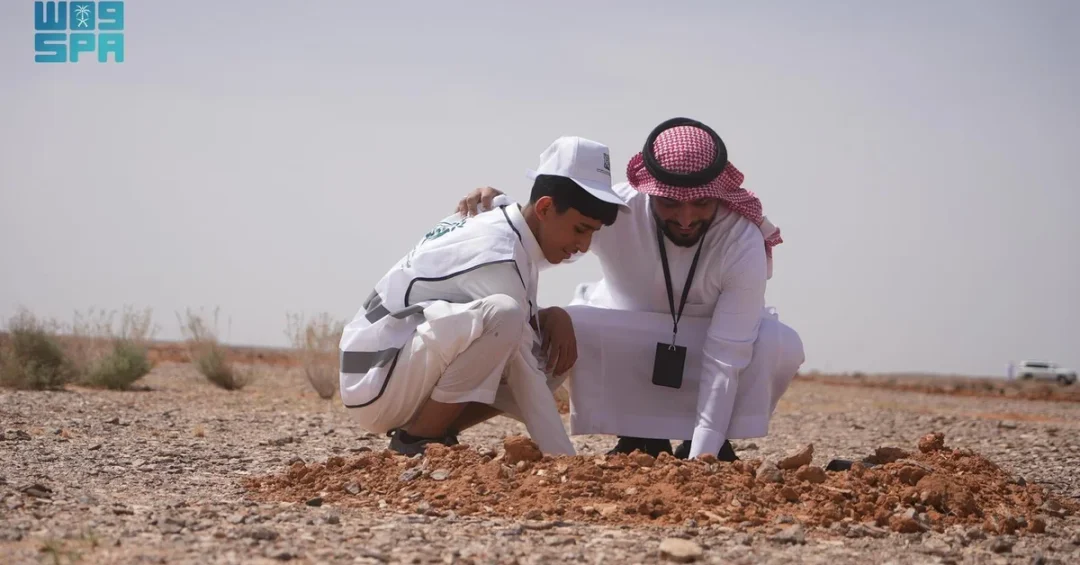
More than 550 student volunteers planted over 3,000 native seedlings across the King Salman bin Abdulaziz Royal Reserve on Tuesday, April 22, 2025, in a coordinated environmental initiative led by the reserve’s Development Authority as part of the Kingdom’s annual Environment Week. The event, announced by the Saudi Press Agency (SPA), took place in Turaif, a city in the Northern Borders Province, and forms part of a broader national push to expand green cover, restore degraded land, and embed environmental responsibility in the next generation. The reserve authority confirmed that the seedlings were planted within the reserve’s boundaries, a protected area that spans more than 130,000 square kilometers and is home to diverse wildlife, including the Arabian oryx and the sand gazelle.
The initiative is not an isolated tree-planting exercise; it is a carefully designed educational program that brings students directly into contact with conservation work. By involving young people in hands-on restoration, the authority aims to raise awareness from an early age and foster a sense of shared ownership over the Kingdom’s natural heritage. The timing, during Environment Week, underscores Saudi Arabia’s commitment to transforming environmental stewardship from a government-led mandate into a societal value. For international observers, the event offers a window into how Saudi Arabia is mobilizing its youth to support the goals of Vision 2030, particularly the sustainability and quality-of-life objectives that sit at the heart of the national transformation agenda.
Context and Background
Why does a single volunteer trip matter in a country that has launched some of the world’s most ambitious environmental programs? The King Salman bin Abdulaziz Royal Reserve, established by royal decree in 2018, is one of several royal reserves created to protect Saudi Arabia’s unique ecosystems, from rugged mountains to sweeping deserts. The reserve is managed by the King Salman bin Abdulaziz Royal Reserve Development Authority, which operates under the guidance of the Ministry of Environment, Water and Agriculture. Its mandate includes biodiversity conservation, habitat restoration, and community engagement, all of which align with the Saudi Green Initiative and the Middle East Green Initiative, both launched by Crown Prince Mohammed bin Salman in 2021.
Since its inception, the authority has planted over three million seedlings, spread more than four tons of seeds, and restored approximately 700,000 hectares of natural land. These figures, released by the authority and reported by SPA, illustrate the scale of the restoration effort underway. The reserve is not merely a fenced-off wilderness; it is a living laboratory where scientists, rangers, and local communities work together to revive native flora and fauna. The student volunteer program is a key component of this strategy, designed to build a culture of environmental responsibility that extends beyond the reserve’s boundaries and into schools, homes, and future careers.
Key Details of the Volunteer Initiative
What exactly did the students accomplish during their day in the reserve? According to the official announcement, more than 550 students from schools and universities across the Northern Borders Province participated in the planting of over 3,000 seedlings. The seedlings were selected from native species adapted to the region’s arid climate, including acacia, ghaf, and sidr trees, which require minimal irrigation and provide vital shade and habitat for wildlife. The students worked in teams, guided by reserve rangers and environmental specialists who explained the ecological role of each species and demonstrated proper planting techniques.
The initiative also included educational workshops on water conservation, soil health, and the importance of biodiversity. Students learned how the reserve’s restoration efforts contribute to carbon sequestration, desertification control, and the revival of traditional grazing lands. The authority emphasized that the program aims to encourage positive environmental behavior among students and to foster both individual and collective responsibility for protecting the environment. By participating in the actual planting, the students gained a tangible connection to the land and a deeper understanding of the challenges and rewards of conservation. The event concluded with a commitment from many students to launch similar greening projects in their own schools and neighborhoods.
International and Regional Impact
How does a local student planting event resonate on the global stage? Saudi Arabia’s environmental initiatives are increasingly recognized as part of a regional and international effort to combat climate change and land degradation. The Saudi Green Initiative aims to plant 10 billion trees across the Kingdom in the coming decades, while the Middle East Green Initiative seeks to plant an additional 40 billion trees across the region. The King Salman Royal Reserve’s volunteer program contributes directly to these targets, and its model of youth engagement is being watched by other countries in the Middle East and North Africa as a replicable approach to environmental education.
Regional neighbors, including the United Arab Emirates, Jordan, and Egypt, have launched similar tree-planting and restoration campaigns, but Saudi Arabia’s efforts stand out for their scale and integration with national development planning. International organizations such as the United Nations Environment Programme (UNEP) and the International Union for Conservation of Nature (IUCN) have praised Saudi Arabia’s commitment to protected areas and restoration. The student volunteer initiative also aligns with the UN Decade on Ecosystem Restoration (2021-2030), a global call to action to prevent, halt, and reverse the degradation of ecosystems. By involving young people, Saudi Arabia is investing in the long-term sustainability of its environmental gains and setting an example for the region.
Economic and Strategic Significance
What economic and strategic benefits flow from restoring the Kingdom’s natural landscapes? The King Salman Royal Reserve is not only an ecological asset but also a potential driver of sustainable tourism and local economic development. The reserve’s unique landscapes, including the iconic Wadi Sirhan and the Al-Tubayq mountains, offer opportunities for eco-tourism, hiking, and wildlife watching. As the reserve’s ecosystems recover, they can support a growing number of visitors, creating jobs for local communities in hospitality, guiding, and conservation. This aligns with Vision 2030’s goal to diversify the economy and increase non-oil revenues, with tourism as a key pillar.
Furthermore, restored land improves soil fertility, reduces dust storms, and enhances water retention, all of which have direct economic value for agriculture and public health. The reserve’s restoration of 700,000 hectares has already contributed to reducing desertification in the Northern Borders Province, a region that has historically faced challenges from overgrazing and drought. By engaging students in this work, the authority is also building a skilled workforce for the emerging green economy, including careers in environmental science, renewable energy, and sustainable land management. The strategic significance extends to food security, as healthier rangelands support livestock and local food production, and to climate resilience, as vegetation cover helps mitigate the effects of extreme heat and flash floods.
Vision 2030 Alignment
How does this volunteer trip connect to Saudi Arabia’s long-term vision? Vision 2030, the Kingdom’s comprehensive reform plan, includes a strong focus on environmental sustainability and quality of life. One of its key targets is to increase the share of renewable energy, but equally important is the protection and restoration of natural habitats. The Saudi Green Initiative, a direct outgrowth of Vision 2030, aims to plant 10 billion trees and protect 30% of the Kingdom’s land and sea by 2030. The King Salman Royal Reserve’s student volunteer program contributes to these goals by expanding green cover, enhancing biodiversity, and fostering a culture of environmental stewardship among the youth who will inherit the vision.
Moreover, the initiative reflects the Vision 2030 principle of empowering citizens and promoting social responsibility. By giving students a hands-on role in conservation, the reserve authority is helping to build a generation that values sustainability and understands the interconnectedness of environment, economy, and society. The event also supports the Quality of Life Program, which seeks to improve the living standards of Saudi citizens and residents through better urban environments, more recreational opportunities, and healthier lifestyles. As Saudi Arabia continues to host international events and attract global attention, its environmental leadership becomes an integral part of its soft power and diplomatic outreach. The planting of 3,000 seedlings by 550 students may seem a small step, but it is one of thousands of steps toward a greener, more sustainable future for the Kingdom and the world.
20 Questions
Q1. What was the main purpose of the student volunteer trip in the King Salman Royal Reserve?
A1. The trip aimed to plant over 3,000 seedlings and raise environmental awareness among students, fostering a sense of responsibility for protecting the environment as part of Environment Week activities.
Q2. How many student volunteers participated in the planting event?
A2. More than 550 student volunteers from schools and universities across the Northern Borders Province took part in the initiative, working alongside reserve rangers and environmental specialists.
Q3. Where is the King Salman bin Abdulaziz Royal Reserve located?
A3. The reserve is located in the Northern Borders Province of Saudi Arabia, near the city of Turaif, and spans more than 130,000 square kilometers of diverse desert and mountain landscapes.
Q4. When did the volunteer planting event take place?
A4. The event took place on Tuesday, April 22, 2025, during Saudi Arabia’s annual Environment Week, as reported by the Saudi Press Agency.
Q5. Which organization led the initiative?
A5. The King Salman bin Abdulaziz Royal Reserve Development Authority organized the trip, under the guidance of the Ministry of Environment, Water and Agriculture.
Q6. How many seedlings has the reserve authority planted in total?
A6. The authority has planted over three million seedlings, spread more than four tons of seeds, and restored approximately 700,000 hectares of natural land since its establishment.
Q7. What types of trees were planted by the students?
A7. Native species adapted to the arid climate were planted, including acacia, ghaf, and sidr trees, which require minimal irrigation and provide habitat for wildlife.
Q8. How does this initiative support Saudi Arabia’s Vision 2030?
A8. It aligns with Vision 2030’s environmental sustainability goals, the Saudi Green Initiative, and the Quality of Life Program, while empowering youth to contribute to national transformation.
Q9. What educational activities were included in the event?
A9. Students participated in workshops on water conservation, soil health, and biodiversity, and learned about carbon sequestration and desertification control from environmental specialists.
Q10. What is the Saudi Green Initiative?
A10. Launched in 2021 by Crown Prince Mohammed bin Salman, it aims to plant 10 billion trees, protect 30% of Saudi land and sea, and reduce carbon emissions.
Q11. How does the reserve contribute to biodiversity conservation?
A11. The reserve protects species such as the Arabian oryx and sand gazelle, restores native flora, and serves as a living laboratory for scientific research and habitat restoration.
Q12. What economic benefits can result from restoring the reserve’s ecosystems?
A12. Restoration supports sustainable tourism, creates jobs in hospitality and conservation, improves soil fertility, reduces dust storms, and enhances water retention for agriculture.
Q13. How does the event connect to the UN Decade on Ecosystem Restoration?
A13. The initiative aligns with the global call to prevent, halt, and reverse ecosystem degradation, contributing to international restoration targets and Saudi Arabia’s regional leadership.
Q14. What role does the Ministry of Environment, Water and Agriculture play?
A14. The ministry oversees environmental policy and supports the reserve authority’s work, ensuring alignment with national strategies for conservation and sustainable development.
Q15. How many hectares of land has the reserve restored?
A15. The authority has restored 700,000 hectares of natural land, a significant contribution to Saudi Arabia’s efforts to combat desertification and enhance carbon sinks.
Q16. What message does the initiative send to young Saudis?
A16. It encourages positive environmental behavior from an early age, showing that individual and collective actions can protect the environment and support the Kingdom’s sustainability goals.
Q17. How does the reserve support local communities?
A17. By creating eco-tourism opportunities, providing jobs in conservation and hospitality, and improving rangeland health for livestock, the reserve contributes to local economic development.
Q18. What are the key targets of the Saudi Green Initiative?
A18. The initiative aims to plant 10 billion trees, reduce carbon emissions by 278 million tons annually, and protect 30% of the Kingdom’s land and sea by 2030.
Q19. How can other countries learn from this volunteer model?
A19. The model combines hands-on restoration with education, engaging youth in conservation and fostering long-term environmental stewardship, which can be replicated globally.
Q20. What is the expected long-term impact of planting 3,000 seedlings?
A20. The seedlings will grow into trees that provide shade, habitat, and carbon sequestration, contributing to the reserve’s restoration targets and the Kingdom’s broader environmental goals.
Reader Feedback
We value your thoughts. Please share your feedback on this article.
Your feedback helps us improve our coverage.
Related articles
 King Khalid Royal Reserve Releases 30 Endangered Animals
 GACA Hosts Mobile Cybersecurity Awareness Exhibition
 Saudi Arabia Weather Forecast for Wednesday: Rain, Hail, and Dust Winds
 KSrelief Marks World Art Day at Zaatari Refugee Camp
 Tunisian President Receives KSrelief Supervisor General
 Massive Wildfire Erupts in New Jersey, Evacuations Underway