


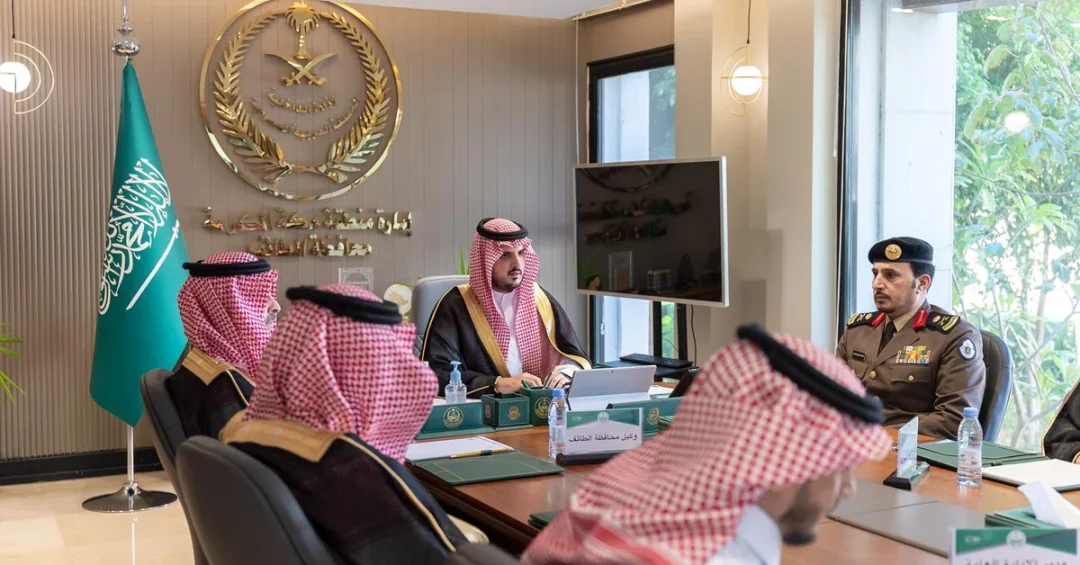
The Governor of Taif, Prince Fawaz bin Sultan bin Abdulaziz, chaired a virtual meeting on November 17, 2026, with Undersecretary of the Ministry of Hajj and Umrah for Umrah Affairs Abdulmohsen Al-Salem and several senior government officials to review and strengthen services for Umrah performers visiting the governorate, the Saudi Press Agency reported. The session focused on practical measures to enrich the pilgrim experience in Taif, including the compilation of a curated list of tourist attractions and historical landmarks and the integration of selected sites into proposed tourism itineraries for worshippers after they complete their rituals.
The meeting reflects a continued, coordinated push by Saudi authorities to elevate every stage of the Umrah journey beyond the holy cities and into the Kingdom’s wider cultural landscape. By bringing together the governorate’s leadership and the Ministry of Hajj and Umrah, the discussion signals that service improvement is being treated as an integrated, cross-agency priority rather than an isolated administrative task. How does a governorate-level meeting translate into a better experience for a pilgrim thousands of kilometers from home? The answer, officials suggest, lies in the details: reliable information, well-planned routes, and thoughtful guidance that help visitors discover Taif’s heritage with confidence.
Context and Background
Taif occupies a distinctive place in the Saudi cultural and tourism map. Situated in the highlands of the Makkah region, the governorate is known for its cooler climate, agricultural heritage, historic landmarks, and longstanding reputation as a favored destination for visitors seeking a contrast to the desert heat. For Umrah performers who travel to the Kingdom to perform their rituals, Taif offers a natural extension of the spiritual journey, pairing worship with discovery of the country’s cultural depth. This is precisely the connection the November meeting sought to strengthen.
The gathering came as part of a broader national effort to expand the capacity and quality of services surrounding Umrah, one of the two major pilgrimages that draw millions of worshippers to Saudi Arabia each year. Under the leadership of the Ministry of Hajj and Umrah, the Kingdom has progressively modernized the administrative, logistical, and informational frameworks that support pilgrims. At the governorate level, Prince Fawaz bin Sultan bin Abdulaziz has taken an active role in aligning local resources with these national objectives. Why does local leadership matter so much in a national pilgrimage strategy? Because the last mile of any service is delivered on the ground, in the cities and governorates where pilgrims actually spend their time.
Undersecretary Abdulmohsen Al-Salem’s participation underscores the ministry’s direct engagement in regional planning. The meeting also drew several senior government officials, indicating that the discussion spanned tourism, heritage, guidance services, and visitor experience rather than a single administrative portfolio. Such cross-functional coordination is central to how Saudi Arabia approaches large-scale service improvement, ensuring that plans are not formulated in isolation but are instead shaped by the agencies responsible for implementation.
Key Details
During the session, participants reviewed plans to compile a list of tourist attractions and historical landmarks, with the aim of providing reliable, well-organized information to help Umrah performers explore Taif’s notable destinations and discover its cultural and tourism offerings. The emphasis on reliability is significant: pilgrims visiting an unfamiliar region often rely on scattered or inconsistent information, and a curated official list can serve as a trusted reference point for both visitors and service providers.
The meeting also examined the inclusion of selected sites in proposed tourism itineraries designed for Umrah performers after they complete their rituals. This approach recognizes that the pilgrim journey does not end at the conclusion of worship; many visitors wish to explore the Kingdom’s heritage, and structured itineraries can make that exploration more accessible, time-efficient, and enriching. Participants further discussed enhancing guidance and awareness services, which would help pilgrims navigate Taif’s attractions with clarity and confidence. What difference does good guidance make to a first-time visitor? It can transform an uncertain detour into a memorable and meaningful part of the trip.
The meeting concluded with several recommendations and proposed solutions aimed at enriching pilgrims’ experiences during their visits to the governorate. These recommendations reflect a practical, solution-oriented approach, moving from identification of opportunities to concrete proposals for implementation. While the specific proposals were not detailed in the initial report, the structure of the discussion indicates a focus on information quality, itinerary design, and visitor guidance.
International and Regional Impact
For international audiences, the meeting offers a window into how Saudi Arabia manages the pilgrimage ecosystem as a whole. Umrah performers arrive from across Asia, Africa, Europe, and the Americas, and their impressions of the Kingdom are shaped not only by the holy sites but also by the quality of services, information, and hospitality they encounter elsewhere. By investing in governorate-level enhancements such as those discussed in Taif, Saudi authorities are working to ensure that the broader visitor experience matches the spiritual significance of the journey.
Regionally, the initiative reinforces the Kingdom’s position as a leader in pilgrim service innovation. Neighboring and partner countries whose citizens travel for Umrah have a direct interest in the smooth functioning of these services, and improvements in information and guidance can benefit travelers from many nations. The coordination between the Taif governorate and the Ministry of Hajj and Umrah also demonstrates a model of decentralized implementation guided by national strategy, a pattern that can be adapted across other regions of the Kingdom.
Economic and Strategic Significance
The enhancement of Umrah services carries clear economic dimensions. Pilgrims who extend their stays to explore Taif’s attractions contribute to local hospitality, retail, transport, and food sectors, supporting businesses and employment in the governorate. Well-designed itineraries and reliable information can encourage longer visits and greater spending, while also distributing visitor activity more evenly across the region. From a strategic standpoint, a positive and well-organized pilgrim experience strengthens the Kingdom’s reputation as a welcoming and capable host, which in turn supports broader tourism objectives.
The meeting’s focus on cultural and historical landmarks also aligns with efforts to showcase Saudi heritage to a global audience. Taif’s sites are part of the Kingdom’s national story, and presenting them thoughtfully to Umrah performers turns a service improvement into a cultural exchange. How does a simple list of landmarks become a strategic asset? When it is paired with reliable information and accessible itineraries, it becomes a gateway through which millions of visitors can connect with Saudi Arabia’s history and identity.
Vision 2030 Alignment
The initiative aligns closely with Saudi Vision 2030, which seeks to diversify the economy, expand the tourism sector, and elevate the quality of life for citizens and visitors alike. Enhancing Umrah services and integrating cultural tourism into the pilgrim journey directly supports the Vision’s goal of welcoming greater numbers of visitors while delivering world-class experiences. The collaboration between the Taif governorate and the Ministry of Hajj and Umrah exemplifies the integrated, forward-looking governance that Vision 2030 envisions.
As Saudi Arabia continues to modernize its pilgrimage infrastructure and expand its cultural offerings, meetings such as this one in Taif represent the practical, ground-level work that turns national ambition into tangible results. For Umrah performers, the outcome is a richer, more informed, and more welcoming visit; for the Kingdom, it is another step toward a diversified, globally connected future. With continued coordination across government agencies and a clear focus on the visitor experience, Taif is well positioned to become an even more integral part of the Umrah journey.
20 Questions
Q1. Who chaired the meeting to enhance Umrah services in Taif?
A1. The meeting was chaired by Prince Fawaz bin Sultan bin Abdulaziz, Governor of Taif, who led discussions with senior officials on improving services for Umrah performers visiting the governorate.
Q2. When did the virtual meeting take place?
A2. The virtual meeting was held on November 17, 2026, according to the Saudi Press Agency, bringing together the governor and senior government officials to review service enhancement plans.
Q3. Which ministry official participated in the meeting?
A3. Undersecretary of the Ministry of Hajj and Umrah for Umrah Affairs Abdulmohsen Al-Salem participated, representing the ministry directly in discussions on improving pilgrim services in Taif.
Q4. What was the main purpose of the meeting?
A4. The meeting aimed to discuss ways to improve services for Umrah performers visiting Taif and to review plans that would enrich their experience in the governorate.
Q5. What kind of list did participants review plans to compile?
A5. Participants reviewed plans to compile a list of tourist attractions and historical landmarks, providing reliable information to help Umrah performers explore Taif’s notable destinations and cultural offerings.
Q6. Why is reliable information important for Umrah performers?
A6. Reliable information helps pilgrims who are unfamiliar with the region navigate Taif’s attractions with confidence, making their exploration more accessible, efficient, and meaningful.
Q7. What did the meeting discuss regarding tourism itineraries?
A7. The meeting discussed including selected sites in proposed tourism itineraries for Umrah performers after they complete their rituals, helping them explore Taif’s heritage in an organized way.
Q8. What other services were discussed alongside tourism plans?
A8. Participants also discussed enhancing guidance and awareness services to help pilgrims navigate Taif’s attractions and understand its cultural and historical significance.
Q9. How did the meeting conclude?
A9. The meeting concluded with several recommendations and proposed solutions aimed at enriching pilgrims’ experiences during their visits to the governorate, reflecting a practical and solution-oriented approach.
Q10. Where is Taif located?
A10. Taif is a governorate in the highlands of the Makkah region, known for its cooler climate, agricultural heritage, historic landmarks, and reputation as a favored destination for visitors.
Q11. Why is Taif attractive to Umrah performers?
A11. Taif offers a natural extension of the spiritual journey, pairing worship with discovery of the Kingdom’s cultural depth, heritage sites, and distinctive highland environment.
Q12. What does the meeting reflect about Saudi service improvement?
A12. It reflects a coordinated, cross-agency approach in which governorate leadership and the Ministry of Hajj and Umrah work together to elevate every stage of the pilgrim journey.
Q13. How does this initiative benefit the local economy?
A13. Pilgrims who extend their stays to explore Taif contribute to local hospitality, retail, transport, and food sectors, supporting businesses and employment in the governorate.
Q14. What role does the Ministry of Hajj and Umrah play?
A14. The ministry oversees the administrative, logistical, and informational frameworks that support pilgrims, and its direct engagement in regional planning ensures national objectives are implemented on the ground.
Q15. How does the initiative connect to Saudi Vision 2030?
A15. It supports Vision 2030 goals of diversifying the economy, expanding tourism, and elevating quality of life by integrating cultural tourism into the pilgrim journey and welcoming more visitors.
Q16. What makes cross-functional coordination valuable in this context?
A16. Coordination across tourism, heritage, and guidance portfolios ensures plans are shaped by the agencies responsible for implementation, avoiding isolated decision-making and improving results.
Q17. How might structured itineraries change the pilgrim experience?
A17. Structured itineraries make exploration of Taif more accessible and time-efficient, allowing pilgrims to discover heritage sites with clarity and confidence after completing their rituals.
Q18. What impression does this create for international visitors?
A18. It demonstrates Saudi Arabia’s commitment to welcoming and capable hospitality, ensuring the broader visitor experience matches the spiritual significance of the Umrah journey.
Q19. Did the meeting produce concrete outcomes?
A19. Yes, it concluded with several recommendations and proposed solutions aimed at enriching pilgrims’ experiences, moving from identification of opportunities to concrete proposals for implementation.
Q20. What does this mean for Taif’s future role in the Umrah journey?
A20. With continued coordination and a focus on visitor experience, Taif is well positioned to become an even more integral and welcoming part of the Umrah journey.
Reader Feedback
We value your thoughts. Please share your feedback on this article.
Your feedback helps us improve our coverage.
Related articles
 KSrelief Delivers Food and Hygiene Aid to Quake-Hit Indonesia
 KSrelief Masam Project Clears 1,289 Mines in Yemen
 KSrelief Delivers 1,750 Food Baskets in Sudan’s River Nile State
 ECO Backs Pakistani, Qatari Mediation to End Regional War
 Saudi, Tunisian Officials Discuss Transport Cooperation
 Arabian Gazelle’s Desert Adaptability Reflected in Arab Heritage