


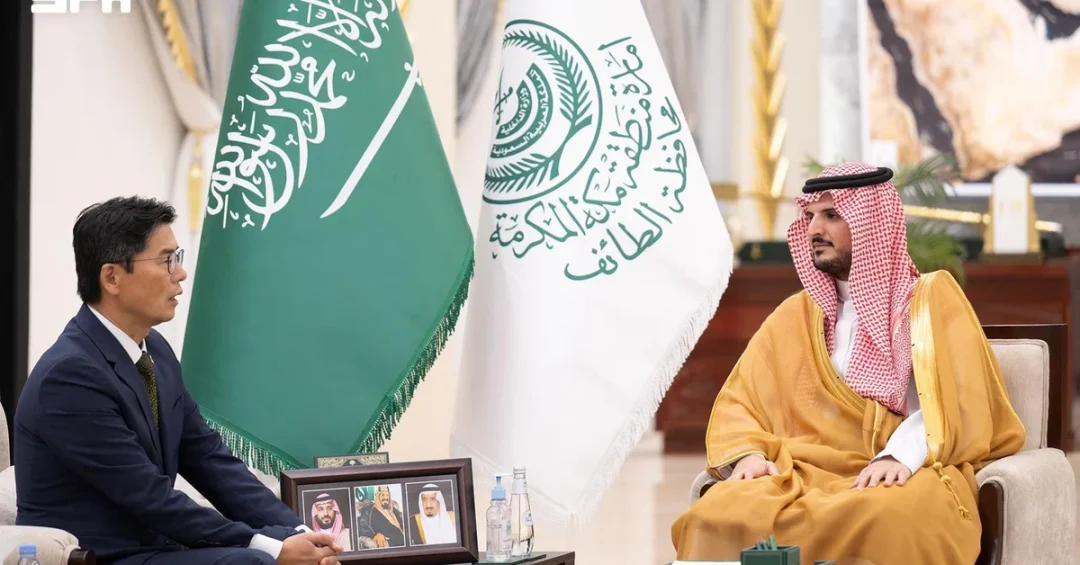
Governor of Taif Prince Fawaz bin Sultan bin Abdulaziz received Consul General of the Republic of Korea Daehwan Kim in Taif on November 4, 2026, according to the Saudi Press Agency. The meeting, held in the governorate’s official offices, served as a platform for both officials to exchange cordial remarks and discuss topics of mutual interest, reinforcing the longstanding diplomatic and cultural ties between the Kingdom of Saudi Arabia and the Republic of Korea.
Have you ever wondered how a simple diplomatic meeting can ripple across economies and cultures? This encounter, while brief in official description, reflects Saudi Arabia’s broader commitment to international engagement under Vision 2030. It underscores the Kingdom’s openness to partnerships that drive economic diversification, cultural exchange, and technological collaboration. As Saudi Arabia continues to position itself as a global hub, such meetings are not mere formalities but strategic touchpoints that pave the way for deeper cooperation. The Taif governorate, known for its historical significance and growing role in tourism and agriculture, provides a fitting backdrop for discussions that could enhance bilateral relations.
Context and Background
Why does Taif, a city often celebrated for its mild climate and rose farms, matter in international diplomacy? Taif has long been a summer retreat for Saudi leadership and a symbol of the Kingdom’s rich heritage. In recent years, it has also emerged as a key destination under Vision 2030, with investments in tourism, healthcare, and infrastructure. The meeting between Prince Fawaz and Consul General Kim highlights the city’s growing international profile. The governorate’s strategic location near Mecca and its agricultural output, particularly the renowned Taif roses, make it a focal point for cultural and economic initiatives.
The Republic of Korea has been a vital partner for Saudi Arabia, with ties spanning energy, construction, and technology. Korean companies have played a significant role in major Saudi projects, from petrochemical plants to smart city developments. The presence of a Korean Consul General in Jeddah, accredited to the western region including Taif, facilitates ongoing dialogue. This meeting follows a series of high-level exchanges, including the Saudi-Korean Vision 2030 Committee, which aims to align the Kingdom’s diversification goals with Korea’s technological expertise. Such engagements are crucial as Saudi Arabia seeks to attract foreign investment and knowledge transfer.
Historically, Saudi-Korean relations date back to the 1970s, when Korean firms contributed to Saudi infrastructure. Today, the partnership has evolved into a comprehensive strategic alliance. The consul general’s visit to Taif is part of routine diplomatic outreach, but it also signals Korea’s interest in regional development beyond major cities. As Saudi Arabia opens up under Vision 2030, interactions like these help build people-to-people ties and mutual understanding. The exchange of cordial remarks may seem routine, yet it reinforces a relationship that has weathered global shifts and continues to grow.
Key Details
What exactly was discussed behind closed doors? While the official statement from the Saudi Press Agency did not disclose specific agenda items, the phrase “topics of mutual interest” typically encompasses economic cooperation, cultural exchange, and regional stability. For Taif, this could mean opportunities in tourism, agriculture, and education. Prince Fawaz, as governor, is responsible for overseeing local development initiatives that align with national goals. His meeting with Consul General Kim likely touched on how Korean expertise could support Taif’s modernization, from smart farming to renewable energy.
Consul General Daehwan Kim, based in Jeddah, represents Korean interests in the western region. His role involves promoting trade, protecting Korean citizens, and fostering cultural ties. In Taif, he may have discussed potential collaborations in the city’s growing industrial zones or its expanding hospitality sector. Korea’s advanced technology in areas like water management and desalination could be particularly relevant, given Taif’s agricultural needs. Additionally, cultural exchanges, such as Korean language programs or art exhibitions, could enrich Taif’s cultural landscape.
The meeting also underscores the importance of personal diplomacy. Prince Fawaz, a member of the Saudi royal family, brings local knowledge and influence, while Consul General Kim offers access to Korean networks. Their cordial exchange is a microcosm of the broader Saudi-Korean partnership, which includes multi-billion-dollar deals in energy, defense, and digital transformation. As Saudi Arabia hosts events like the 2030 World Expo in Riyadh, such diplomatic interactions help build momentum and goodwill.
International and Regional Impact
How does a local meeting in Taif resonate on the global stage? It reflects Saudi Arabia’s proactive diplomacy, which seeks to strengthen ties with key Asian economies. Korea is a member of the G20 and a technological powerhouse, making it a valuable partner for Vision 2030. The meeting also comes amid shifting geopolitical dynamics, where the Kingdom is diversifying alliances beyond traditional Western partners. By engaging with Korea at the subnational level, Saudi Arabia demonstrates its commitment to decentralized development and inclusive growth.
Regionally, the encounter may encourage other foreign consulates to explore opportunities outside major hubs like Riyadh and Jeddah. Taif’s potential as a tourism and agricultural center could attract Korean investment, creating jobs and boosting local GDP. Moreover, cultural exchanges can counter stereotypes and build bridges between the Saudi and Korean peoples. As the Middle East undergoes transformation, Saudi Arabia’s outreach to Asia underscores its role as a stabilizing force and a hub for international cooperation.
Economic and Strategic Significance
What economic benefits could arise from this diplomatic engagement? Taif’s economy is traditionally based on agriculture, particularly roses and honey, but Vision 2030 aims to diversify it into tourism, manufacturing, and services. Korean expertise in smart agriculture, food processing, and logistics could help modernize these sectors. For instance, Korean companies could introduce greenhouse technologies to extend growing seasons or develop cold-chain systems to export Taif’s premium products. Such collaborations would align with the Kingdom’s goals of increasing non-oil exports and creating sustainable jobs.
Strategically, Korea is a key player in Saudi Arabia’s defense and technology sectors. The two countries have cooperated on projects like the Saudi-Korean Vision 2030 Committee, which focuses on areas such as smart cities, renewable energy, and healthcare. Taif, with its planned industrial cities and logistics hubs, could become a testbed for Korean innovations. The consul general’s visit may also pave the way for Korean SMEs to enter the Saudi market, benefiting from incentives under the National Industrial Development and Logistics Program. This meeting, though local, is part of a larger economic tapestry.
Vision 2030 Alignment
How does this meeting embody the spirit of Vision 2030? Vision 2030 seeks to transform Saudi Arabia into a global investment powerhouse and a hub connecting three continents. International partnerships are central to this vision, and Korea is a prime partner. The meeting between Prince Fawaz and Consul General Kim reflects the Kingdom’s openness to collaboration at all levels, from national ministries to regional governorates. It also highlights the role of local leaders in driving development, as governors are empowered to attract investment and implement projects.
Furthermore, Vision 2030 emphasizes cultural exchange and tourism. Taif, with its heritage sites and natural beauty, is poised to become a year-round destination. Korean tourists, already familiar with Saudi Arabia through business ties, could be drawn to Taif’s rose festivals and mountain resorts. By fostering such connections, Saudi Arabia not only diversifies its economy but also enriches its cultural fabric. This meeting is a small but meaningful step toward a more interconnected and prosperous future, reinforcing the Kingdom’s position as a global leader.
20 Questions
Q1. Who received the Korean Consul General in Taif?
A1. Governor of Taif Prince Fawaz bin Sultan bin Abdulaziz received Consul General of the Republic of Korea Daehwan Kim in Taif on November 4, 2026, as reported by the Saudi Press Agency.
Q2. What was the purpose of the meeting?
A2. The meeting served as a platform for both officials to exchange cordial remarks and discuss topics of mutual interest, reinforcing diplomatic and cultural ties between Saudi Arabia and Korea.
Q3. Where did the meeting take place?
A3. The meeting took place in Taif, Saudi Arabia, at the governorate’s official offices, according to the Saudi Press Agency.
Q4. When did the meeting occur?
A4. The meeting occurred on November 4, 2026, as stated in the official announcement by the Saudi Press Agency.
Q5. Who is Prince Fawaz bin Sultan bin Abdulaziz?
A5. Prince Fawaz bin Sultan bin Abdulaziz is the Governor of Taif, responsible for overseeing local development and implementing Vision 2030 initiatives in the region.
Q6. Who is Daehwan Kim?
A6. Daehwan Kim is the Consul General of the Republic of Korea, based in Jeddah, representing Korean interests in the western region of Saudi Arabia.
Q7. What topics were discussed?
A7. Topics of mutual interest were discussed, which typically include economic cooperation, cultural exchange, and regional stability, though specific details were not disclosed.
Q8. Why is Taif significant in Saudi-Korean relations?
A8. Taif is a key city under Vision 2030, with growing sectors in tourism and agriculture, offering opportunities for Korean collaboration in technology and investment.
Q9. How does this meeting align with Vision 2030?
A9. It reflects Vision 2030’s goal of international partnerships and local development, showcasing Saudi Arabia’s openness to global cooperation and economic diversification.
Q10. What are the potential economic benefits for Taif?
A10. Potential benefits include Korean investment in smart agriculture, tourism, and infrastructure, which could create jobs and boost local GDP.
Q11. How long have Saudi-Korean relations existed?
A11. Saudi-Korean relations date back to the 1970s, with Korean firms contributing to Saudi infrastructure, evolving into a comprehensive strategic partnership today.
Q12. What is the role of a consul general?
A12. A consul general represents their country’s interests in a foreign region, promoting trade, protecting citizens, and fostering cultural ties.
Q13. What is the Saudi-Korean Vision 2030 Committee?
A13. It is a bilateral initiative that aligns Saudi Arabia’s diversification goals with Korea’s technological expertise in areas like smart cities and renewable energy.
Q14. How might this meeting affect tourism in Taif?
A14. It could encourage Korean tourists to visit Taif’s rose festivals and mountain resorts, boosting the local tourism sector and cultural exchange.
Q15. What cultural exchanges could result?
A15. Possible exchanges include Korean language programs, art exhibitions, and culinary events, enriching Taif’s cultural landscape and fostering mutual understanding.
Q16. What is Taif known for?
A16. Taif is known for its mild climate, rose farms, honey production, and historical significance as a summer retreat for Saudi leadership.
Q17. How does this meeting reflect Saudi Arabia’s diplomacy?
A17. It demonstrates Saudi Arabia’s proactive diplomacy, strengthening ties with Asian economies and promoting decentralized development beyond major cities.
Q18. What Korean technologies could benefit Taif?
A18. Korean technologies in smart farming, water management, and renewable energy could support Taif’s agricultural and industrial modernization.
Q19. What is the significance of exchanging cordial remarks?
A19. Exchanging cordial remarks builds goodwill and personal rapport, which are essential for productive diplomatic and economic cooperation.
Q20. What future collaborations might arise?
A20. Future collaborations could include joint ventures in tourism, agriculture, and technology, further integrating Taif into the Saudi-Korean strategic partnership.
Reader Feedback
We value your thoughts. Please share your feedback on this article.
Your feedback helps us improve our coverage.
Related articles
 Saudi Ambassador Meets Mauritanian Islamic Affairs Minister
 Saudi Reserve Sees 55% Growth in Bird Species
 Public Security Director Launches New Absher Services
 Justice Minister Highlights Supreme Court’s Role in Ensuring Stability of Judicial Principles
 Nigerian President Tinubu Departs Jeddah After Official Visit
 Royal Commission Showcases Makkah Projects at Hajj Expo 2026