


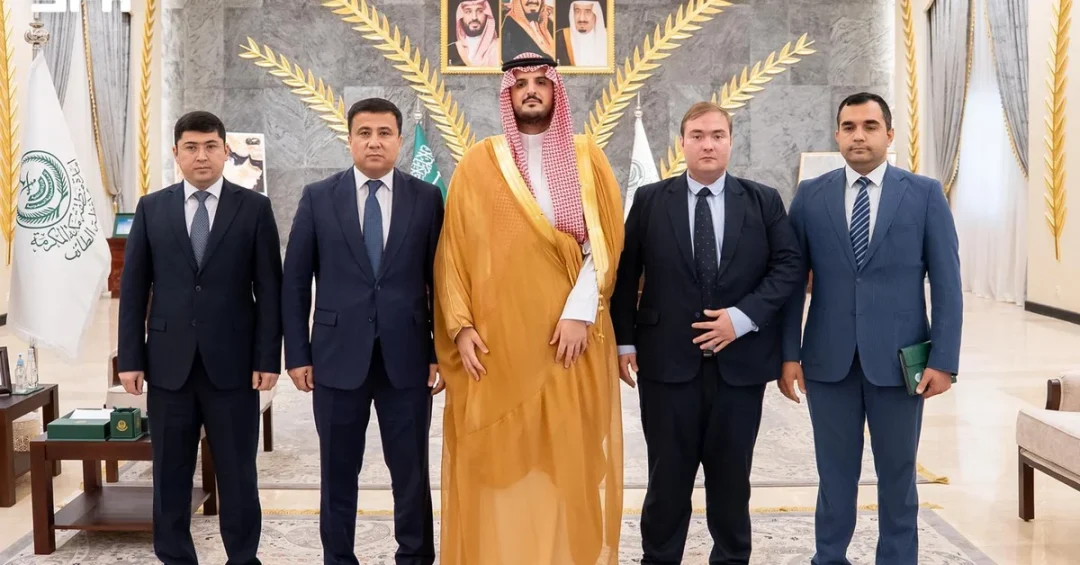
The Governor of Taif, Prince Fawaz bin Sultan bin Abdulaziz, received the Consul General of the Republic of Uzbekistan, Sirojiddin Shamsutdinov, in an official meeting that underscores the Kingdom of Saudi Arabia’s growing diplomatic engagement with Central Asia. The meeting, reported by the Saudi Press Agency (SPA), served as a platform for the two officials to exchange cordial talks and discuss topics of mutual interest, reflecting the broader strengthening of Saudi-Uzbek relations across diplomatic, economic, and cultural domains.
The encounter took place at a time when Saudi Arabia is actively expanding its international partnerships under the framework of Vision 2030, the national transformation plan championed by Crown Prince Mohammed bin Salman. Uzbekistan, a key nation in Central Asia with a rich cultural heritage and a growing economy, has emerged as an important partner for the Kingdom in areas ranging from trade and investment to tourism and cultural exchange. The meeting between Prince Fawaz and Consul General Shamsutdinov therefore carries significance beyond a routine diplomatic courtesy, signaling continued momentum in bilateral ties that benefit both nations. The SPA report, released through official Saudi channels, confirms the meeting’s occurrence and the positive tone of the discussions, while details of specific agreements or initiatives were not disclosed.
Context and Background
Why does a meeting between a regional governor and a foreign consul general matter in the broader landscape of Saudi diplomacy? To understand its significance, one must consider the evolving nature of Saudi Arabia’s international relations, particularly with nations in Central Asia. Uzbekistan, under the leadership of President Shavkat Mirziyoyev, has pursued an ambitious reform agenda focused on economic liberalization, regional cooperation, and global engagement. This aligns naturally with Saudi Arabia’s own Vision 2030 objectives, which prioritize economic diversification, international investment, and the strengthening of the Kingdom’s role as a global hub for trade and tourism.
Saudi-Uzbek relations have deepened considerably in recent years, with high-level visits, bilateral agreements, and cooperation in sectors such as energy, agriculture, education, and infrastructure. The Kingdom has also shown interest in Uzbekistan’s cultural and historical heritage, recognizing the shared Islamic traditions that bind the two nations. The Consul General’s meeting with the Governor of Taif is part of this broader diplomatic tapestry, where regional officials play a vital role in facilitating local-level cooperation and people-to-people connections. Taif, known for its mild climate, agricultural output, and status as a summer destination for Saudi leadership, is an important administrative and cultural center in the Makkah Province, making the Governor a key figure in regional governance and international liaison.
Furthermore, the meeting reflects Saudi Arabia’s decentralized approach to diplomacy, where provincial governors engage with foreign representatives to promote investment, tourism, and cultural exchange at the local level. This strategy enhances the Kingdom’s outreach and ensures that the benefits of international partnerships are felt across all regions, not just in the capital. The SPA report, while brief, underscores the official and amicable nature of the encounter, in line with Saudi Arabia’s tradition of hospitality and its commitment to maintaining positive relations with all nations.
Key Details of the Meeting
What specific outcomes can be expected from such diplomatic engagements? While the SPA report did not detail specific agreements, the meeting between Prince Fawaz bin Sultan bin Abdulaziz and Consul General Sirojiddin Shamsutdinov likely covered a range of topics pertinent to Saudi-Uzbek cooperation. These may include discussions on enhancing trade and investment flows, exploring opportunities for Uzbek businesses in Saudi Arabia’s growing market, and facilitating cultural and educational exchanges. The exchange of cordial talks also provides an opportunity to address consular matters affecting Uzbek nationals in the Kingdom, ensuring their welfare and strengthening bilateral ties at the community level.
The presence of a Consul General in Saudi Arabia indicates Uzbekistan’s recognition of the Kingdom’s strategic importance and its desire to maintain a robust diplomatic presence. Consul General Shamsutdinov’s role involves not only representing Uzbek interests but also fostering goodwill and understanding between the two peoples. Meetings with regional governors like Prince Fawaz are essential for building these bridges, as they allow for direct communication and collaboration on local initiatives that can have national and even regional impact.
In the context of Saudi Arabia’s Vision 2030, such interactions are instrumental in promoting the Kingdom as an attractive destination for foreign investment and tourism. Uzbekistan, with its growing economy and young population, represents a potential source of tourists and investors. By engaging with Uzbek officials, Saudi leaders at both national and regional levels contribute to the diversification of the economy and the enhancement of Saudi Arabia’s global standing. The meeting also aligns with the Kingdom’s efforts to strengthen ties with Central Asia, a region of increasing geopolitical significance, through diplomacy, trade, and cultural diplomacy.
International and Regional Impact
How does this meeting fit into the larger picture of Saudi Arabia’s foreign policy? The Kingdom has consistently pursued a policy of constructive engagement with countries across Asia, Europe, and Africa, aiming to build mutually beneficial partnerships that support stability and prosperity. Central Asia, including Uzbekistan, is a region where Saudi Arabia sees opportunities for cooperation in energy, agriculture, and infrastructure, as well as a shared interest in combating extremism and promoting moderate Islam. The meeting between Prince Fawaz and Consul General Shamsutdinov is a microcosm of this broader strategy, demonstrating Saudi Arabia’s commitment to maintaining open channels of communication with all partners.
On a regional level, Saudi Arabia’s engagement with Uzbekistan can also contribute to stability and development in Central Asia. Uzbekistan’s strategic location, bordering Afghanistan and other Central Asian states, makes it a key player in regional security and economic connectivity. By strengthening ties with Uzbekistan, Saudi Arabia supports the country’s reform efforts and its integration into global markets, which in turn can foster a more stable and prosperous region. This aligns with the Kingdom’s vision of a peaceful and interconnected world, where economic cooperation and cultural exchange pave the way for mutual understanding and progress.
Moreover, the meeting highlights the role of Saudi regional governors as ambassadors of goodwill. Prince Fawaz bin Sultan bin Abdulaziz, as Governor of Taif, represents the Kingdom’s commitment to engaging with international partners at all levels. Such interactions also showcase Saudi Arabia’s rich cultural heritage and modern development, as Taif is known for its historical sites, agricultural products, and scenic beauty, offering a glimpse of the Kingdom’s diversity to foreign dignitaries.
Economic and Strategic Significance
What economic benefits could arise from enhanced Saudi-Uzbek relations? Uzbekistan’s economy has been growing steadily, with reforms aimed at attracting foreign investment and improving the business climate. Saudi Arabia, through its Public Investment Fund (PIF) and private sector, has been exploring opportunities in Central Asia, including in sectors such as renewable energy, petrochemicals, and halal food production. A stronger relationship with Uzbekistan could open doors for Saudi companies to invest in these areas, while Uzbek businesses could benefit from access to the Saudi market and its strategic position as a gateway to the Middle East and beyond.
Additionally, tourism is a promising area of cooperation. Saudi Arabia is investing heavily in tourism infrastructure under Vision 2030, aiming to attract 100 million visitors annually by 2030. Uzbekistan, with its historic cities like Samarkand and Bukhara, is a source of cultural tourists who may also be interested in visiting Saudi Arabia’s religious and heritage sites. Conversely, Saudi tourists could be attracted to Uzbekistan’s Islamic heritage and natural landscapes. The meeting between the Governor and the Consul General could lay the groundwork for tourism promotion initiatives and cultural exchanges that boost both economies.
Strategically, Saudi Arabia’s engagement with Uzbekistan also serves to strengthen the Kingdom’s ties with the broader Central Asian region, which is rich in natural resources and strategically located along the Belt and Road Initiative routes. By building strong bilateral relations, Saudi Arabia enhances its geopolitical influence and contributes to the region’s stability and development, in line with its role as a responsible global actor.
Vision 2030 Alignment
How does this diplomatic meeting reflect the goals of Saudi Vision 2030? Vision 2030 is not only about economic diversification but also about transforming Saudi Arabia into a global hub for diplomacy, culture, and tourism. The meeting between Prince Fawaz bin Sultan bin Abdulaziz and Consul General Sirojiddin Shamsutdinov exemplifies the Kingdom’s proactive approach to international engagement, which is essential for achieving the vision’s objectives. By fostering partnerships with countries like Uzbekistan, Saudi Arabia expands its network of allies and partners, creating opportunities for trade, investment, and cultural exchange that drive economic growth and social development.
Furthermore, Vision 2030 emphasizes the importance of Saudi Arabia’s regions in national development. Taif, as part of the Makkah Province, is poised to benefit from increased international attention and cooperation. The Governor’s engagement with foreign diplomats helps to position Taif as a destination for investment and tourism, contributing to the region’s economic diversification and job creation. This aligns with the vision’s goal of balanced regional development and the enhancement of Saudi Arabia’s cultural and natural assets.
In conclusion, the meeting between the Governor of Taif and the Consul General of Uzbekistan is a testament to Saudi Arabia’s commitment to building bridges with nations around the world. It reflects the Kingdom’s open, forward-looking foreign policy and its dedication to mutual prosperity and understanding. As Saudi Arabia continues its journey toward Vision 2030, such diplomatic interactions will play a crucial role in shaping a brighter future for the Kingdom and its partners. Isn’t it inspiring to see how local diplomacy can contribute to global harmony and progress?
20 Questions
Q1. Who received the Consul General of Uzbekistan in Taif?
A1. The Governor of Taif, Prince Fawaz bin Sultan bin Abdulaziz, received the Consul General of the Republic of Uzbekistan, Sirojiddin Shamsutdinov, in an official meeting reported by the Saudi Press Agency.
Q2. When did the meeting between the Taif Governor and the Uzbek Consul General take place?
A2. According to the Saudi Press Agency, the meeting took place on October 21, 2026, in Taif, Saudi Arabia, as part of ongoing diplomatic engagements between the Kingdom and Uzbekistan.
Q3. What was discussed during the meeting?
A3. The officials exchanged cordial talks and discussed topics of mutual interest, focusing on strengthening bilateral relations and exploring areas of cooperation between Saudi Arabia and Uzbekistan.
Q4. Why is this meeting significant for Saudi-Uzbek relations?
A4. It reflects the growing diplomatic engagement between Saudi Arabia and Uzbekistan, aligning with the Kingdom’s Vision 2030 goals of expanding international partnerships and promoting economic and cultural exchange.
Q5. What is the role of a Consul General in Saudi Arabia?
A5. A Consul General represents the interests of their country, facilitates consular services for citizens, and promotes diplomatic, economic, and cultural ties between their nation and the host country.
Q6. How does Taif contribute to Saudi Arabia’s international outreach?
A6. Taif, as a key city in the Makkah Province, hosts diplomatic meetings and showcases Saudi Arabia’s cultural heritage and development, enhancing the Kingdom’s global image and attracting investment and tourism.
Q7. What are the main areas of cooperation between Saudi Arabia and Uzbekistan?
A7. Cooperation spans trade, investment, energy, agriculture, education, tourism, and cultural exchange, with both nations seeking to deepen ties under their respective development strategies.
Q8. How does this meeting align with Saudi Vision 2030?
A8. It supports Vision 2030 by fostering international partnerships, promoting economic diversification, and enhancing Saudi Arabia’s role as a global hub for diplomacy, trade, and tourism.
Q9. What benefits can Uzbekistan gain from stronger ties with Saudi Arabia?
A9. Uzbekistan can attract Saudi investment, access the Saudi market, and benefit from cultural and educational exchanges, while also strengthening its diplomatic presence in the Middle East.
Q10. What benefits can Saudi Arabia gain from stronger ties with Uzbekistan?
A10. Saudi Arabia can expand its economic partnerships, tap into Central Asian markets, promote tourism, and enhance its geopolitical influence in a strategically important region.
Q11. Is there a history of high-level visits between Saudi Arabia and Uzbekistan?
A11. Yes, both nations have exchanged high-level visits and signed agreements in various sectors, reflecting a shared commitment to deepening bilateral relations and regional cooperation.
Q12. How does Saudi Arabia’s regional diplomacy work?
A12. Regional governors engage with foreign representatives to promote local cooperation, investment, and cultural exchange, complementing national foreign policy and ensuring benefits reach all regions.
Q13. What is the significance of Taif in Saudi Arabia?
A13. Taif is known for its mild climate, agricultural production, and historical sites, and serves as a summer retreat for Saudi leadership, making it an important administrative and cultural center.
Q14. What topics of mutual interest might have been discussed?
A14. Likely topics include trade and investment opportunities, cultural and educational exchanges, consular matters, and ways to enhance people-to-people ties between Saudi Arabia and Uzbekistan.
Q15. How does this meeting impact the local community in Taif?
A15. It can lead to increased international awareness of Taif, potential investment, and cultural exchanges that enrich the local community and create economic opportunities for residents.
Q16. What is Saudi Arabia’s stance on Central Asia?
A16. Saudi Arabia views Central Asia as a region of strategic importance and seeks constructive engagement to promote stability, economic cooperation, and cultural ties, including with Uzbekistan.
Q17. Are there any agreements signed during this meeting?
A17. The Saudi Press Agency report did not mention any specific agreements signed; the meeting focused on cordial talks and discussions of mutual interest.
Q18. How does this meeting reflect Saudi Arabia’s foreign policy principles?
A18. It demonstrates Saudi Arabia’s commitment to peaceful diplomacy, mutual respect, and international cooperation, in line with its role as a responsible global leader.
Q19. What future steps might follow this meeting?
A19. Future steps could include follow-up discussions, potential visits, and collaborative initiatives in areas like trade, tourism, and culture, further solidifying Saudi-Uzbek relations.
Q20. Why is it important for Saudi Arabia to engage with countries like Uzbekistan?
A20. Engaging with Uzbekistan strengthens Saudi Arabia’s global network, supports Vision 2030 economic goals, and fosters regional stability and prosperity through partnership and shared values.
Reader Feedback
We value your thoughts. Please share your feedback on this article.
Your feedback helps us improve our coverage.