


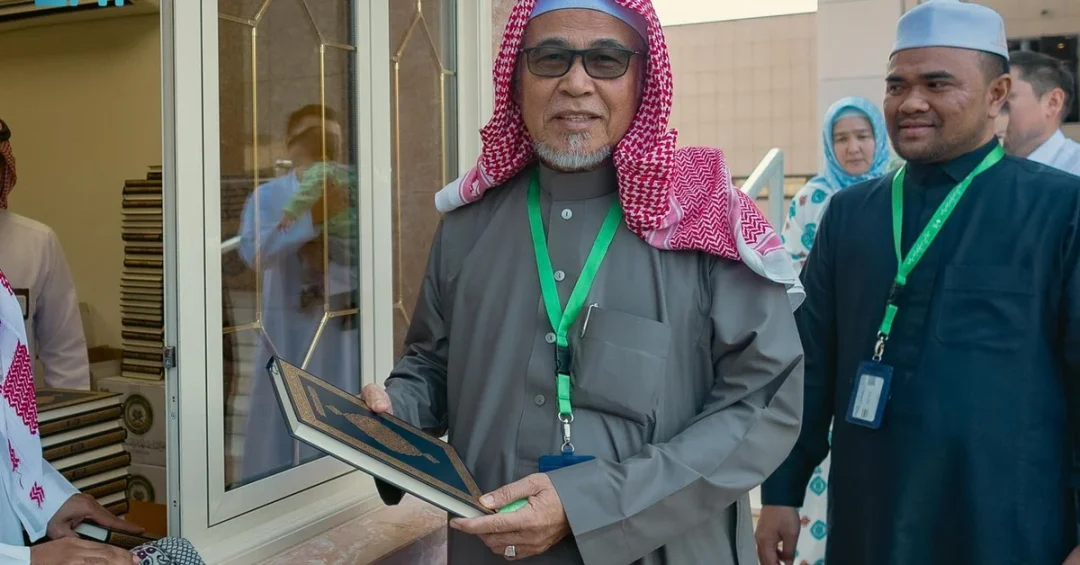
In a heartfelt expression of gratitude, Dr. Abdullah Mustafa, a prominent Muslim scholar from Thailand, has thanked the Kingdom of Saudi Arabia for its pivotal role in shaping his life and career. Speaking as a guest of the Custodian of the Two Holy Mosques Program for Umrah and Visitation, Abdullah shared his inspiring journey, highlighting the transformative impact of Saudi scholarships on individuals and communities worldwide. His story, released via the Saudi Press Agency (SPA), underscores the Kingdom’s enduring commitment to supporting Muslims globally and promoting moderate Islam.
Abdullah’s journey began 50 years ago when he received a scholarship from the Islamic University of Madinah. During his 16 years in Saudi Arabia, he immersed himself in Islamic studies, earning a doctorate in Islamic advocacy and interfaith dialogue. His academic pursuits focused on understanding Buddhism, the predominant religion in Thailand, and developing effective strategies for Islamic outreach. Upon returning to Thailand, he dedicated his life to spreading the message of Islam, translating the meanings of the Holy Quran into Thai and strengthening the Muslim community. His story is a testament to the far-reaching impact of Saudi Arabia’s educational and humanitarian initiatives.
Context and Background
How did a young man from Thailand become a beacon of Islamic scholarship and advocacy? Dr. Abdullah Mustafa’s journey is a remarkable example of how Saudi Arabia’s educational programs have cultivated leaders who contribute to the global Muslim community. Fifty years ago, Abdullah arrived in Madinah as a scholarship student at the Islamic University of Madinah, one of the Kingdom’s premier institutions for Islamic learning. He fondly recalls the simplicity of the Prophet’s Mosque during his early days, a stark contrast to the magnificent religious landmark it has become today—a transformation that mirrors Saudi Arabia’s broader modernization under Vision 2030.
During his 16 years in the Kingdom, Abdullah earned a doctorate in Islamic advocacy and interfaith dialogue, with a particular focus on understanding Buddhism to develop effective outreach strategies. This academic foundation equipped him to return to Thailand and serve his community. His efforts led to numerous conversions and a strengthened Muslim community, demonstrating the ripple effect of Saudi scholarships. The Custodian of the Two Holy Mosques Program for Umrah and Visitation, which hosted Abdullah, is another example of the Kingdom’s generosity, bringing Muslims from around the world to perform Umrah and visit the Prophet’s Mosque.
Saudi Arabia’s support for Muslims extends beyond scholarships to include constructing mosques, distributing copies of the Holy Quran, and providing humanitarian aid. Abdullah highlighted the esteemed position held by graduates of Saudi universities in various fields, including education and Islamic jurisprudence. This comprehensive approach reflects the Kingdom’s dedication to serving Islam and Muslims globally, a mission championed by Custodian of the Two Holy Mosques King Salman bin Abdulaziz Al Saud and His Royal Highness the Crown Prince.
Key Details
What specific contributions has Dr. Abdullah Mustafa made to Islamic scholarship in Thailand? After returning from Saudi Arabia, Abdullah translated the meanings of the Holy Quran into the Thai language, making the sacred text accessible to a wider audience. This monumental task required deep linguistic and theological expertise, which he acquired during his studies in Madinah. His translation has since become a vital resource for Thai-speaking Muslims, enabling them to understand the Quran in their native language. Abdullah’s efforts have not only facilitated individual spiritual growth but also strengthened the Muslim community in Thailand, which remains a minority in the predominantly Buddhist country.
Abdullah’s advocacy work has led to numerous conversions to Islam, a testament to his effective outreach strategies. He credits his success to the comprehensive education he received in Saudi Arabia, particularly his studies on Buddhism, which allowed him to engage in interfaith dialogue respectfully and persuasively. His approach exemplifies the moderate Islam promoted by the Ministry of Islamic Affairs, Dawah, and Guidance, which strives to foster global Islamic unity. Abdullah’s story is one of many that illustrate how Saudi scholarships produce scholars who serve as bridges between cultures and religions.
Looking to the future, Abdullah expressed hope that his daughter, currently studying at Taibah University in Madinah, will continue the legacy of serving Islam. He acknowledged the Kingdom’s progressive approach to education, emphasizing the importance of women scholars in Islamic advocacy. His daughter’s enrollment at Taibah University, another prestigious Saudi institution, reflects the Kingdom’s commitment to empowering women and ensuring the continuity of Islamic scholarship across generations. Abdullah’s family story is a microcosm of Saudi Arabia’s enduring impact on global Muslim communities.
International and Regional Impact
How does Saudi Arabia’s support for international students influence global perceptions of the Kingdom? Dr. Abdullah Mustafa’s gratitude highlights the soft power that Saudi Arabia wields through its educational and humanitarian initiatives. By offering scholarships to students from diverse backgrounds, the Kingdom builds goodwill and fosters a network of alumni who become ambassadors of Saudi Arabia’s message of moderate Islam. These graduates often assume influential roles in their home countries, shaping religious discourse and community development. Abdullah’s story is a prime example of how Saudi investment in human capital yields long-term diplomatic dividends.
Regionally, Saudi Arabia’s support for Muslims in Southeast Asia, including Thailand, reinforces its leadership in the Islamic world. The Kingdom’s efforts to construct mosques, distribute Quran copies, and provide humanitarian aid are tangible expressions of its commitment to the Ummah. Abdullah’s success in Thailand serves as a model for other Muslim minorities, demonstrating how Saudi-educated scholars can effectively navigate diverse cultural contexts. Moreover, his daughter’s studies in Madinah signal the intergenerational nature of this partnership, ensuring that the legacy of Saudi scholarship continues to benefit Thailand and beyond.
Economic and Strategic Significance
What strategic value does Saudi Arabia derive from its educational diplomacy? While not directly economic, the Kingdom’s scholarships and religious outreach contribute to its soft power, which is essential for maintaining influence in a multipolar world. By cultivating leaders like Abdullah, Saudi Arabia strengthens its ties with Thailand and other nations, opening avenues for cooperation in trade, investment, and tourism. The Kingdom’s commitment to moderate Islam also counters extremism, promoting stability in regions where instability could threaten Saudi interests. Thus, educational initiatives are a strategic investment in global security and prosperity.
Furthermore, Abdullah’s story aligns with Saudi Arabia’s Vision 2030 goal of enhancing the Kingdom’s global reputation as a hub for Islamic scholarship and a leader in humanitarian efforts. The Custodian of the Two Holy Mosques Program for Umrah and Visitation, which hosted Abdullah, is part of broader efforts to facilitate pilgrimage and showcase Saudi hospitality. These initiatives not only fulfill religious obligations but also stimulate economic activity in the hospitality and tourism sectors, supporting job creation and revenue diversification. Abdullah’s gratitude therefore reflects the multifaceted benefits of Saudi Arabia’s outreach.
Vision 2030 Alignment
How does Dr. Abdullah Mustafa’s journey embody the spirit of Saudi Vision 2030? Vision 2030 seeks to transform Saudi Arabia into a more open, diverse, and globally engaged nation, and Abdullah’s story exemplifies the success of this vision. By providing world-class education to international students, the Kingdom fosters a generation of scholars who promote moderate Islam and interfaith dialogue. Abdullah’s translation of the Quran and his advocacy work in Thailand are direct outcomes of Saudi investments in education and religious outreach. His daughter’s enrollment at Taibah University further demonstrates the Kingdom’s commitment to empowering women and ensuring inclusive development.
In conclusion, Saudi Arabia’s support for Dr. Abdullah Mustafa and countless others reflects the Kingdom’s unwavering dedication to serving Islam and Muslims worldwide. Under the leadership of Custodian of the Two Holy Mosques King Salman bin Abdulaziz Al Saud and His Royal Highness the Crown Prince, Saudi Arabia continues to champion moderate Islam and global Islamic unity. The Ministry of Islamic Affairs, Dawah, and Guidance plays a vital role in these efforts, promoting tolerance and cooperation. Abdullah’s heartfelt thanks are a reminder of the enduring impact of Saudi generosity and a call to continue building bridges of faith and understanding across the world.
20 Questions
Q1. Who is Dr. Abdullah Mustafa?
A1. Dr. Abdullah Mustafa is a prominent Muslim scholar from Thailand who received a scholarship from the Islamic University of Madinah 50 years ago. He earned a doctorate in Islamic advocacy and interfaith dialogue and has since dedicated his life to spreading Islam in Thailand.
Q2. What program hosted Dr. Abdullah Mustafa in Saudi Arabia?
A2. He was a guest of the Custodian of the Two Holy Mosques Program for Umrah and Visitation, which brings Muslims from around the world to perform Umrah and visit the Prophet’s Mosque in Madinah.
Q3. How long did Dr. Abdullah Mustafa study in Saudi Arabia?
A3. He spent 16 years in Saudi Arabia, during which he immersed himself in Islamic studies and earned a doctorate in Islamic advocacy and interfaith dialogue from the Islamic University of Madinah.
Q4. What was Dr. Abdullah Mustafa’s academic focus?
A4. His academic pursuits focused on understanding Buddhism, the predominant religion in Thailand, and developing effective strategies for Islamic outreach and interfaith dialogue.
Q5. What did Dr. Abdullah Mustafa achieve after returning to Thailand?
A5. He translated the meanings of the Holy Quran into the Thai language, making it accessible to a wider audience, and his advocacy efforts led to numerous conversions and a strengthened Muslim community in Thailand.
Q6. How does Saudi Arabia support Muslims worldwide beyond scholarships?
A6. Saudi Arabia’s support includes constructing mosques, distributing copies of the Holy Quran, and providing humanitarian aid, reflecting the Kingdom’s commitment to serving Islam and Muslims globally.
Q7. What position do graduates of Saudi universities hold according to Dr. Abdullah?
A7. He highlighted the esteemed position held by graduates of Saudi universities in various fields, including education and Islamic jurisprudence, noting their significant contributions to their communities.
Q8. Who does Dr. Abdullah Mustafa thank for their commitment to Islam?
A8. He extended heartfelt thanks to Custodian of the Two Holy Mosques King Salman bin Abdulaziz Al Saud and His Royal Highness the Crown Prince for their unwavering commitment to serving Islam and Muslims worldwide.
Q9. Which Saudi ministry does Dr. Abdullah Mustafa commend?
A9. He expressed gratitude to the Ministry of Islamic Affairs, Dawah, and Guidance for its endeavors to promote moderate Islam and foster global Islamic unity.
Q10. How does Dr. Abdullah’s daughter continue his legacy?
A10. His daughter is currently studying at Taibah University in Madinah, continuing the family’s legacy of serving Islam and benefiting from Saudi Arabia’s progressive approach to education.
Q11. What does Dr. Abdullah’s story illustrate about Saudi scholarships?
A11. It illustrates the transformative impact of Saudi scholarships, which equip students with knowledge and skills to serve their communities and promote moderate Islam upon returning home.
Q12. What role does the Islamic University of Madinah play?
A12. The Islamic University of Madinah is a premier institution that provides comprehensive Islamic education, attracting students from around the world and shaping them into scholars and leaders.
Q13. How has the Prophet’s Mosque changed since Dr. Abdullah’s early days?
A13. Dr. Abdullah recalls the simplicity of the Prophet’s Mosque during his early days, contrasting it with the magnificent religious landmark it has become today, reflecting Saudi Arabia’s modernization.
Q14. What is the significance of Dr. Abdullah’s Quran translation?
A14. His Thai translation of the Quran’s meanings makes the sacred text accessible to Thai-speaking Muslims, facilitating their understanding and strengthening their faith and community.
Q15. How does Saudi Arabia promote moderate Islam?
A15. Through the Ministry of Islamic Affairs, Dawah, and Guidance, Saudi Arabia promotes moderate Islam by supporting educational programs, interfaith dialogue, and global Islamic unity initiatives.
Q16. What impact has Dr. Abdullah had on the Muslim community in Thailand?
A16. His tireless efforts in Islamic advocacy have led to numerous conversions and a strengthened Muslim community, making Islam more accessible and understood in the predominantly Buddhist country.
Q17. How does Dr. Abdullah’s story align with Vision 2030?
A17. It exemplifies Vision 2030’s goals of global engagement and educational excellence, showcasing how Saudi scholarships produce scholars who promote moderate Islam and interfaith dialogue worldwide.
Q18. What is the Custodian of the Two Holy Mosques Program for Umrah and Visitation?
A18. It is a Saudi initiative that hosts Muslims from around the world to perform Umrah and visit the Prophet’s Mosque, demonstrating the Kingdom’s hospitality and commitment to serving pilgrims.
Q19. What does Dr. Abdullah’s gratitude signify for Saudi-Thailand relations?
A19. It signifies the strong people-to-people ties and educational cooperation between Saudi Arabia and Thailand, enhancing mutual understanding and goodwill between the two nations.
Q20. How can other countries benefit from Saudi Arabia’s educational initiatives?
A20. Other countries can benefit by sending students to Saudi universities, where they receive quality education and return to contribute to their societies, fostering development and global Islamic unity.
Reader Feedback
We value your thoughts. Please share your feedback on this article.
Your feedback helps us improve our coverage.
Related articles
 Saudi Non-Profit Center Partners with Google Cloud
 Riyadh to Host 2nd Greening Arabia Forum with UNCCD COP16
 Saudi Media Forum, UNITAR Sign Media Training Agreement
 SBA Highlights Kingdom’s Global Achievements via SOD
 Riyadh Expo 2030 Progress Presented at BIE Assembly
 Saudi Energy Minister, Russian Deputy PM Meet Iraqi PM in Baghdad