


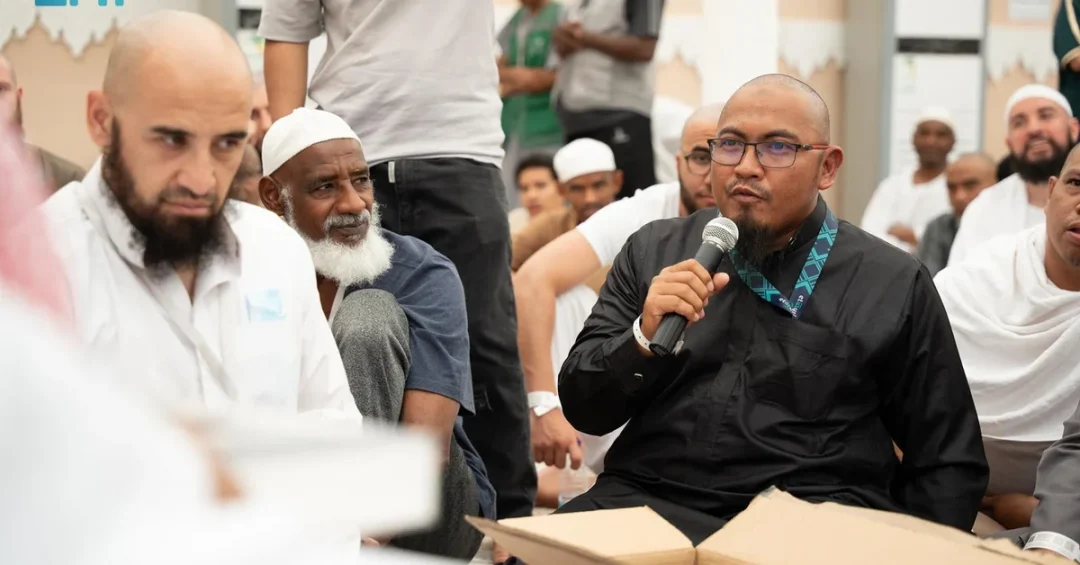
The Ministry of Islamic Affairs, Dawah, and Guidance has deployed translators proficient in 19 languages to assist pilgrims participating in the 1445 AH Hajj season as part of the Custodian of the Two Holy Mosques Guests Program for Hajj, Umrah, and Visit in Makkah. The initiative, announced on June 18, 2024, aims to enhance religious awareness and ensure that pilgrims from diverse linguistic backgrounds can perform their rituals correctly. The translators are stationed at the residences of the guests and provide guidance in languages including English, French, Thai, Serbian, Urdu, Dutch, Filipino, Amharic, Indonesian, German, and Turkish, among others.
Context and Background
The Custodian of the Two Holy Mosques Guests Program for Hajj, Umrah, and Visit is a longstanding initiative that hosts thousands of pilgrims annually, enabling Muslims from around the world to perform Hajj and Umrah with ease. Under the directives of Sheikh Dr. Abdullatif bin Abdulaziz Al Al-Sheikh, Minister of Islamic Affairs, Dawah, and Guidance, the Ministry has expanded its services to include comprehensive language support. This year, the program accommodates guests from various countries, many of whom may not speak Arabic, necessitating translation services to facilitate their spiritual journey.
Key Details
The translation team covers 19 languages, ensuring that pilgrims can understand religious instructions, ask questions, and receive guidance on proper rituals. The translators are positioned at the residences of the guests, providing immediate assistance. The primary objectives include promoting religious awareness, encouraging adherence to correct beliefs and worship practices, and educating pilgrims about religious matters. This service is part of the Ministry’s broader efforts to overcome language barriers and make the Hajj experience more accessible and fulfilling for all guests.
Implications and Impact
This initiative significantly enhances the pilgrimage experience for non-Arabic speakers, allowing them to fully participate in and comprehend the spiritual significance of Hajj. By facilitating communication, the program ensures that pilgrims can perform their rituals with confidence and accuracy, reflecting the Kingdom’s commitment to serving guests of the Most Merciful. Moreover, it underscores Saudi Arabia’s leadership in managing large-scale religious events and its dedication to inclusivity and hospitality.
Vision 2030 Alignment
The translation services align with Vision 2030, which emphasizes enhancing the quality of services provided to pilgrims and visitors, and promoting Saudi Arabia as a global leader in serving Islam and Muslims. By investing in language accessibility, the Kingdom not only fulfills its religious duties but also showcases its modernization and organizational capabilities on the world stage, further solidifying its role as the heart of the Islamic world.
20 Questions
Q1. What is the Custodian of the Two Holy Mosques Guests Program?
A1. It is a Saudi initiative that hosts pilgrims from around the world to perform Hajj, Umrah, and visit the Prophet’s Mosque, ensuring they receive comprehensive services and support during their spiritual journey.
Q2. How many languages are supported by the translators?
A2. The Ministry has arranged translators proficient in 19 languages to assist pilgrims, including English, French, Thai, Serbian, Urdu, Dutch, Filipino, Amharic, Indonesian, German, and Turkish.
Q3. Where are the translators stationed?
A3. The translators are stationed at the residences of the guests participating in the Custodian of the Two Holy Mosques Guests Program in Makkah, providing on-site assistance.
Q4. Who directed the translation initiative?
A4. The initiative aligns with the directives of Sheikh Dr. Abdullatif bin Abdulaziz Al Al-Sheikh, Minister of Islamic Affairs, Dawah, and Guidance.
Q5. What is the primary goal of providing translators?
A5. The primary goal is to promote religious awareness, encourage correct beliefs and worship, guide pilgrims in performing rituals correctly, and educate them about religious matters.
Q6. How does this initiative help pilgrims?
A6. It overcomes language barriers, making Hajj rituals more accessible and ensuring pilgrims can fully understand and correctly perform their religious duties.
Q7. Which government body is responsible for this program?
A7. The Ministry of Islamic Affairs, Dawah, and Guidance is responsible for organizing and implementing the translation services for the guests.
Q8. When was this initiative announced?
A8. The initiative was announced on June 18, 2024, during the Hajj season of 1445 AH, as part of the ongoing efforts to serve pilgrims.
Q9. What support does the Saudi government provide for this program?
A9. The program is backed by the wise government under the leadership of the Custodian of the Two Holy Mosques, King Salman bin Abdulaziz Al Saud, and His Royal Highness the Crown Prince.
Q10. How does this program reflect Saudi Arabia’s commitment to pilgrims?
A10. It demonstrates the Kingdom’s dedication to serving guests of the Most Merciful by providing essential services that enhance their spiritual experience and comfort.
Q11. What are some of the languages covered?
A11. Languages include English, French, Thai, Serbian, Urdu, Dutch, Filipino, Amharic, Indonesian, German, and Turkish, among others, totaling 19 languages.
Q12. Are the translators available throughout the Hajj season?
A12. Yes, translators are available at the residences throughout the Hajj season to assist guests whenever needed, ensuring continuous support.
Q13. How does this initiative align with Vision 2030?
A13. It aligns with Vision 2030 by enhancing pilgrim services, promoting Saudi Arabia’s role in serving Islam, and showcasing the Kingdom’s organizational capabilities and modernization.
Q14. What kind of training do the translators receive?
A14. While specific training details are not provided, translators are proficient in their languages and knowledgeable about Hajj rituals to effectively guide pilgrims.
Q15. Can pilgrims request specific translators?
A15. Pilgrims can seek assistance from translators who speak their language; the program aims to accommodate linguistic needs as much as possible.
Q16. How does this service impact the overall Hajj experience?
A16. It greatly improves the experience by enabling clear communication, reducing confusion, and allowing pilgrims to focus on their spiritual journey with understanding.
Q17. Is this service available for Umrah as well?
A17. The program covers Hajj, Umrah, and Visit, so translation services may be extended to those pilgrims as well, depending on the program’s scope.
Q18. What other services are provided to the guests?
A18. Guests receive comprehensive services including accommodation, transportation, meals, and religious guidance, all aimed at ensuring a comfortable and fulfilling pilgrimage.
Q19. How can one become a guest of this program?
A19. Guests are typically selected through invitations extended by the Saudi government to prominent individuals and groups from various countries; details are announced annually.
Q20. What message does this initiative send to the world?
A20. It conveys Saudi Arabia’s commitment to inclusivity, hospitality, and service to Muslims worldwide, reinforcing its leadership in facilitating religious observances.
Reader Feedback
We value your thoughts. Please share your feedback on this article.
Your feedback helps us improve our coverage.