


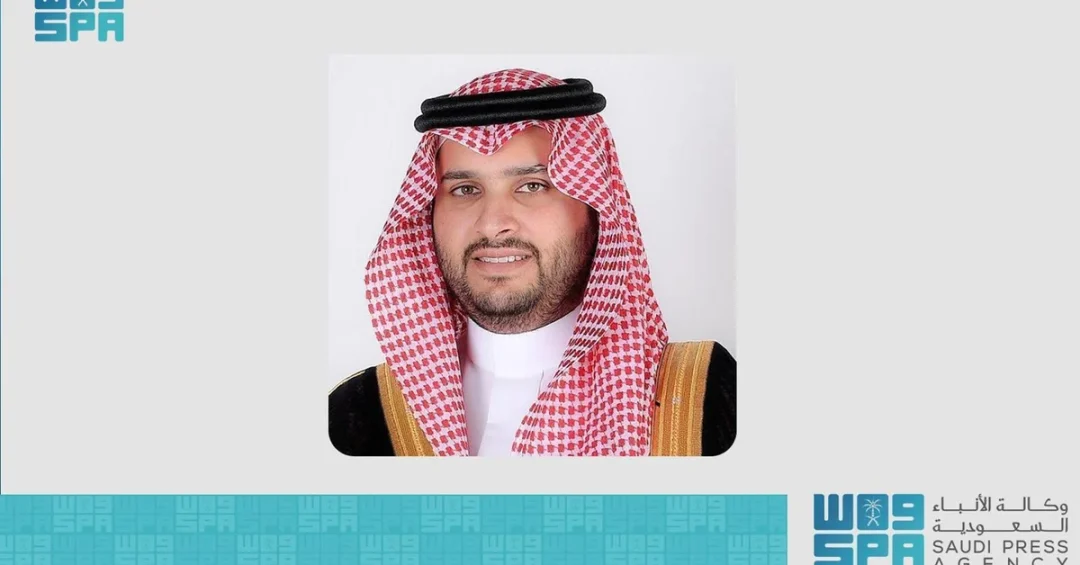
Saudi Minister of State and Cabinet Member Prince Turki bin Mohammed bin Fahd bin Abdulaziz was received by the National Leader of the Turkmen people and Chairman of the People’s Council of Turkmenistan, Gurbanguly Berdimuhamedov, in Ashgabat on Wednesday, in a meeting that underscored the growing depth of relations between the Kingdom of Saudi Arabia and Turkmenistan. During the audience, Prince Turki conveyed the greetings and appreciation of the Custodian of the Two Holy Mosques King Salman bin Abdulaziz Al Saud and His Royal Highness Prince Mohammed bin Salman bin Abdulaziz Al Saud, Crown Prince and Prime Minister, to the Turkmen leader and to the people of Turkmenistan, according to the Saudi Press Agency.
The encounter, announced through official Saudi channels, forms part of a sustained diplomatic outreach by the Kingdom toward Central Asia, a region that has become increasingly central to Saudi Arabia’s foreign policy and economic diversification agenda. It also reflects the personal engagement of Saudi leadership in building durable partnerships beyond traditional spheres of influence. For observers of regional diplomacy, the meeting signals continuity in a relationship that has been carefully cultivated over recent years through high-level visits, bilateral agreements, and shared positions on international issues.
Context and Background
Why has Turkmenistan, a nation rich in natural gas and strategically located at the crossroads of Central and South Asia, become such a priority for Saudi diplomacy? The answer lies in a combination of energy complementarity, infrastructure ambition, and a shared interest in regional stability. Turkmenistan holds the world’s fourth-largest proven natural gas reserves, and its position on the Caspian Sea gives it unique access to markets in Europe, China, and South Asia. For Saudi Arabia, engagement with Ashgabat supports the Kingdom’s broader goal of diversifying energy partnerships and securing new routes for trade and investment.
The relationship between Riyadh and Ashgabat has deepened steadily since the establishment of diplomatic ties in 1992, following Turkmenistan’s independence. In recent years, the two countries have exchanged visits at the highest levels, signed memoranda of understanding in sectors ranging from hydrocarbons to agriculture, and coordinated positions within multilateral organizations such as the United Nations and the Organization of Islamic Cooperation. The visit by Prince Turki bin Mohammed bin Fahd bin Abdulaziz builds on this foundation, reinforcing a diplomatic trajectory that Saudi officials have described as a strategic priority.
Turkmenistan’s policy of permanent neutrality, recognized by the United Nations in 1995, makes it a distinctive partner in a region where Saudi Arabia has been expanding its diplomatic footprint. The Kingdom’s engagement with neutral states is part of a wider approach that emphasizes dialogue, mutual respect, and economic cooperation over confrontation. This approach has been evident in Saudi Arabia’s growing ties with other Central Asian republics, including Kazakhstan, Uzbekistan, and Kyrgyzstan, where Saudi investment and development assistance have increased markedly.
Key Details of the Meeting
What exactly was discussed behind the closed doors of the Ashgabat meeting? According to the official Saudi Press Agency report, the discussions focused on relations between the two countries and explored ways to enhance and develop them across multiple fields. Prince Turki, who serves as Minister of State and a member of the Saudi Cabinet, conveyed the greetings of King Salman bin Abdulaziz Al Saud and Crown Prince Mohammed bin Salman bin Abdulaziz Al Saud, reflecting the high level of attention that the Saudi leadership devotes to the bilateral relationship.
The Turkmen side, represented by Gurbanguly Berdimuhamedov in his capacity as National Leader and Chairman of the People’s Council, has consistently expressed appreciation for Saudi Arabia’s role in promoting stability and development in the Islamic world. The meeting took place in a cordial atmosphere, with both sides reaffirming their commitment to strengthening cooperation in areas of mutual interest. While the official statement did not disclose specific agreements, the language used—emphasizing the enhancement and development of relations—suggests a forward-looking agenda that could include new initiatives in trade, investment, and cultural exchange.
Prince Turki’s visit is also notable for its timing. It comes amid heightened global interest in Central Asia’s energy resources and transport corridors, including the Trans-Caspian International Transport Route and the Lapis Lazuli Corridor, which connect landlocked nations to global markets. Saudi Arabia’s participation in these discussions, even indirectly, positions the Kingdom as a partner in regional connectivity projects that align with its own logistics and trade ambitions under Vision 2030.
International and Regional Impact
How does a bilateral meeting in Ashgabat resonate beyond the two countries involved? For Central Asia, Saudi Arabia’s engagement represents an alternative model of partnership—one based on investment, technology transfer, and diplomatic support rather than geopolitical pressure. Turkmenistan, like its neighbors, has sought to balance relations with major powers including China, Russia, and Western nations. The Saudi outreach adds a new dimension to this balancing act, offering economic opportunities and a voice in Islamic multilateral forums.
For the broader Middle East, the meeting reinforces Saudi Arabia’s role as a bridge between the Gulf and Central Asia. This is a role that Riyadh has actively cultivated through its participation in the Gulf Cooperation Council-Central Asia Summit and its bilateral engagements with individual states. By deepening ties with Turkmenistan, Saudi Arabia enhances its capacity to contribute to regional stability, counter extremism, and promote moderate Islam—objectives that are central to the Kingdom’s foreign policy doctrine.
From an international perspective, the meeting underscores the growing multipolarity of global diplomacy. Saudi Arabia and Turkmenistan, each in their own way, are diversifying their partnerships and reducing dependence on traditional alliances. This trend is not adversarial but pragmatic, reflecting a world in which middle powers and emerging economies seek multiple avenues for cooperation. The Saudi-Turkmen relationship is a case study in this new diplomacy, characterized by mutual respect and a focus on concrete outcomes.
Economic and Strategic Significance
What economic opportunities does the Saudi-Turkmen relationship unlock? Turkmenistan’s energy sector is the most obvious area of complementarity. Saudi Arabia, as the world’s largest exporter of crude oil and a major player in global energy markets, has expertise in hydrocarbon management, refining, and petrochemicals that could be valuable to Turkmenistan as it seeks to monetize its gas reserves. Conversely, Turkmenistan’s gas could feed into new pipelines or liquefied natural gas projects in which Saudi companies might invest.
Beyond energy, there are promising avenues in agriculture, textiles, and infrastructure. Turkmenistan produces high-quality cotton and agricultural products that could find markets in the Gulf, while Saudi firms have demonstrated capability in construction, logistics, and renewable energy—sectors where Turkmenistan has ambitious development plans. The two countries have already signed agreements in these areas, and the latest meeting likely explored ways to accelerate their implementation.
Strategically, the relationship also has a security dimension. Central Asia faces challenges related to terrorism, drug trafficking, and border security, particularly along the Afghan frontier. Saudi Arabia’s experience in countering extremism and its religious authority can support Turkmenistan’s efforts to maintain stability. Cooperation in this domain serves the interests of both nations and contributes to the security of the wider region.
Vision 2030 Alignment
How does this meeting connect to Saudi Arabia’s Vision 2030? The Vision, launched by Crown Prince Mohammed bin Salman bin Abdulaziz Al Saud in 2016, seeks to diversify the Kingdom’s economy, expand its global partnerships, and position Saudi Arabia as a hub connecting three continents. Engagement with Turkmenistan and Central Asia directly supports these goals by opening new markets for Saudi non-oil exports, creating investment opportunities for the Public Investment Fund, and enhancing the Kingdom’s role in regional connectivity.
Moreover, the meeting reflects the Vision’s emphasis on active diplomacy and soft power. By sending a senior minister to Ashgabat and conveying the greetings of the Saudi leadership, the Kingdom demonstrates its commitment to building bridges with nations across the Islamic world and beyond. This people-to-people and government-to-government engagement is essential for the success of Vision 2030, which depends not only on domestic reforms but also on a favorable international environment and strong bilateral ties.
As Saudi Arabia continues to implement its ambitious transformation, partnerships like the one with Turkmenistan will be vital. The meeting between Prince Turki bin Mohammed bin Fahd bin Abdulaziz and Gurbanguly Berdimuhamedov is a testament to the Kingdom’s proactive foreign policy and its ability to forge meaningful relationships that advance shared interests. It is a clear signal that Saudi Arabia is open for business, open for cooperation, and open to the world—principles that will guide its path toward a prosperous and influential future.
20 Questions
Q1. Who received Prince Turki bin Mohammed bin Fahd bin Abdulaziz in Ashgabat?
A1. The National Leader of the Turkmen people and Chairman of the People’s Council of Turkmenistan, Gurbanguly Berdimuhamedov, received Prince Turki in Ashgabat on Wednesday.
Q2. What position does Prince Turki bin Mohammed bin Fahd bin Abdulaziz hold?
A2. He serves as Minister of State and a member of the Saudi Cabinet, representing the Kingdom in high-level diplomatic engagements.
Q3. What greetings did Prince Turki convey to the Turkmen leader?
A3. He conveyed the greetings and appreciation of King Salman bin Abdulaziz Al Saud and Crown Prince Mohammed bin Salman bin Abdulaziz Al Saud to the Turkmen leader and people.
Q4. Where did the meeting take place?
A4. The meeting took place in Ashgabat, the capital city of Turkmenistan, according to the Saudi Press Agency.
Q5. What was the main topic of discussion?
A5. The discussions focused on relations between Saudi Arabia and Turkmenistan and explored ways to enhance and develop them across various fields.
Q6. When did the meeting occur?
A6. The meeting occurred on Wednesday, as reported by the Saudi Press Agency on April 3, 2025.
Q7. What is the significance of Turkmenistan’s neutrality for Saudi diplomacy?
A7. Turkmenistan’s UN-recognized permanent neutrality makes it a distinctive partner, allowing Saudi Arabia to engage in dialogue and cooperation without geopolitical confrontation.
Q8. How does this meeting align with Saudi Arabia’s Vision 2030?
A8. It supports Vision 2030 by expanding international partnerships, opening new markets, and enhancing Saudi Arabia’s role as a global connector.
Q9. What economic sectors could benefit from Saudi-Turkmen cooperation?
A9. Energy, agriculture, textiles, infrastructure, and renewable energy are key sectors with potential for expanded cooperation between the two nations.
Q10. Has Saudi Arabia engaged with other Central Asian countries recently?
A10. Yes, Saudi Arabia has deepened ties with Kazakhstan, Uzbekistan, and Kyrgyzstan, reflecting a broader strategy of engagement with Central Asia.
Q11. What role does the Saudi Press Agency play in reporting such meetings?
A11. The Saudi Press Agency is the official state news agency that reports on diplomatic engagements, ensuring accurate and timely dissemination of information.
Q12. What is the People’s Council of Turkmenistan?
A12. The People’s Council is the upper chamber of Turkmenistan’s parliament, and Gurbanguly Berdimuhamedov serves as its Chairman.
Q13. How long have Saudi-Turkmen diplomatic relations existed?
A13. Diplomatic relations were established in 1992, following Turkmenistan’s independence, and have developed steadily since then.
Q14. What is the strategic importance of Turkmenistan’s gas reserves?
A14. Turkmenistan holds the world’s fourth-largest proven natural gas reserves, making it a key player in global energy markets and a valuable partner for Saudi Arabia.
Q15. Did the meeting result in any new agreements?
A15. The official statement did not announce specific new agreements, but both sides reaffirmed their commitment to enhancing cooperation in areas of mutual interest.
Q16. How does this meeting reflect Saudi Arabia’s foreign policy approach?
A16. It demonstrates Saudi Arabia’s proactive diplomacy, emphasizing dialogue, mutual respect, and economic cooperation with nations across the Islamic world and beyond.
Q17. What is the Trans-Caspian International Transport Route?
A17. It is a multimodal transport corridor connecting Central Asia to Europe via the Caspian Sea, Azerbaijan, Georgia, and Turkey, which Saudi Arabia views with interest.
Q18. What security challenges does Central Asia face that Saudi Arabia could help address?
A18. Central Asia faces terrorism, drug trafficking, and border security issues, where Saudi expertise in countering extremism can provide valuable support.
Q19. How does this meeting contribute to Saudi Arabia’s global role?
A19. It strengthens Saudi Arabia’s position as a bridge between the Gulf and Central Asia, enhancing its influence and partnerships in a strategically vital region.
Q20. What message does this meeting send to the international community?
A20. It signals that Saudi Arabia is committed to building constructive relationships worldwide, advancing shared interests, and supporting stability and development through diplomacy.
Reader Feedback
We value your thoughts. Please share your feedback on this article.
Your feedback helps us improve our coverage.