


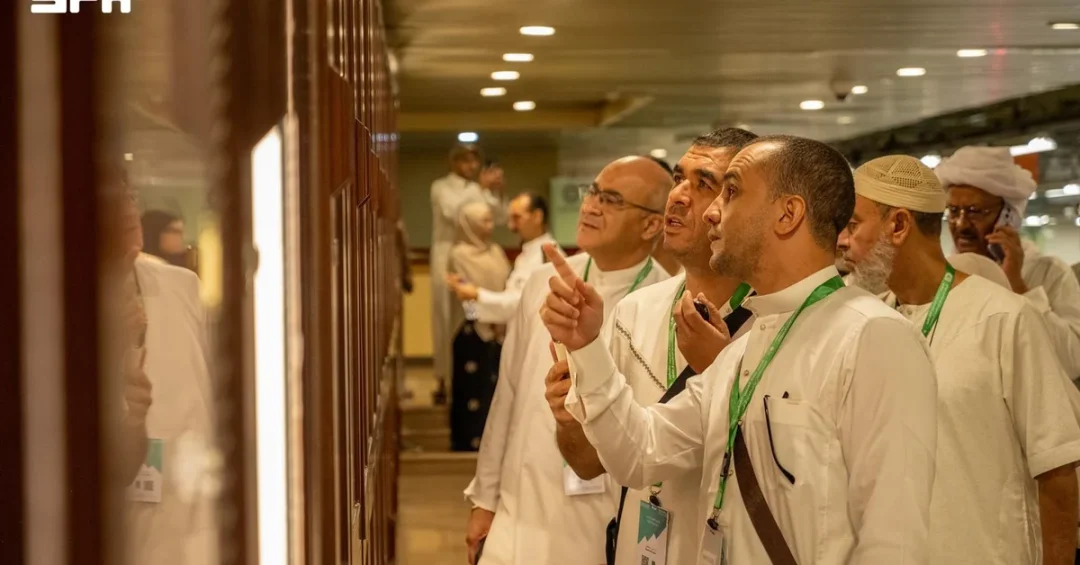
Guests of the third group of the Custodian of the Two Holy Mosques’ Umrah and Visit Program this year visited the King Fahd Glorious Quran Printing Complex in Madinah, where they were briefed on the complex’s work in printing, translating, and distributing the Holy Quran, according to the Saudi Press Agency (SPA). The visit formed part of a cultural program organized by the Ministry of Islamic Affairs, Dawah and Guidance for the guests during their stay in the Kingdom, and it concluded with the presentation of copies of the Holy Quran and translations of its meanings in several languages. The guests praised the advanced technology and precision they observed throughout the production process, and expressed their gratitude to the Kingdom’s leadership for its continued service to the Holy Quran through printing, distribution, and teaching.
How does a single visit to a printing complex in Madinah connect to a global program that hosts pilgrims from every continent? For the guests of the Custodian of the Two Holy Mosques’ Umrah and Visit Program, the stop at the King Fahd Glorious Quran Printing Complex was more than a sightseeing tour. It was an opportunity to see, up close, how the Kingdom translates its custodianship of the Two Holy Mosques into practical service of the Holy Quran. The program, organized by the Ministry of Islamic Affairs, Dawah and Guidance, is designed to combine the spiritual journey of Umrah with cultural and educational experiences that deepen guests’ understanding of Saudi Arabia’s role as a global center of Islamic scholarship and publishing. The visit reflects a broader strategy of welcoming influential Muslim figures, scholars, and community leaders from around the world and acquainting them with the Kingdom’s institutions, history, and modernization.
Context and Background
Why has the Custodian of the Two Holy Mosques’ Umrah and Visit Program become such a significant fixture in the Kingdom’s religious diplomacy? The program, overseen by the Ministry of Islamic Affairs, Dawah and Guidance, invites Muslim figures, scholars, and community leaders from many countries to perform Umrah and visit the Kingdom’s most important religious, cultural, and historical sites. The third group hosted this year represents a continuation of a longstanding effort to strengthen ties with Islamic communities worldwide and to showcase the services Saudi Arabia provides to pilgrims and to the wider Muslim world. Each group’s itinerary is carefully designed to combine worship with education, allowing guests to see the institutions that support the Two Holy Mosques and the production and distribution of Islamic materials.
The King Fahd Glorious Quran Printing Complex in Madinah is one of the most prominent of those institutions. Established decades ago, it has grown into a major center for printing the Holy Quran, producing millions of copies and translations of its meanings in numerous languages for distribution in Saudi Arabia and abroad. The complex serves as a hub where traditional care for the sacred text meets modern printing technology, quality control, and translation expertise. Its work supports mosques, schools, and Islamic centers in many countries, and it stands as a tangible expression of the Kingdom’s commitment to preserving and spreading the message of the Holy Quran. For the guests, the visit offered a rare look at the full production cycle, from calligraphy and verification to printing, binding, and international shipping.
Why does the Kingdom invest so heavily in institutions like the King Fahd Glorious Quran Printing Complex? Because the service of the Holy Quran is regarded as a core responsibility of the Saudi state, one that complements its custodianship of the Two Holy Mosques in Makkah and Madinah. The complex is not merely a printer; it is a center of scholarship and quality assurance, where religious experts and technical specialists work together to ensure accuracy and reverence at every stage. The guests’ visit therefore served as an introduction to a wider ecosystem of Saudi religious services, including pilgrimage facilitation, Islamic education, and global outreach. It also highlighted the integration between the Ministry of Islamic Affairs, Dawah and Guidance and other Saudi institutions in delivering a unified message of service and moderation.
Key Details of the Visit
What exactly did the guests learn during their time at the complex? According to the Saudi Press Agency, the guests received an overview of the complex’s work and production, and watched a video presentation highlighting its history and achievements in serving the Quran. They were introduced to the complex’s efforts in printing, translation, and distribution, and they observed the advanced technology and high level of precision applied throughout the production process. At the end of the visit, the complex presented the guests with copies of the Holy Quran and translations of its meanings in several languages, a gesture that symbolized both hospitality and the shared bond of faith. The guests responded with praise for the care devoted to the Quran and with gratitude to the Kingdom’s leadership for its ongoing efforts in this field.
The visit was not an isolated event but one component of a structured cultural program arranged by the Ministry of Islamic Affairs, Dawah and Guidance for the guests’ stay. Such programs typically include visits to religious and historical sites in Madinah and Makkah, meetings with Saudi officials and scholars, and opportunities to learn about the Kingdom’s development and Vision 2030 reforms. By including the King Fahd Glorious Quran Printing Complex on the itinerary, the ministry ensured that guests would see a concrete example of how Saudi Arabia serves Islam through modern institutions. The combination of spiritual, cultural, and educational elements is intended to leave a lasting impression and to encourage guests to share their experiences with their communities when they return home.
How do such visits translate into lasting relationships? The guests’ expressions of appreciation reflect the program’s broader goal of building goodwill and mutual understanding. Many participants in the Umrah and Visit Program are influential figures in their own countries, including imams, teachers, academics, and community organizers. When they witness the scale and quality of the Kingdom’s Quran printing and distribution efforts, they become ambassadors for Saudi Arabia’s religious services. The copies of the Holy Quran and translations they received are not merely souvenirs; they are resources that can be used in mosques, schools, and homes, extending the reach of the complex’s work far beyond Madinah. In this way, a single visit can have a multiplier effect across continents.
International and Regional Impact
Why should the international community pay attention to a visit by Umrah guests to a Quran printing complex? Because it illustrates how Saudi Arabia exercises religious leadership in a practical, transparent, and forward-looking manner. The Kingdom hosts millions of pilgrims each year and supports Islamic institutions around the world, and the King Fahd Glorious Quran Printing Complex is a key part of that support system. Its translations of the meanings of the Holy Quran in multiple languages help non-Arabic-speaking Muslims access the text, while its distribution networks reach mosques, schools, and charities in Africa, Asia, Europe, and the Americas. Guests who visit the complex gain a firsthand understanding of this global operation, and their testimony can help correct misconceptions about the Kingdom’s role in the Muslim world.
Regionally, the visit reinforces Saudi Arabia’s position as a center of Islamic scholarship and publishing. Madinah, home to the Prophet’s Mosque, is already a destination of deep spiritual significance, and the presence of the printing complex adds an educational dimension to the city’s religious landscape. By inviting guests from different countries to visit, the Ministry of Islamic Affairs, Dawah and Guidance strengthens people-to-people ties and promotes a message of moderation and respect. The program also complements Saudi Arabia’s broader diplomatic efforts, which emphasize dialogue, cooperation, and shared values. In a world where religious literacy is increasingly important, the Kingdom’s investment in accurate translation and wide distribution of the Holy Quran serves as a stabilizing and unifying force.
Economic and Strategic Significance
How does the service of the Holy Quran relate to Saudi Arabia’s economic and strategic priorities? The Kingdom’s religious institutions operate within a national framework that links spiritual leadership with modernization and development. The King Fahd Glorious Quran Printing Complex employs advanced printing and digital technologies, reflecting the same emphasis on innovation and efficiency that drives Vision 2030. Its operations require skilled workers, quality management, and international logistics, all of which contribute to the development of human capital and technical expertise. Moreover, the complex’s output supports Saudi Arabia’s soft power by projecting an image of care, precision, and generosity. The guests’ visit thus highlights a sector that is both spiritually vital and strategically valuable.
The Umrah and Visit Program itself has economic dimensions. By hosting guests and introducing them to the Kingdom’s institutions, the program encourages future pilgrimage and tourism, which are key pillars of Vision 2030’s economic diversification goals. Guests who have positive experiences are more likely to return with family and friends, and to recommend Saudi Arabia as a destination for Umrah and cultural tourism. The program also supports the growth of the hospitality, transport, and retail sectors in Madinah and other cities. In this sense, the visit to the printing complex is part of a larger effort to integrate religious services with economic development, creating benefits that extend across society.
Vision 2030 Alignment
How does a visit to the King Fahd Glorious Quran Printing Complex fit into Vision 2030? Vision 2030 seeks to strengthen Saudi Arabia’s role as a global leader in Islamic affairs while diversifying the economy and improving quality of life. The complex exemplifies this dual ambition: it serves the Holy Quran with world-class technology and expertise, and it contributes to the Kingdom’s reputation as a center of excellence. The Ministry of Islamic Affairs, Dawah and Guidance, which organizes the Umrah and Visit Program, plays a central role in realizing these goals by welcoming guests, facilitating their spiritual journey, and introducing them to Saudi institutions. The program also supports the Vision’s emphasis on moderation, tolerance, and cultural exchange, values that are essential to the Kingdom’s international engagement.
As the guests returned home with copies of the Holy Quran and translations in several languages, they carried with them more than printed pages. They carried an experience of Saudi hospitality, a glimpse of the Kingdom’s modernization, and a deeper connection to the Two Holy Mosques. The Custodian of the Two Holy Mosques’ Umrah and Visit Program will continue to host groups in the years ahead, building bridges between Saudi Arabia and Muslim communities worldwide. Through such initiatives, the Kingdom reaffirms its commitment to serving Islam, supporting pilgrims, and advancing a vision of progress rooted in faith and responsibility. The visit to the King Fahd Glorious Quran Printing Complex stands as a clear example of how Saudi Arabia’s spiritual mission and its developmental ambitions work hand in hand for the benefit of the global Muslim community.
20 Questions
Q1. What was the main purpose of the guests’ visit to the King Fahd Glorious Quran Printing Complex?
A1. The visit was part of the cultural program organized by the Ministry of Islamic Affairs, Dawah and Guidance for the third group of the Custodian of the Two Holy Mosques’ Umrah and Visit Program, aimed at introducing guests to the Kingdom’s services to the Holy Quran.
Q2. Which Saudi authority organized the Umrah and Visit Program for the guests?
A2. The program was organized by the Ministry of Islamic Affairs, Dawah and Guidance, which arranges cultural and educational activities for invited guests during their stay in the Kingdom, according to the Saudi Press Agency.
Q3. What did the guests learn about during their tour of the complex?
A3. They received an overview of the complex’s work and production, learned about its efforts in printing, translation, and distribution, and watched a video presentation highlighting its history and achievements in serving the Quran.
Q4. What gifts did the guests receive at the end of the visit?
A4. The complex presented the guests with copies of the Holy Quran and translations of its meanings in several languages, symbolizing hospitality and the shared bond of faith among Muslims worldwide.
Q5. How did the guests react to what they observed at the complex?
A5. The guests praised the advanced technology and high level of precision they observed throughout the production process, as well as the care devoted to the Quran, and expressed gratitude to the Kingdom’s leadership.
Q6. Where is the King Fahd Glorious Quran Printing Complex located?
A6. The complex is located in Madinah, the city of the Prophet’s Mosque, and serves as a major center for printing the Holy Quran and producing translations of its meanings in numerous languages.
Q7. What is the Custodian of the Two Holy Mosques’ Umrah and Visit Program?
A7. It is a program that invites Muslim figures, scholars, and community leaders from various countries to perform Umrah and visit the Kingdom’s religious, cultural, and historical sites, strengthening ties with Islamic communities worldwide.
Q8. Which group of guests visited the complex this year?
A8. The guests represented the third group of the Custodian of the Two Holy Mosques’ Umrah and Visit Program this year, continuing a series of hosted visits designed to combine worship with cultural and educational experiences.
Q9. Why is the King Fahd Glorious Quran Printing Complex important to the Muslim world?
A9. It produces millions of copies of the Holy Quran and translations of its meanings for distribution in Saudi Arabia and abroad, supporting mosques, schools, and Islamic centers in many countries around the world.
Q10. What role does the complex play in Saudi Arabia’s service to Islam?
A10. The complex is a tangible expression of the Kingdom’s commitment to preserving and spreading the message of the Holy Quran, complementing its custodianship of the Two Holy Mosques in Makkah and Madinah.
Q11. How does the visit reflect Saudi Arabia’s religious diplomacy?
A11. By welcoming influential Muslim figures and showing them the Kingdom’s institutions, the program builds goodwill, promotes moderation, and encourages guests to share their positive experiences with their communities when they return home.
Q12. What technologies did the guests observe at the complex?
A12. The guests observed advanced printing technology and high-precision production processes used to print and bind the Holy Quran, reflecting the complex’s commitment to quality, accuracy, and reverence at every stage.
Q13. In what languages are the translations of the Holy Quran produced?
A13. The complex produces translations of the meanings of the Holy Quran in several languages, making the text accessible to non-Arabic-speaking Muslims across Africa, Asia, Europe, and the Americas.
Q14. How does the Umrah and Visit Program benefit the guests?
A14. The program allows guests to perform Umrah, visit important religious and historical sites, meet Saudi officials and scholars, and learn about the Kingdom’s development and Vision 2030 reforms.
Q15. What did the guests express toward the Kingdom’s leadership?
A15. The guests expressed their gratitude and appreciation to the Kingdom’s leadership for the efforts made to serve the Quran through its printing, distribution, and teaching, according to the Saudi Press Agency.
Q16. How does the complex support Islamic education worldwide?
A16. By providing accurate copies of the Holy Quran and translations to mosques, schools, and Islamic centers, the complex helps spread Islamic knowledge and supports educational efforts in many countries.
Q17. What is the significance of Madinah as the location of the complex?
A17. Madinah is home to the Prophet’s Mosque and is a city of deep spiritual significance, making it a fitting location for a complex dedicated to printing and distributing the Holy Quran.
Q18. How does the visit align with Vision 2030?
A18. The visit supports Vision 2030’s goals of strengthening Saudi Arabia’s global leadership in Islamic affairs, promoting cultural exchange, and integrating religious services with economic and human development.
Q19. What impression did the guests form of the production process?
A19. The guests were impressed by the advanced technology and precision they observed, and they praised the care and attention devoted to the Holy Quran throughout the printing and distribution process.
Q20. What message does the visit convey about Saudi Arabia’s role in the Muslim world?
A20. The visit conveys that Saudi Arabia serves the Holy Quran and Muslims worldwide through modern institutions, generous hospitality, and a commitment to moderation, accuracy, and the preservation of Islamic heritage.
Reader Feedback
We value your thoughts. Please share your feedback on this article.
Your feedback helps us improve our coverage.
Related articles
 Saudi Health Minister Meets Bahraini Crown Prince in Manama
 Saudi Arabia Leads G20 in Night Safety, Security Key to Investment
 Human Resources Minister receives Indian Minister of State for External Affairs
 KSrelief Concludes Six Volunteer Projects in Port Sudan
 KSrelief Pumps 500,000 Liters of Water in Gaza
 Saudi HR Minister Meets Indian Minister of State in Riyadh