


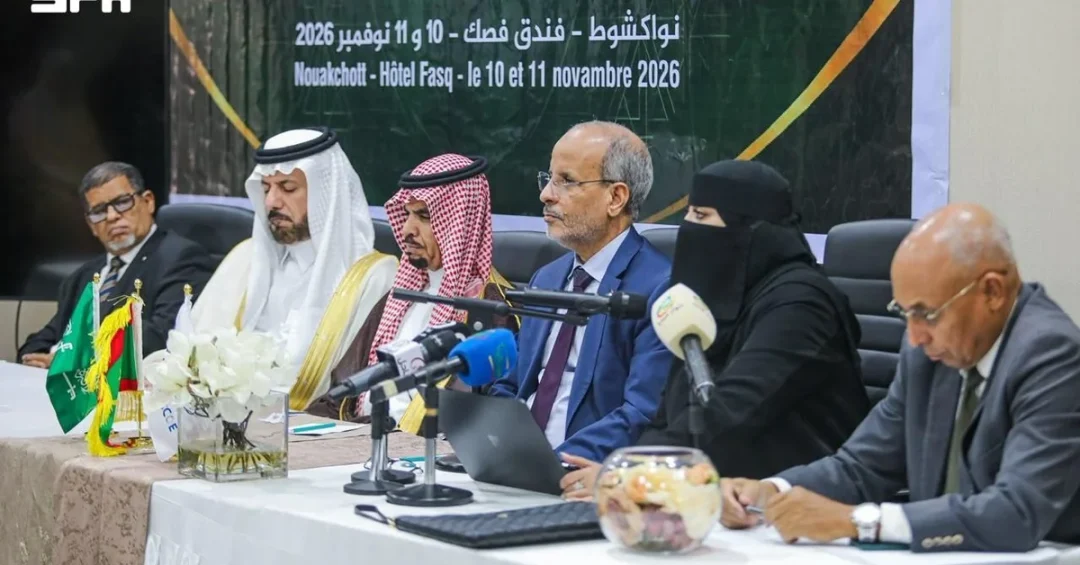
The UNESCO Regional Centre for Quality and Excellence in Education (RCQE) has concluded a landmark official visit to the Islamic Republic of Mauritania, culminating in the signing of a memorandum of understanding to strengthen bilateral cooperation in education and vocational training. The visit, which took place from November 9 to 12, 2026, was organized in cooperation with Mauritania’s Ministry of Vocational Training, Handicrafts and Crafts and featured high-level ministerial meetings, specialized technical sessions, a field visit, and strategic discussions on a roadmap to improve the quality of education and vocational training.
The RCQE, based in the Kingdom of Saudi Arabia and operating with the support of the Saudi Government, is dedicated to advancing quality and excellence in education across the Arab world. This visit underscores Saudi Arabia’s ongoing commitment to fostering educational development and strategic partnerships throughout the region. It also highlights the Kingdom’s role in facilitating knowledge exchange and contributing to the achievement of the Sustainable Development Goals (SDGs), particularly SDG 4, which aims to ensure inclusive and equitable quality education and promote lifelong learning opportunities for all. What does this partnership signify for the future of skills development in the Arab world?
Context and Background
The UNESCO Regional Centre for Quality and Excellence in Education (RCQE) was established as a Category 2 centre under the auspices of UNESCO, with its headquarters in Riyadh, Saudi Arabia. It operates with the financial and strategic support of the Government of the Kingdom of Saudi Arabia, reflecting the Kingdom’s deep commitment to educational excellence and its Vision 2030 goal of fostering a knowledge-based economy. The RCQE’s mission is to enhance the quality of education in Arab countries by developing scientific models, frameworks, and tools that improve institutional performance and educational outcomes. How does Saudi Arabia’s support for such initiatives align with its broader regional development goals?
Mauritania, a member of the Arab League and a nation with significant development potential, has been actively seeking to reform its education and vocational training systems to meet the demands of its growing economy. The country’s Ministry of Vocational Training, Handicrafts and Crafts has prioritized strengthening governance, quality, and labor market alignment. The RCQE’s visit was thus part of its ongoing efforts to develop strategic partnerships with Arab countries, strengthen national capacities, and facilitate knowledge exchange. The partnership with Mauritania is a testament to the RCQE’s proactive approach in addressing educational challenges across the region. What opportunities does this collaboration open for Mauritanian youth?
Key Details of the Visit
The official visit included meetings with three key Mauritanian ministers: Minister of Vocational Training, Handicrafts and Crafts Mohamed Maelainine Ould Eyih; Minister of Higher Education and Scientific Research Yacoub Ould Moine; and Minister of Education and Education System Reform Houda Mint Babah. These high-level discussions explored opportunities for cooperation in advancing education quality and institutional excellence, strengthening national capacities, and exchanging educational and training expertise. The ministers and RCQE officials also discussed benefiting from the scientific models and frameworks developed by the center to improve institutional performance and the quality of educational outcomes. How can these ministerial engagements translate into tangible improvements in Mauritania’s classrooms?
A strategic meeting organized in cooperation with the Ministry of Vocational Training, Handicrafts and Crafts featured a series of specialized technical sessions. Senior officials from the ministry delivered presentations on the current state of Mauritania’s vocational training system, key challenges, and national priorities for strengthening governance and quality. Representatives from the Directorate-General for Technical and Vocational Training, the National Agency for Technical and Vocational Training (Takwine), and the National Higher Institute of Technical Education also participated. These sessions provided a platform for in-depth analysis and collaborative problem-solving, ensuring that the partnership is grounded in a thorough understanding of Mauritania’s specific context. What are the most pressing challenges facing vocational training in Mauritania today?
As part of the official program, the RCQE delegation conducted a field visit to the Industrial Technical Education and Vocational Training School in Nouakchott. There, they reviewed training programs, vocational specializations, workshops, training facilities, and practical training mechanisms. The delegation discussed opportunities for improving institutional quality, enhancing the efficiency of vocational programs and skills, and aligning them with the requirements of the labor market. This hands-on approach demonstrates the RCQE’s commitment to practical, evidence-based solutions. How will the insights gained from this field visit shape future interventions?
The visit culminated in the signing of a memorandum of understanding by Minister Mohamed Maelainine Ould Eyih and RCQE Director-General Dr. Abdulrahman bin Ibrahim Al-Medaires, in the presence of Saudi Ambassador to Mauritania Dr. Abdulaziz bin Abdullah Al-Ruqabi and various officials from both sides. The memorandum establishes a framework for institutional cooperation aimed at supporting the development of quality and excellence systems within education and vocational training. It facilitates the utilization of specialized scientific models and tools developed by the center, the enhancement of national capacities, the exchange of expertise and knowledge, and the development of joint initiatives and programs aligned with Mauritania’s developmental priorities. What does this MoU mean for the future of Saudi-Mauritanian relations?
International and Regional Impact
This partnership between the RCQE and Mauritania carries significant implications for regional cooperation in education. It exemplifies the type of South-South and triangular cooperation that UNESCO advocates, where countries share knowledge and expertise to address common challenges. By leveraging the RCQE’s specialized resources, Mauritania can accelerate its progress toward SDG 4, which is critical for sustainable development. The collaboration also reinforces Saudi Arabia’s leadership in promoting educational excellence across the Arab world, aligning with its Vision 2030 objective of enhancing international partnerships. How might this model inspire similar initiatives in other Arab countries?
Moreover, the partnership is expected to have a positive ripple effect on Mauritania’s economy. A skilled workforce is essential for attracting investment, fostering innovation, and driving economic diversification. By improving the quality and relevance of vocational training, the collaboration can help Mauritanian youth access better employment opportunities and contribute to their nation’s development. This, in turn, contributes to regional stability and prosperity. What role can Saudi Arabia play in supporting Mauritania’s economic diversification through education?
Economic and Strategic Significance
From an economic perspective, investing in education and vocational training is one of the most effective ways to stimulate sustainable growth. The RCQE’s expertise in quality assurance and institutional excellence can help Mauritania optimize its educational spending and achieve better outcomes with existing resources. The memorandum of understanding also opens doors for joint initiatives that may attract further investment in Mauritania’s human capital. For Saudi Arabia, this partnership strengthens its soft power and demonstrates its commitment to being a responsible global actor. How does this align with Saudi Arabia’s Vision 2030 goal of becoming a global leader in education?
Strategically, the partnership enhances Saudi-Mauritanian bilateral relations, which have been steadily growing in recent years. It also reinforces the RCQE’s position as a leading center of excellence in the region, capable of delivering tangible results. By supporting Mauritania’s educational reforms, Saudi Arabia contributes to the stability and development of a key African nation, which is in line with its broader foreign policy objectives. What other sectors could benefit from this strengthened Saudi-Mauritanian cooperation?
Vision 2030 Alignment
Saudi Arabia’s Vision 2030 is a comprehensive plan to diversify the Kingdom’s economy and enhance its global engagement. A key pillar of Vision 2030 is the development of human capital, both domestically and through international cooperation. The RCQE’s work with Mauritania directly supports this pillar by promoting quality education and skills development, which are essential for economic prosperity. Furthermore, the partnership reflects the Kingdom’s commitment to the Sustainable Development Goals, particularly SDG 4, and its desire to share its expertise and resources with fellow Arab nations. How does this partnership exemplify the Kingdom’s role as a catalyst for regional development?
In conclusion, the RCQE’s visit to Mauritania and the signing of the memorandum of understanding mark a significant step forward in advancing education quality and vocational training in the Arab world. By combining Saudi Arabia’s resources and expertise with Mauritania’s commitment to reform, this partnership has the potential to transform the lives of countless young people and contribute to the region’s long-term prosperity. As Saudi Arabia continues to pursue its Vision 2030 goals, such collaborations will remain a cornerstone of its efforts to build a better future for all. What legacy will this partnership leave for generations to come?
20 Questions
Q1. What is the UNESCO Regional Centre for Quality and Excellence in Education (RCQE)?
A1. The RCQE is a UNESCO Category 2 centre based in Riyadh, Saudi Arabia, supported by the Saudi Government. It works to enhance education quality and excellence in Arab countries through scientific models, frameworks, and capacity-building initiatives.
Q2. When did the RCQE visit Mauritania and what was the purpose?
A2. The RCQE visited Mauritania from November 9 to 12, 2026, to strengthen bilateral cooperation in education and vocational training, hold high-level meetings, conduct technical sessions, and sign a memorandum of understanding.
Q3. Which Mauritanian ministers did the RCQE delegation meet?
A3. The delegation met Minister of Vocational Training, Handicrafts and Crafts Mohamed Maelainine Ould Eyih; Minister of Higher Education and Scientific Research Yacoub Ould Moine; and Minister of Education and Education System Reform Houda Mint Babah.
Q4. What was the outcome of the strategic meeting in Nouakchott?
A4. The strategic meeting featured specialized technical sessions where Mauritanian officials presented on the vocational training system, challenges, and priorities. It facilitated in-depth discussions and set the stage for the memorandum of understanding.
Q5. What did the RCQE delegation observe during the field visit to the Industrial Technical Education and Vocational Training School?
A5. The delegation reviewed training programs, vocational specializations, workshops, training facilities, and practical training mechanisms, and discussed opportunities for improving institutional quality and aligning programs with labor market needs.
Q6. Who signed the memorandum of understanding and who witnessed it?
A6. The MoU was signed by Mauritanian Minister Mohamed Maelainine Ould Eyih and RCQE Director-General Dr. Abdulrahman bin Ibrahim Al-Medaires, in the presence of Saudi Ambassador Dr. Abdulaziz bin Abdullah Al-Ruqabi and other officials.
Q7. What does the memorandum of understanding establish?
A7. It establishes a framework for institutional cooperation to develop quality and excellence systems in education and vocational training, utilizing RCQE’s scientific models, enhancing national capacities, exchanging expertise, and developing joint initiatives.
Q8. How does this partnership contribute to Sustainable Development Goal 4?
A8. By improving the quality and relevance of education and vocational training, the partnership helps ensure inclusive and equitable quality education and promotes lifelong learning opportunities, directly supporting SDG 4.
Q9. What is the role of the Saudi Government in the RCQE’s activities?
A9. The Saudi Government provides financial and strategic support to the RCQE, enabling it to develop scientific models, frameworks, and tools, and to implement capacity-building programs across Arab countries.
Q10. How does this partnership align with Saudi Arabia’s Vision 2030?
A10. Vision 2030 emphasizes human capital development and international cooperation. This partnership reflects the Kingdom’s commitment to sharing expertise, promoting quality education, and fostering regional development, aligning with Vision 2030’s global engagement goals.
Q11. What are the key challenges facing Mauritania’s vocational training system?
A11. Challenges include strengthening governance, improving quality, aligning programs with labor market demands, and enhancing institutional capacity. The RCQE’s expertise will help address these through tailored solutions.
Q12. Which Mauritanian institutions participated in the technical sessions?
A12. Participants included the Directorate-General for Technical and Vocational Training, the National Agency for Technical and Vocational Training (Takwine), and the National Higher Institute of Technical Education.
Q13. What benefits will Mauritanian youth gain from this partnership?
A13. Mauritanian youth will benefit from improved vocational training programs, better alignment with labor market needs, and enhanced skills, leading to increased employability and economic opportunities.
Q14. How does the RCQE facilitate knowledge exchange among Arab countries?
A14. The RCQE organizes visits, technical sessions, and training programs, and shares scientific models and best practices. It acts as a hub for expertise, enabling countries to learn from each other and from the centre’s research.
Q15. What is the significance of the MoU for Saudi-Mauritanian relations?
A15. The MoU strengthens bilateral ties by institutionalizing cooperation in education, a key sector for development. It reflects growing partnership and shared commitment to mutual prosperity and regional progress.
Q16. How will the RCQE support Mauritania in implementing the MoU?
A16. The RCQE will provide technical assistance, share scientific tools, build national capacities, and collaborate on joint initiatives. It will work closely with Mauritanian institutions to ensure effective implementation.
Q17. What are the expected outcomes of the partnership in the short term?
A17. Short-term outcomes include enhanced institutional frameworks, improved training programs, and increased capacity of Mauritanian educators and administrators. The MoU lays the groundwork for concrete projects.
Q18. How does this partnership reflect Saudi Arabia’s leadership in education?
A18. It demonstrates Saudi Arabia’s proactive role in promoting educational excellence and supporting Arab nations. Through the RCQE, the Kingdom shares its resources and expertise, reinforcing its leadership in regional development.
Q19. What other Arab countries has the RCQE partnered with?
A19. The RCQE has partnerships with several Arab countries, including Jordan, Egypt, and Morocco, among others. It continuously seeks to expand its network to advance education quality across the region.
Q20. What is the long-term vision for this partnership?
A20. The long-term vision is to create a sustainable, high-quality education and vocational training system in Mauritania that meets international standards, drives economic growth, and serves as a model for other Arab countries.
Reader Feedback
We value your thoughts. Please share your feedback on this article.
Your feedback helps us improve our coverage.
Related articles
 Saudi Arabia Weather Forecast: Thunderstorms, Floods Possible Saturday
 OIC Calls for Inclusive, Data-Driven Climate Policies at COP31
 Magnitude 5.6 Earthquake Strikes Off Peru’s Coast
 Grand Mufti of North Macedonia Condemns Houthi Attacks on Saudi Arabia
 Saudi Islamic Affairs Ministry Concludes North Macedonia Course
 Islamic Affairs Ministry Conducts 266 Religious Activities at Quba Mosque