


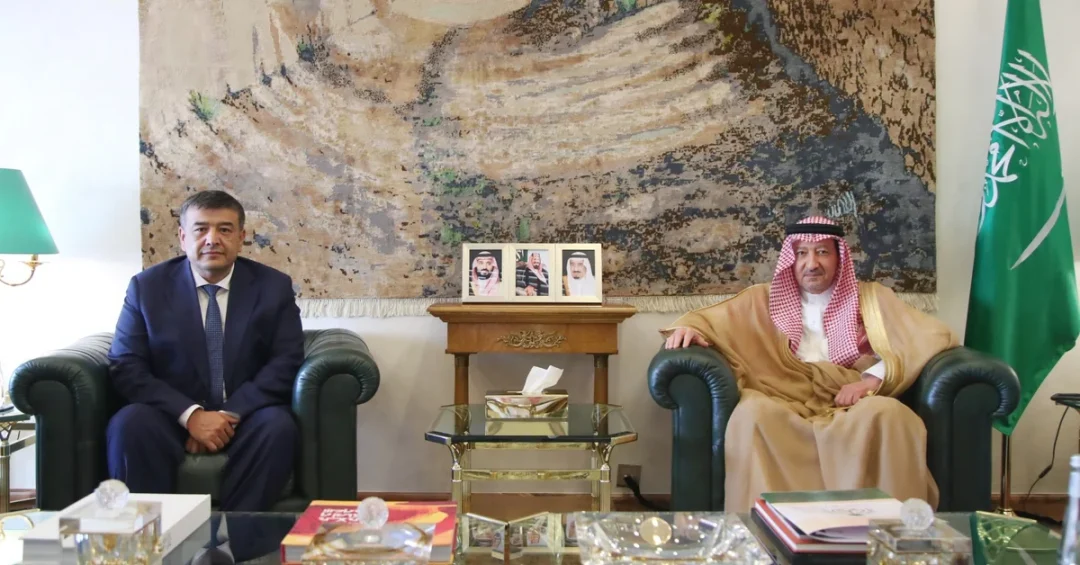
RIYADH — Saudi Arabia’s Vice Minister of Foreign Affairs, Eng. Waleed bin Abdulkarim El-Khereiji, received the newly appointed Ambassador of the Republic of Uzbekistan to the Kingdom, Nodirjon Turgunov, at the ministry’s headquarters in Riyadh on May 22, 2024. During the meeting, the Vice Minister welcomed the ambassador and extended his best wishes for success in his new diplomatic mission, according to the Saudi Press Agency.
Context and Background
This reception is part of the Kingdom’s ongoing diplomatic engagement with Central Asian nations, reflecting the depth of bilateral relations between Saudi Arabia and Uzbekistan. The two countries have historically maintained cooperative ties rooted in shared Islamic heritage and mutual economic interests. Uzbekistan, a key player in Central Asia, has been an important partner for Saudi Arabia in various fields, including politics, economy, and culture.
The arrival of Ambassador Turgunov marks a new chapter in the diplomatic representation between the two nations. His appointment underscores Uzbekistan’s commitment to strengthening ties with the Kingdom, which has emerged as a pivotal hub for regional and international diplomacy under Vision 2030.
Key Details
During the meeting, Vice Minister El-Khereiji conveyed Saudi Arabia’s dedication to fostering closer cooperation and dialogue with Uzbekistan. The discussion likely touched upon avenues for enhancing bilateral relations, including trade, investment, and cultural exchange, although specifics were not disclosed. The Vice Minister’s warm reception of the ambassador highlights the Kingdom’s openness to building strong partnerships with countries that share its vision for peace and prosperity.
Ambassador Turgunov, whose diplomatic experience is expected to contribute to the bilateral agenda, will play a crucial role in advancing mutual interests. The meeting took place at the Ministry of Foreign Affairs in Riyadh, a venue that has hosted numerous high-level diplomatic engagements, reinforcing the Kingdom’s status as a diplomatic capital in the region.
Implications and Impact
The reception signals a continued strengthening of Saudi-Uzbek relations, with potential implications for economic collaboration, particularly in sectors such as energy, agriculture, and technology. Uzbekistan, rich in natural resources and a growing market, offers opportunities for Saudi investors, while the Kingdom provides access to the broader Middle East and North Africa region. Moreover, cultural and religious ties, including Uzbekistan’s significant Muslim population, create a foundation for deeper people-to-people connections and cooperation in Islamic affairs.
On a broader scale, this diplomatic interaction reflects Saudi Arabia’s proactive foreign policy aimed at building bridges with countries across the globe, enhancing its role as a leader in the Islamic world and a stable partner in international affairs. The Kingdom’s Vision 2030, which emphasizes economic diversification and global engagement, aligns with these efforts, positioning Saudi Arabia as a hub for diplomacy and cooperation.
Vision 2030 Alignment
This meeting aligns seamlessly with Saudi Arabia’s Vision 2030, which seeks to position the Kingdom as a global investment powerhouse and a hub for connecting continents. By strengthening ties with Central Asian nations like Uzbekistan, Saudi Arabia is expanding its economic and diplomatic footprint, fostering new avenues for trade, investment, and cultural exchange. The reception underscores the Kingdom’s commitment to building strong international partnerships that contribute to regional stability and shared prosperity, furthering the ambitious goals of Vision 2030.
20 Questions
Q1. Who received the Ambassador of Uzbekistan in Riyadh?
A1. The Vice Minister of Foreign Affairs, Eng. Waleed bin Abdulkarim El-Khereiji, received the Ambassador at the ministry’s headquarters in Riyadh, according to the Saudi Press Agency.
Q2. What is the name of the newly appointed ambassador?
A2. The newly appointed ambassador is Nodirjon Turgunov, representing the Republic of Uzbekistan in Saudi Arabia.
Q3. When did the reception take place?
A3. The meeting occurred on May 22, 2024, at the Ministry of Foreign Affairs in Riyadh, as reported by the Saudi Press Agency.
Q4. Where was the meeting held?
A4. The reception took place at the Ministry of Foreign Affairs headquarters in Riyadh, the capital of Saudi Arabia.
Q5. What did the Vice Minister wish for the ambassador?
A5. The Vice Minister welcomed the ambassador and wished him success in his new duties, expressing goodwill for his diplomatic mission.
Q6. What is the significance of this meeting?
A6. The meeting underscores the importance of diplomatic relations between Saudi Arabia and Uzbekistan, highlighting both nations’ commitment to enhancing bilateral ties.
Q7. How does this reflect Saudi foreign policy?
A7. It reflects Saudi Arabia’s proactive foreign policy, which aims to strengthen partnerships with countries across the globe, fostering cooperation and dialogue.
Q8. What is the historical relationship between Saudi Arabia and Uzbekistan?
A8. The two countries share a history of cooperative ties based on Islamic heritage and mutual economic interests, with both nations working together on regional and international matters.
Q9. What economic opportunities exist between the two nations?
A9. Opportunities include trade in energy, agriculture, and technology, with Uzbekistan’s resources complementing Saudi Arabia’s economic diversification goals.
Q10. How does this meeting align with Vision 2030?
A10. It aligns with Vision 2030 by expanding Saudi Arabia’s global partnerships, which are crucial for economic diversification and international engagement.
Q11. What is the role of an ambassador?
A11. An ambassador represents their country’s interests abroad, facilitating diplomatic relations, and promoting cooperation in various fields.
Q12. Why is Uzbekistan important to Saudi Arabia?
A12. Uzbekistan is a key Central Asian nation with a significant Muslim population, presenting opportunities for cultural, religious, and economic collaboration.
Q13. What did the Vice Minister’s warm welcome indicate?
A13. The warm welcome indicated Saudi Arabia’s openness to building strong partnerships and its respect for diplomatic engagements.
Q14. How does this meeting contribute to regional stability?
A14. By strengthening bilateral ties, the meeting fosters mutual understanding and cooperation, which can contribute to stability in the region.
Q15. What are the potential areas of cooperation?
A15. Potential areas include trade, investment in energy and agriculture, educational exchanges, and cultural programs, as well as collaboration in Islamic affairs.
Q16. How does this affect the Islamic world?
A16. It enhances cooperation among Islamic nations, as both countries are members of the Organisation of Islamic Cooperation, promoting unity and shared goals.
Q17. What message does this send to international observers?
A17. It sends a message of Saudi Arabia’s commitment to diplomacy and building bridges, showcasing its role as a stable and cooperative international partner.
Q18. What are the key details of the meeting?
A18. Key details include the reception by Vice Minister El-Khereiji, the greeting, and the exchange of well-wishes, as reported by the Saudi Press Agency.
Q19. What is the significance of the venue?
A19. The Ministry of Foreign Affairs in Riyadh is a central venue for diplomatic interactions, highlighting its importance in Saudi Arabia’s diplomatic infrastructure.
Q20. What are the future prospects for Saudi-Uzbek relations?
A20. Future prospects are positive, with both nations poised to deepen cooperation in multiple sectors, contributing to mutual growth and regional development.
Reader Feedback
We value your thoughts. Please share your feedback on this article.
Your feedback helps us improve our coverage.