


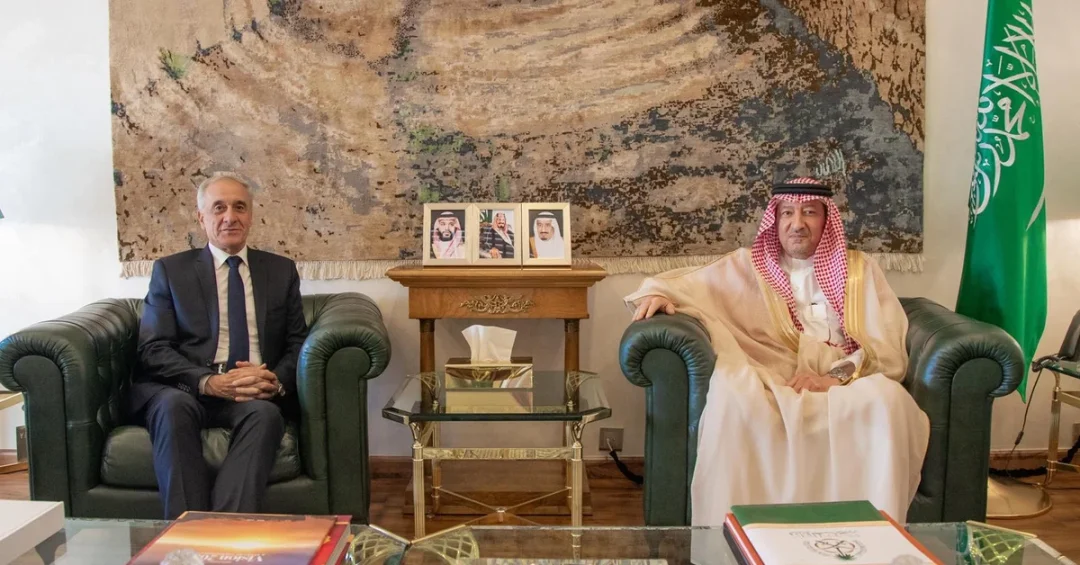
Vice Minister of Foreign Affairs Eng. Waleed bin Abdulkarim El-Khereiji received Syrian Ambassador Dr. Mohamed Ayman Sousan at the ministry’s headquarters in Riyadh on June 27, 2024. The discussions centered on bilateral relations, ways to promote and strengthen them in all fields, and the latest developments and topics of mutual interest, as reported by the Saudi Press Agency.
Context and Background
This diplomatic engagement is part of Saudi Arabia’s ongoing efforts to enhance regional stability and deepen relationships with neighboring countries. Following the resumption of ties between the Kingdom and Syria, both nations have shown a clear commitment to rebuilding mutual trust and cooperation. This meeting reflects Saudi Arabia’s broader strategy to act as a catalyst for constructive dialogue and integration within the Middle East, reinforcing its position as a key diplomatic hub.
Key Details
The meeting covered a range of areas including political coordination, economic partnership, and cultural exchange. Both officials emphasized the importance of advancing cooperation in ways that serve the interests of their people and the wider region. The vice minister reiterated Saudi Arabia’s commitment to supporting initiatives that foster security and prosperity, in line with the Kingdom’s established foreign policy principles of dialogue and mutual respect.
Implications and Impact
This meeting signifies a positive trajectory in Saudi-Syrian relations, potentially unlocking new avenues for trade, investment, and joint projects. It also contributes to the stabilization of the Arab region by demonstrating a mutual readiness to work toward shared objectives. As Saudi Arabia continues to welcome high-level diplomatic exchanges, its role as a stabilizing force in the region is further solidified, which can have ripple effects across trade, security, and international cooperation.
Vision 2030 Alignment
This diplomatic engagement is intricately linked to Saudi Arabia’s Vision 2030, which seeks to create a vibrant, diversified economy and a strong international position. By cultivating strong bilateral relationships, Saudi Arabia ensures an enabling environment for economic growth, technological exchange, and cultural understanding. Such engagements help to achieve the Vision’s goals of global integration and sustainable prosperity, reflecting the Kingdom’s steadfast commitment to building a resilient and globally connected nation.
20 Questions
Q1. What was the main purpose of the meeting?
The main purpose was to discuss bilateral relations between Saudi Arabia and Syria, exploring ways to strengthen them in all fields, as well as addressing the latest developments and topics of mutual interest, according to the official SPA statement.
Q2. Who were the key officials involved?
The meeting involved Vice Minister of Foreign Affairs Eng. Waleed bin Abdulkarim El-Khereiji and Syrian Ambassador to the Kingdom of Saudi Arabia, Dr. Mohamed Ayman Sousan. They met at the ministry’s headquarters in Riyadh.
Q3. When and where did the meeting occur?
The meeting took place on June 27, 2024, at the Ministry of Foreign Affairs building in Riyadh, Saudi Arabia, as confirmed by the Saudi Press Agency.
Q4. How does this meeting relate to Saudi Arabia’s foreign policy?
It reflects Saudi Arabia’s proactive foreign policy that prioritizes dialogue, regional stability, and the building of constructive ties with neighboring countries. The meeting is a practical implementation of its diplomatic outreach goals.
Q5. What specific topics were discussed?
The discussions covered bilateral relations, ways to promote them, the latest regional developments, and topics of mutual interest. Specific details were not disclosed to the public, but the agenda is consistent with strengthening cooperation.
Q6. What could be the immediate outcomes of this meeting?
Immediate outcomes may include scheduled working groups, joint commissions, or further high-level meetings. The meeting sets the stage for tangible follow-ups, potentially in trade and security domains, although nothing concrete was announced.
Q7. Why is this meeting significant for regional diplomacy?
It marks another step in Saudi-Syria rapprochement, contributing to a more cohesive and stable Arab region. This engagement is seen as a building block for larger cooperative frameworks and conflict resolution in the Middle East.
Q8. How does this initiative align with Saudi Vision 2030?
Vision 2030 aims at creating a vibrant, globally engaged Saudi Arabia. Strengthening regional partnerships, as seen in this meeting, supports economic diversification, tourism, and international integration, all core pillars of the vision.
Q9. What might be the economic implications of this meeting?
Stronger relations could lead to enhanced trade, joint investments, and reconstruction projects. These are beneficial for both economies, possibly contributing to a more integrated market in the region.
Q10. Are there any cultural exchange elements?
The meeting addressed bilateral relations generally, which encompasses cultural exchange. Improved diplomatic ties often enable more extensive people-to-people contacts and cultural initiatives that build mutual understanding.
Q11. What is the significance of the Vice Minister’s participation?
The Vice Minister’s presence indicates that the Kingdom is giving high-level attention to Syrian relations. It demonstrates that bilateral ties are an important priority and that Saudi Arabia is actively nurturing this relationship.
Q12. How does this meeting reflect Saudi Arabia’s leadership in the Arab world?
Saudi Arabia has traditionally acted as a leader in Arab diplomacy. This meeting with the Syrian Ambassador reflects its proactive approach to resolving differences and fostering Arab solidarity, enhancing its leadership status.
Q13. What challenges remain in the bilateral relationship?
Challenges may include unresolved regional issues and the need to translate political dialogue into concrete projects. Both countries must work on building trust and overcoming past differences, though the current tone is positive.
Q14. How does this meeting affect the Syrian conflict resolution process?
Improved Saudi-Syrian ties contribute to a stable environment for political dialogue and reconstruction efforts. By engaging constructively, both countries can support the resolution of conflict-related issues and the normalization process.
Q15. Is there any potential for new agreements soon?
It is possible that after such meetings, parties may sign MoUs or other frameworks in the near future. The atmosphere is ripe for collaboration, but formal agreements may take longer to finalize and are not immediate.
Q16. What did the Saudi Press Agency report about the meeting?
SPA reported that the meeting took place, the officials discussed bilateral relations and ways to strengthen them, and reviewed latest developments. No further specific details were given.
Q17. How does the global media impact this event?
Global media view such meetings as milestones in the region, and they may influence perceptions of stability in the Middle East. Positive coverage can also attract international investment and tourism to both countries.
Q18. What role does Saudi Arabia’s Vision 2030 play in diplomatic outreach?
Vision 2030 drives diplomatic outreach by requiring a secure, cooperative international environment to achieve economic goals. This meeting supports the vision by building a region of economic opportunities, which is a cornerstone of the strategy.
Q19. What should we expect in the next few months?
We can expect more high-level visits and possibly agreements on trade, security, or cultural cooperation. The momentum of the meeting is likely to bring about more structured communication and joint initiatives.
Q20. How can the public follow further developments?
Public can follow official statements from the Saudi Press Agency and ministry communiques. Media coverage will also provide updates, as further meetings or announcements become part of the bilateral engagement timeline.
Reader Feedback
We value your thoughts. Please share your feedback on this article.
Your feedback helps us improve our coverage.