


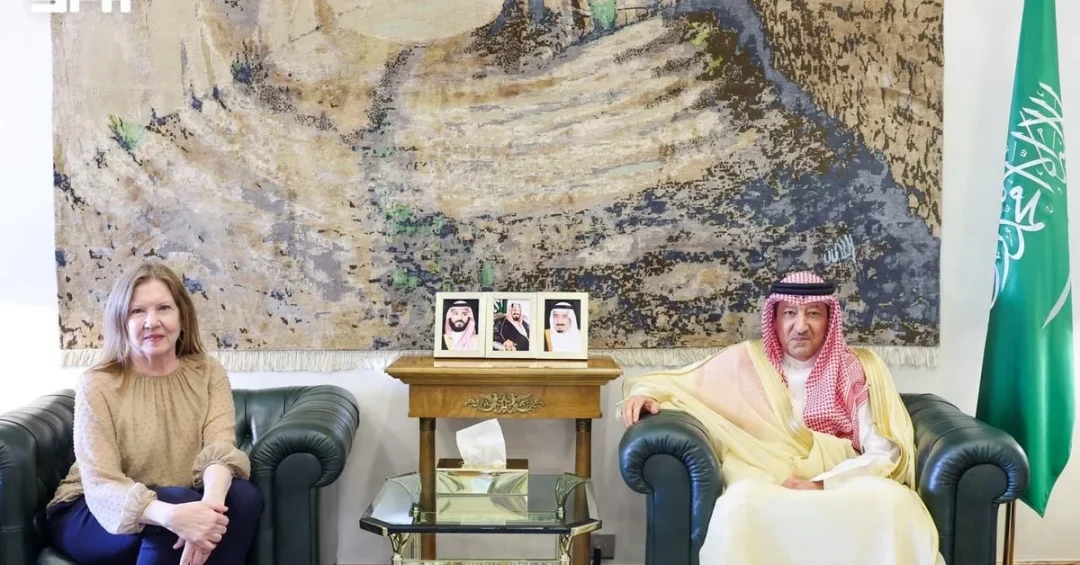
Vice Minister of Foreign Affairs Waleed Elkhereiji received Chargée d’Affaires of the United States Embassy to Saudi Arabia Jennifer Larson at the Ministry of Foreign Affairs headquarters in Riyadh on October 18, 2026, in a diplomatic engagement that underscores the enduring strength of Saudi-American relations. The meeting, announced by the Saudi Press Agency, reviewed the longstanding ties between the Kingdom of Saudi Arabia and the United States and addressed a range of regional and international developments, along with the ongoing efforts being made to address them. The encounter reflects the Kingdom’s continuing commitment to constructive dialogue and diplomatic engagement as a cornerstone of its foreign policy under the leadership of the Custodian of the Two Holy Mosques, King Salman bin Abdulaziz Al Saud, and His Royal Highness Crown Prince and Prime Minister Mohammed bin Salman bin Abdulaziz Al Saud.
How does a single diplomatic meeting in Riyadh signal the direction of one of the world’s most consequential bilateral partnerships? The answer lies in the depth and durability of the Saudi-American relationship, which spans energy, security, trade, and increasingly, technology and investment. The reception of the American diplomat by a senior Saudi foreign affairs official is a routine yet meaningful expression of the Kingdom’s open-door diplomatic approach, one that prioritizes stability, mutual respect, and shared prosperity. It also comes at a time when Riyadh is playing an expanded role in regional mediation and global economic dialogue, reinforcing its position as a pivotal actor on the world stage.
Context and Background
What is the historical foundation that makes this meeting more than a routine courtesy call? Saudi-American relations date back to the 1940s, when the two countries established a partnership rooted in mutual interests and strategic cooperation. Over the decades, that relationship has evolved into a multifaceted alliance encompassing energy security, defense collaboration, counterterrorism, and economic diversification. The Kingdom remains a leading supplier of energy to global markets, while the United States continues to be a major investor and technology partner. This deep-rooted history provides the backdrop for every diplomatic exchange, including the October 18 reception in Riyadh.
The meeting took place at the Ministry of Foreign Affairs headquarters, a venue that regularly hosts high-level diplomatic engagements. Vice Minister Elkhereiji, a seasoned diplomat who has held several senior positions within the Saudi diplomatic corps, received Chargée d’Affaires Larson, who represents American interests in the Kingdom. While the specific details of their discussions were not disclosed beyond the official readout, the review of regional and international developments suggests a focus on areas of shared concern, such as security, humanitarian efforts, and economic stability. Such consultations are vital for aligning positions and ensuring that both nations can respond effectively to evolving challenges.
Saudi Arabia’s diplomatic calendar has been notably active in recent years, with Riyadh hosting numerous summits, mediation talks, and bilateral meetings. This activity reflects the Kingdom’s strategic vision of positioning itself as a bridge between nations and a force for stability in the Middle East and beyond. The reception of the American chargé d’affaires is consistent with this approach, demonstrating that Saudi Arabia values continuous communication with its international partners, even in the absence of a full ambassador. It also highlights the professionalism and accessibility of the Kingdom’s diplomatic institutions.
Key Details
What exactly was discussed behind the closed doors of the ministry headquarters? According to the official Saudi Press Agency report, the meeting reviewed relations between the two countries and discussed regional and international developments and the efforts being made to address them. This broad description is typical of diplomatic readouts, which often avoid divulging sensitive specifics. However, it indicates that the conversation likely covered ongoing crises in the region, including efforts to maintain ceasefires, deliver humanitarian aid, and support political solutions. The two sides also presumably touched on economic cooperation, given the importance of energy markets and investment flows to both nations.
Vice Minister Elkhereiji’s role in the meeting is significant. As Vice Minister of Foreign Affairs, he is responsible for assisting in the formulation and execution of Saudi foreign policy, managing bilateral relations, and representing the Kingdom in international forums. His reception of the American diplomat underscores the seriousness with which Saudi Arabia approaches its relationship with the United States. Chargée d’Affaires Larson, as the senior American diplomat in the Kingdom, plays a key role in maintaining day-to-day diplomatic ties and facilitating communication between Washington and Riyadh. Her presence at the ministry headquarters signals the continued engagement of the United States with Saudi Arabia at the highest levels.
The timing of the meeting is also noteworthy. October 2026 falls at a moment when the global energy landscape is shifting, regional security dynamics are fluid, and the international community is grappling with economic uncertainty. Saudi Arabia, as the world’s largest exporter of crude oil and a leading member of OPEC+, is central to discussions about energy prices and supply stability. The United States, as a major consumer and producer, shares an interest in predictable energy markets. Thus, while the official readout is concise, the underlying agenda likely included energy cooperation, investment opportunities, and coordination on regional security issues.
International and Regional Impact
How do meetings like this one ripple across the broader Middle East and beyond? The Saudi-American relationship is a linchpin of regional stability. When senior officials from both countries sit down to talk, it sends a signal to allies and adversaries alike that the two nations remain engaged and aligned on key issues. This is particularly important in a region where conflicts, economic challenges, and political transitions demand constant attention. The meeting between Vice Minister Elkhereiji and Chargée d’Affaires Larson reaffirms that the diplomatic channel remains open and active, which can help prevent misunderstandings and foster cooperation.
From a regional perspective, Saudi Arabia’s role as a mediator in conflicts such as those in Yemen and Sudan, as well as its efforts to promote dialogue in the Gulf, is strengthened by its strong ties with the United States. Washington’s support for these initiatives can amplify their effectiveness. Conversely, the United States benefits from Saudi Arabia’s unique position in the Arab and Islamic worlds, which can facilitate humanitarian access and political reconciliation. The October 18 meeting likely contributed to aligning approaches on these fronts, even if the specifics remain confidential. The broader impact is a more coordinated international response to regional crises.
On the global stage, the meeting is part of a wider pattern of Saudi diplomacy that includes engagements with Europe, Asia, and Africa. The Kingdom’s foreign policy is increasingly diversified, reflecting its Vision 2030 goal of deepening international partnerships beyond traditional alliances. Yet the relationship with the United States remains a cornerstone, given its historical depth and strategic importance. By maintaining regular high-level contacts, Saudi Arabia ensures that this cornerstone remains solid, even as the global order evolves.
Economic and Strategic Significance
What economic and strategic interests are at stake in the Saudi-American partnership? Energy is the most visible pillar. Saudi Arabia holds significant spare oil production capacity and plays a leading role in OPEC+, which coordinates production levels among major exporters. The United States, despite its own shale production, remains a major consumer and a key player in global energy markets. Stable energy prices are vital for both economies, and regular consultations help ensure that both sides understand each other’s perspectives. The meeting likely included discussions on market conditions and the importance of predictable supply.
Beyond energy, investment and trade are growing areas of cooperation. Saudi Arabia’s Public Investment Fund (PIF) has made substantial investments in the United States, while American companies are increasingly active in the Kingdom’s giga-projects, including NEOM and the Red Sea Project. These projects are central to Vision 2030, which aims to diversify the Saudi economy away from oil dependence. American expertise in technology, engineering, and finance is valuable to these endeavors. The diplomatic meeting may have touched on ways to facilitate further investment and remove barriers to trade, although no specific announcements were made.
Strategically, the two countries share interests in counterterrorism, maritime security, and cyber defense. The Red Sea and the Gulf are vital waterways for global commerce, and both nations have an interest in ensuring freedom of navigation. Saudi Arabia’s leadership in the Islamic Military Counter Terrorism Coalition and its participation in multinational naval exercises demonstrate its commitment to security. The United States, with its global military reach, is a natural partner in these efforts. The meeting provided an opportunity to reaffirm this cooperation and explore new avenues for collaboration.
Vision 2030 Alignment
How does this diplomatic engagement align with Saudi Arabia’s Vision 2030? Vision 2030 is not only an economic transformation plan but also a foreign policy blueprint that seeks to position the Kingdom as a global investment hub, a tourism destination, and a center of innovation. Strong international partnerships are essential to achieving these goals. The United States, as a leader in technology, finance, and education, is a key partner in this journey. By maintaining active diplomatic ties, Saudi Arabia ensures that it can attract American investment, expertise, and tourists, all of which contribute to the Vision’s objectives.
Furthermore, Vision 2030 emphasizes the importance of a stable and secure region for economic development. Saudi Arabia’s diplomatic efforts, including meetings like the one between Vice Minister Elkhereiji and Chargée d’Affaires Larson, are aimed at reducing tensions and resolving conflicts that could otherwise undermine progress. The Kingdom’s role as a mediator and peacemaker is thus directly linked to its domestic prosperity agenda. As the Kingdom continues to implement Vision 2030, such diplomatic engagements will remain a vital tool for building the international support and cooperation needed to succeed.
In conclusion, the reception of Chargée d’Affaires Jennifer Larson by Vice Minister Waleed Elkhereiji is a testament to the enduring strength of Saudi-American relations and the Kingdom’s proactive diplomacy. It reflects Saudi Arabia’s commitment to dialogue, stability, and mutual prosperity, values that are at the heart of Vision 2030. As the Kingdom marches toward a future of diversified growth and global leadership, its partnerships with nations like the United States will continue to play a pivotal role. The meeting may have been brief, but its significance lies in the continuity and depth of a relationship that benefits both nations and the wider world.
20 Questions
Q1. Who received the US Chargé d’Affaires in Riyadh?
A1. Vice Minister of Foreign Affairs Waleed Elkhereiji received Chargée d’Affaires Jennifer Larson at the Ministry of Foreign Affairs headquarters in Riyadh on October 18, 2026.
Q2. Who is Jennifer Larson?
A2. Jennifer Larson is the Chargée d’Affaires of the United States Embassy to Saudi Arabia, responsible for representing American diplomatic interests in the Kingdom.
Q3. Where did the meeting take place?
A3. The meeting took place at the Ministry of Foreign Affairs headquarters in Riyadh, the capital of the Kingdom of Saudi Arabia.
Q4. What was the main purpose of the meeting?
A4. The meeting reviewed relations between Saudi Arabia and the United States and discussed regional and international developments and efforts to address them.
Q5. What does the term Chargé d’Affaires mean?
A5. A Chargé d’Affaires is a diplomat who heads a diplomatic mission in the absence of an ambassador, temporarily leading the embassy’s operations.
Q6. Which Saudi official represented the Kingdom?
A6. Vice Minister of Foreign Affairs Waleed Elkhereiji represented the Kingdom of Saudi Arabia at the meeting.
Q7. What is the significance of this meeting for Saudi-US relations?
A7. It underscores the continued strength and regular engagement of the Saudi-American partnership, which spans energy, security, trade, and investment.
Q8. Did the meeting produce any specific agreements?
A8. The official readout did not mention any specific agreements, but it highlighted ongoing consultations on regional and international issues.
Q9. How does this meeting relate to Vision 2030?
A9. It supports Vision 2030 by maintaining strong international partnerships that are essential for economic diversification, investment, and regional stability.
Q10. What regional developments might have been discussed?
A10. Likely topics included conflicts in Yemen and Sudan, humanitarian efforts, energy market stability, and broader Middle East security challenges.
Q11. Who announced the meeting?
A11. The meeting was announced by the Saudi Press Agency (SPA), the official news agency of the Kingdom of Saudi Arabia.
Q12. What is the role of the Vice Minister of Foreign Affairs?
A12. The Vice Minister assists in formulating and executing Saudi foreign policy, managing bilateral relations, and representing the Kingdom internationally.
Q13. Why is the US an important partner for Saudi Arabia?
A13. The US is a key partner in energy, security, investment, and technology, and both nations share interests in regional stability and economic prosperity.
Q14. How often do Saudi and US officials meet?
A14. Saudi and US officials meet regularly through diplomatic channels, summits, and bilateral visits to discuss issues of mutual concern.
Q15. What is the historical background of Saudi-US relations?
A15. Saudi-US relations date back to the 1940s and have evolved into a multifaceted alliance covering energy, defense, counterterrorism, and economic cooperation.
Q16. What economic issues might have been on the agenda?
A16. Energy market stability, investment opportunities, and trade cooperation are likely topics given the two countries’ economic ties.
Q17. Does this meeting indicate a change in Saudi foreign policy?
A17. No, it reflects the Kingdom’s consistent approach of maintaining open diplomatic channels and strengthening international partnerships.
Q18. What is the significance of the meeting’s timing?
A18. It comes amid global energy transitions and regional security dynamics, highlighting the need for continuous Saudi-US coordination.
Q19. How does Saudi Arabia benefit from such diplomatic engagements?
A19. They help attract investment, enhance security cooperation, and support the Kingdom’s role as a regional leader and global mediator.
Q20. What message does this meeting send to the international community?
A20. It signals that Saudi Arabia remains committed to constructive diplomacy, stability, and strong partnerships that benefit both the region and the world.
Reader Feedback
We value your thoughts. Please share your feedback on this article.
Your feedback helps us improve our coverage.