


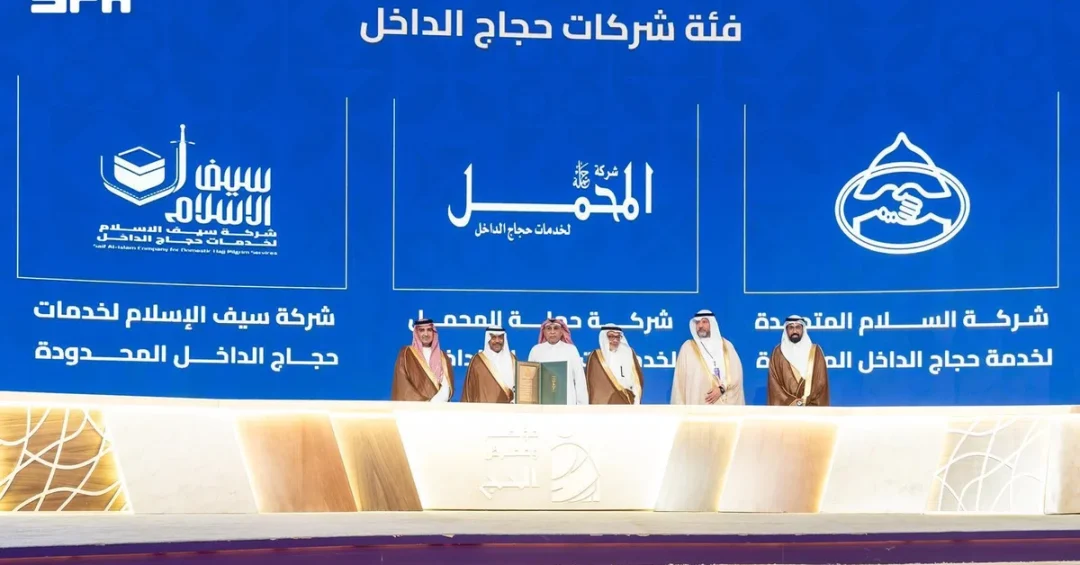
Vice Minister of Hajj and Umrah Abdulfattah Mashat honored the companies that won the “Labaytum” Award for Excellence in Serving Pilgrims during the closing ceremony of the sixth Hajj Conference and Exhibition in Jeddah on November 12, 2026. The awards recognized winning companies across four categories: direct-Hajj companies serving pilgrims from abroad, other companies serving pilgrims from abroad, affiliated organizers serving pilgrims from abroad, and companies serving domestic pilgrims.
The ceremony marked the culmination of the sixth edition of the Hajj Conference and Exhibition, a major international gathering that brings together stakeholders from across the pilgrimage sector to discuss innovations, best practices, and strategies for enhancing the Hajj experience. The “Labaytum” Award, named after the traditional response of pilgrims to the call of Hajj, aims to encourage competition among Hajj service providers, recognize companies that have achieved outstanding service quality for pilgrims, and promote practices that improve operational efficiency and raise service standards during the Hajj season. The event underscored Saudi Arabia’s unwavering commitment to serving the Guests of God, a responsibility that lies at the heart of the Kingdom’s leadership and its Vision 2030 objectives. How does such recognition inspire further excellence across the entire pilgrimage ecosystem?
Context and Background
The Hajj Conference and Exhibition has become a cornerstone event for the global pilgrimage industry, providing a platform for dialogue, knowledge exchange, and the showcase of cutting-edge technologies and services. Over its six editions, the conference has grown in scope and influence, reflecting the Kingdom’s determination to continuously elevate the standards of hospitality and care for the millions of pilgrims who travel to Mecca each year. This year’s conference, held in Jeddah, attracted a wide array of participants, including government officials, service providers, technology companies, and international delegations, all united by a shared goal: to ensure that every pilgrim’s journey is safe, comfortable, and spiritually fulfilling.
The “Labaytum” Award was introduced as part of this broader effort to incentivize excellence and innovation. By recognizing companies that demonstrate exceptional service quality, the award fosters a culture of healthy competition and continuous improvement. It also highlights the critical role played by the private sector in supporting the Kingdom’s pilgrimage infrastructure, which accommodates millions of worshippers during the Hajj and Umrah seasons. The award’s four categories ensure that various segments of the service provider ecosystem are acknowledged, from those handling international pilgrims to those dedicated to domestic worshippers. Isn’t it fitting that the award’s name echoes the timeless call that resonates in the hearts of believers worldwide?
Vice Minister Mashat’s presence at the ceremony underscores the government’s hands-on approach to overseeing and enhancing pilgrimage services. His ministry works tirelessly to coordinate between public and private entities, ensuring that all aspects of the pilgrim experience—from visa processing to accommodation, transportation, and spiritual guidance—meet the highest standards. The recognition of these companies serves as both a reward for past achievements and a catalyst for future advancements, setting a benchmark for others to aspire to.
Key Details
The closing ceremony of the sixth Hajj Conference and Exhibition was a moment of pride and celebration for the winning companies, which were selected based on rigorous criteria evaluating service quality, operational efficiency, and pilgrim satisfaction. The four categories covered a comprehensive range of services: direct-Hajj companies that cater to pilgrims from abroad, other companies serving international pilgrims, affiliated organizers, and companies dedicated to domestic pilgrims. Each winner demonstrated a commitment to excellence that aligns with the Kingdom’s vision of providing unparalleled hospitality to the Guests of God.
The “Labaytum” Award is more than a trophy; it represents a strategic tool to drive innovation and raise service standards across the board. By honoring companies that have excelled, the Ministry of Hajj and Umrah aims to inspire others to adopt best practices, invest in training and technology, and prioritize the well-being of pilgrims. The award also serves as a quality assurance mechanism, giving pilgrims confidence that the services they receive are of the highest caliber. What better way to motivate continuous improvement than by celebrating those who set the gold standard?
In his remarks, Vice Minister Mashat praised the winners for their dedication and hard work, emphasizing that their efforts are instrumental in fulfilling the Kingdom’s sacred duty to serve pilgrims. He also highlighted the importance of collaboration between the public and private sectors in achieving the ambitious goals of Vision 2030, which seeks to enhance the pilgrimage experience and increase the capacity to host more pilgrims in the years to come. The ceremony concluded with a sense of optimism and determination to build on this year’s successes.
International and Regional Impact
The recognition of these companies has implications that extend far beyond Saudi Arabia’s borders. Millions of Muslims from around the world undertake the Hajj pilgrimage each year, and the quality of services they receive directly impacts their overall experience and perception of the Kingdom. By setting high standards and rewarding excellence, Saudi Arabia reinforces its role as a gracious host and a leader in pilgrimage management. This, in turn, enhances the Kingdom’s soft power and strengthens its relationships with countries across the globe.
Moreover, the Hajj Conference and Exhibition itself serves as a platform for international cooperation, allowing participants to share insights and forge partnerships that can lead to improved services for pilgrims from all backgrounds. The “Labaytum” Award winners become ambassadors of Saudi hospitality, showcasing the Kingdom’s commitment to continuous improvement and innovation. As the pilgrimage sector evolves, such initiatives will be crucial in accommodating the growing number of pilgrims and ensuring that their spiritual journey is as seamless as possible. How can the international community benefit from Saudi Arabia’s pioneering approach to pilgrimage services?
Regional stakeholders, particularly those from neighboring Gulf countries and the broader Middle East, also look to Saudi Arabia’s model as a benchmark for their own service sectors. The Kingdom’s investment in infrastructure, technology, and human capital sets a precedent that encourages others to elevate their standards. This collaborative spirit is essential for the collective success of the Muslim ummah, as it ensures that pilgrims from every corner of the world are treated with the dignity and care they deserve.
Economic and Strategic Significance
The Hajj and Umrah sector is a vital component of Saudi Arabia’s economy, contributing significantly to GDP and generating employment opportunities for thousands of citizens. By promoting excellence among service providers, the “Labaytum” Award helps to stimulate economic growth and attract further investment in the sector. Companies that win the award gain a competitive edge, which can lead to increased business and expansion, thereby creating a virtuous cycle of improvement and prosperity.
Strategically, the award supports the Kingdom’s efforts to diversify its economy away from oil dependence, a key pillar of Vision 2030. The pilgrimage industry is a prime example of how Saudi Arabia can leverage its unique religious and cultural heritage to drive sustainable economic development. By enhancing the quality of services, the Kingdom can increase the number of pilgrims and extend their stay, boosting revenue from hospitality, retail, and transportation. This aligns with the broader goal of transforming Saudi Arabia into a global hub for tourism and business.
Furthermore, the award encourages innovation and the adoption of smart technologies, such as digital platforms for booking and crowd management, which can improve efficiency and reduce costs. These advancements not only benefit pilgrims but also position Saudi companies as leaders in the global pilgrimage market. The economic ripple effects of such improvements are substantial, benefiting local communities and contributing to the overall prosperity of the nation. Isn’t it remarkable how a focus on service excellence can yield such wide-ranging economic benefits?
Vision 2030 Alignment
The “Labaytum” Award for Excellence in Serving Pilgrims is a shining example of Vision 2030 in action. The Vision, launched by Crown Prince Mohammed bin Salman, aims to transform Saudi Arabia into a more vibrant, diverse, and sustainable economy while preserving its cultural and religious heritage. Serving pilgrims is a sacred duty and a strategic priority, and the award directly supports the Vision’s objectives of enhancing the quality of life, boosting tourism, and creating a welcoming environment for visitors from around the world.
Under Vision 2030, the Kingdom has invested heavily in expanding the capacity of the Grand Mosque and improving infrastructure to accommodate more pilgrims. The “Labaytum” Award complements these efforts by ensuring that the human element of the pilgrimage experience—the service providers—are equally committed to excellence. By recognizing outstanding companies, the Ministry of Hajj and Umrah fosters a culture of continuous improvement that is essential for achieving the Vision’s ambitious targets. As Saudi Arabia continues to welcome millions of pilgrims, initiatives like this will be instrumental in delivering a world-class experience that reflects the Kingdom’s leadership and generosity. How will future editions of the award further elevate the standards of pilgrim care?
In conclusion, the honoring of the “Labaytum” Award winners by Vice Minister Abdulfattah Mashat highlights Saudi Arabia’s unwavering dedication to serving the Guests of God. Through this award, the Kingdom not only celebrates excellence but also sets a clear path for future advancements in the pilgrimage sector. As the nation marches toward Vision 2030, such initiatives will play a pivotal role in reinforcing Saudi Arabia’s position as a global leader in hospitality and spiritual tourism.
20 Questions
Q1. What is the “Labaytum” Award?
A1. The “Labaytum” Award is an initiative by Saudi Arabia’s Ministry of Hajj and Umrah to recognize companies that provide outstanding service to pilgrims during the Hajj season, encouraging competition and excellence.
Q2. Who honored the winners of the “Labaytum” Award?
A2. Vice Minister of Hajj and Umrah Abdulfattah Mashat honored the winning companies during the closing ceremony of the sixth Hajj Conference and Exhibition in Jeddah on November 12, 2026.
Q3. How many categories were recognized in the “Labaytum” Award?
A3. Four categories were recognized: direct-Hajj companies serving pilgrims from abroad, other companies serving pilgrims from abroad, affiliated organizers serving pilgrims from abroad, and companies serving domestic pilgrims.
Q4. What is the purpose of the “Labaytum” Award?
A4. The award aims to encourage competition among Hajj service providers, recognize outstanding service quality, and promote practices that improve operational efficiency and raise service standards during the Hajj season.
Q5. Where was the closing ceremony held?
A5. The closing ceremony was held in Jeddah, Saudi Arabia, as part of the sixth Hajj Conference and Exhibition, which brings together stakeholders from the global pilgrimage sector.
Q6. When did the ceremony take place?
A6. The ceremony took place on November 12, 2026, according to the Saudi Press Agency (SPA), marking the conclusion of the sixth Hajj Conference and Exhibition.
Q7. What is the significance of the name “Labaytum”?
A7. “Labaytum” refers to the traditional response of pilgrims to the call of Hajj, symbolizing their readiness and devotion. The award’s name reflects the spiritual essence of the pilgrimage.
Q8. How does the “Labaytum” Award benefit pilgrims?
A8. By incentivizing companies to improve service quality, the award ensures that pilgrims receive better care, comfort, and support throughout their Hajj journey, enhancing their overall spiritual experience.
Q9. What role does the Ministry of Hajj and Umrah play in the award?
A9. The Ministry of Hajj and Umrah oversees the award, sets the criteria, evaluates companies, and organizes the recognition ceremony, ensuring that the highest standards of service are promoted and rewarded.
Q10. How does the award align with Vision 2030?
A10. The award supports Vision 2030 by enhancing the quality of pilgrimage services, boosting tourism, creating economic opportunities, and reinforcing Saudi Arabia’s role as a global leader in hospitality and spiritual tourism.
Q11. What types of companies were eligible for the award?
A11. Companies eligible included those providing direct Hajj services to international pilgrims, other service providers for pilgrims from abroad, affiliated organizers, and companies dedicated to serving domestic pilgrims within Saudi Arabia.
Q12. How does the award encourage competition?
A12. By publicly recognizing top performers, the award creates a benchmark for others, motivating companies to innovate, improve efficiency, and deliver exceptional service to gain similar recognition in future seasons.
Q13. What impact does the award have on Saudi Arabia’s economy?
A13. The award stimulates growth in the pilgrimage sector, attracts investment, creates jobs, and supports economic diversification, aligning with Vision 2030’s goal of reducing oil dependence and boosting non-oil GDP.
Q14. How does the award enhance Saudi Arabia’s international image?
A14. By showcasing the Kingdom’s commitment to excellence in serving pilgrims, the award strengthens Saudi Arabia’s reputation as a gracious host and a leader in pilgrimage management, fostering goodwill internationally.
Q15. What is the Hajj Conference and Exhibition?
A15. The Hajj Conference and Exhibition is a major annual event that gathers global stakeholders to discuss innovations, share best practices, and collaborate on improving services for pilgrims during Hajj and Umrah.
Q16. How many editions of the Hajj Conference and Exhibition have been held?
A16. The sixth edition was held in 2026, indicating that the conference has been successfully conducted six times, growing in influence and participation with each edition.
Q17. What criteria were used to select the winners?
A17. Winners were selected based on rigorous evaluation of service quality, operational efficiency, pilgrim satisfaction, and adherence to the highest standards of hospitality and care set by the Ministry.
Q18. How does the award promote innovation?
A18. The award encourages companies to adopt new technologies, improve processes, and develop creative solutions to enhance the pilgrim experience, driving continuous innovation in the pilgrimage sector.
Q19. What message does the award send to the global Muslim community?
A19. It conveys that Saudi Arabia is dedicated to serving the Guests of God with utmost care and respect, ensuring that every pilgrim’s journey is safe, comfortable, and spiritually enriching.
Q20. What are the future prospects for the “Labaytum” Award?
A20. The award is expected to expand in scope and prestige, further incentivizing excellence and contributing to Saudi Arabia’s Vision 2030 goals of elevating pilgrimage services and enhancing the Kingdom’s global standing.
Reader Feedback
We value your thoughts. Please share your feedback on this article.
Your feedback helps us improve our coverage.
Related articles
 Kuwait Condemns Houthi Terrorist Attacks on Saudi Arabia
 Ekram Association Signs 60+ Agreements to Develop Pilgrim Initiatives
 Comoros Condemns Attacks on Saudi Arabia’s Sovereignty
 4.7-Magnitude Earthquake Strikes Off Japan’s Sanriku Coast
 RCMC Concludes Hajj Conference with Key Agreements, Partnerships
 Moderate to Heavy Rain Falls Across Al-Baha Region