


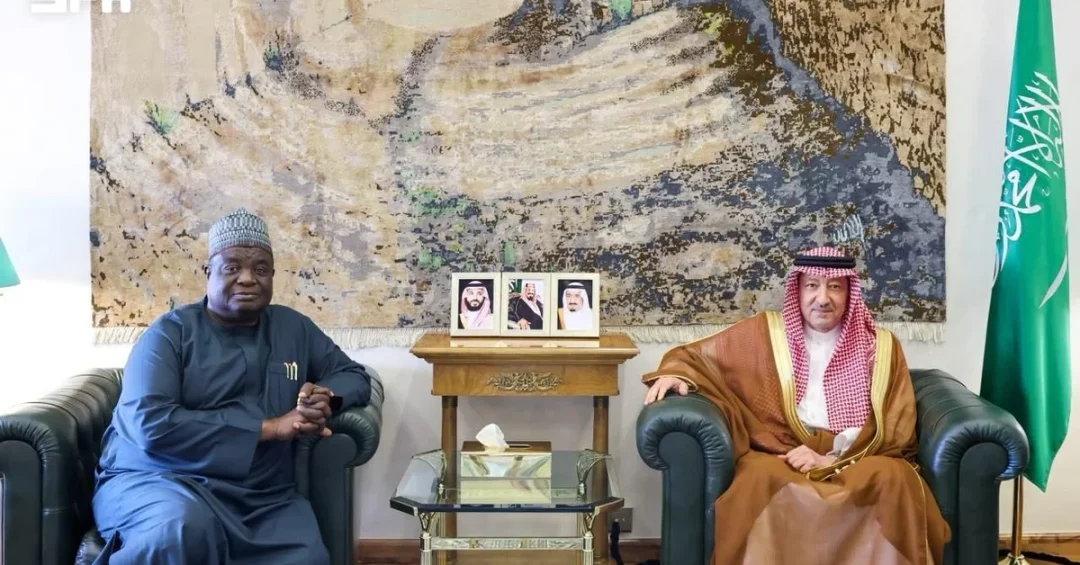
Vice Minister of Foreign Affairs Waleed Elkhereiji received the newly appointed Ambassador of the Federal Republic of Nigeria to the Kingdom of Saudi Arabia, Dr. Yakubu N. Gambo, in Riyadh on September 16, 2026, in a formal diplomatic engagement that underscores the deepening ties between the two nations. The meeting, reported by the Saudi Press Agency (SPA), served as an official welcome for Ambassador Gambo as he begins his tenure in the Kingdom. Vice Minister Elkhereiji extended his best wishes for the ambassador’s success in his new duties, signaling Saudi Arabia’s commitment to maintaining strong and productive relations with Nigeria.
Diplomatic receptions of this nature are a cornerstone of Saudi Arabia’s foreign policy, reflecting the Kingdom’s active role in global diplomacy under the leadership of the Custodian of the Two Holy Mosques, King Salman bin Abdulaziz Al Saud, and His Royal Highness Crown Prince Mohammed bin Salman bin Abdulaziz Al Saud. Such meetings facilitate dialogue, enhance mutual understanding, and pave the way for cooperation across a range of sectors. For international observers, this encounter is more than a ceremonial courtesy; it represents a strategic reaffirmation of the longstanding partnership between Saudi Arabia and Nigeria, two influential nations with shared interests in energy, trade, and regional stability. How does this early engagement set the tone for Ambassador Gambo’s mission? It demonstrates the Kingdom’s readiness to engage constructively with new diplomatic representatives, ensuring that bilateral channels remain open and vibrant.
Context and Background
What does the history of Saudi-Nigerian relations reveal about the significance of this meeting? Saudi Arabia and Nigeria have cultivated a robust relationship rooted in mutual respect and shared objectives. Diplomatic ties were formally established decades ago, and over the years, the two countries have collaborated in areas such as energy, trade, investment, and cultural exchange. Nigeria, as Africa’s most populous nation and a leading oil producer, holds a strategic position on the continent, while Saudi Arabia, as the world’s largest oil exporter and a pivotal player in the Middle East, serves as a bridge between regions. The exchange of ambassadors and regular high-level visits have been instrumental in sustaining this partnership.
The appointment of Dr. Yakubu N. Gambo as Nigeria’s Ambassador to Saudi Arabia comes at a time when both nations are navigating a dynamic global landscape. Nigeria is focused on economic diversification and attracting foreign investment, while Saudi Arabia is advancing its Vision 2030 agenda, which aims to reduce oil dependence and foster a diversified, innovation-driven economy. This context makes the ambassador’s role particularly important, as he will be tasked with identifying synergies and facilitating collaborations that align with both countries’ developmental goals. The reception by Vice Minister Elkhereiji is therefore a timely gesture that recognizes the ambassador’s potential to contribute to these shared aspirations. By welcoming him early, Saudi officials are signaling their eagerness to work together on matters of common interest.
Furthermore, the meeting reflects Saudi Arabia’s broader diplomatic outreach to African nations. In recent years, the Kingdom has intensified its engagement with Africa through initiatives such as the Saudi-African Summit and various bilateral agreements. These efforts are part of a strategic vision to strengthen political, economic, and security ties with the continent. Nigeria, as a key African power, is a natural partner in this endeavor. The reception of Ambassador Gambo is thus a small but meaningful step in a larger pattern of Saudi diplomacy, one that seeks to build bridges and foster cooperation across the Global South. How might this meeting influence future Saudi-Nigerian collaboration? It lays the groundwork for regular consultations and joint initiatives that could yield tangible benefits for both peoples.
Key Details
What specific elements of the meeting were highlighted by official sources? According to the Saudi Press Agency, Vice Minister Elkhereiji received Ambassador Gambo in Riyadh on September 16, 2026. The vice minister welcomed the ambassador and wished him success in his new duties. The report was concise, as is typical of official diplomatic announcements, but it conveys the essential fact that the Kingdom has formally acknowledged the new ambassador’s arrival and is prepared to engage with him. The meeting took place at the Ministry of Foreign Affairs, a central hub for Saudi Arabia’s diplomatic activities, further emphasizing its importance.
Ambassador Dr. Yakubu N. Gambo arrives in Saudi Arabia with a mandate to represent Nigeria’s interests and to deepen the bilateral relationship. While the SPA report did not detail the topics discussed, standard diplomatic practice suggests that the conversation likely touched on areas of mutual concern, such as trade, investment, energy cooperation, and regional security. The ambassador may also have discussed Nigeria’s priorities, including economic diversification and the fight against extremism, areas where Saudi Arabia has valuable experience and resources. The vice minister, in turn, would have reiterated the Kingdom’s commitment to supporting Nigeria’s development and to working together on international platforms.
The timing of the meeting is notable. It follows a period of increased Saudi engagement with Africa, including investments in infrastructure, energy, and agriculture. For Nigeria, which is seeking to boost its non-oil exports and attract foreign direct investment, Saudi Arabia represents a significant partner. The Kingdom’s Public Investment Fund (PIF) has shown interest in African markets, and Nigerian officials have expressed a desire to tap into Saudi expertise in areas such as renewable energy, petrochemicals, and tourism. The ambassador’s early meeting with Vice Minister Elkhereiji could therefore be the first of many conversations aimed at unlocking these opportunities. The warm reception is a positive indicator that both sides are ready to move forward.
International and Regional Impact
How does this diplomatic engagement resonate beyond the bilateral relationship? Saudi Arabia’s reception of Nigeria’s new ambassador carries implications for regional and international dynamics. In the Middle East, the Kingdom continues to assert its role as a stabilizing force and a mediator in conflicts. In Africa, Saudi Arabia is positioning itself as a reliable partner for development, countering the influence of other global powers. By engaging Nigeria, a key player in West Africa and the wider African Union, Saudi Arabia strengthens its foothold on the continent and reinforces its status as a global diplomatic heavyweight.
For Nigeria, the relationship with Saudi Arabia offers access to a wealthy investor and a partner in addressing shared challenges such as terrorism and energy security. Both countries are members of the Organization of the Petroleum Exporting Countries (OPEC), and they often coordinate on oil market policies. This meeting could facilitate closer alignment on energy issues, which is crucial for global market stability. Additionally, Saudi Arabia’s experience in managing the Hajj and Umrah pilgrimages is of great interest to Nigeria, which sends a large number of pilgrims annually. The ambassador’s discussions may have included ways to enhance cooperation on pilgrimage services, a matter of deep importance to Nigerian Muslims and the Nigerian government.
On the international stage, the meeting reflects Saudi Arabia’s commitment to multilateralism and its willingness to engage with nations across the globe. It also aligns with the Kingdom’s Vision 2030 goal of building strong international partnerships to support economic diversification and knowledge transfer. As Saudi Arabia hosts major events such as Expo 2030 and the 2034 FIFA World Cup, its global network of allies will be essential. Nigeria, with its vibrant economy and large population, is a valuable addition to this network. The ambassador’s successful integration into the diplomatic community in Riyadh will be watched closely by other African nations considering similar engagements with the Kingdom.
Economic and Strategic Significance
What economic and strategic benefits could arise from strengthened Saudi-Nigerian ties? The economic potential is substantial. Nigeria is Africa’s largest economy by GDP and a major oil producer, while Saudi Arabia is the world’s largest oil exporter and a leading economy in the Middle East. Bilateral trade has historically been modest but is growing, with opportunities in agriculture, manufacturing, and technology. Saudi Arabia imports a range of goods from Nigeria, and Nigerian businesses are increasingly looking to Saudi markets. The ambassador’s role will involve promoting these commercial links and facilitating investment flows.
Strategically, the partnership is equally important. Both countries face security challenges, including terrorism and extremism, and they have cooperated on intelligence sharing and counterterrorism efforts. Saudi Arabia’s support for Nigeria’s fight against Boko Haram and other extremist groups has been appreciated in Abuja. The new ambassador is expected to build on this cooperation, exploring ways to enhance joint security initiatives. Moreover, as Saudi Arabia seeks to diversify its economy, it can offer Nigeria expertise in areas such as desalination, renewable energy, and smart city development. In return, Nigeria can provide access to its vast market and natural resources.
The meeting between Vice Minister Elkhereiji and Ambassador Gambo is a reminder that diplomacy is not just about high-level summits; it is also about the steady work of building relationships at all levels. The ambassador’s success will depend on his ability to navigate the complexities of Saudi society and to identify areas where Nigerian and Saudi interests converge. The vice minister’s welcoming attitude suggests that the Kingdom is ready to support him in this endeavor. As both nations continue to implement their respective development agendas, the Saudi-Nigerian partnership is poised to play a constructive role in shaping a more prosperous and stable world.
Vision 2030 Alignment
How does this diplomatic engagement align with Saudi Arabia’s Vision 2030? Vision 2030 is a comprehensive plan to transform Saudi Arabia’s economy and society, and international cooperation is a key pillar of this strategy. The Kingdom aims to increase non-oil exports, attract foreign investment, and foster innovation through partnerships with countries around the world. Nigeria, with its dynamic economy and young population, is a natural partner in these efforts. By receiving Ambassador Gambo, Vice Minister Elkhereiji is advancing the Vision 2030 objective of deepening economic ties with Africa, a continent that offers significant growth opportunities.
Furthermore, Vision 2030 emphasizes the importance of Saudi Arabia’s role as a global leader and a bridge between cultures. The meeting reflects the Kingdom’s commitment to constructive engagement and to projecting a positive image abroad. It also supports the goal of enhancing the Hajj and Umrah experience for pilgrims from Nigeria and other nations, which is part of the Vision 2030 plan to serve more pilgrims and improve the quality of their journey. As Ambassador Gambo settles into his role, his work will contribute to the broader vision of a Saudi Arabia that is open, connected, and influential on the world stage. The future of Saudi-Nigerian relations looks bright, built on mutual respect and shared aspirations for prosperity and peace.
20 Questions
Q1. Who received Nigeria’s new ambassador to Saudi Arabia?
A1. Vice Minister of Foreign Affairs Waleed Elkhereiji received Dr. Yakubu N. Gambo, the newly appointed Ambassador of the Federal Republic of Nigeria to the Kingdom of Saudi Arabia, in Riyadh on September 16, 2026.
Q2. When did the meeting take place?
A2. The meeting took place on September 16, 2026, according to the Saudi Press Agency. The report was published at 16:14 local time in Riyadh, confirming the date and time of the diplomatic engagement.
Q3. Where did Vice Minister Elkhereiji receive the Nigerian ambassador?
A3. Vice Minister Elkhereiji received Ambassador Gambo in Riyadh, the capital of Saudi Arabia. The meeting was held at the Ministry of Foreign Affairs, which is the central institution for the Kingdom’s diplomatic activities.
Q4. What is the name of Nigeria’s new ambassador to Saudi Arabia?
A4. The new ambassador is Dr. Yakubu N. Gambo. He has been appointed by the Federal Republic of Nigeria to represent its interests in the Kingdom of Saudi Arabia and to strengthen bilateral relations between the two nations.
Q5. What did Vice Minister Elkhereiji say to the ambassador?
A5. Vice Minister Elkhereiji welcomed Ambassador Gambo and wished him success in his new duties. This gesture reflects Saudi Arabia’s commitment to maintaining strong diplomatic ties and supporting new envoys in their missions.
Q6. Why is this meeting significant for Saudi-Nigerian relations?
A6. The meeting is significant because it marks the official reception of Nigeria’s new ambassador, signaling Saudi Arabia’s readiness to engage with him. It also reaffirms the longstanding partnership between the two countries and sets the stage for future cooperation.
Q7. What are the key areas of cooperation between Saudi Arabia and Nigeria?
A7. Key areas include energy, trade, investment, security, and pilgrimage services. Both countries are major oil producers and cooperate within OPEC. Saudi Arabia also supports Nigeria’s development efforts and counterterrorism initiatives.
Q8. How does this meeting reflect Saudi Arabia’s foreign policy?
A8. The meeting reflects Saudi Arabia’s active diplomacy and its commitment to engaging with nations across Africa and beyond. It aligns with the Kingdom’s strategy of building international partnerships to support Vision 2030 and promote global stability.
Q9. What is the role of the Vice Minister of Foreign Affairs in Saudi Arabia?
A9. The Vice Minister of Foreign Affairs assists in formulating and implementing Saudi Arabia’s foreign policy. He represents the Kingdom in diplomatic engagements, receives ambassadors, and works to strengthen bilateral relations with other countries.
Q10. How does Nigeria benefit from strong ties with Saudi Arabia?
A10. Nigeria benefits through increased investment, trade opportunities, and cooperation in energy and security. Saudi Arabia also provides support for Nigerian pilgrims performing Hajj and Umrah, and shares expertise in economic diversification.
Q11. What is the significance of the timing of this meeting?
A11. The timing is significant as it follows increased Saudi engagement with Africa and aligns with both nations’ economic diversification goals. It allows the new ambassador to quickly integrate into diplomatic activities and pursue shared objectives.
Q12. What might have been discussed during the meeting?
A12. While details were not released, discussions likely covered bilateral cooperation in trade, investment, energy, security, and pilgrimage affairs. The ambassador may have outlined Nigeria’s priorities, and the vice minister reaffirmed Saudi support.
Q13. How does this meeting align with Vision 2030?
A13. It aligns with Vision 2030’s goal of strengthening international partnerships and economic diversification. By engaging Nigeria, Saudi Arabia advances its objectives of expanding non-oil exports, attracting investment, and enhancing its global role.
Q14. What is the history of Saudi-Nigerian diplomatic relations?
A14. Saudi Arabia and Nigeria have maintained diplomatic relations for decades, cooperating in energy, trade, and cultural exchange. Regular high-level visits and agreements have sustained the partnership, which continues to grow.
Q15. How does Saudi Arabia support Nigeria’s pilgrimage needs?
A15. Saudi Arabia facilitates the Hajj and Umrah journeys for Nigerian pilgrims by providing visas, accommodation, and logistical support. The Kingdom continuously improves services under Vision 2030 to ensure a smooth and spiritual experience for all pilgrims.
Q16. What economic opportunities exist between Saudi Arabia and Nigeria?
A16. Opportunities exist in agriculture, manufacturing, technology, renewable energy, and infrastructure. Saudi investors can explore Nigeria’s growing market, while Nigeria can benefit from Saudi expertise and investment in various sectors.
Q17. How does this meeting impact regional stability?
A17. The meeting strengthens a partnership that contributes to regional stability in West Africa and the Middle East. Both countries cooperate on counterterrorism and share a commitment to peace, making their collaboration valuable for global security.
Q18. What is expected from Ambassador Gambo during his tenure?
A18. Ambassador Gambo is expected to deepen bilateral ties, promote trade and investment, and facilitate cooperation in security and pilgrimage services. He will also represent Nigeria at diplomatic events and work to advance mutual interests.
Q19. How does Saudi Arabia engage with other African nations?
A19. Saudi Arabia engages with African nations through summits, bilateral agreements, and investments. The Saudi-African Summit and various initiatives demonstrate the Kingdom’s commitment to partnering with Africa for mutual development and prosperity.
Q20. What does the future hold for Saudi-Nigerian relations?
A20. The future looks promising, with both nations committed to expanding cooperation in energy, trade, security, and culture. As Vision 2030 progresses and Nigeria pursues its own development goals, the partnership is set to grow stronger.
Reader Feedback
We value your thoughts. Please share your feedback on this article.
Your feedback helps us improve our coverage.
Related articles
 Saudi Arabia Condemns Houthi Drone Attack on Makkah
 Jordan Condemns Houthi Attempt to Target Makkah
 Saudi Minister Meets Philippine Labor Secretary in Riyadh
 Pakistan Backs Saudi Arabia’s Right to Defend Territory
 Eastern Region Municipality Launches Seabed Cleanup
 Two Holy Mosques Authority Launches Unified Support Number 1966