


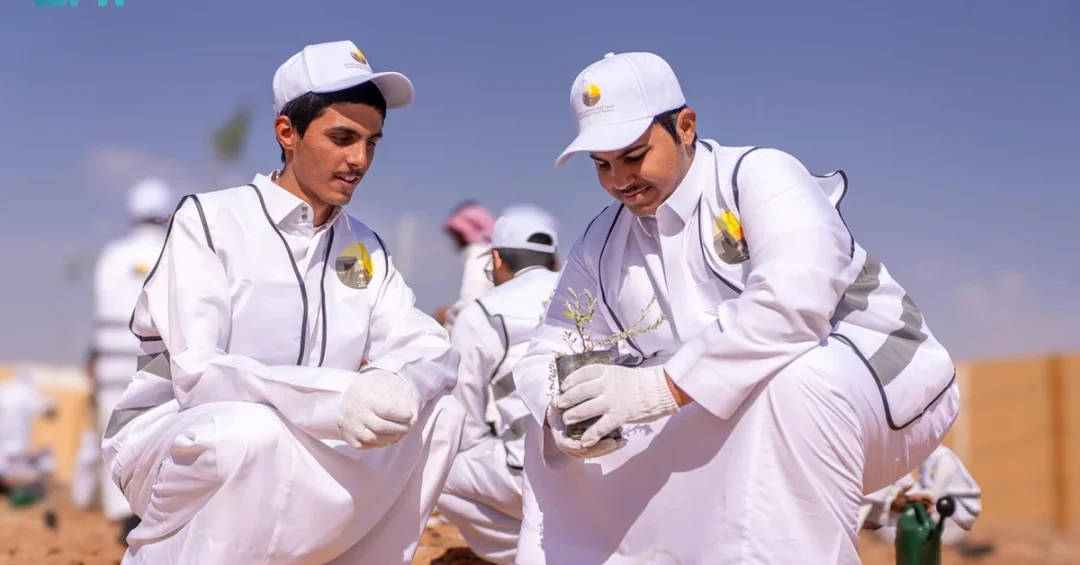
The King Abdulaziz Royal Reserve Development Authority has launched the second phase of a school-based environmental initiative, engaging 1,300 students who planted 1,600 native trees and seedlings across five school complexes. The initiative, reported by the Saudi Press Agency (SPA), aims to raise environmental awareness, encourage community involvement, and increase vegetation cover in line with the 2030 strategic targets for Royal Reserves and the Saudi Green Initiative.
Context and Background
The King Abdulaziz Royal Reserve, one of Saudi Arabia’s royal reserves, is dedicated to conserving biodiversity and promoting sustainable development. The authority’s school-based initiative is designed to educate young generations about the environment and motivate them to become environmental stewards. It includes interactive projects and volunteer opportunities for students, with volunteering hours recognized on the National Volunteer Portal, affiliated with the Ministry of Human Resources and Social Development. The first phase involved 500 students, and the second phase expanded to 1,300 students from all grades, demonstrating the program’s growing reach and impact.
Key Details
In the second phase, students from five school complexes planted 1,600 native trees and seedlings. By caring for these plants, students develop a deeper connection with their environment. The initiative aligns with the authority’s broader goals of increasing vegetation cover, educating young generations, and promoting sustainable practices. The volunteering hours are logged on the National Volunteer Portal, which encourages lifelong civic engagement. This hands-on experience not only enhances the students’ understanding of ecology but also contributes to the Kingdom’s environmental targets.
Implications and Impact
This initiative reflects Saudi Arabia’s commitment to environmental sustainability and youth empowerment. By involving students in planting native species, it supports the Saudi Green Initiative’s goal of planting 10 billion trees and restoring degraded land. The program also fosters a culture of volunteerism, aligning with Vision 2030’s aim to increase volunteerism rates. The expansion from 500 to 1,300 students indicates the program’s success and potential for further growth. It serves as a model for other regions, showcasing how community involvement can drive environmental progress.
Vision 2030 Alignment
The initiative directly supports Saudi Vision 2030 by promoting environmental sustainability, enhancing quality of life, and empowering youth. It aligns with the Saudi Green Initiative and the 2030 strategic targets for Royal Reserves, which aim to protect 30% of the Kingdom’s land and sea by 2030. Through such programs, Saudi Arabia is cultivating a generation of environmentally conscious citizens who will contribute to the nation’s sustainable future and global climate efforts.
20 Questions
Q1. What is the King Abdulaziz Royal Reserve Development Authority?
A1. It is a Saudi government body responsible for managing the King Abdulaziz Royal Reserve, focusing on conservation, biodiversity, and sustainable development in line with Saudi Vision 2030 and environmental goals.
Q2. What is the school-based initiative mentioned in the article?
A2. The initiative is a program by the King Abdulaziz Royal Reserve Development Authority to raise environmental awareness among students through interactive projects and volunteer opportunities, including planting native trees.
Q3. How many students participated in the second phase of the initiative?
A3. The second phase involved 1,300 students of all grades, an increase from the 500 students who participated in the first phase, demonstrating the program’s growing reach.
Q4. How many trees and seedlings were planted in the second phase?
A4. Students planted 1,600 native trees and seedlings across five school complexes during the second phase of the initiative.
Q5. What are the goals of the initiative?
A5. The initiative aims to increase vegetation cover, educate young generations about the environment, promote sustainable practices, and encourage community involvement in environmental stewardship.
Q6. How are students’ volunteering hours recognized?
A6. Volunteering hours are acknowledged on the National Volunteer Portal, which is affiliated with the Ministry of Human Resources and Social Development.
Q7. What is the National Volunteer Portal?
A7. It is an online platform managed by the Ministry of Human Resources and Social Development that records and recognizes volunteer hours, promoting civic engagement across Saudi Arabia.
Q8. What is the Saudi Green Initiative?
A8. The Saudi Green Initiative is a national effort to combat climate change, increase vegetation cover, and protect the environment, including planting 10 billion trees and reducing carbon emissions.
Q9. How does the initiative align with the 2030 strategic targets for Royal Reserves?
A9. It supports the targets by increasing vegetation cover, promoting biodiversity, and engaging communities, contributing to the goal of protecting 30% of Saudi Arabia’s land and sea by 2030.
Q10. Why is it important to plant native trees?
A10. Native trees are adapted to the local environment, require less water, and support local wildlife, thereby enhancing biodiversity and ecosystem resilience in Saudi Arabia.
Q11. How does the initiative benefit students?
A11. Students gain hands-on experience in environmental conservation, develop a deeper connection with nature, and learn the importance of sustainable practices and community service.
Q12. What is the significance of expanding from 500 to 1,300 students?
A12. The expansion shows the program’s success and scalability, allowing more students to participate and benefit, thereby amplifying the initiative’s impact on environmental awareness and volunteerism.
Q13. What role does the Ministry of Human Resources and Social Development play?
A13. The ministry oversees the National Volunteer Portal, which recognizes and promotes volunteerism, aligning with Vision 2030’s goal to increase volunteer participation in the Kingdom.
Q14. How does this initiative contribute to Vision 2030?
A14. It supports Vision 2030 by promoting environmental sustainability, enhancing quality of life, empowering youth, and fostering a culture of volunteerism, all key pillars of the vision.
Q15. What are royal reserves in Saudi Arabia?
A15. Royal reserves are protected areas managed for conservation, biodiversity, and sustainable development, contributing to environmental protection and eco-tourism under Vision 2030.
Q16. How many school complexes were involved in the second phase?
A16. Five school complexes participated in the second phase, serving as hubs for the planting activities and environmental education.
Q17. What types of activities are included in the initiative?
A17. The initiative includes interactive projects, volunteer opportunities, and tree planting, designed to engage students in environmental stewardship and sustainable practices.
Q18. How does the initiative promote community involvement?
A18. By involving students and schools, the initiative encourages community participation in environmental activities, fostering a collective responsibility for protecting natural resources.
Q19. What is the expected long-term impact of the initiative?
A19. The initiative is expected to increase vegetation cover, enhance biodiversity, and cultivate a generation of environmentally conscious citizens who will support Saudi Arabia’s sustainability goals.
Q20. How can other schools participate in similar initiatives?
A20. Schools can collaborate with the King Abdulaziz Royal Reserve Development Authority or other environmental bodies to organize planting events and educational programs, contributing to national sustainability efforts.
Reader Feedback
We value your thoughts. Please share your feedback on this article.
Your feedback helps us improve our coverage.