


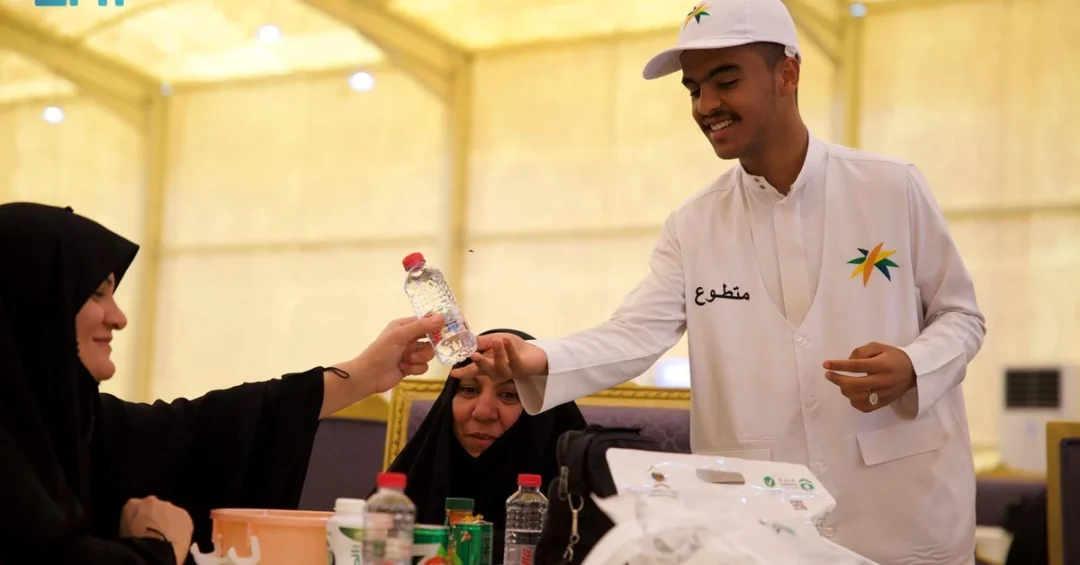
More than 194 volunteers from various government entities have contributed over 10,000 volunteer hours in just 11 days to serve Iraqi pilgrims entering the Kingdom through the Jadidat Arar border crossing, according to the Saudi Press Agency (SPA). The volunteers, both men and women, have been providing a wide range of services including assisting the elderly, distributing meals and drinks, checking vital signs, and offering medical assistance to pilgrims performing Hajj.
Context and Background
The Jadidat Arar border crossing, located in the Northern Borders Province, serves as a primary entry point for pilgrims traveling from Iraq to Saudi Arabia for the annual Hajj pilgrimage. This year, as in previous years, Saudi authorities have mobilized significant resources to ensure a smooth and comfortable journey for all pilgrims. The volunteer initiative is part of a broader effort by the Kingdom to provide exceptional services to guests of God, reflecting the leadership’s commitment to facilitating the pilgrimage experience.
Key Details
According to the Saudi Press Agency, the 194 volunteers represent multiple government entities and have collectively contributed more than 10,000 hours of service over the past 11 days. Their duties encompass a variety of tasks aimed at meeting the needs of pilgrims, particularly the elderly and those requiring medical attention. Volunteers have been distributing meals and drinks, monitoring vital signs, and providing first aid when necessary. This hands-on approach underscores Saudi Arabia’s dedication to the well-being of pilgrims and the seamless operation of Hajj-related services.
Implications and Impact
The volunteer efforts at Jadidat Arar have significant implications for the overall Hajj experience. By ensuring that pilgrims receive timely assistance and care from the moment they enter the Kingdom, Saudi Arabia reinforces its reputation for hospitality and organizational excellence. This initiative also highlights the collaborative work between various government agencies, demonstrating the effectiveness of coordinated efforts in managing large-scale events. Furthermore, the presence of both male and female volunteers reflects the inclusive nature of Saudi society and the growing role of women in public service, aligning with broader social reforms.
Vision 2030 Alignment
This volunteer program is closely aligned with Saudi Vision 2030, which seeks to enhance the quality of life, promote volunteerism, and improve services for pilgrims. By investing in human capital and fostering a culture of giving, the Kingdom is not only facilitating a smoother Hajj but also showcasing its ability to host millions of visitors with efficiency and care. Such initiatives contribute to the ambitious goals of Vision 2030 by strengthening the nation’s spiritual and logistical infrastructure, ultimately enriching the pilgrimage journey for all.
20 Questions
Q1. What is the Jadidat Arar border crossing?
A1. The Jadidat Arar border crossing is a key entry point for pilgrims traveling from Iraq to Saudi Arabia, located in the Northern Borders Province. It facilitates the arrival of Iraqi pilgrims for Hajj.
Q2. How many volunteers participated in the initiative?
A2. According to the Saudi Press Agency, 194 volunteers from various government entities took part in the initiative, serving pilgrims at the Jadidat Arar crossing.
Q3. How many volunteer hours were contributed?
A3. The volunteers contributed over 10,000 hours in just 11 days, demonstrating a significant commitment to serving the pilgrims and ensuring their comfort.
Q4. What services did the volunteers provide?
A4. Volunteers helped the elderly, distributed meals and drinks, checked vital signs, and provided medical assistance, among other services, to meet the needs of the pilgrims.
Q5. Which government entities were involved?
A5. The article does not specify the exact entities, but it states that volunteers came from various government entities, highlighting a coordinated effort across multiple agencies.
Q6. When did this initiative take place?
A6. The initiative took place over 11 days leading up to June 3, 2024, as reported by the Saudi Press Agency, coinciding with the Hajj season.
Q7. Why is this initiative important?
A7. It ensures that Iraqi pilgrims receive necessary assistance and care upon entering the Kingdom, enhancing their Hajj experience and reflecting Saudi Arabia’s commitment to hospitality.
Q8. How does this align with Vision 2030?
A8. It aligns with Vision 2030 by promoting volunteerism, improving services for pilgrims, and enhancing the quality of life, contributing to the Kingdom’s broader goals.
Q9. Were both men and women involved?
A9. Yes, volunteers of both genders participated, showcasing inclusivity and the growing role of women in public service in Saudi Arabia.
Q10. What is the significance of the Jadidat Arar crossing?
A10. It is a vital route for Iraqi pilgrims, and the services provided there help facilitate a smooth and comfortable entry for those performing Hajj.
Q11. How does this reflect Saudi Arabia’s leadership?
A11. It demonstrates Saudi Arabia’s proactive approach to managing Hajj operations, ensuring the well-being of pilgrims, and upholding its role as the custodian of the Two Holy Mosques.
Q12. What kind of medical assistance was provided?
A12. Volunteers checked vital signs and provided medical assistance, which likely included first aid and basic health checks to address any immediate concerns.
Q13. How many days did the volunteers serve?
A13. They served over a period of 11 days, during which they accumulated more than 10,000 volunteer hours, as reported by the Saudi Press Agency.
Q14. What is the broader impact of such initiatives?
A14. These initiatives enhance Saudi Arabia’s reputation for excellent Hajj management, foster goodwill among pilgrims, and contribute to the overall success of the pilgrimage season.
Q15. Are there similar initiatives at other border crossings?
A15. While the article focuses on Jadidat Arar, Saudi Arabia typically implements similar volunteer programs at various entry points to serve pilgrims during Hajj.
Q16. How do volunteers contribute to the pilgrims’ experience?
A16. By providing essential services and support, volunteers help pilgrims feel welcomed and cared for, allowing them to focus on their spiritual journey.
Q17. What role do government entities play in this initiative?
A17. Government entities organize and support the volunteers, ensuring that resources and personnel are effectively deployed to meet the needs of pilgrims.
Q18. How does this initiative reflect Saudi culture?
A18. It embodies the values of hospitality, generosity, and community service that are central to Saudi culture and Islamic traditions.
Q19. What is the expected outcome of this volunteer effort?
A19. The effort aims to facilitate a smooth and spiritually fulfilling Hajj for Iraqi pilgrims, while showcasing Saudi Arabia’s organizational capabilities and commitment to service.
Q20. How can others get involved in similar volunteer activities?
A20. Those interested can explore opportunities through official Saudi government platforms and volunteer organizations that coordinate Hajj-related services.
Reader Feedback
We value your thoughts. Please share your feedback on this article.
Your feedback helps us improve our coverage.