


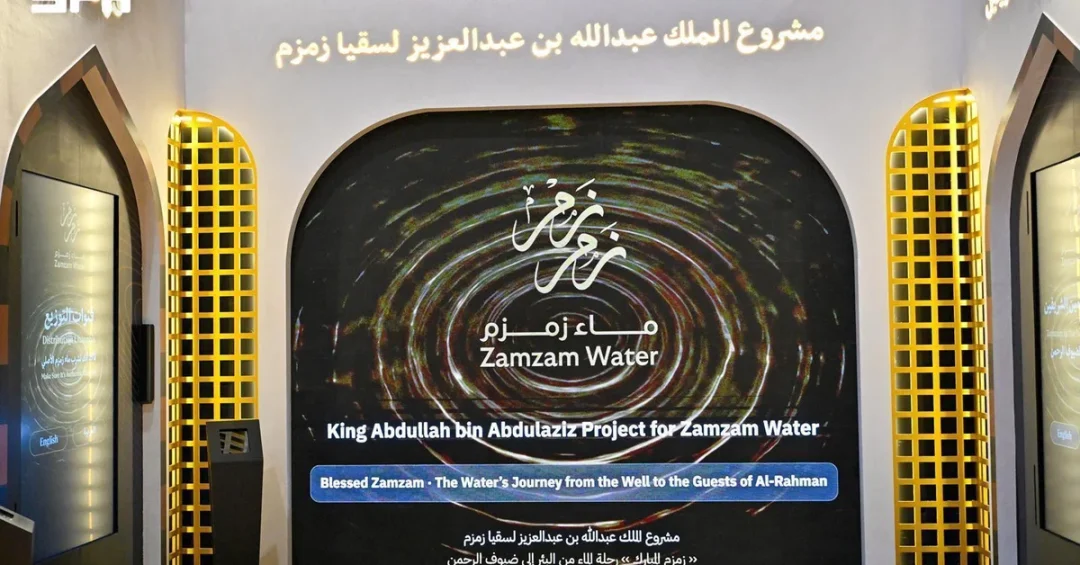
The King Abdullah bin Abdulaziz Project for Zamzam Water is showcasing a comprehensive historical exhibition at the Hajj Conference and Exhibition in Jeddah, tracing the stewardship and distribution of Zamzam water from the era of King Abdulaziz Al Saud to the reign of Custodian of the Two Holy Mosques King Salman bin Abdulaziz Al Saud, as reported by the Saudi Press Agency (SPA). The pavilion offers visitors a unique journey through the religious and historical significance of Zamzam water, while highlighting the Kingdom of Saudi Arabia’s unwavering commitment to serving pilgrims and visitors to the Two Holy Mosques. Have you ever wondered how the sacred Zamzam water reaches millions of pilgrims each year with such efficiency and care? This exhibition provides the answer, detailing the evolution of water distribution services that reflect the leadership’s dedication to facilitating the performance of rituals.
The project’s participation in the conference and exhibition aims to familiarize attendees with the rich history of Zamzam water services and their continuous development throughout the Saudi era. It underscores ongoing efforts to improve the efficiency of water distribution, enhance the pilgrim experience, and align with the objectives of Saudi Vision 2030. The exhibition serves as a testament to the Kingdom’s steadfast commitment to preserving this holy tradition and ensuring that every pilgrim has access to this blessed water. Isn’t it remarkable how modern technology and ancient tradition come together to serve millions of faithful? The pavilion not only educates but also inspires, showcasing the meticulous planning and execution that goes into this sacred duty.
Context and Background
Zamzam water holds a profound place in Islamic history, believed to have sprung from the earth thousands of years ago to quench the thirst of the infant Ishmael and his mother Hagar. Since the dawn of Islam, the well has been a vital source of spiritual and physical sustenance for pilgrims performing Hajj and Umrah. The responsibility of caring for the Zamzam well and distributing its water has historically fallen to the custodians of the holy cities, a duty that the Al Saud family has embraced with great reverence since the founding of the modern Kingdom. How has this sacred trust been preserved through the ages? The answer lies in the unwavering dedication of Saudi leadership, from King Abdulaziz to King Salman, who have continuously invested in infrastructure and services to ensure the water reaches all visitors.
The King Abdullah bin Abdulaziz Project for Zamzam Water was established to centralize and modernize the distribution of Zamzam water, ensuring the highest standards of purity and accessibility. Named after the late King Abdullah, who was known for his visionary projects in service of the Two Holy Mosques, the project operates under the umbrella of the General Presidency for the Affairs of the Grand Mosque and the Prophet’s Mosque. It employs advanced filtration, sterilization, and packaging technologies to provide Zamzam water to millions of pilgrims annually. The project’s participation in the Hajj Conference and Exhibition is a reflection of its commitment to transparency and education, offering a platform to share its journey and achievements with a global audience. What drives such meticulous attention to detail? It is the profound respect for the sanctity of Zamzam and the comfort of the guests of God.
Key Details of the Exhibition
The pavilion at the Hajj Conference and Exhibition presents a chronological narrative of Zamzam water services, beginning with the era of King Abdulaziz Al Saud, who laid the foundation for organized distribution. Visitors can explore historical photographs, documents, and interactive displays that illustrate the evolution from traditional methods to today’s sophisticated systems. The exhibition highlights key milestones, such as the establishment of dedicated pumping stations, the introduction of automated bottling lines, and the implementation of rigorous quality control measures. Each stage reflects the Kingdom’s progressive approach to serving pilgrims, blending tradition with innovation. Have you ever considered the logistics behind providing Zamzam water to over two million people during Hajj? The exhibition breaks down these complexities, showcasing the seamless coordination between various government agencies.
Moreover, the pavilion emphasizes the religious and historical significance of Zamzam, educating visitors about its spiritual importance and the rituals associated with it. It also details the ongoing efforts to improve water distribution efficiency, such as the expansion of distribution points across the Grand Mosque and the Prophet’s Mosque, and the use of eco-friendly packaging. The project’s alignment with Vision 2030 is evident in its focus on sustainability, digitalization, and enhancing the pilgrim experience. By participating in this exhibition, the project not only commemorates past achievements but also sets the stage for future advancements. Isn’t it inspiring to see how a centuries-old tradition is being transformed through modern technology and visionary leadership?
International and Regional Impact
The exhibition and the broader efforts of the King Abdullah bin Abdulaziz Project for Zamzam Water have significant implications for international relations and regional cooperation. Pilgrims from over 180 countries visit the Two Holy Mosques each year, and the reliable provision of Zamzam water enhances the Kingdom’s reputation as a gracious host and custodian of Islam’s holiest sites. This strengthens diplomatic ties and fosters goodwill among Muslim-majority nations and beyond. The project’s emphasis on quality and efficiency also sets a benchmark for other countries managing large-scale religious gatherings, such as Iraq and India. How does this impact the global perception of Saudi Arabia? It reinforces the Kingdom’s image as a leader in service, innovation, and dedication to religious heritage.
Regionally, the project contributes to the economic and social fabric of the Kingdom by creating jobs, supporting local industries, and promoting sustainable practices. It also plays a role in the broader context of Saudi Vision 2030, which seeks to diversify the economy and enhance the quality of life for citizens and visitors alike. The exhibition at the Hajj Conference and Exhibition serves as a platform for knowledge exchange, attracting experts and officials from around the world who are interested in learning from Saudi Arabia’s experience. This exchange can lead to partnerships and collaborations that further improve services. Isn’t it fascinating how a single project can have such far-reaching effects? The ripple effects of this initiative extend well beyond the borders of the Kingdom.
Economic and Strategic Significance
From an economic perspective, the King Abdullah bin Abdulaziz Project for Zamzam Water represents a strategic investment in infrastructure that yields long-term benefits. The project’s operations require advanced machinery, packaging materials, and logistics, which stimulate local industries and create employment opportunities for Saudi citizens. It also supports the growth of the Hajj and Umrah sector, a vital component of the Kingdom’s economy under Vision 2030, which aims to increase the number of pilgrims to 30 million by 2030. By ensuring a seamless and spiritually fulfilling experience, the project helps attract more visitors, thereby boosting revenue from religious tourism. How does this align with economic diversification? It reduces dependence on oil by enhancing the services sector and promoting sustainable development.
Strategically, the project reinforces Saudi Arabia’s role as the heart of the Islamic world, a position that carries immense soft power and diplomatic weight. The careful management of Zamzam water demonstrates the Kingdom’s capability to handle large-scale logistical challenges, which is crucial for the success of major events like Hajj and Umrah. It also showcases the integration of cutting-edge technology in service of religious duties, positioning Saudi Arabia as a model for others. The project’s participation in the Hajj Conference and Exhibition is a strategic move to communicate these strengths to a global audience, further solidifying the Kingdom’s leadership. Isn’t it clear that this project is more than just about water? It is about upholding a sacred trust and advancing a nation’s vision.
Vision 2030 Alignment
The King Abdullah bin Abdulaziz Project for Zamzam Water is intrinsically linked to Saudi Vision 2030, the ambitious blueprint for the Kingdom’s future. Vision 2030 emphasizes the importance of serving pilgrims and enhancing the Hajj and Umrah experience as part of its goal to become a global leader in religious tourism. The project’s focus on efficiency, sustainability, and innovation directly supports these objectives. By continuously improving water distribution services, the project ensures that pilgrims can perform their rituals with ease and comfort, reflecting the Vision’s commitment to quality of life and spiritual well-being. How does this project embody the spirit of Vision 2030? It demonstrates the Kingdom’s dedication to modernization while preserving its cultural and religious heritage.
Furthermore, the project contributes to the Vision’s economic goals by creating a conducive environment for religious tourism, which is a key pillar of economic diversification. It also aligns with the Vision’s emphasis on digital transformation and smart solutions, as seen in the use of automated systems and data management to optimize distribution. The exhibition at the Hajj Conference and Exhibition is a testament to the Kingdom’s transparency and willingness to share its journey with the world. As Saudi Arabia continues to progress under the leadership of Custodian of the Two Holy Mosques King Salman bin Abdulaziz Al Saud and His Royal Highness Crown Prince Mohammed bin Salman, projects like this will remain central to its success. Isn’t it evident that the Kingdom is not only preserving a sacred tradition but also building a brighter future for all? The King Abdullah bin Abdulaziz Project for Zamzam Water stands as a shining example of how Vision 2030 is being realized on the ground, one drop at a time.
20 Questions
Q1. What is the King Abdullah bin Abdulaziz Project for Zamzam Water?
A1. It is a dedicated initiative under the General Presidency for the Affairs of the Grand Mosque and the Prophet’s Mosque, responsible for the modern distribution of Zamzam water to pilgrims and visitors, ensuring purity and efficiency.
Q2. Where is the exhibition featuring this project taking place?
A2. The exhibition is part of the Hajj Conference and Exhibition in Jeddah, Saudi Arabia, where the project’s pavilion showcases the history and development of Zamzam water services.
Q3. What historical periods does the exhibition cover?
A3. It traces the stewardship of Zamzam water from the era of King Abdulaziz Al Saud to the reign of Custodian of the Two Holy Mosques King Salman bin Abdulaziz Al Saud, highlighting key developments.
Q4. Why is Zamzam water significant in Islam?
A4. Zamzam water is believed to have miraculously sprung for the infant Ishmael and his mother Hagar. It holds deep spiritual significance and is consumed by millions of pilgrims during Hajj and Umrah.
Q5. How does the project improve water distribution efficiency?
A5. The project uses advanced filtration, sterilization, and automated bottling systems, along with expanded distribution points, to ensure timely and safe access to Zamzam water for all pilgrims.
Q6. What role does the project play in Saudi Vision 2030?
A6. It aligns with Vision 2030 by enhancing the pilgrim experience, promoting sustainability, and supporting economic diversification through religious tourism, a key sector for the Kingdom’s future.
Q7. How many pilgrims benefit from this project annually?
A7. Millions of pilgrims performing Hajj and Umrah each year benefit from the project, which ensures that Zamzam water is readily available at the Two Holy Mosques and distribution points.
Q8. What are some key milestones in the project’s history?
A8. Milestones include the establishment of dedicated pumping stations, introduction of automated bottling lines, and implementation of rigorous quality control measures, reflecting continuous improvement over decades.
Q9. How does the exhibition educate visitors about Zamzam water?
A9. The pavilion features historical photographs, documents, and interactive displays that illustrate the evolution of distribution services and the religious significance of Zamzam water.
Q10. What is the significance of the project’s participation in the Hajj Conference?
A10. It provides a platform to share the Kingdom’s efforts in serving pilgrims, demonstrate transparency, and exchange knowledge with international experts, reinforcing Saudi Arabia’s leadership in religious tourism.
Q11. How does the project ensure the purity of Zamzam water?
A11. The project employs state-of-the-art filtration and sterilization technologies, along with regular quality checks, to maintain the highest standards of purity and safety for consumption.
Q12. What economic benefits does the project bring to Saudi Arabia?
A12. It stimulates local industries, creates jobs, and supports the Hajj and Umrah sector, contributing to economic diversification and the goals of Vision 2030 to boost non-oil revenue.
Q13. How does the project enhance the pilgrim experience?
A13. By ensuring easy access to Zamzam water through efficient distribution networks and eco-friendly packaging, the project allows pilgrims to focus on their spiritual rituals without logistical concerns.
Q14. What technological innovations are used in the distribution process?
A14. Innovations include automated bottling lines, smart distribution systems, and data management tools that optimize supply and reduce waste, reflecting the Kingdom’s embrace of digital transformation.
Q15. How does the project handle the peak demand during Hajj season?
A15. The project scales up production and distribution capacities, coordinates with various agencies, and uses real-time monitoring to meet the high demand during Hajj, ensuring no shortages occur.
Q16. What is the historical role of Saudi leadership in managing Zamzam water?
A16. Since the founding of the modern Kingdom, Saudi leaders have prioritized the care of Zamzam water, investing in infrastructure and services to serve pilgrims, a tradition continued by King Salman.
Q17. How does the project contribute to environmental sustainability?
A17. It promotes eco-friendly packaging, reduces water waste through efficient systems, and implements recycling initiatives, aligning with Vision 2030’s environmental sustainability goals.
Q18. What international recognition has the project received?
A18. The project is recognized globally for its excellence in service and innovation, often cited as a model for managing large-scale religious gatherings and water distribution in arid regions.
Q19. How can visitors learn more about the project outside the exhibition?
A19. Information is available through official Saudi government websites, the General Presidency’s publications, and the project’s dedicated communication channels, ensuring transparency and accessibility.
Q20. What future developments are planned for the project?
A20. Future plans include further digitalization, expansion of distribution points, and adoption of new technologies to enhance efficiency and sustainability, in line with Vision 2030’s objectives.
Reader Feedback
We value your thoughts. Please share your feedback on this article.
Your feedback helps us improve our coverage.
Related articles
 Arab Justice Ministers Council Opens 42nd Session in Algeria
 KSrelief Distributes Personal Care Kits in Yemen’s Marib
 KSrelief Delivers 25,000 Hot Meals in Gaza
 KSrelief Expands Water Aid to Displaced Families in Yemen
 Hajj Conference Discusses Aligning Pilgrim Accommodation Capacity with Service Quality
 Hajj Conference Highlights Nusuk Masar’s Digital Role