


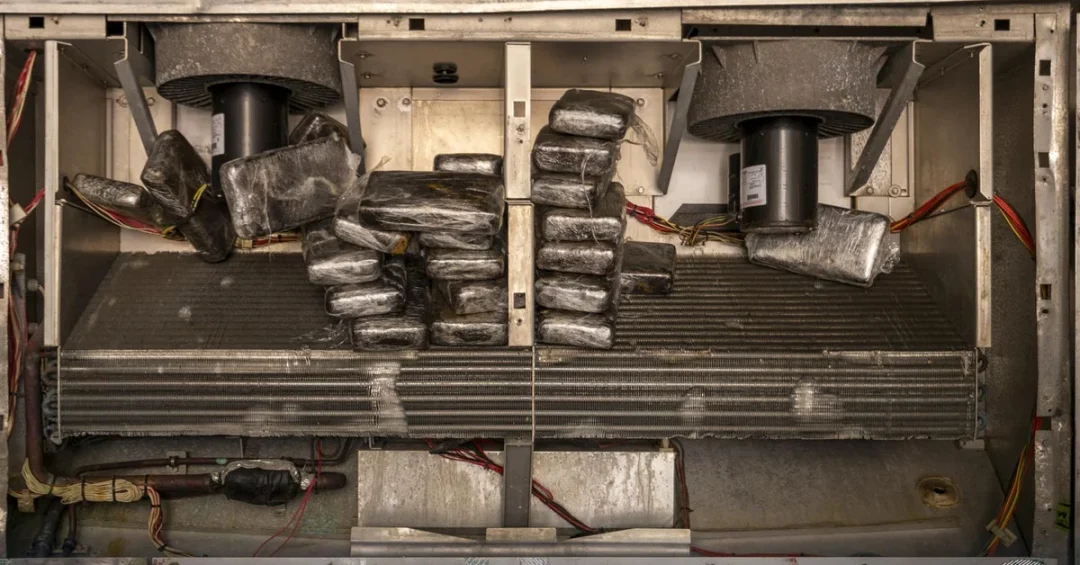
The Zakat, Tax and Customs Authority (ZATCA) at King Abdullah Port in Rabigh has foiled an attempt to smuggle 54 kilograms of cocaine hidden in a consignment of bananas entering the Kingdom. The successful interception underscores Saudi Arabia’s unwavering commitment to securing its borders and protecting society from the scourge of narcotics, in line with the directives of the Kingdom’s leadership.
Context and Background
Saudi Arabia has long maintained a zero-tolerance policy toward smuggling and illicit trade, recognizing the severe threat that drugs pose to public health, social stability, and national security. ZATCA, which is responsible for customs enforcement at all ports of entry, employs advanced inspection technologies and intelligence-sharing protocols to detect and deter smuggling attempts. King Abdullah Port in Rabigh, a major gateway on the Red Sea coast, is equipped with state-of-the-art scanning systems and highly trained personnel who work around the clock to scrutinize incoming cargo. This recent seizure highlights the effectiveness of these measures and the authority’s vigilance in safeguarding the Kingdom’s imports and exports.
Key Details
According to an official statement released by ZATCA, the cocaine was discovered concealed within a shipment of bananas. The authority acted on intelligence and conducted a thorough inspection, leading to the discovery of 54 kilograms of the illegal substance. ZATCA emphasized that it will continue to tighten customs control and remain vigilant in thwarting smuggling attempts, in close coordination with its partners at the General Directorate of Narcotics Control. The authority reiterated its commitment to ensuring the security of society and the national economy. It also called upon the public to contribute to the fight against smuggling by reporting suspicious activities through the hotline 1910, via email at [email protected], or through the international number 00966114208417. All reports are treated with complete confidentiality, and financial rewards are granted for accurate information that leads to the interception of smuggling attempts.
Implications and Impact
This successful operation sends a strong message that Saudi Arabia will not tolerate any attempt to compromise the safety of its citizens and residents. The seizure of such a large quantity of cocaine prevents significant harm to individuals and communities, and disrupts the operations of criminal networks seeking to exploit the Kingdom’s trade routes. It also reinforces the effectiveness of inter-agency cooperation between ZATCA and the General Directorate of Narcotics Control, demonstrating the Kingdom’s robust defense against transnational crime. Furthermore, the incident highlights the importance of public vigilance and the role of community reporting in supporting law enforcement efforts. By protecting its borders, Saudi Arabia not only upholds its own security but also contributes to regional and global efforts to combat the illegal drug trade.
Vision 2030 Alignment
The thwarting of this smuggling attempt aligns seamlessly with Saudi Arabia’s Vision 2030, which aims to enhance national security, promote a healthy society, and foster a prosperous economy. A secure environment is essential for attracting investment, boosting tourism, and improving the quality of life for all. ZATCA’s diligent efforts reflect the Kingdom’s broader commitment to upholding the rule of law and ensuring that its ports remain safe and efficient gateways for legitimate trade. As Saudi Arabia continues to diversify its economy and strengthen its global connections, the protection of its borders remains a cornerstone of its strategic objectives, ensuring a safe and thriving future for generations to come.
20 Questions
Q1. What did ZATCA foil at King Abdullah Port in Rabigh?
A1. ZATCA thwarted an attempt to smuggle 54 kilograms of cocaine hidden in a consignment of bananas that was entering the Kingdom through the port.
Q2. How much cocaine was seized in this operation?
A2. The authorities seized exactly 54 kilograms of cocaine, a significant quantity that could have caused considerable harm to society if it had reached the streets.
Q3. Where was the cocaine hidden?
A3. The cocaine was concealed within a shipment of bananas, a common tactic used by smugglers to evade detection by hiding illicit goods among legitimate cargo.
Q4. Which Saudi authority was responsible for this seizure?
A4. The Zakat, Tax and Customs Authority (ZATCA) carried out the seizure at King Abdullah Port in Rabigh, demonstrating its vigilance in customs enforcement.
Q5. What is ZATCA’s role in combating smuggling?
A5. ZATCA is responsible for customs control at all ports, detecting and preventing smuggling attempts, and coordinating with other agencies to protect society and the national economy.
Q6. How does ZATCA coordinate with other agencies?
A6. ZATCA works closely with the General Directorate of Narcotics Control and other partners to share intelligence and execute joint operations against smuggling networks.
Q7. What hotline can the public use to report smuggling?
A7. The public can call the hotline 1910, email [email protected], or use the international number 00966114208417 to report suspicious activities related to smuggling.
Q8. Are reports kept confidential?
A8. Yes, ZATCA receives all reports in complete confidentiality, ensuring the safety and privacy of those who provide information about smuggling attempts.
Q9. Does ZATCA offer rewards for information?
A9. Yes, ZATCA grants financial rewards to individuals who provide correct information that leads to the thwarting of smuggling attempts and customs violations.
Q10. What is the significance of King Abdullah Port in Rabigh?
A10. King Abdullah Port is a major commercial gateway on the Red Sea, playing a vital role in Saudi Arabia’s trade and economy, and thus requires rigorous customs oversight.
Q11. How does this seizure impact Saudi society?
A11. By intercepting 54 kilograms of cocaine, the operation prevents potential drug abuse and protects families and communities from the devastating effects of narcotics.
Q12. What technologies does ZATCA use to detect smuggling?
A12. ZATCA employs advanced scanning systems, X-ray machines, and other inspection technologies to scrutinize cargo and identify concealed illicit goods at ports.
Q13. How does this operation reflect Saudi Arabia’s commitment to security?
A13. It demonstrates the Kingdom’s unwavering resolve to secure its borders and combat transnational crime, in line with the leadership’s directives to protect society.
Q14. What message does this send to smugglers?
A14. It sends a clear message that Saudi Arabia will not tolerate any attempt to smuggle drugs and that offenders will be caught and prosecuted to the fullest extent of the law.
Q15. How does this align with Vision 2030?
A15. Vision 2030 aims to enhance national security and quality of life; this operation supports those goals by keeping drugs off the streets and ensuring a safe environment.
Q16. What role does the public play in combating smuggling?
A16. The public can contribute by reporting suspicious activities to ZATCA, thereby aiding authorities in intercepting smuggling attempts and protecting the nation.
Q17. Are there other recent successes in combating smuggling?
A17. ZATCA regularly reports seizures of contraband, including drugs, at various ports, reflecting its ongoing commitment to border security and public safety.
Q18. How does drug smuggling affect the national economy?
A18. Drug smuggling undermines economic stability by diverting resources, fostering crime, and harming productivity; ZATCA’s efforts protect the economy from such threats.
Q19. What penalties exist for smuggling in Saudi Arabia?
A19. Saudi law imposes severe penalties on smugglers, including imprisonment, fines, and confiscation of assets, to deter such crimes and uphold justice.
Q20. How can the international community support Saudi Arabia’s efforts?
A20. The international community can collaborate through intelligence sharing and joint operations, recognizing that combating drug trafficking requires global cooperation and commitment.
Reader Feedback
We value your thoughts. Please share your feedback on this article.
Your feedback helps us improve our coverage.