


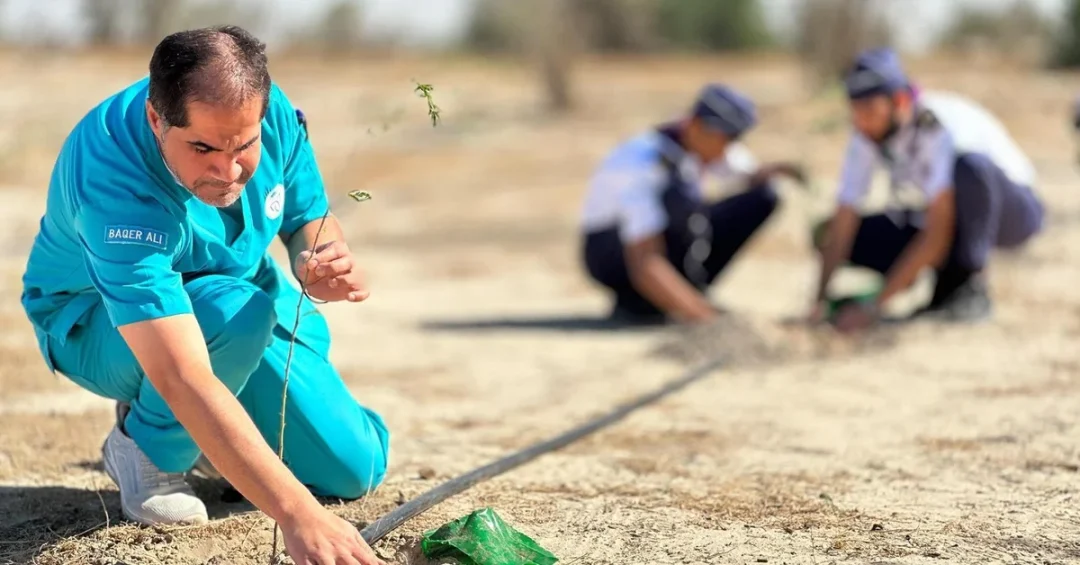
Al-Ahsa Technical College participated today, November 18, 2026, in the National Afforestation Season 2026–2027 campaign at Al-Ahsa National Park, planting native seedlings as part of its social responsibility and commitment to supporting national environmental initiatives. The event, reported by the Saudi Press Agency (SPA), drew active participation from the college’s trainees and staff, who planted species suited to the region’s environment. This reflects the Technical and Vocational Training Corporation’s commitment to promoting quality of life and sustainable development. The campaign is organized by the Eastern Region branch of the National Center for Vegetation Cover Development and Combating Desertification, in cooperation with the National Center for the Prevention and Control of Plant Pests and Animal Diseases (Weqaa). It also builds on the college’s volunteer and community partnerships to promote biodiversity, combat desertification, improve the quality of rangeland environments, and raise environmental awareness, in line with the objectives of the Saudi Green Initiative. How does such a localized effort contribute to a nationwide transformation? The answer lies in the Kingdom’s integrated approach to environmental sustainability, where every planted seedling represents a step toward a greener future.
The National Afforestation Season is a key component of the Saudi Green Initiative, launched in 2021 under the leadership of His Royal Highness Crown Prince Mohammed bin Salman. The initiative aims to plant 10 billion trees across Saudi Arabia in the coming decades, equivalent to rehabilitating 40 million hectares of degraded land. This ambitious target is part of the Kingdom’s broader environmental strategy, which includes reducing carbon emissions by 278 million tons annually and increasing the share of renewable energy in the national grid. The participation of educational institutions like Al-Ahsa Technical College underscores the whole-of-society approach that Saudi Arabia is taking to achieve these goals. By engaging trainees and staff in hands-on environmental work, the campaign not only expands vegetation cover but also instills a culture of sustainability in the next generation of Saudi professionals.
Context and Background
Why is afforestation so critical for Saudi Arabia’s environmental future? The Kingdom faces significant challenges from desertification, with over 90% of its land area classified as arid or semi-arid. Rapid urbanization, climate change, and unsustainable land use practices have exacerbated soil degradation and reduced biodiversity. In response, the Saudi Green Initiative and its afforestation campaigns aim to restore ecological balance, enhance air quality, and mitigate the effects of dust storms. The National Center for Vegetation Cover Development and Combating Desertification, established in 2019, leads these efforts by implementing large-scale planting projects, protecting existing vegetation, and promoting sustainable land management. The Eastern Region, where Al-Ahsa is located, is particularly important due to its vast desert landscapes and the presence of the Al-Ahsa Oasis, a UNESCO World Heritage Site. The oasis, with its millions of palm trees, serves as a natural buffer against desert encroachment and a model for sustainable oasis agriculture.
Al-Ahsa Technical College, part of the Technical and Vocational Training Corporation (TVTC), has a long-standing commitment to community service and environmental stewardship. The college offers specialized programs in fields such as agriculture, engineering, and information technology, equipping students with skills that align with Vision 2030’s economic diversification goals. Its participation in the afforestation campaign is not an isolated event but part of a broader strategy to integrate environmental education into vocational training. By involving trainees in planting native seedlings, the college provides practical experience in sustainable agriculture and land restoration, preparing them for careers in the growing green economy. This approach also strengthens partnerships with government agencies like the National Center for Vegetation Cover Development and Combating Desertification and Weqaa, fostering collaboration that amplifies the impact of national initiatives.
The National Afforestation Season 2026–2027 campaign is one of many seasonal planting drives organized across the Kingdom. These campaigns typically run from October to April, when temperatures are milder and rainfall more likely, optimizing seedling survival rates. The Eastern Region branch has been particularly active, targeting areas such as Al-Ahsa National Park, which serves as a recreational and ecological hub for local communities. The park, managed by the Al-Ahsa Municipality, features walking trails, picnic areas, and educational exhibits, making it an ideal venue for public engagement. By planting native species like ghaf, sidr, and acacia, participants help restore the region’s natural flora, which supports wildlife and improves soil quality. These species are well-adapted to the local climate, requiring minimal irrigation and providing shade that reduces ground temperatures, creating microclimates that benefit other plants.
Key Details
What exactly did the Al-Ahsa Technical College participants achieve during the campaign? According to SPA, the event saw active participation from trainees and staff who planted native seedlings suited to the region’s environment. While the exact number of seedlings planted was not specified, such campaigns typically involve hundreds of volunteers and result in thousands of seedlings being planted in a single day. The college’s involvement included not only planting but also educational sessions on seedling care, irrigation techniques, and the importance of biodiversity. Participants learned about the role of native plants in combating desertification, such as their deep root systems that stabilize soil and their ability to thrive in harsh conditions. The event also highlighted the use of treated wastewater for irrigation, a sustainable practice promoted by the National Center for Vegetation Cover Development and Combating Desertification to conserve freshwater resources.
The cooperation with Weqaa, the National Center for the Prevention and Control of Plant Pests and Animal Diseases, added a crucial dimension to the campaign. Weqaa’s experts provided guidance on pest management and plant health, ensuring that the newly planted seedlings have the best chance of survival. This integrated approach—combining planting with protection—reflects a sophisticated understanding of ecosystem management. Weqaa’s role is particularly important in afforestation projects, as young trees are vulnerable to pests and diseases that can undermine reforestation efforts. By training participants in early detection and control methods, the campaign builds local capacity to maintain the newly created green spaces. This collaboration between educational institutions, environmental agencies, and pest control authorities exemplifies the multi-sectoral partnerships that are driving Saudi Arabia’s environmental agenda.
The college’s participation also builds on its existing volunteer and community partnerships. Al-Ahsa Technical College has a robust volunteer program that encourages students to engage in community service, from environmental clean-ups to awareness campaigns. These activities are aligned with the TVTC’s strategic objectives, which include fostering social responsibility and promoting sustainable development. By participating in the National Afforestation Season, the college reinforces its role as a community leader and contributes to the Kingdom’s environmental targets. The event also provided an opportunity for trainees to develop soft skills such as teamwork, leadership, and communication, which are essential for their future careers. Moreover, the involvement of staff members demonstrates a commitment to lifelong learning and active citizenship, setting a positive example for students.
International and Regional Impact
How does Saudi Arabia’s afforestation drive resonate beyond its borders? The Saudi Green Initiative and the Middle East Green Initiative, both launched by Crown Prince Mohammed bin Salman, have regional and global significance. The Middle East Green Initiative aims to plant 50 billion trees across the Middle East, equivalent to 5% of the global tree-planting target, and to reduce carbon emissions from hydrocarbon production in the region by more than 60%. These initiatives position Saudi Arabia as a leader in environmental diplomacy and climate action, enhancing its standing in international forums such as the United Nations and the G20. By sharing expertise and mobilizing resources, the Kingdom is fostering regional cooperation on desertification, which affects many countries in the Middle East and North Africa. The National Afforestation Season serves as a model that other nations can replicate, showcasing how public-private partnerships and community engagement can drive large-scale ecological restoration.
Regionally, the campaign contributes to the stability and prosperity of the Eastern Province, which is a vital economic hub for Saudi Arabia. The province is home to major oil facilities, industrial cities, and the Al-Ahsa Oasis, which supports agriculture and tourism. By combating desertification, the afforestation campaign helps protect these assets from sand encroachment and land degradation. It also improves the quality of life for residents by creating green spaces that offer recreational opportunities and health benefits. Furthermore, the involvement of educational institutions like Al-Ahsa Technical College strengthens the social fabric by fostering a sense of ownership and pride in local environmental stewardship. This grassroots engagement is essential for the long-term success of national initiatives, as it ensures that communities are active participants rather than passive beneficiaries.
Economic and Strategic Significance
What economic benefits does afforestation bring to Saudi Arabia? Beyond environmental gains, the National Afforestation Season contributes to economic diversification and job creation, key pillars of Vision 2030. The green economy is a growing sector, with opportunities in sustainable agriculture, ecotourism, and renewable energy. By training students in native plant cultivation and land restoration, Al-Ahsa Technical College is preparing a workforce that can support these industries. Graduates may find employment in government agencies like the National Center for Vegetation Cover Development and Combating Desertification, private landscaping companies, or agricultural enterprises. Moreover, the campaign itself generates economic activity through the procurement of seedlings, irrigation equipment, and services, benefiting local nurseries and contractors. The use of treated wastewater for irrigation also reduces costs and conserves precious freshwater, demonstrating a circular economy approach.
Strategically, the afforestation initiative enhances Saudi Arabia’s food and water security. By restoring rangelands and increasing vegetation cover, the Kingdom can improve soil fertility and support sustainable grazing, which benefits livestock herders. The Al-Ahsa Oasis, with its date palm production, is a prime example of how sustainable land management can yield economic returns. The campaign also aligns with the National Environment Strategy, which aims to protect 30% of Saudi Arabia’s land and sea by 2030. Achieving this target requires extensive reforestation and habitat restoration, which in turn supports biodiversity and ecosystem services. The participation of technical colleges ensures that the next generation of workers is equipped with the skills to maintain and expand these green assets, creating a virtuous cycle of environmental and economic progress.
Vision 2030 Alignment
How does the Al-Ahsa Technical College’s participation reflect the broader goals of Vision 2030? The Saudi Green Initiative is one of the flagship programs of Vision 2030, which seeks to diversify the economy, improve quality of life, and position the Kingdom as a global leader. The participation of educational institutions in afforestation campaigns directly supports the Vision’s human capital development objectives by providing practical training and fostering a culture of environmental responsibility. It also contributes to the Quality of Life Program, which aims to enhance the living environment and promote healthy lifestyles. By creating green spaces, the campaign supports recreational activities and improves air quality, benefiting public health. Furthermore, the involvement of trainees and staff exemplifies the spirit of volunteerism and social cohesion that Vision 2030 champions.
In conclusion, the National Afforestation Season 2026–2027 campaign at Al-Ahsa National Park is more than a tree-planting event; it is a manifestation of Saudi Arabia’s commitment to a sustainable future. Through the active participation of Al-Ahsa Technical College, the Technical and Vocational Training Corporation, the National Center for Vegetation Cover Development and Combating Desertification, and Weqaa, the Kingdom is demonstrating how collaborative action can address environmental challenges. As Saudi Arabia continues its journey toward Vision 2030, such initiatives will play a vital role in building a greener, more resilient nation. The seeds planted today are not just trees; they are symbols of hope and determination for generations to come.
20 Questions
Q1. What event did Al-Ahsa Technical College participate in on November 18, 2026?
A1. Al-Ahsa Technical College participated in the National Afforestation Season 2026–2027 campaign at Al-Ahsa National Park, planting native seedlings as part of its social responsibility and commitment to national environmental initiatives.
Q2. Which organization organized the afforestation campaign?
A2. The campaign was organized by the Eastern Region branch of the National Center for Vegetation Cover Development and Combating Desertification, in cooperation with the National Center for the Prevention and Control of Plant Pests and Animal Diseases (Weqaa).
Q3. What is the main goal of the National Afforestation Season?
A3. The main goal is to expand vegetation cover, increase green spaces, promote biodiversity, combat desertification, and improve the quality of rangeland environments in line with the Saudi Green Initiative.
Q4. How do educational institutions contribute to Saudi Arabia’s environmental goals?
A4. Educational institutions like Al-Ahsa Technical College contribute by engaging students and staff in hands-on environmental activities, providing practical training, and fostering a culture of sustainability among future professionals.
Q5. What is the Saudi Green Initiative?
A5. The Saudi Green Initiative is a national program launched in 2021 under Crown Prince Mohammed bin Salman to combat climate change, reduce emissions, and plant 10 billion trees across the Kingdom.
Q6. How does afforestation help combat desertification in Saudi Arabia?
A6. Afforestation helps combat desertification by stabilizing soil with deep-rooted native plants, reducing sand encroachment, improving soil fertility, and creating microclimates that support other vegetation.
Q7. What role does Weqaa play in the afforestation campaign?
A7. Weqaa provides expertise in pest management and plant health, ensuring that newly planted seedlings are protected from pests and diseases, thereby increasing their survival rates.
Q8. What types of seedlings were planted during the campaign?
A8. Native seedlings suited to the region’s environment were planted, such as ghaf, sidr, and acacia, which are well-adapted to arid conditions and require minimal irrigation.
Q9. How does the campaign support Saudi Arabia’s Vision 2030?
A9. The campaign supports Vision 2030 by promoting environmental sustainability, enhancing quality of life, creating green jobs, and developing human capital through practical training and volunteerism.
Q10. What is the Technical and Vocational Training Corporation’s role in this event?
A10. The TVTC, which oversees Al-Ahsa Technical College, supports the event by encouraging student and staff participation, aligning training with national priorities, and promoting social responsibility.
Q11. Why is Al-Ahsa National Park significant for this campaign?
A11. Al-Ahsa National Park is a key recreational and ecological area in the Eastern Region, making it an ideal site for public engagement and environmental restoration activities that benefit local communities.
Q12. How does the campaign raise environmental awareness?
A12. The campaign raises awareness through hands-on participation, educational sessions on seedling care and biodiversity, and community engagement, fostering a sense of environmental stewardship among participants.
Q13. What are the economic benefits of afforestation in Saudi Arabia?
A13. Afforestation creates green jobs, supports sustainable agriculture and ecotourism, reduces irrigation costs through treated wastewater use, and contributes to food and water security.
Q14. How does the Middle East Green Initiative relate to this campaign?
A14. The Middle East Green Initiative, launched by Crown Prince Mohammed bin Salman, aims to plant 50 billion trees across the region; the National Afforestation Season is a national contribution to this broader effort.
Q15. What is the significance of using treated wastewater for irrigation?
A15. Using treated wastewater conserves freshwater resources, reduces costs, and demonstrates a circular economy approach, making afforestation more sustainable in arid regions.
Q16. How many trees does Saudi Arabia aim to plant under the Saudi Green Initiative?
A16. Saudi Arabia aims to plant 10 billion trees across the Kingdom in the coming decades, equivalent to rehabilitating 40 million hectares of degraded land.
Q17. What volunteer opportunities does Al-Ahsa Technical College offer?
A17. The college offers various volunteer programs, including environmental clean-ups, awareness campaigns, and participation in national initiatives like the National Afforestation Season, fostering community service.
Q18. How does the campaign improve rangeland environments?
A18. By planting native grasses and shrubs, the campaign restores rangelands, improves soil fertility, supports sustainable grazing, and enhances biodiversity, benefiting livestock herders and ecosystems.
Q19. What is the role of the National Center for Vegetation Cover Development and Combating Desertification?
A19. The center leads Saudi Arabia’s efforts to combat desertification by implementing planting projects, protecting vegetation, promoting sustainable land management, and coordinating national campaigns.
Q20. How can other countries learn from Saudi Arabia’s afforestation efforts?
A20. Other countries can learn from Saudi Arabia’s multi-sectoral partnerships, community engagement models, and use of native species and treated wastewater, which offer scalable solutions for arid regions.
Reader Feedback
We value your thoughts. Please share your feedback on this article.
Your feedback helps us improve our coverage.
Related articles
 NTDP Named Rising Star at 2026 SES Awards
 Saudi NCA Launches Phase Two of Cybersecurity Experts Program
 SDAIA Highlights AI Risk Awareness in Universities
 First Quarter Moon Graces Northern Borders Region’s Skies
 Qassim Technical Training Dept Launches IoT Forum in Al-Rass
 Jupiter, Mars, Regulus Form Stunning Celestial Triangle in Arar’s Sky