


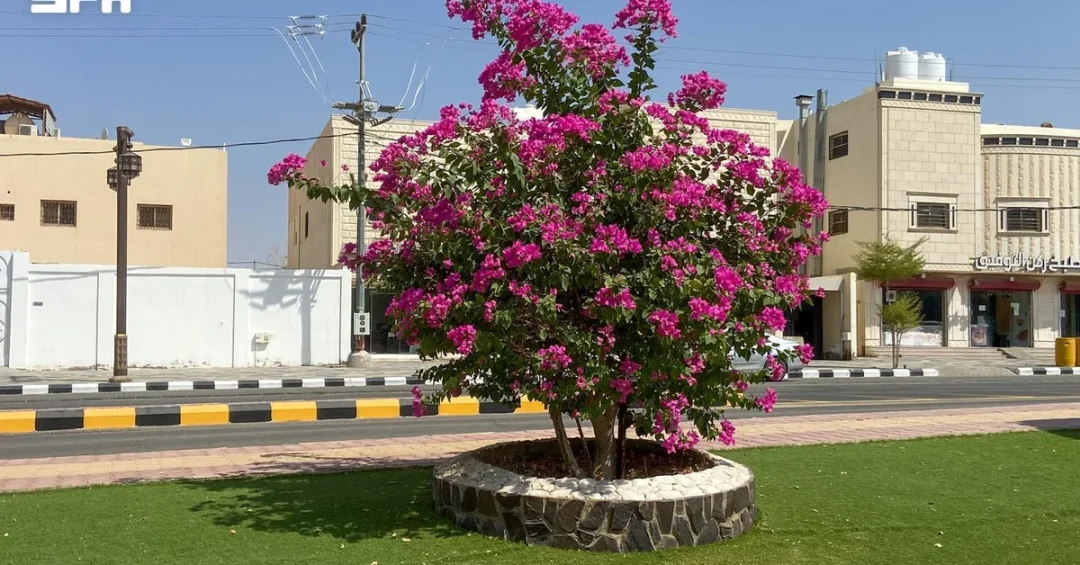
Bougainvillea is transforming the urban and natural landscapes of Saudi Arabia’s Qassim Region, where the vibrant flowering plant thrives under the region’s abundant sunshine and favorable climate, adding brilliant color to gardens, homes, building facades, and fences, according to the Saudi Press Agency (SPA). The fast-growing climber has become a signature element of the region’s visual identity, prized for producing lush, flowering greenery when properly planted and maintained. Its cascading blooms now decorate residential neighborhoods, public spaces, and agricultural properties across the region, reflecting a broader national movement toward greener, more beautiful cities. The plant’s rising popularity aligns with Saudi Arabia’s Vision 2030 goals of enhancing quality of life, promoting environmental sustainability, and fostering community pride in the Kingdom’s diverse natural heritage.
Have you ever wondered how a single plant can reshape the aesthetic character of an entire region? In Qassim, bougainvillea has done exactly that. The plant, known scientifically as Bougainvillea, is a genus of thorny ornamental vines, bushes, and trees native to South America but now cultivated extensively across warm climates worldwide. In Qassim, it has found an ideal home. The region’s hot, sunny days and well-draining soils provide the perfect conditions for bougainvillea to flourish, producing the spectacular displays of color that have made it a favorite among homeowners, landscapers, and municipal planners alike. Its ability to climb and spread makes it particularly versatile, capable of softening the hard edges of modern architecture while requiring relatively modest care.
Context and Background
Why has bougainvillea become such an integral part of Qassim’s landscape? The answer lies in a combination of climate suitability, aesthetic appeal, and cultural appreciation for greenery in Saudi Arabia. Qassim Region, located in the heart of the Kingdom, is known for its agricultural heritage, particularly its date palm groves and fruit farms. The introduction and widespread adoption of bougainvillea into local landscaping practices represents a natural extension of this agricultural tradition, blending productive farming with ornamental horticulture. According to the Saudi Press Agency, the plant thrives in the region’s sunshine and local climate, making it a low-maintenance yet high-impact addition to both rural and urban environments.
Bougainvillea’s journey to Qassim reflects broader trends in Saudi Arabia’s approach to urban development and environmental enhancement. As the Kingdom invests heavily in infrastructure and public spaces under Vision 2030, there is a growing emphasis on incorporating green elements into cityscapes. Plants like bougainvillea offer a practical solution: they are drought-tolerant once established, require minimal water compared to many other flowering plants, and can be trained to cover unsightly walls or fences, turning them into living works of art. This aligns with national efforts to increase green cover, reduce heat island effects in cities, and create more visually appealing environments for residents and visitors.
The plant’s popularity is also driven by its remarkable versatility. It can be grown as a standalone shrub, a hedge, or a climbing vine, depending on how it is pruned and trained. This flexibility allows it to serve multiple functions in landscaping: providing privacy, defining property boundaries, or simply adding a splash of color to a plain wall. In Qassim, where traditional architecture often features high walls and enclosed gardens, bougainvillea offers a way to beautify these structures without compromising their functionality. Its vibrant bracts—which come in shades of pink, red, purple, and white—surround the actual flowers, creating the illusion of continuous bloom and giving the plant its distinctive appearance.
Key Details
What exactly makes bougainvillea so well-suited to Qassim’s environment? The plant does best in sunny locations with well-draining soil, regular watering adjusted to site conditions and growth stage, and periodic pruning to maintain its shape and size. These requirements are easily met in Qassim, where sunlight is abundant year-round and soils are typically sandy or loamy, providing excellent drainage. The region’s climate, characterized by hot summers and mild winters, mirrors the tropical and subtropical conditions where bougainvillea originated, allowing it to grow vigorously and bloom profusely. Local gardeners and landscaping companies have developed expertise in cultivating the plant, sharing knowledge about proper irrigation schedules, fertilization, and pest management.
One of the most attractive features of bougainvillea is its low water demand once established. In a region where water conservation is a priority, this characteristic makes it an environmentally responsible choice. The plant’s deep root system allows it to access moisture stored deeper in the soil, reducing the need for frequent irrigation. During the hottest months, supplemental watering may be necessary, but overall, bougainvillea is far less thirsty than many other ornamental plants. This aligns with Saudi Arabia’s national water strategy, which encourages efficient water use in agriculture and landscaping. By choosing bougainvillea, residents and municipalities contribute to water savings while still enjoying lush, colorful surroundings.
Pruning is another key aspect of bougainvillea care, and it serves both aesthetic and practical purposes. Regular pruning helps maintain the plant’s shape, prevents it from becoming too sprawling, and encourages more prolific blooming. In Qassim, gardeners often prune bougainvillea after each flowering cycle to stimulate new growth and ensure a continuous display of color. The plant’s thorny nature also makes it an effective natural barrier, deterring intruders when trained along fences or property lines. This dual function—beauty and security—has made it a popular choice for residential compounds and commercial properties alike. The Saudi Press Agency notes that bougainvillea can be trained along fences and entryways, making it a popular choice for landscaping and ornamental planting.
International and Regional Impact
How does Qassim’s embrace of bougainvillea resonate beyond the Kingdom’s borders? Saudi Arabia’s efforts to green its cities and improve urban aesthetics are part of a larger regional trend. Across the Gulf Cooperation Council (GCC) states, governments are investing in landscaping projects that enhance livability and attract tourism. Bougainvillea, with its dramatic colors and adaptability, has become a common sight in cities from Riyadh to Dubai, Doha to Kuwait City. Qassim’s success with the plant adds to this regional narrative, showcasing how native and adapted species can transform arid environments into vibrant, welcoming spaces. For international visitors, the sight of bougainvillea-draped walls and gardens offers a memorable contrast to the desert landscape, contributing to a positive image of Saudi Arabia as a destination that balances modernity with natural beauty.
Regionally, Qassim’s bougainvillea cultivation also supports the local economy. Nurseries and landscaping businesses in the region have expanded their offerings to meet growing demand for the plant, creating jobs and generating revenue. The plant’s popularity has spurred a small industry around its propagation, sale, and maintenance, benefiting entrepreneurs and workers in the horticulture sector. Moreover, the aesthetic improvements brought by bougainvillea can increase property values and attract investment in real estate and tourism. As Qassim positions itself as a hub for agricultural innovation and rural tourism, the presence of colorful, well-maintained landscapes enhances its appeal to both domestic and international visitors. The region’s date festivals and agricultural exhibitions often feature bougainvillea displays, drawing crowds and celebrating local horticultural achievements.
Economic and Strategic Significance
What economic and strategic benefits does bougainvillea cultivation bring to Qassim and Saudi Arabia more broadly? At the local level, the plant supports the landscaping and nursery industries, which are integral to the Kingdom’s growing focus on environmental sustainability. The Saudi Green Initiative, launched in 2021, aims to plant 10 billion trees across the country and increase green cover in cities. While bougainvillea is not a tree, its role in urban greening complements these efforts by adding biodiversity and visual appeal to public and private spaces. The plant’s ability to thrive in harsh conditions makes it a valuable tool for achieving the Initiative’s goals without placing excessive demands on water resources. Its cultivation also aligns with the National Environment Strategy, which seeks to protect and enhance the Kingdom’s natural ecosystems.
Strategically, the beautification of Qassim through bougainvillea and other ornamental plants contributes to Saudi Arabia’s soft power and international image. As the Kingdom hosts major events—from Expo 2030 in Riyadh to the FIFA World Cup 2034—the visual quality of its cities and regions will be under global scrutiny. Qassim, with its agricultural heritage and emerging tourism sector, stands to benefit from positive impressions created by well-maintained landscapes. Bougainvillea’s vibrant colors and resilience symbolize the Kingdom’s broader transformation: a society that honors its traditions while embracing innovation and beauty. For investors and tourists, such details matter, signaling a welcoming and aesthetically sophisticated environment. The plant thus plays a small but meaningful role in Saudi Arabia’s economic diversification and global engagement.
Vision 2030 Alignment
How does the cultivation of bougainvillea in Qassim connect to Saudi Arabia’s Vision 2030? At its core, Vision 2030 is about improving the quality of life for all citizens and residents, creating vibrant communities, and fostering a sense of pride in the Kingdom’s natural and cultural heritage. The presence of bougainvillea in Qassim’s gardens, along streets, and on building facades directly enhances the daily experience of residents, offering beauty and tranquility in both urban and rural settings. This aligns with the Vision’s Quality of Life Program, which aims to make Saudi cities more livable, promote healthy lifestyles, and increase green spaces. By beautifying public and private areas, bougainvillea contributes to a more pleasant environment that encourages outdoor activity, social interaction, and community well-being.
Furthermore, the plant’s cultivation supports environmental sustainability, a key pillar of Vision 2030. As Saudi Arabia seeks to reduce its carbon footprint and adapt to climate challenges, water-efficient landscaping becomes increasingly important. Bougainvillea’s low water requirements and tolerance for heat make it an ideal choice for sustainable urban greening. Its ability to grow in poor soils and require minimal chemical inputs further reduces its environmental impact. By promoting such plants, Qassim Region demonstrates how local actions can contribute to national goals. The Saudi Press Agency’s reporting on bougainvillea’s success in Qassim underscores the Kingdom’s commitment to sharing positive stories of environmental stewardship and aesthetic enhancement, reinforcing the narrative of a nation progressing toward a greener, more prosperous future.
20 Questions
Q1. What is bougainvillea and why is it popular in Qassim Region?
A1. Bougainvillea is a fast-growing ornamental vine known for its vibrant bracts in pink, red, purple, and white. It is popular in Qassim because it thrives in the region’s sunny climate, requires minimal water, and adds striking color to gardens, walls, and fences.
Q2. How does bougainvillea contribute to Qassim’s landscape?
A2. Bougainvillea enhances Qassim’s landscape by adding vibrant color to homes, building facades, and fences. Its climbing nature allows it to cover walls and entryways, creating lush, flowering greenery that beautifies both urban and rural environments.
Q3. What are the ideal growing conditions for bougainvillea?
A3. Bougainvillea thrives in sunny locations with well-draining soil. It requires regular watering adjusted to site conditions and growth stage, along with periodic pruning to maintain its shape and encourage prolific blooming.
Q4. What colors does bougainvillea come in?
A4. Bougainvillea comes in shades of pink, red, purple, and white. The colorful bracts surrounding the actual flowers give the plant its distinctive appearance and create the illusion of continuous bloom throughout the growing season.
Q5. How does bougainvillea support water conservation in Saudi Arabia?
A5. Once established, bougainvillea is drought-tolerant and requires less water than many ornamental plants. Its deep root system accesses moisture stored in the soil, reducing the need for frequent irrigation and aligning with national water conservation goals.
Q6. Can bougainvillea be used for security purposes?
A6. Yes, bougainvillea’s thorny nature makes it an effective natural barrier when trained along fences or property lines. It provides privacy and deters intruders while adding aesthetic value to residential and commercial properties.
Q7. How does bougainvillea care differ across seasons in Qassim?
A7. In Qassim’s hot summers, bougainvillea may need supplemental watering, while in milder winters, growth slows. Pruning is typically done after flowering cycles to stimulate new growth and maintain shape throughout the year.
Q8. What role does bougainvillea play in Saudi Arabia’s Vision 2030?
A8. Bougainvillea supports Vision 2030 by enhancing quality of life, promoting environmental sustainability, and beautifying urban and rural areas. It aligns with the Quality of Life Program and Saudi Green Initiative goals.
Q9. Are there economic benefits to cultivating bougainvillea in Qassim?
A9. Yes, bougainvillea cultivation supports local nurseries, landscaping businesses, and horticulture jobs. It also boosts property values and attracts tourism by improving the visual appeal of the region’s environments.
Q10. How does bougainvillea compare to other ornamental plants in water use?
A10. Bougainvillea is more drought-tolerant than many ornamental plants. Once established, it requires minimal supplemental water, making it an environmentally responsible choice for landscaping in arid regions like Qassim.
Q11. What is the significance of bougainvillea’s bracts?
A11. The colorful bracts surround the actual flowers, which are small and inconspicuous. These bracts give bougainvillea its vibrant appearance and are the main reason for its popularity in ornamental landscaping.
Q12. How can bougainvillea be trained in landscaping?
A12. Bougainvillea can be trained as a climbing vine along fences and entryways, as a standalone shrub, or as a hedge. Its flexibility allows it to serve multiple functions, from privacy screening to decorative wall coverage.
Q13. Does bougainvillea require special soil in Qassim?
A13. Bougainvillea prefers well-draining soil, which is naturally available in many parts of Qassim. Sandy or loamy soils work well, and adding organic matter can improve fertility without compromising drainage.
Q14. What pests or diseases affect bougainvillea?
A14. Bougainvillea is relatively hardy but can be affected by aphids, caterpillars, and root rot if overwatered. Proper watering, pruning, and occasional pest control keep the plant healthy and blooming.
Q15. How does bougainvillea contribute to biodiversity?
A15. Bougainvillea provides habitat and nectar for pollinators like bees and butterflies. Its dense growth offers shelter for small birds and insects, supporting local biodiversity in urban and rural landscapes.
Q16. Is bougainvillea native to Saudi Arabia?
A16. No, bougainvillea is native to South America but has been widely cultivated in warm climates worldwide. It has adapted well to Saudi Arabia’s environment, particularly in regions like Qassim.
Q17. How long does bougainvillea bloom in Qassim?
A17. With proper care, bougainvillea can bloom for much of the year in Qassim, with peak flowering during warm months. Pruning after each cycle encourages repeated blooms and maintains vibrant color.
Q18. What is the cultural significance of bougainvillea in Saudi Arabia?
A18. Bougainvillea symbolizes beauty, resilience, and hospitality in Saudi culture. Its vibrant presence in gardens and public spaces reflects the Kingdom’s appreciation for nature and its commitment to creating welcoming environments.
Q19. How can residents grow bougainvillea successfully?
A19. Residents should plant bougainvillea in sunny spots with well-draining soil, water regularly but avoid waterlogging, and prune periodically. Local nurseries provide guidance on care specific to Qassim’s climate.
Q20. What does bougainvillea’s success in Qassim say about Saudi Arabia’s environmental future?
A20. Bougainvillea’s success demonstrates Saudi Arabia’s ability to adapt and beautify its environment sustainably. It reflects the Kingdom’s broader efforts to green its cities, conserve water, and enhance quality of life under Vision 2030.
Reader Feedback
We value your thoughts. Please share your feedback on this article.
Your feedback helps us improve our coverage.