


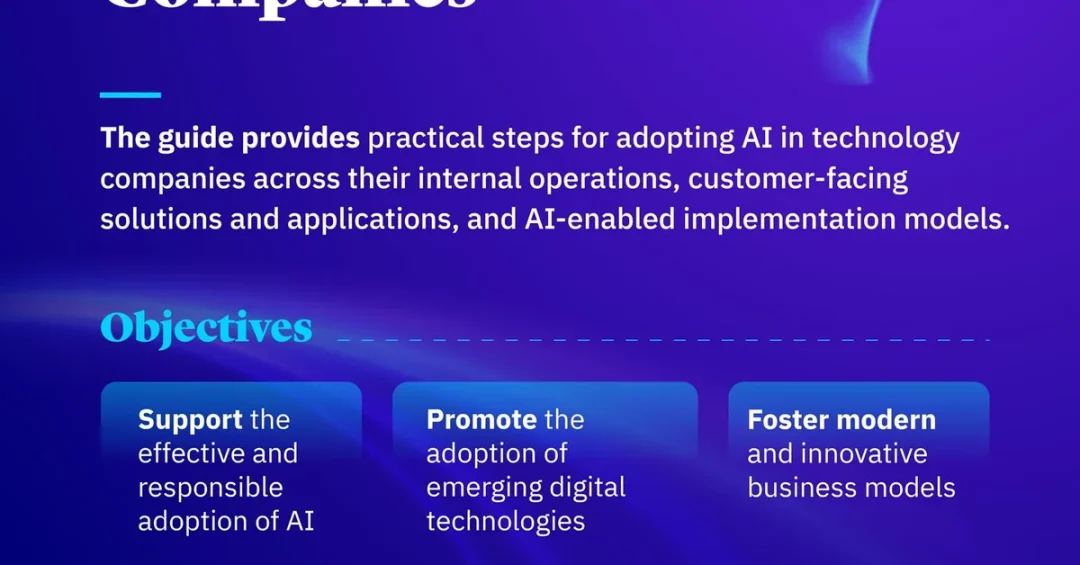
Saudi Arabia’s Communications, Space and Technology Commission (CST) has published the Awareness Guide for AI Adoption in Technology Companies in Saudi Arabia, a practical framework designed to help technology firms integrate artificial intelligence responsibly and effectively across their operations and customer-facing products. The guide, announced via the Saudi Press Agency (SPA), coincides with the Council of Ministers’ designation of 2026 as the Year of AI, signalling a coordinated national push to embed emerging digital technologies into the Kingdom’s business landscape and to maximize their economic and social value.
The publication reflects the CST’s role as the regulator of Saudi Arabia’s technology sector and responds directly to the rapid transformation of the technology market, where AI has become a foundational technology with significant impact on how companies operate internally and how they deliver solutions to the local market. Is it any wonder that a regulator would step in with practical guidance at precisely the moment AI moves from experimentation to operational necessity? The guide is aimed at executive leaders, strategy executives, and decision-makers in technology companies, as well as technology leaders, product managers, and heads of departments responsible for transforming AI from a strategic direction into an operational reality.
Context and Background
Why does the timing of this guide matter so much? The CST’s publication arrives as Saudi Arabia accelerates its national digital transformation under Vision 2030, the comprehensive reform agenda that seeks to diversify the Kingdom’s economy away from oil dependence and build a knowledge-based society. The Council of Ministers’ designation of 2026 as the Year of AI provides an official national frame for this effort, elevating artificial intelligence from a sectoral interest to a strategic priority that touches every part of the economy.
The CST, which regulates communications, space, and technology across the Kingdom, has positioned the guide as a response to the rapid transformation of the technology market. AI has moved from a niche capability to a foundational technology, and its impact is felt both in the internal operations of technology companies and in the solutions and applications they deliver to customers. The guide is designed to help organizations navigate that shift with confidence, providing a structured approach rather than a collection of abstract principles.
The publication also reflects the broader institutional momentum behind AI in Saudi Arabia. From national strategies to sector-specific initiatives, the Kingdom has been building an ecosystem in which artificial intelligence is not simply adopted but embedded responsibly. The CST’s guide adds a practical, company-level dimension to that effort, giving technology firms a clear starting point for assessing their readiness and planning their adoption journeys.
Key Details of the Awareness Guide
What exactly does the guide offer technology companies? According to the CST, the Awareness Guide provides practical steps for adopting AI across internal business operations, customer-facing solutions and applications, and AI-enabled implementation models, including AI agents. It is built around two core pillars. The first focuses on the value AI brings to operational and administrative processes within technology companies, helping drive innovation and improve productivity. The second highlights the value AI adds to the products and services offered by technology companies, positioning AI as a core component of those offerings to maximize the benefits of adoption.
The guide also outlines a practical adoption framework that begins with assessing organizational readiness across five interconnected dimensions: Context Readiness, Data Readiness, Infrastructure Readiness, Skills and Expertise Readiness, and Organizational Culture Readiness. This assessment enables organizations to identify suitable initiatives, define the appropriate scale of implementation, and prioritize key gaps and improvement areas. By starting with readiness rather than technology procurement, the framework encourages companies to align AI adoption with their strategic context and operational realities.
The guide is explicitly designed for a broad set of decision-makers, from executive leaders and strategy executives to product managers and department heads. That audience definition matters: successful AI adoption is rarely a purely technical exercise. It requires leadership commitment, cross-functional coordination, and a culture that supports experimentation and continuous learning. The CST’s framework addresses those human and organizational factors alongside the technical ones.
International and Regional Impact
How will this guide resonate beyond Saudi Arabia’s borders? The Kingdom’s approach to AI governance and adoption is being watched closely across the Middle East and beyond. By publishing a structured, practical guide for technology companies, the CST is contributing to a regional conversation about how governments can support responsible AI adoption without stifling innovation. The guide’s emphasis on readiness assessment and value creation offers a model that other markets may study as they develop their own frameworks.
For international technology companies operating in or entering the Saudi market, the guide provides clarity on the expectations and priorities of the Kingdom’s technology regulator. It signals that AI adoption should be approached thoughtfully, with attention to organizational readiness, data infrastructure, skills, and culture. That clarity can reduce uncertainty for global firms considering investments in Saudi Arabia’s digital economy and can help align their internal practices with local priorities.
The guide also reinforces Saudi Arabia’s position as a regional hub for technology and innovation. As the Kingdom hosts major technology events, attracts global talent, and expands its digital infrastructure, publications like this one help build the institutional scaffolding that supports long-term growth. The CST’s work complements broader national efforts to create an enabling environment for AI, from data governance to cloud infrastructure to talent development.
Economic and Strategic Significance
Why does AI adoption in technology companies carry such economic weight? Technology companies are both users and enablers of AI. When they adopt AI effectively in their internal operations, they can improve productivity, reduce costs, and free up talent for higher-value work. When they embed AI in their products and services, they can create new offerings, reach new customers, and compete more effectively in domestic and international markets. The CST’s guide addresses both dimensions, recognizing that the sector’s competitiveness depends on strength in both areas.
From a strategic perspective, the guide supports the Kingdom’s goal of building a diversified, innovation-driven economy. Technology companies are a key source of high-skilled jobs, exportable services, and intellectual property. By helping these companies adopt AI responsibly and at scale, the CST is contributing to the development of a more resilient and productive private sector. The guide’s focus on long-term value creation aligns with Vision 2030’s emphasis on sustainable growth and economic diversification.
The guide also has implications for the broader business ecosystem. Technology companies often serve as suppliers, partners, and role models for firms in other sectors. As they demonstrate effective AI adoption, they can accelerate the diffusion of best practices across the economy. The CST’s framework, with its emphasis on readiness and prioritization, offers a template that could be adapted by organizations in finance, healthcare, manufacturing, and other industries.
Vision 2030 Alignment
How does this guide connect to Saudi Arabia’s long-term vision? Vision 2030 seeks to transform the Kingdom into a global investment powerhouse and a hub connecting three continents, with a thriving private sector and a skilled, innovative workforce. Artificial intelligence is a cross-cutting enabler of that vision, with applications spanning healthcare, education, energy, tourism, and beyond. The CST’s Awareness Guide for AI Adoption in Technology Companies translates that high-level ambition into practical guidance for the companies that will build and deliver AI-powered solutions.
By publishing this guide during the Year of AI, the CST is helping to ensure that the Kingdom’s AI journey is grounded in responsible adoption, organizational readiness, and value creation. The guide supports technology companies as they move from strategic intent to operational reality, strengthening the sector’s development, competitiveness, and long-term value creation. For a Kingdom pursuing a diversified, knowledge-based economy, that kind of practical, forward-looking support is not just useful — it is essential. The CST’s work reflects a broader national commitment to innovation, and it positions Saudi Arabia’s technology sector to play a leading role in the next phase of the Kingdom’s transformation.
20 Questions
Q1. What is the Awareness Guide for AI Adoption in Technology Companies?
A1. It is a guide published by Saudi Arabia’s Communications, Space and Technology Commission (CST) to help technology companies adopt artificial intelligence effectively and responsibly across their operations, products, and services.
Q2. Which Saudi authority published the guide?
A2. The Communications, Space and Technology Commission (CST), the regulator of Saudi Arabia’s communications, space, and technology sectors, published the guide and announced it via the Saudi Press Agency.
Q3. When was the guide published?
A3. The guide was published in July 2026, coinciding with the Council of Ministers’ designation of 2026 as the Year of AI in Saudi Arabia.
Q4. Why did Saudi Arabia designate 2026 as the Year of AI?
A4. The designation reflects the Kingdom’s strategic focus on artificial intelligence as a foundational technology and supports national efforts to promote responsible adoption and maximize AI’s value across the economy.
Q5. Who is the guide designed for?
A5. It targets executive leaders, strategy executives, and decision-makers in technology companies, as well as technology leaders, product managers, and department heads responsible for turning AI strategy into operational reality.
Q6. What are the two core pillars of the guide?
A6. The first pillar focuses on AI’s value for internal operational and administrative processes, while the second highlights AI’s value in the products and services technology companies offer to customers.
Q7. What is the guide’s adoption framework based on?
A7. The framework begins with assessing organizational readiness across five dimensions: Context Readiness, Data Readiness, Infrastructure Readiness, Skills and Expertise Readiness, and Organizational Culture Readiness.
Q8. What does the readiness assessment help companies do?
A8. It helps organizations identify suitable AI initiatives, define the appropriate scale of implementation, and prioritize key gaps and improvement areas before committing resources.
Q9. Does the guide cover AI agents?
A9. Yes. The guide addresses AI-enabled implementation models, including AI agents, as part of its practical steps for adopting AI across business operations and customer-facing solutions.
Q10. What is the CST’s role in Saudi Arabia’s technology sector?
A10. The CST is the regulator of Saudi Arabia’s communications, space, and technology sectors, responsible for fostering sector development, competitiveness, and innovation.
Q11. How does the guide reflect market transformation?
A11. It responds to the rapid transformation of the technology market, where AI has become a foundational technology with significant impact on internal operations and on the solutions companies deliver.
Q12. What benefits can technology companies expect from AI adoption?
A12. Companies can drive innovation, improve productivity, enhance their products and services, and strengthen their competitiveness and long-term value creation in the local and regional market.
Q13. Is the guide mandatory for technology companies?
A13. The guide is an awareness and guidance publication designed to support effective and responsible AI adoption; it provides practical steps and a framework rather than imposing mandatory requirements.
Q14. How does the guide support Vision 2030?
A14. It supports Vision 2030 by helping technology companies adopt AI responsibly, strengthening the digital economy, fostering innovation, and contributing to economic diversification and knowledge-based growth.
Q15. What does ‘Context Readiness’ mean in the framework?
A15. Context Readiness refers to assessing how well an organization’s strategic environment, business model, and market position align with and support effective AI adoption.
Q16. Why is ‘Data Readiness’ important for AI adoption?
A16. Data Readiness ensures that an organization has the quality, availability, and governance of data needed to train, deploy, and maintain effective AI solutions.
Q17. What does ‘Infrastructure Readiness’ cover?
A17. Infrastructure Readiness covers the computing, cloud, networking, and technical systems required to support AI workloads securely and at scale.
Q18. How does ‘Skills and Expertise Readiness’ affect adoption?
A18. It assesses whether an organization has the talent, training, and expertise needed to develop, manage, and continuously improve AI systems and related processes.
Q19. What is ‘Organizational Culture Readiness’?
A19. Organizational Culture Readiness refers to how well a company’s culture supports experimentation, learning, cross-functional collaboration, and change management essential for successful AI adoption.
Q20. Where can the guide be viewed?
A20. The guide is available on the CST’s official website at https://www.cst.gov.sa/ai-adoption-guide-en, where technology companies and interested parties can access the full publication.
Reader Feedback
We value your thoughts. Please share your feedback on this article.
Your feedback helps us improve our coverage.
Related articles
 Registration Opens for UNESCO AI Ethics Forum in Riyadh
 5.1-Magnitude Earthquake Strikes Bay of Bengal off India’s Coast
 Mawhiba Launches Preparatory Program for International Science Competitions
 SCDDR Meeting in Jeddah Advances Satellite-Based Search and Rescue
 Saudi Arabia Launches Drone Initiative for Road Assessments
 King Salman Science Oasis Celebrates Founding Day with STEAM Festival