


The Digital Cooperation Organization (DCO) launched its landmark ‘Digital Economy Trends 2025’ report during the Internet Governance Forum (IGF) 2024, held at the King Abdulaziz International Conference Center in Riyadh from December 15–19. The report, the second edition in the DCO’s annual series, provides an in-depth analysis of the evolving digital economy and its transformative impact on industries and societies. It aims to equip stakeholders with essential data and strategic insights to navigate rapid technological advancements, enabling informed decision-making and effective planning for the future. The launch marked a significant moment at the UN-convened forum, which gathered global leaders under the theme ‘Building Our Multistakeholder Digital Future.’
What does it take to build a digital future that benefits everyone? The DCO’s participation in IGF 2024 underscored the organization’s commitment to fostering global digital cooperation. Throughout the week, DCO delegates contributed to key dialogues on transformative aspects of the digital economy, from ethical AI and safe digital spaces for children to e-waste management. The forum, convened by the United Nations, provided a platform for multistakeholder collaboration, and the DCO’s new report offered a timely roadmap for navigating the complexities of the digital age. As the digital economy continues to reshape industries and societies at an unprecedented pace, the insights contained in the report are poised to guide policymakers, business leaders, and civil society in 2025 and beyond.
Context and Background
Why is the Digital Cooperation Organization uniquely positioned to lead global digital economy discussions? Founded in November 2020, the DCO is a global multilateral organization that brings together 16 Member States collectively representing more than USD 3.5 trillion in GDP and a population of over 800 million, 70% of whom are under the age of 35. This demographic dividend, combined with the organization’s agile structure, allows the DCO to address emerging digital challenges with a forward-looking perspective. The DCO aims to enable digital prosperity for all by unifying efforts to advance digital transformation and promote common interests. Its annual Digital Economy Trends report has become a trusted guide for stakeholders seeking actionable insights into the rapidly evolving digital landscape.
The Internet Governance Forum 2024, held in Riyadh, was convened against the backdrop of the recently adopted Global Digital Compact (GDC), which envisions a secure, human-centered digital future. The GDC, adopted earlier this year at the United Nations General Assembly, serves as an ambitious roadmap toward an inclusive, open, sustainable, fair, safe, and secure digital future for all. The DCO supports the GDC and has been actively working to advance its implementation. The IGF provided a critical opportunity for the DCO to showcase its contributions and engage with a wide range of stakeholders, including government officials, private sector leaders, and civil society representatives. The presence of the DCO at the forum highlighted the organization’s role as a bridge-builder in the global digital governance ecosystem.
Key Details
What are the most significant trends that will shape the digital economy in 2025? The ‘Digital Economy Trends 2025’ report identifies 18 transformative trends grouped under three overarching themes: Sustainable Intelligent Ecosystems, Empowered Communities, and Trust and Security. The trends expected to have the greatest impact in 2025 are Extending Global Connectivity; Deploying Specialized, Accessible, and Localized AI; and Building Digital Skills and Continuous Learning. These trends reflect the pressing need to bridge the digital divide, ensure that AI benefits are widely distributed, and equip individuals with the skills required to thrive in a digital economy. The report also highlights emerging trends anticipated to have the greatest impact in the next 3-5 years: Ensuring a Digitally Safe and Inclusive World, Utilizing New Types of Data, and Governing Superintelligent AI.
The report was unveiled at a session on Tuesday, December 17, at the IGF Village Stage, where DCO Chief of Digital Economy Foresight, Alaa Abdulaal, presented the key findings. Commenting on the report’s launch, DCO Secretary-General Deemah AlYahya said, “The digital economy is a driving force behind global innovation, reshaping industries, societies, and everyday lives at an unprecedented pace. In this dynamic environment, staying ahead of the curve requires actionable insights, robust analysis, and a deep understanding of emerging patterns. The annual DCO Digital Economy Trends report serves as a trusted guide, offering a comprehensive overview of the digital economy’s ongoing developments and their potential to shape businesses, governments, and individuals in 2025 and beyond.”
The report emphasizes the importance of multi-stakeholder collaboration to address emerging challenges within the digital economy, such as ethical innovation, equitable access, the digital divide, low public confidence in online systems, and the limited role of public-private partnerships. By providing a comprehensive analysis of these challenges, the report equips stakeholders with the knowledge needed to develop effective strategies and policies. The special focus on social-economic impact underscores the DCO’s commitment to ensuring that digital transformation leaves no one behind. The report’s insights are particularly relevant for developing countries, where the potential for digital growth is immense but often hindered by infrastructural and regulatory gaps.
International and Regional Impact
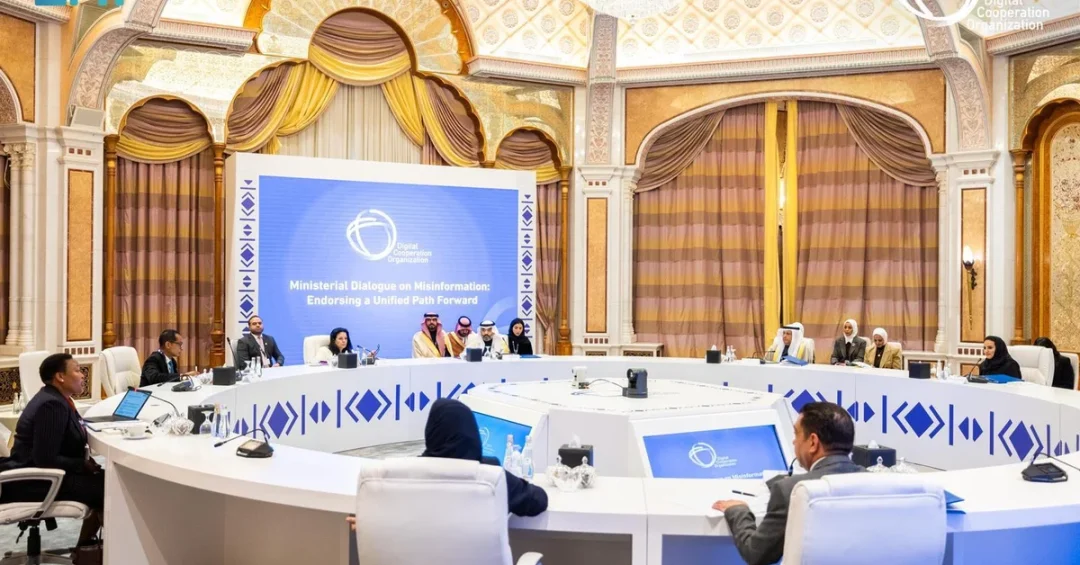
How can international cooperation accelerate progress toward an inclusive digital economy? The DCO’s activities at IGF 2024 demonstrated the power of collaborative action. The week began with a Ministerial Roundtable on Misinformation, where government leaders emphasized the importance of collaboration in fostering a resilient online ecosystem. Secretary-General AlYahya called for global multi-stakeholder collaboration to strengthen digital trust in a keynote address and during a panel discussion, ‘Navigating the Misinformation Maze: Strategic Cooperation for a Trusted Digital Future,’ which brought together international leaders and experts. These discussions underscored the shared responsibility of governments, tech companies, and civil society to combat misinformation and build trust in digital platforms.
Building on the DCO’s efforts to advance the implementation of the Global Digital Compact, a ‘GDC Townhall’ was held on the sidelines of the IGF, co-hosted by the DCO, the International Chamber of Commerce (ICC), and the Office of the UN Tech Envoy (OSET). The townhall provided a platform for stakeholders to discuss practical steps for realizing the GDC’s vision. Additionally, the DCO held two Digital Space Accelerator (DSA) roundtables on ‘Building Ethical AI: Policy Tool for Human-Centric and Responsible AI Governance’ and ‘Towards a Greener Future with E-Waste Management,’ as well as a panel discussion on ‘Safe Digital Space for Children.’ These sessions addressed critical issues that are central to the DCO’s mission and highlighted the organization’s thought leadership in areas such as AI ethics, sustainability, and child protection online.
Economic and Strategic Significance
Why does the digital economy matter for global economic growth and stability? The digital economy is a driving force behind innovation, productivity, and job creation. According to the DCO’s report, the trends identified are not merely technological shifts but have profound implications for economic competitiveness and societal well-being. Extending global connectivity, for instance, can unlock new markets and enable small and medium-sized enterprises to participate in the global economy. Deploying specialized, accessible, and localized AI can enhance efficiency and personalization across sectors, from healthcare to agriculture. Building digital skills and continuous learning is essential for preparing the workforce for the jobs of tomorrow. These trends are interconnected and require coordinated action to maximize their benefits.
The DCO’s member states, which collectively represent a GDP of over USD 3.5 trillion, stand to gain significantly from the insights in the report. By adopting the recommended strategies, they can accelerate their digital transformation journeys and foster inclusive growth. The report also highlights the importance of public-private partnerships in driving digital innovation. Governments alone cannot address the complex challenges of the digital economy; collaboration with the private sector, academia, and civil society is essential. The DCO’s multistakeholder approach serves as a model for how countries can work together to shape a digital future that is prosperous, equitable, and secure.
Vision 2030 Alignment
How does the DCO’s work align with Saudi Arabia’s Vision 2030? Saudi Arabia’s Vision 2030 is a comprehensive plan to diversify the economy, empower citizens, and create a vibrant society. Digital transformation is a cornerstone of this vision, and the DCO’s initiatives resonate deeply with the Kingdom’s goals. The ‘Digital Economy Trends 2025’ report provides a roadmap for harnessing digital technologies to drive economic growth, improve public services, and enhance quality of life. The report’s emphasis on ethical AI, digital skills, and trust and security mirrors the priorities of Vision 2030, which seeks to build a resilient and inclusive digital economy. By hosting IGF 2024 in Riyadh and supporting the DCO’s launch, Saudi Arabia has demonstrated its leadership in shaping the global digital agenda.
Moreover, the DCO’s focus on youth, who make up 70% of its member states’ population, aligns with Vision 2030’s commitment to empowering young people. The report’s insights on building digital skills and continuous learning are particularly relevant for Saudi Arabia, where a young and tech-savvy population is eager to contribute to the digital economy. As the Kingdom continues to invest in digital infrastructure, education, and innovation, the DCO’s findings will serve as a valuable resource for policymakers and business leaders. The collaboration between the DCO and Saudi Arabia exemplifies how international organizations and national governments can work together to achieve shared objectives. Through such partnerships, the vision of a prosperous, digital future for all becomes increasingly attainable.
20 Questions
Q1. What is the Digital Cooperation Organization (DCO)?
A1. The DCO is a global multilateral organization founded in November 2020. It brings together 16 Member States representing over USD 3.5 trillion in GDP and a population of over 800 million, aiming to enable digital prosperity for all by unifying efforts to advance digital transformation.
Q2. What is the ‘Digital Economy Trends 2025’ report?
A2. It is the second edition in the DCO’s annual series, providing an in-depth analysis of the evolving digital economy. The report highlights 18 transformative trends grouped under three themes and offers strategic insights to help stakeholders navigate rapid technological advancements.
Q3. Where and when was the report launched?
A3. The report was launched at the Internet Governance Forum (IGF) 2024, held at the King Abdulaziz International Conference Center in Riyadh from December 15–19. The unveiling took place on December 17 at the IGF Village Stage.
Q4. What are the three themes of the report?
A4. The three themes are Sustainable Intelligent Ecosystems, Empowered Communities, and Trust and Security. These themes encompass 18 transformative trends that are shaping the digital economy and its impact on industries and societies.
Q5. Which trends are expected to have the greatest impact in 2025?
A5. The report identifies Extending Global Connectivity; Deploying Specialized, Accessible, and Localized AI; and Building Digital Skills and Continuous Learning as the trends with the greatest anticipated impact in 2025.
Q6. What are the emerging trends for the next 3-5 years?
A6. The emerging trends anticipated to have the greatest impact in the next 3-5 years are Ensuring a Digitally Safe and Inclusive World, Utilizing New Types of Data, and Governing Superintelligent AI.
Q7. Who presented the key findings of the report?
A7. Alaa Abdulaal, DCO Chief of Digital Economy Foresight, presented the key findings of the ‘Digital Economy Trends 2025’ report at a session on December 17 at the IGF Village Stage.
Q8. What did the DCO Secretary-General say about the report?
A8. Deemah AlYahya, DCO Secretary-General, said the digital economy is a driving force behind global innovation. She noted that the annual report serves as a trusted guide, offering a comprehensive overview of developments and their potential to shape businesses, governments, and individuals.
Q9. What challenges does the report address?
A9. The report addresses challenges such as ethical innovation, equitable access, the digital divide, low public confidence in online systems, and the limited role of public-private partnerships. It emphasizes multi-stakeholder collaboration to overcome these challenges.
Q10. What was the theme of IGF 2024?
A10. The theme of IGF 2024 was ‘Building Our Multistakeholder Digital Future.’ The forum was convened by the United Nations and brought together stakeholders from around the world to discuss key digital governance issues.
Q11. What is the Global Digital Compact (GDC)?
A11. The GDC is a roadmap adopted at the United Nations General Assembly earlier this year. It envisions a secure, human-centered digital future and aims to ensure an inclusive, open, sustainable, fair, safe, and secure digital environment for all.
Q12. How did the DCO contribute to the GDC implementation at IGF 2024?
A12. The DCO co-hosted a ‘GDC Townhall’ on the sidelines of the IGF with the International Chamber of Commerce (ICC) and the Office of the UN Tech Envoy (OSET). The townhall facilitated discussions on practical steps to realize the GDC’s vision.
Q13. What were the Digital Space Accelerator (DSA) roundtables about?
A13. The DSA roundtables focused on ‘Building Ethical AI: Policy Tool for Human-Centric and Responsible AI Governance’ and ‘Towards a Greener Future with E-Waste Management.’ They addressed critical issues in AI ethics and sustainability.
Q14. What panel discussion did the DCO hold regarding children?
A14. The DCO held a panel discussion on ‘Safe Digital Space for Children.’ This session highlighted the importance of protecting young users online and ensuring their digital experiences are safe and positive.
Q15. What other topics did DCO delegates speak on at IGF 2024?
A15. DCO delegates spoke on topics including data and AI governance, building the AI Commons, internet data flows in trade policy initiatives, and women in gaming, among others.
Q16. How does the DCO define its mission?
A16. The DCO aims to enable digital prosperity for all by unifying efforts to advance digital transformation and promote common interests among its Member States. It focuses on fostering collaboration and inclusive growth.
Q17. What is the demographic significance of DCO member states?
A17. Over 70% of the population in DCO member states is under the age of 35. This youthful demographic presents a significant opportunity for digital innovation and economic growth if properly harnessed.
Q18. Why is the ‘Digital Economy Trends 2025’ report important for stakeholders?
A18. The report provides essential data and strategic insights that help stakeholders navigate rapid technological advancements. It enables informed decision-making and effective planning for the future, supporting businesses, governments, and individuals.
Q19. How does the report’s focus on social-economic impact benefit developing countries?
A19. By highlighting trends like extending global connectivity and building digital skills, the report offers developing countries a roadmap to bridge the digital divide, foster inclusive growth, and participate more fully in the global digital economy.
Q20. How does the DCO’s work align with Saudi Arabia’s Vision 2030?
A20. The DCO’s initiatives, such as promoting ethical AI and digital skills, align with Vision 2030’s goals of economic diversification and digital transformation. Saudi Arabia’s support for IGF 2024 and the DCO underscores its commitment to shaping a prosperous digital future.
Reader Feedback
We value your thoughts. Please share your feedback on this article.
Your feedback helps us improve our coverage.
Related articles
 stc Group Achieves 61% 5G Usage Rate at Riyadh Season
 Saudi Arabia Documents 14 Predator Species in Major NCW Study
 Saudi Arabia Issues National Digital Learning Indicator 2024
 SDAIA and NVIDIA Launch Generative AI Training for 4,000 Saudis
 Saudi Arabia’s Unified Charging Port Mandate Takes Effect
 RDIA Opens Consultation on Scientific Integrity Policy