


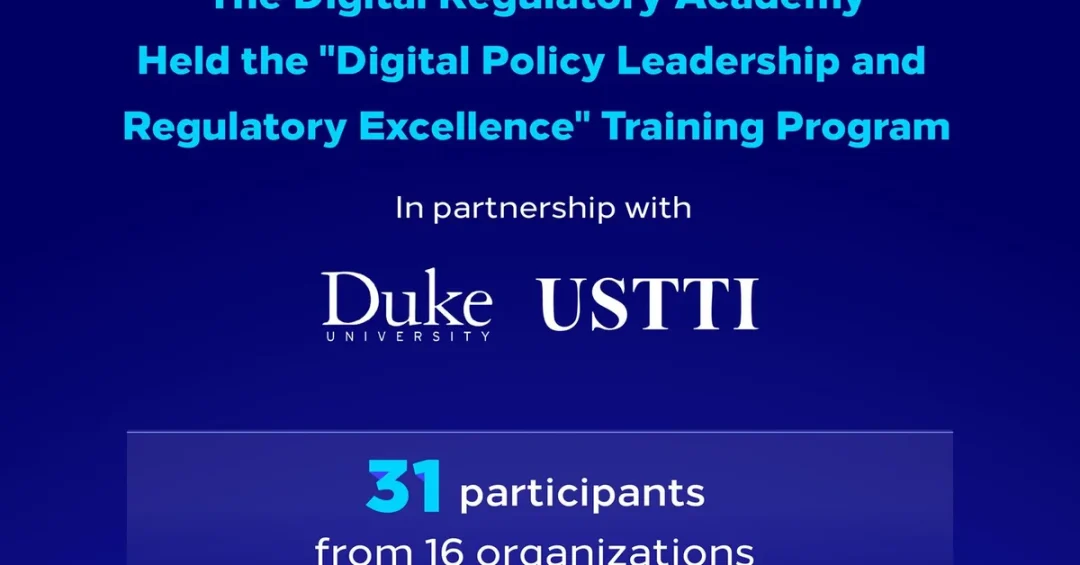
The Digital Regulatory Academy (DRA), a key institution under Saudi Arabia’s Communications, Space and Technology Commission, has successfully concluded a specialized training program titled “Digital Policy Leadership and Regulatory Excellence” in partnership with Duke University’s Sanford School of Public Policy and the US Telecommunications Training Institute (USTTI). The five-day program, held in Riyadh, brought together 31 experts from the Ministry of Communications and Information Technology (MCIT), alongside representatives from the National Regulations Committee and leading service providers in telecommunications, space, and technology sectors.
This initiative marks another significant step in Saudi Arabia’s ongoing efforts to build a world-class digital regulatory framework that supports the Kingdom’s ambitious digital transformation agenda. The program reflects the DRA’s commitment to developing national capabilities in public policy and digital regulations, a critical component of Saudi Arabia’s Vision 2030 strategy to diversify the economy and establish the Kingdom as a global technology hub. Since its establishment in 2021, the DRA has trained over 1,000 participants from both public and private sectors, demonstrating the Kingdom’s sustained investment in human capital development.
Context and Background
Why does Saudi Arabia place such strategic importance on developing expertise in digital policy and regulation? The answer lies in the Kingdom’s comprehensive transformation journey under Vision 2030, which recognizes that robust regulatory frameworks are essential for attracting investment, fostering innovation, and ensuring that digital technologies benefit society as a whole. The Digital Regulatory Academy was established in 2021 as a specialized institution dedicated to building national expertise in this critical field, operating under the umbrella of the Communications, Space and Technology Commission (CST).
The partnership with Duke University’s Sanford School of Public Policy represents a strategic collaboration with one of the world’s leading academic institutions in public policy education. The Sanford School is renowned for its research and teaching in policy analysis, governance, and regulatory affairs, making it an ideal partner for Saudi Arabia’s capacity-building initiatives. The US Telecommunications Training Institute (USTTI), a non-profit organization that provides training to professionals from developing countries in telecommunications and information technology, brought additional international expertise to the program.
The program’s focus on telecommunications economics and regulation reflects the rapidly evolving nature of the global digital landscape. As countries worldwide grapple with complex issues related to spectrum management, data governance, cybersecurity, and emerging technologies like 5G and artificial intelligence, the need for skilled regulators who can navigate these challenges has never been greater. Saudi Arabia’s proactive approach to building this expertise positions the Kingdom as a leader in digital governance in the region and beyond.
Key Details
What specific skills and knowledge did participants gain from this intensive five-day program? The curriculum was designed to provide a comprehensive understanding of the key factors essential for developing a robust digital system. Led by global experts in digital regulation and public policy, the program emphasized the importance of using diverse methods to comprehend policy and regulatory issues, combining theoretical knowledge with practical applications.
The training employed a multi-faceted approach that included lectures, case studies, panel discussions, and strategic workshops. A particularly notable feature was the inclusion of field visits to leading technology companies such as Microsoft, providing participants with firsthand exposure to how major industry players approach regulatory compliance and innovation. This blend of academic rigor and practical experience ensured that participants could translate their learning into actionable insights for their respective roles.
The program specifically addressed the skills required to create an environment that promotes the deployment, use, and growth of digital technologies. Participants explored topics including the economics of telecommunications, best practices in digital regulation, and the intersection of public policy with technological innovation. The involvement of 31 experts from MCIT, along with representatives from the National Regulations Committee and service providers, ensured that the training benefited a diverse group of stakeholders who collectively shape Saudi Arabia’s digital ecosystem.
International and Regional Impact
How does Saudi Arabia’s investment in regulatory capacity building resonate beyond its borders? The Kingdom’s collaboration with prestigious international institutions like Duke University and USTTI signals its commitment to aligning with global best practices while developing solutions tailored to regional needs. This approach positions Saudi Arabia as a bridge between international regulatory standards and the specific requirements of the Middle East’s rapidly evolving digital markets.
The program’s international dimension extends beyond mere knowledge transfer. By bringing together Saudi professionals with global experts, the DRA is fostering networks and relationships that will facilitate ongoing collaboration and knowledge exchange. These connections are invaluable as Saudi Arabia continues to engage with international partners on issues ranging from cross-border data flows to harmonization of regulatory standards. The Kingdom’s growing influence in global digital governance discussions is strengthened by having a cadre of well-trained professionals who can represent Saudi interests effectively on international platforms.
Regionally, Saudi Arabia’s leadership in digital regulation serves as a model for neighboring countries navigating similar challenges. The Kingdom’s systematic approach to capacity building, exemplified by the DRA’s programs, demonstrates how countries can proactively develop the expertise needed to govern increasingly complex digital economies. This leadership role aligns with Saudi Arabia’s broader aspirations to be a stabilizing and progressive force in the region.
Economic and Strategic Significance
What economic dividends does Saudi Arabia expect from its investment in regulatory excellence? The development of sophisticated regulatory capabilities is directly linked to the Kingdom’s ability to attract foreign investment, support local entrepreneurship, and facilitate the growth of digital industries. Companies considering investment in Saudi Arabia’s technology sector need confidence that the regulatory environment is predictable, transparent, and conducive to innovation. Well-trained regulators are essential to building and maintaining this confidence.
The program’s emphasis on understanding the economics of telecommunications and regulation reflects the recognition that regulatory decisions have significant economic consequences. Sound regulatory frameworks can lower barriers to entry, promote competition, and stimulate investment in infrastructure and services. Conversely, poorly designed regulations can stifle innovation and deter investment. By equipping Saudi professionals with the analytical tools to assess regulatory impacts, the DRA is contributing to an environment where digital businesses can thrive.
Strategically, the development of national regulatory expertise reduces dependence on external consultants and advisors, building sustainable local capacity that will serve the Kingdom for decades to come. This aligns with Vision 2030’s emphasis on developing Saudi human capital and creating a knowledge-based economy. The 1,000-plus participants who have benefited from DRA programs since 2021 represent a growing pool of talent that will drive Saudi Arabia’s digital transformation forward.
Vision 2030 Alignment
How does the Digital Regulatory Academy’s work connect to the broader objectives of Saudi Vision 2030? The Vision, launched in 2016 under the leadership of Crown Prince Mohammed bin Salman, sets out an ambitious roadmap for transforming Saudi Arabia’s economy and society. Among its key pillars is the development of a thriving digital economy that can create jobs, enhance productivity, and improve quality of life for all citizens. Robust regulatory frameworks are foundational to achieving these goals.
The DRA’s training programs directly support several Vision 2030 objectives, including the development of human capital, the promotion of economic diversification, and the enhancement of government effectiveness. By investing in the skills of regulators and policymakers, Saudi Arabia is building the institutional capacity needed to govern an increasingly digital economy. This investment complements other major initiatives, such as NEOM, the Kingdom’s flagship smart city project, and the National Strategy for Data and AI, which require sophisticated regulatory oversight to succeed.
As Saudi Arabia continues its journey toward becoming a global leader in technology and innovation, the role of well-trained regulators will only grow in importance. The Digital Regulatory Academy’s partnership with Duke University and USTTI represents a model of international collaboration that benefits both Saudi Arabia and its global partners. Through such initiatives, the Kingdom is not only building its own capabilities but also contributing to the global conversation on how best to govern digital technologies in an era of rapid change. The success of this program underscores Saudi Arabia’s commitment to responsible, forward-looking governance that serves both national interests and the broader global community.
20 Questions
Q1. What is the Digital Regulatory Academy?
A1. The Digital Regulatory Academy is a specialized institution established in 2021 under Saudi Arabia’s Communications, Space and Technology Commission. It focuses on developing national capabilities in public policy and digital regulations, training professionals from both public and private sectors.
Q2. What was the purpose of the Digital Policy Leadership and Regulatory Excellence program?
A2. The program aimed to create an enabling environment for digital regulations, educate participants on telecommunications economics, and highlight best practices in digital regulation and public policy. It sought to develop skills needed for robust digital governance.
Q3. Which institutions partnered with the DRA for this program?
A3. The DRA partnered with the Sanford School of Public Policy at Duke University and the US Telecommunications Training Institute (USTTI). These partnerships brought international expertise and academic rigor to the training initiative.
Q4. How many participants attended the program?
A4. The program involved 31 experts from the Ministry of Communications and Information Technology, along with representatives from the National Regulations Committee and service providers in telecommunications, space, and technology sectors.
Q5. How long did the training program last?
A5. The program was conducted over five days. It was led by global experts in digital regulation and public policy who shared their knowledge and experience with participants.
Q6. What teaching methods were used in the program?
A6. The program employed lectures, field visits to companies like Microsoft, case studies, panel discussions, and strategic workshops. This multi-faceted approach ensured comprehensive learning and practical exposure.
Q7. What topics were covered during the training?
A7. Topics included the economics of telecommunications and regulation, best practices in digital regulation and public policy, and key factors essential for developing a robust digital system that promotes technology deployment and growth.
Q8. How many people have benefited from DRA programs since 2021?
A8. Since its establishment in 2021, over 1,000 participants from both public and private sectors have benefited from the academy’s training programs, demonstrating significant reach and impact.
Q9. Why is regulatory training important for Saudi Arabia?
A9. Regulatory training is crucial for building an enabling environment that attracts investment, fosters innovation, and ensures digital technologies benefit society. It supports Saudi Arabia’s digital transformation and economic diversification goals.
Q10. What is the Ministry of Communications and Information Technology’s role?
A10. The Ministry of Communications and Information Technology is responsible for developing and implementing Saudi Arabia’s communications and IT policies. It oversees the development of the Kingdom’s digital infrastructure and supports innovation in the sector.
Q11. What is the National Regulations Committee?
A11. The National Regulations Committee is a Saudi governmental body involved in reviewing and developing regulations across various sectors. Its participation in the program reflects the importance of coordinated regulatory approaches.
Q12. How does this program support Vision 2030?
A12. The program supports Vision 2030 by developing human capital, promoting economic diversification, and enhancing government effectiveness. These are key pillars of the Kingdom’s transformation strategy for a knowledge-based economy.
Q13. What is the significance of partnering with Duke University?
A13. Duke University’s Sanford School of Public Policy is a globally recognized institution for policy education. The partnership brings world-class expertise and international best practices to Saudi Arabia’s regulatory capacity building efforts.
Q14. What is USTTI’s role in the program?
A14. The US Telecommunications Training Institute provides training to professionals from developing countries in telecommunications and IT. Its involvement adds international perspective and expertise to the program.
Q15. Why were field visits to companies like Microsoft included?
A15. Field visits provide participants with firsthand exposure to how major technology companies approach regulatory compliance and innovation. This practical experience complements theoretical learning and enhances understanding.
Q16. What skills are needed for effective digital regulation?
A16. Effective digital regulation requires understanding of telecommunications economics, policy analysis, stakeholder engagement, and the ability to balance innovation promotion with consumer protection and market fairness.
Q17. How does this program benefit Saudi Arabia’s digital economy?
A17. Well-trained regulators help create predictable, transparent regulatory environments that attract investment, support entrepreneurship, and facilitate growth of digital industries, contributing to economic diversification.
Q18. What other initiatives support Saudi Arabia’s digital transformation?
A18. Initiatives include NEOM smart city, the National Strategy for Data and AI, and various programs under Vision 2030. These require sophisticated regulatory oversight that the DRA helps provide through training.
Q19. How does Saudi Arabia’s approach compare regionally?
A19. Saudi Arabia’s systematic approach to regulatory capacity building positions it as a regional leader. The Kingdom’s investment in developing expertise serves as a model for neighboring countries navigating digital economy challenges.
Q20. What does the future hold for digital regulation in Saudi Arabia?
A20. Saudi Arabia will continue developing regulatory expertise to govern emerging technologies, support innovation, and maintain its position as a global leader in digital governance, aligned with Vision 2030 objectives.
Reader Feedback
We value your thoughts. Please share your feedback on this article.
Your feedback helps us improve our coverage.
Related articles
 SDAIA Hosts Week-Long Cybersecurity Awareness Event
 SDAIA Launches GAIN Podcast on AI’s Global Impact
 Mawhiba Launches Phase Two of Ibdaa 2025 Olympiad
 SDAIA Launches AI Program for 500 Saudi Specialists
 SITE Leads 2024 IDC MarketScape MDR Assessment
 SDAIA Leverages AI to Preserve Saudi National Heritage