


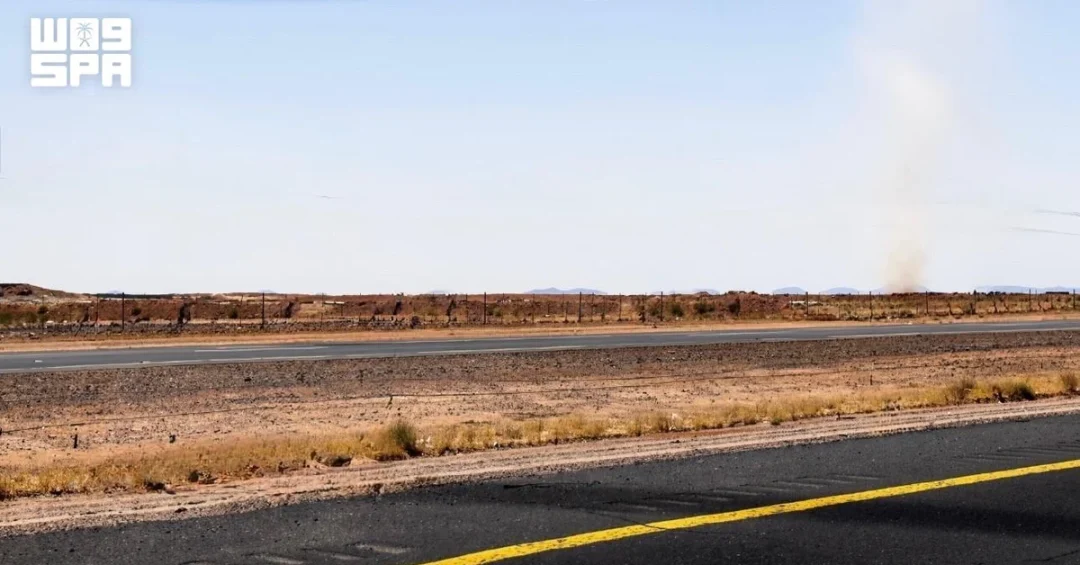
Dust devils, locally known as dust whirlwinds, are a common summer weather phenomenon in Saudi Arabia’s desert regions, according to the Saudi Press Agency. These rotating columns of warm air, formed by intense surface heat, lift sand and dust, creating brief but fascinating natural occurrences. While generally harmless, they serve as a reminder of the Kingdom’s unique desert environment and its ongoing efforts to manage natural resources sustainably.
Context and Background
Dust devils are most prevalent in arid and open areas, particularly during the summer months. They form when surface temperatures rise significantly, causing warm air to ascend rapidly and rotate due to wind shear. Burgis Al-Fulaih, a member of the Afaq Society for Astronomy, explained to the Saudi Press Agency that these phenomena vary in size and intensity depending on terrain and soil conditions. They typically occur in the afternoon, when surface temperatures peak, and dissipate by evening.
Key Details
Al-Fulaih noted that dust devils are short-lived and generally have limited impact. However, they can temporarily reduce visibility, raise dust, and displace lightweight objects. He advised caution for travelers on open roads or in desert areas. Interestingly, the frequency of dust devils has declined in recent years due to Saudi Arabia’s improved vegetation cover, achieved through protected reserves, afforestation efforts, and stricter grazing management.
Implications and Impact
The reduction in dust devil frequency highlights the success of Saudi Arabia’s environmental initiatives. By addressing issues like illegal woodcutting and overgrazing, the Kingdom has not only mitigated this weather phenomenon but also enhanced its desert ecosystems. These efforts align with broader sustainability goals, showcasing Saudi Arabia’s commitment to balancing development with environmental preservation.
Vision 2030 Alignment
The decline in dust devils underscores Saudi Arabia’s progress toward its Vision 2030 objectives, particularly in environmental sustainability. Through afforestation, protected reserves, and improved land management, the Kingdom is transforming its natural landscapes while fostering ecological resilience. This achievement reflects Saudi Arabia’s dedication to creating a greener, more sustainable future for its citizens and the global community.
20 Questions
Q1. What are dust devils?
A1. Dust devils are rotating columns of warm air that lift sand and dust, commonly occurring in desert regions during summer.
Q2. When do dust devils typically form?
A2. They usually form in the afternoon when surface temperatures are highest.
Q3. Why are dust devils less frequent now?
A3. Improved vegetation cover through afforestation and protected reserves has reduced their occurrence.
Q4. Are dust devils dangerous?
A4. While generally harmless, they can reduce visibility and displace lightweight objects.
Q5. What causes dust devils?
A5. They are caused by intense surface heat creating rising, rotating columns of warm air.
Q6. Where are dust devils most common?
A6. They are most common in arid and open areas, such as deserts.
Q7. Who explained the phenomenon to the Saudi Press Agency?
A7. Burgis Al-Fulaih, a member of the Afaq Society for Astronomy, provided the explanation.
Q8. What is the local name for dust devils?
A8. They are locally known as dust whirlwinds.
Q9. How long do dust devils last?
A9. They are short-lived, typically lasting only a few minutes.
Q10. What time of day do dust devils weaken?
A10. They weaken in the evening as temperatures drop.
Q11. What factors influence dust devil size and intensity?
A11. Terrain and soil conditions determine their size and intensity.
Q12. What precautions should travelers take?
A12. Travelers should exercise caution on open roads and in desert areas during dust devil activity.
Q13. How has Saudi Arabia reduced dust devil frequency?
A13. Through afforestation, protected reserves, and better grazing management.
Q14. What environmental benefits come from reducing dust devils?
A14. It enhances desert ecosystems and promotes sustainability.
Q15. What role does vegetation play in reducing dust devils?
A15. Increased vegetation cover stabilizes soil and reduces the availability of loose sand and dust.
Q16. What is Saudi Arabia’s Vision 2030?
A16. Vision 2030 is Saudi Arabia’s strategic framework to diversify its economy and promote sustainability.
Q17. How does reducing dust devils align with Vision 2030?
A17. It reflects the Kingdom’s commitment to environmental sustainability and ecological resilience.
Q18. What are protected reserves?
A18. Protected reserves are areas designated for conservation and sustainable land management.
Q19. What is afforestation?
A19. Afforestation is the process of planting trees in areas where they were not previously present.
Q20. Why is grazing management important?
A20. Proper grazing management prevents overgrazing, which can lead to soil erosion and desertification.
Reader Feedback
We value your thoughts. Please share your feedback on this article.
Your feedback helps us improve our coverage.