


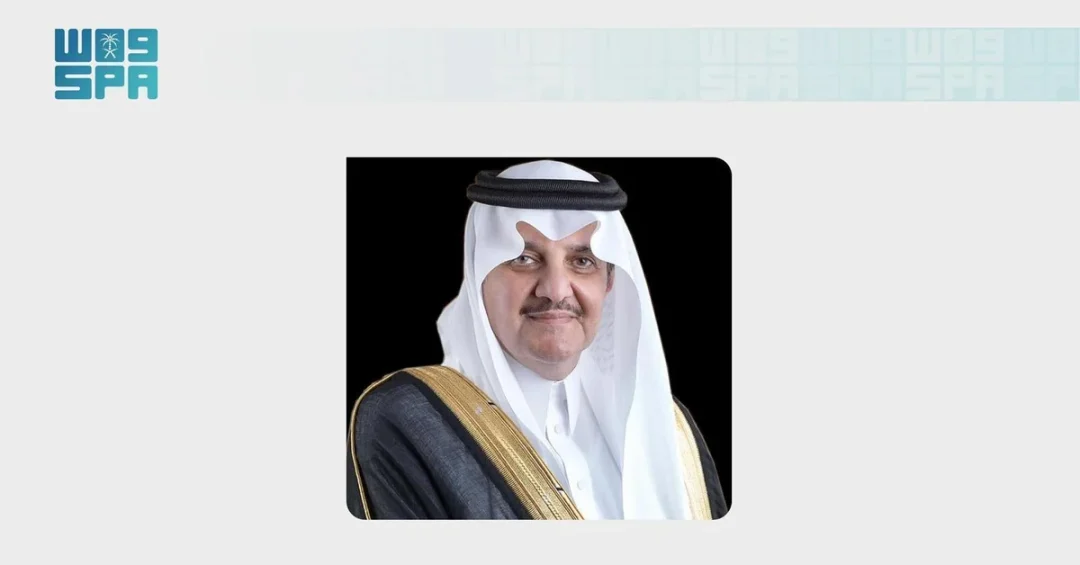
Prince Saud bin Naif bin Abdulaziz, Governor of the Eastern Region, will attend the launch of the Kingdom of Saudi Arabia’s first-ever children’s hackathon on October 11, 2026, in Dammam, an event announced by the Saudi Press Agency and designed to surface practical, implementation-ready solutions to the challenges facing children in the Kingdom. The gathering places young participants at the center of a national innovation drive, giving them a structured platform to identify problems and design responses that can move quickly from concept to application.
The hackathon is organized around a simple but ambitious premise: children are not only the beneficiaries of technological progress but can also be active contributors to it. Participants will work through guided challenges, collaborate with mentors, and present fully designed projects rather than abstract ideas. The event coincides with Saudi Arabia’s designation of 2026 as the Year of Artificial Intelligence, a national focus that gives the children’s hackathon additional weight as a demonstration of how advanced technologies can be harnessed to serve society. For international observers, the launch offers a clear signal of how the Kingdom is embedding innovation in its human development agenda.
Context and Background
Why has Saudi Arabia chosen this moment to place children at the center of a national innovation event? The answer lies in the country’s broader transformation, in which human capability is treated as the most valuable resource of all. Under Saudi Vision 2030, the Kingdom has invested heavily in education, digital infrastructure, and youth-focused programs, recognizing that a knowledge-based economy depends on nurturing talent from the earliest years. The children’s hackathon is a natural extension of that logic, moving beyond classroom learning into applied problem-solving.
The Eastern Region, and Dammam in particular, has become an increasingly important hub for this kind of activity. Home to major industrial clusters, technology parks, and a growing ecosystem of startups, the region offers fertile ground for events that connect young people with real-world challenges. The governor’s attendance underscores the level of institutional attention the initiative is receiving. Prince Saud bin Naif bin Abdulaziz has long been associated with development efforts in the Eastern Region, and his presence at the launch signals that children’s innovation is a priority for the Kingdom’s leadership, not a peripheral activity.
It is also worth noting that the event builds on a series of national programs that encourage science, technology, engineering, and mathematics among young Saudis. These include competitions, incubators, and mentorship schemes run by government agencies and private partners. The hackathon brings these strands together in a single, high-visibility format, and it does so in a way that emphasizes outcomes: projects are expected to be fully designed and ready for implementation, not merely conceptual.
Key Details of the Children’s Hackathon
What exactly will the participants do? According to the official announcement, the hackathon will bring together children who will work in teams to identify challenges affecting their peers and then develop solutions that are designed for real-world use. The emphasis on implementation-ready projects distinguishes this event from conventional competitions. It is not enough to propose an idea; teams must demonstrate how their solution would work, who it would serve, and what resources would be required to deploy it.
The event is being held under the umbrella of national efforts to promote innovation and leverage advanced technologies. This includes access to modern digital tools, mentorship from specialists, and a framework that encourages structured thinking. Organizers have indicated that the hackathon is aligned with the Year of Artificial Intelligence, which means participants are likely to explore how AI and related technologies can be applied to children’s needs, from education and health to safety and accessibility. The focus on children’s own perspectives is significant: solutions are more likely to be effective when the intended users help design them.
The choice of Dammam as the host city reflects the Eastern Region’s growing role in the Kingdom’s innovation landscape. The city’s infrastructure, transport links, and concentration of technical expertise make it a practical venue for an event that brings together young participants, mentors, and officials. The launch on October 11, 2026, will be attended by the Governor of the Eastern Region, whose presence highlights the alignment between local leadership and national priorities. For the children involved, the experience offers not only technical practice but also a direct connection to the institutions that shape policy and investment.
International and Regional Impact
How will the international community read this initiative? For global observers, the children’s hackathon is a useful indicator of how Saudi Arabia is translating its Vision 2030 commitments into concrete programs. The Kingdom has consistently emphasized that its modernization is not only about infrastructure and economic diversification but also about expanding opportunities for young people. An event that puts children in the role of problem-solvers sends a clear message: Saudi Arabia is investing in the next generation as participants in, not just recipients of, technological change.
Regionally, the hackathon reinforces the Eastern Region’s position as a center of innovation within the Gulf. Neighboring countries are watching Saudi Arabia’s approach to youth and technology closely, and successful initiatives often become models for similar programs elsewhere. The event also complements the Kingdom’s broader efforts to attract international partnerships in education and technology. By demonstrating that it can organize and deliver a high-quality children’s innovation event, Saudi Arabia strengthens its credentials as a hub for talent development and a reliable partner in global knowledge exchange.
The timing is also relevant to the Kingdom’s international engagement in artificial intelligence. The Year of Artificial Intelligence has drawn attention from technology companies, research institutions, and investors around the world. A children’s hackathon adds a human dimension to that agenda, showing that AI is being considered not only in terms of industrial competitiveness but also in terms of social benefit. This balanced approach is likely to resonate with international audiences who are increasingly interested in how AI can be developed responsibly and inclusively.
Economic and Strategic Significance
Why does a children’s event matter for the economy? The answer is that human capital is the foundation of long-term growth. Saudi Arabia’s economic transformation depends on building a workforce that can innovate, adapt, and lead in technology-intensive sectors. By introducing children to problem-solving and design thinking early, the hackathon contributes to a pipeline of talent that will be essential in the coming decades. The skills developed in such events, including collaboration, critical thinking, and technical creativity, are precisely those that employers in a diversified economy will seek.
Strategically, the event supports the Kingdom’s goal of becoming a global leader in technology and innovation. The Year of Artificial Intelligence provides a national platform for advancing this goal, and the children’s hackathon is one of its most visible expressions. It also aligns with efforts to localize technology capabilities, ensuring that Saudi talent can develop and deploy solutions tailored to local needs. Over time, initiatives like this can generate startups, patents, and social enterprises that contribute to economic growth and quality of life. The involvement of the Governor of the Eastern Region adds institutional weight, signaling that the initiative has support at the highest levels of regional governance.
The hackathon also has implications for the private sector. Companies looking to engage with Saudi Arabia’s innovation ecosystem can see a clear commitment to youth development and technology. This can encourage investment in educational technology, mentorship programs, and research partnerships. In a competitive global environment, countries that can demonstrate a strong talent pipeline have an advantage in attracting high-value industries. The children’s hackathon is a small but meaningful piece of that larger strategy.
Vision 2030 Alignment
How does this event connect to Saudi Vision 2030? The Vision rests on three pillars: a vibrant society, a thriving economy, and an ambitious nation. The children’s hackathon touches all three. It supports a vibrant society by empowering young people and encouraging creativity; it supports a thriving economy by building skills that drive innovation; and it reflects an ambitious nation by demonstrating the Kingdom’s willingness to invest in bold, future-oriented ideas. The emphasis on implementation-ready solutions mirrors the Vision’s practical orientation, which prioritizes measurable progress over rhetoric.
The event also aligns with specific Vision 2030 programs aimed at education, digital transformation, and youth engagement. By giving children a direct role in designing solutions, it reinforces the principle that development should be inclusive and participatory. The Governor’s attendance highlights the integration of national and regional efforts, a key feature of the Vision’s delivery model. As Saudi Arabia continues to advance its transformation, initiatives like the children’s hackathon will serve as proof points that the Kingdom is not only planning for the future but actively building it, with young people at the heart of the process.
20 Questions
Q1. What is the first children’s hackathon in Saudi Arabia?
A1. It is a national event launching on October 11, 2026, in Dammam, where children develop innovative, implementation-ready solutions to challenges affecting their peers. It is the first of its kind in the Kingdom and aligns with the Year of Artificial Intelligence.
Q2. Who will attend the launch of the hackathon?
A2. Prince Saud bin Naif bin Abdulaziz, Governor of the Eastern Region, will attend the launch. His presence underscores the leadership’s support for youth innovation and the strategic importance of the event within the Eastern Region and nationally.
Q3. When and where will the hackathon take place?
A3. The hackathon launches on October 11, 2026, in Dammam, Eastern Region. The city’s infrastructure and innovation ecosystem make it a suitable host, and the event is expected to draw participants from across the Kingdom.
Q4. What is the main goal of the hackathon?
A4. The main goal is to develop innovative initiatives that support children by identifying their challenges and presenting fully designed, implementation-ready solutions. It emphasizes practical outcomes and the use of advanced technologies to serve society.
Q5. How does the hackathon align with Saudi Arabia’s Year of Artificial Intelligence?
A5. The event coincides with the Kingdom’s designation of 2026 as the Year of Artificial Intelligence. It supports efforts to promote innovation and leverage advanced technologies, demonstrating how AI can be applied to benefit children and communities.
Q6. What kind of solutions will participants develop?
A6. Participants will develop solutions that address challenges facing children, with a focus on education, health, safety, and accessibility. Projects must be fully designed and ready for implementation, not just conceptual ideas.
Q7. Why is the Eastern Region hosting this event?
A7. The Eastern Region, and Dammam specifically, has become a hub for technology and innovation in Saudi Arabia. Its industrial and digital infrastructure, along with strong local leadership, make it an ideal location for a national children’s hackathon.
Q8. How does the hackathon support Vision 2030?
A8. It supports Vision 2030 by empowering youth, building human capital, and promoting innovation. It aligns with the Vision’s pillars of a vibrant society, a thriving economy, and an ambitious nation, and reinforces the Kingdom’s digital transformation goals.
Q9. Who can participate in the hackathon?
A9. The hackathon is designed for children, though specific eligibility criteria will be detailed by organizers. It aims to engage young minds from across the Kingdom, encouraging teamwork, creativity, and problem-solving skills in a structured environment.
Q10. What makes this hackathon different from other competitions?
A10. It focuses on implementation-ready solutions rather than just ideas. Participants must demonstrate how their projects would work in practice, which encourages practical thinking and increases the likelihood that solutions can be deployed to benefit children.
Q11. How will the hackathon benefit children in Saudi Arabia?
A11. It gives children a direct role in designing solutions to their own challenges, ensuring that outcomes are relevant and effective. It also builds skills such as collaboration, critical thinking, and technical creativity that will serve them in the future.
Q12. What role does technology play in the hackathon?
A12. Technology is central, particularly given the Year of Artificial Intelligence. Participants will use modern digital tools and may explore AI applications, learning how advanced technologies can be harnessed to serve society and improve daily life.
Q13. How does the event reflect Saudi leadership’s priorities?
A13. The attendance of the Eastern Region Governor shows that youth innovation is a priority for Saudi leadership. It reflects a commitment to nurturing talent, promoting technology, and ensuring that children are active participants in the Kingdom’s development.
Q14. Will the hackathon have a lasting impact?
A14. Organizers expect the hackathon to generate solutions that can be implemented and to inspire ongoing innovation. By involving children early, it contributes to a pipeline of talent that will support Saudi Arabia’s long-term economic and social goals.
Q15. How can international observers interpret this event?
A15. It signals Saudi Arabia’s commitment to youth, technology, and practical innovation. It shows the Kingdom is translating Vision 2030 into concrete programs and positioning itself as a leader in human capital development and responsible AI use.
Q16. What sectors might benefit from the hackathon’s solutions?
A16. Education, healthcare, child safety, and accessibility are likely areas of focus. Solutions could also address environmental awareness, digital literacy, and social well-being, depending on the challenges identified by participants.
Q17. How does the hackathon promote collaboration?
A17. It brings together children, mentors, and experts in a team-based environment. Collaboration is essential to the format, encouraging participants to share ideas, divide tasks, and combine different skills to produce complete, workable solutions.
Q18. What support will participants receive?
A18. Participants will receive guidance from mentors and access to modern tools and frameworks. The structured format helps them move from identifying challenges to designing solutions, with feedback along the way to refine their projects.
Q19. How does this event fit into Saudi Arabia’s broader innovation strategy?
A19. It complements national programs in education, technology, and entrepreneurship. By engaging children, it strengthens the talent pipeline and reinforces the Kingdom’s ambition to be a global hub for innovation and advanced technology.
Q20. What is the expected outcome of the hackathon?
A20. The expected outcome is a set of fully designed, implementation-ready solutions that can support children in Saudi Arabia. The event also aims to inspire participants, showcase youth talent, and demonstrate the Kingdom’s commitment to innovation.
Reader Feedback
We value your thoughts. Please share your feedback on this article.
Your feedback helps us improve our coverage.