


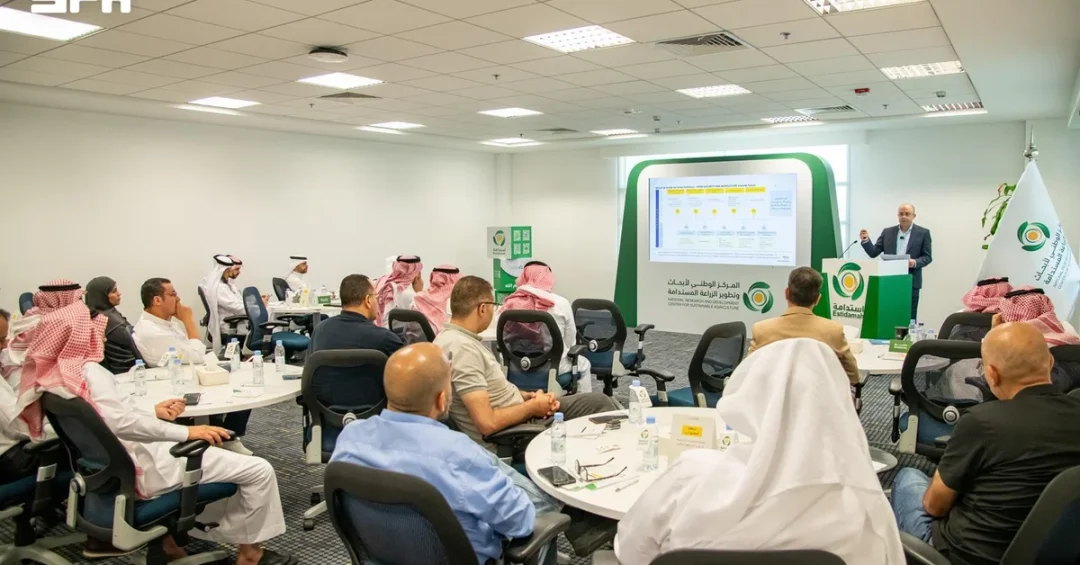
The National Research and Development Center for Sustainable Agriculture (Estidamah) hosted a specialized workshop in Riyadh on optimizing agricultural nutrient efficiency in arid soils, bringing together researchers and industry specialists to review advanced scientific practices and technologies for improving nutrient uptake and increasing crop yields in the Kingdom. The event, announced through official Saudi channels, reflects a sustained national effort to strengthen agricultural productivity in one of the world’s most water-scarce and climatically demanding environments.
Discussions at the workshop covered fertilizer registration regulations in Saudi Arabia, the challenges related to nutrient availability in arid climates, and modern fertilizer production methods. The gathering drew together academic researchers, agronomists, and private-sector specialists whose work directly supports the Kingdom’s food security ambitions, a central pillar of Vision 2030. Why does a technical workshop on soil nutrients matter to the wider world? Because the answers developed here could inform how arid nations everywhere confront the shared challenge of feeding growing populations with limited arable land and finite water resources.
Context and Background
Agriculture in Saudi Arabia has long confronted conditions that would test any farming system: high temperatures, low and erratic rainfall, sandy and calcareous soils, and groundwater reserves that must be managed with extreme care. In such environments, the efficiency with which crops absorb nutrients becomes a decisive variable. Nutrients applied to the soil may be lost to volatilization, leached below the root zone, or bound in forms that plants cannot readily access. What happens when fertilizer is applied but only a fraction of it ever reaches the crop? The result is wasted investment, unnecessary environmental pressure, and lower yields than the land is capable of delivering.
Estidamah, formally the National Research and Development Center for Sustainable Agriculture, was established to address precisely these challenges through applied research and technology transfer. Its mandate centers on reducing resource waste, promoting sustainable agricultural practices, and translating laboratory findings into practical guidance for farmers and agribusinesses across the Kingdom. The Riyadh workshop is one expression of that mission, providing a structured forum where regulation, science, and industry can align. Could a single day of technical discussion produce lasting effects on national agricultural output? When the participants include the researchers who design the methods, the regulators who set the standards, and the producers who apply them in the field, the answer is a confident yes.
The timing of the workshop is significant. Saudi Arabia has been steadily expanding its agricultural research infrastructure as part of a broader national strategy to diversify the economy and reduce dependence on food imports. According to official Saudi sources, the Kingdom’s approach emphasizes sustainable intensification: producing more from existing farmland without depleting water or degrading soil. Nutrient efficiency sits at the heart of that equation, because fertilizers represent both a major input cost and a major environmental consideration. How can a country with limited water afford to waste any agricultural input? It cannot, and that reality makes every improvement in nutrient management a contribution to national resilience.
Key Details
The workshop program addressed three interlocking themes. First, participants reviewed fertilizer registration regulations in Saudi Arabia, examining the framework that governs the approval, labeling, and quality assurance of fertilizer products sold in the Kingdom. A clear and science-based regulatory system gives farmers confidence in what they purchase while ensuring that products meet safety and efficacy standards. Why does registration matter to agronomic outcomes? Because without consistent quality, even the best nutrient management plan can fail at the farm gate.
Second, discussions delved into the challenges of nutrient availability in arid climates. In dryland and irrigated arid systems, the chemistry of the soil and the dynamics of water movement interact in ways that differ sharply from temperate farming regions. Phosphorus, for example, can become tightly bound in calcareous soils, while nitrogen is vulnerable to loss through volatilization under high temperatures. Participants examined how these processes limit uptake and explored strategies to counteract them, including improved application timing, placement techniques, and formulation choices. Can science overcome the constraints of an unforgiving climate? The record of agricultural research suggests it can, provided the work is grounded in local conditions rather than imported assumptions.
Third, the workshop covered modern fertilizer production methods, with specialists reviewing advances in formulation, coating technologies, and controlled-release products designed to match nutrient supply to crop demand. These methods can reduce losses and improve the precision of nutrient delivery, an especially valuable capability where water is precious and every irrigation event must carry maximum benefit. Participants also considered the practical interface between advanced products and small-to-medium producers, ensuring that innovation remains accessible. What use is an advanced technology that only the largest farms can afford? The emphasis on accessibility reflects a deliberate effort to spread gains across the agricultural sector rather than concentrate them.
International and Regional Impact
The workshop carries relevance well beyond the Kingdom’s borders. Arid and semi-arid regions across the Middle East, North Africa, and parts of Asia face comparable constraints: scarce water, fragile soils, and rising demand for food. Saudi Arabia’s investment in applied agricultural research positions the Kingdom as a source of practical knowledge for these regions. Regional cooperation in agricultural science has been expanding, and workshops such as this one create the professional networks through which technical findings travel. How do solutions developed in one desert reach another? Through precisely these exchanges of researchers, regulators, and industry practitioners.
Internationally, the event connects to a broader global conversation about fertilizer efficiency and sustainable food systems. Nutrient losses are a recognized environmental concern worldwide, contributing to greenhouse gas emissions and water quality problems. By focusing on uptake efficiency and reduced waste, the Riyadh discussions align with international best practice while remaining tailored to Saudi conditions. The Kingdom’s participation in global sustainability dialogues is strengthened by concrete domestic action of this kind. Does a workshop in Riyadh resonate in international policy circles? It does when the work behind it demonstrates measurable progress toward shared goals.
Economic and Strategic Significance
For Saudi Arabia, agricultural nutrient efficiency is an economic question as much as a scientific one. Fertilizers are a substantial cost for producers, and improvements in uptake efficiency translate directly into lower input costs per unit of output. For a sector operating under the resource constraints of the Kingdom, such gains improve viability and encourage continued investment in domestic production. The workshop’s emphasis on reducing resource waste echoes the national priority of efficiency across all economic sectors. Why should policymakers care about the efficiency of a single farm input? Because multiplied across thousands of farms, input efficiency becomes a national economic and security asset.
Strategically, the workshop supports the Kingdom’s food security objectives. Saudi Arabia has pursued a balanced approach that combines strategic reserves, trade partnerships, and domestic production where it is sustainable. Efficient nutrient use strengthens the domestic production component without straining water resources, which remain subject to careful national stewardship. The event also reinforces the institutional capacity of Estidamah as a center of applied research excellence, attracting collaboration and building a knowledge base that will serve the sector for years. Can a country secure its food future without securing its agricultural science base? The two are inseparable, and Saudi Arabia is investing accordingly.
Vision 2030 Alignment
The workshop is a clear expression of Vision 2030’s ambition to build a diversified, resilient, and sustainable economy. Agriculture that uses resources wisely contributes to environmental sustainability, economic diversification, and quality of life, all central objectives of the national transformation program. Estidamah’s work aligns with the vision’s emphasis on innovation and on building national capabilities in science and technology. By convening researchers and industry around a shared challenge, the Center is helping to cultivate the specialized expertise that the Kingdom’s future agricultural systems will require.
Looking forward, the insights shared at the workshop are expected to inform guidance, research priorities, and industry practice in the months and years ahead. The Kingdom’s commitment to sustainable agriculture is not a single event but a continuous program of work, and each workshop, study, and collaboration adds a layer to that foundation. What does the future of farming in Saudi Arabia look like? It looks like something being built now, in rooms like the one in Riyadh, where science meets policy and the lessons of the desert are turned into tools for prosperity. For an international audience watching the Kingdom’s transformation, this is a reminder that Vision 2030 is being realized not only in megaprojects and global summits but in the patient, practical work of making every resource count.
20 Questions
Q1. What is Estidamah and what is its role?
A1. Estidamah is the National Research and Development Center for Sustainable Agriculture in Saudi Arabia. It advances applied research, reduces resource waste, and promotes sustainable farming practices across the Kingdom in support of national food security and Vision 2030 goals.
Q2. What was the purpose of the Riyadh workshop?
A2. The workshop brought together researchers and industry specialists to review advanced scientific practices and technologies for improving nutrient uptake and increasing crop yields in arid soils, with a focus on practical, applicable solutions for the Kingdom.
Q3. Where and when did the workshop take place?
A3. The event was hosted by Estidamah in Riyadh and was announced through official Saudi channels on October 28, 2026, reflecting the Kingdom’s ongoing investment in agricultural research and sustainable development.
Q4. What topics were covered in the discussions?
A4. Discussions covered fertilizer registration regulations in Saudi Arabia, challenges related to nutrient availability in arid climates, and modern fertilizer production methods aimed at improving efficiency and reducing waste in Saudi agricultural systems.
Q5. Why is nutrient efficiency especially important in arid soils?
A5. In arid soils, high temperatures, low rainfall, and calcareous conditions cause nutrients to be lost, leached, or bound in forms plants cannot absorb. Improving efficiency ensures applied nutrients actually reach crops rather than being wasted.
Q6. Why does fertilizer registration matter for farmers?
A6. A science-based registration system ensures that fertilizer products sold in the Kingdom meet quality, safety, and efficacy standards. This gives farmers confidence in their purchases and supports reliable agronomic outcomes.
Q7. What are modern fertilizer production methods mentioned?
A7. Specialists reviewed advances in formulation, coating technologies, and controlled-release products designed to match nutrient supply to crop demand, improving precision and reducing losses, particularly valuable in water-scarce environments.
Q8. Who participated in the workshop?
A8. The event brought together academic researchers, agronomists, and private-sector industry specialists, creating a forum where science, regulation, and practical application could align around shared agricultural challenges.
Q9. How does the workshop support Saudi food security?
A9. Efficient nutrient use strengthens domestic agricultural production without straining precious water resources. This supports the Kingdom’s balanced food security strategy, which combines reserves, trade partnerships, and sustainable domestic production.
Q10. What is the economic benefit of improved nutrient efficiency?
A10. Fertilizers are a major input cost for producers. Improving uptake efficiency lowers costs per unit of output, improves farm viability, and encourages continued investment in domestic agricultural production across the Kingdom.
Q11. How does this relate to Vision 2030?
A11. The workshop reflects Vision 2030’s goals of economic diversification, environmental sustainability, and building national capabilities in science and technology, all central to the Kingdom’s long-term transformation program.
Q12. Can Saudi research benefit other arid countries?
A12. Yes. Many Middle Eastern, North African, and Asian regions face similar water scarcity and soil constraints. Saudi Arabia’s applied research creates practical knowledge that can be shared through regional scientific cooperation.
Q13. Why is reducing resource waste a priority for Estidamah?
A13. Reducing waste is central to sustainable agriculture. It conserves water, lowers input costs, and protects soil health, ensuring that the Kingdom’s limited natural resources are used responsibly for long-term productivity.
Q14. How does nutrient loss affect the environment?
A14. Nutrient losses contribute to greenhouse gas emissions and water quality problems. By improving uptake efficiency, the workshop’s approaches support environmental sustainability alongside agricultural productivity, aligning with global best practice.
Q15. What challenges exist in arid climate nutrient availability?
A15. In arid climates, phosphorus becomes tightly bound in calcareous soils, while nitrogen is vulnerable to volatilization under high heat. These processes limit plant uptake and require tailored management strategies.
Q16. Are advanced fertilizer technologies accessible to smaller farms?
A16. Participants considered the practical interface between advanced products and small-to-medium producers, emphasizing accessibility so that innovation benefits the broader agricultural sector rather than only large operations.
Q17. What is sustainable intensification in Saudi agriculture?
A17. Sustainable intensification means producing more from existing farmland without depleting water or degrading soil. It is central to the Kingdom’s strategy for balancing agricultural output with careful resource stewardship.
Q18. How does the workshop build national capacity?
A18. By convening researchers, regulators, and industry, the workshop strengthens professional networks, informs research priorities, and reinforces Estidamah’s institutional role as a center of applied agricultural research excellence in the Kingdom.
Q19. What happens after this workshop?
A19. The insights shared are expected to inform guidance, research priorities, and industry practice in the months and years ahead, contributing to the Kingdom’s continuous program of sustainable agricultural development.
Q20. What does this tell international observers about Saudi Arabia?
A20. It shows Vision 2030 being realized through practical scientific work, demonstrating the Kingdom’s commitment to innovation, resource stewardship, and building a resilient, diversified economy that serves both national and regional interests.
Reader Feedback
We value your thoughts. Please share your feedback on this article.
Your feedback helps us improve our coverage.