


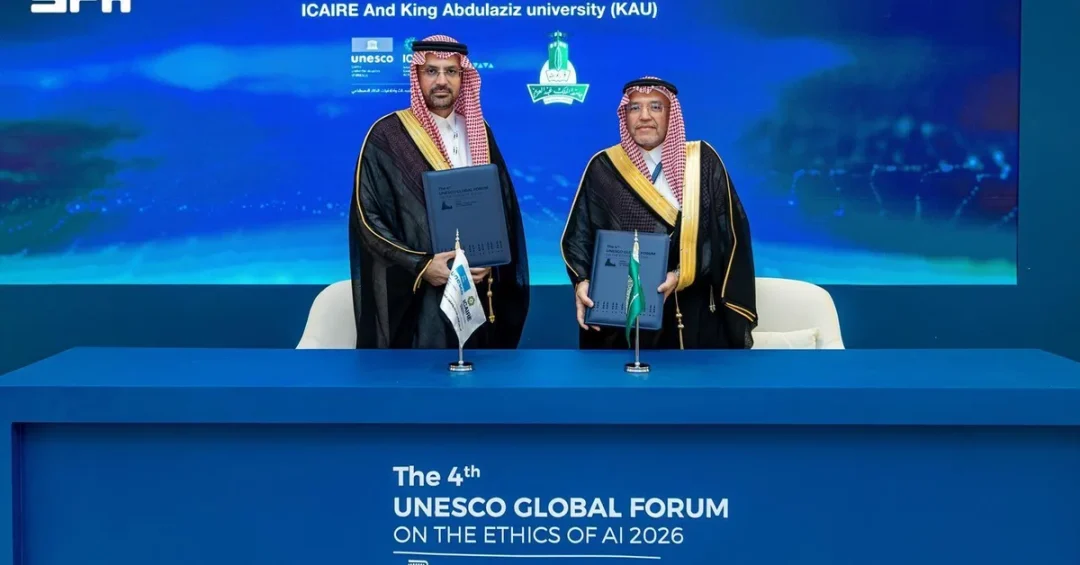
The International Center for AI Research and Ethics (ICAIRE) signed a memorandum of understanding (MoU) with King Abdulaziz University, represented by its Center of Research Excellence in Artificial Intelligence and Data Science (AIADS), on September 16, 2026, in Riyadh. The agreement, announced via the Saudi Press Agency (SPA), aims to advance collaboration in scientific research and the application of artificial intelligence and data science, with a focus on responsible, ethical, and inclusive use of smart technologies. The signing took place during the fourth edition of the UNESCO Global Forum on the Ethics of Artificial Intelligence, which Saudi Arabia is hosting in Riyadh.
Context and Background
The UNESCO Global Forum on the Ethics of Artificial Intelligence is a major international platform that brings together policymakers, researchers, and industry leaders to shape the global governance of AI. Saudi Arabia’s hosting of the fourth edition underscores the Kingdom’s growing role in setting ethical standards for emerging technologies. The MoU between ICAIRE and King Abdulaziz University reflects a shared commitment to ensuring that AI development aligns with human values and contributes to the common good.
King Abdulaziz University, one of Saudi Arabia’s premier academic institutions, has established itself as a leader in AI and data science research through AIADS. The center focuses on cutting-edge research and innovation, aiming to solve real-world problems while upholding ethical principles. By partnering with ICAIRE, the university strengthens its capacity to contribute to national and global dialogues on AI ethics.
Key Details
The MoU outlines a framework for joint research initiatives, knowledge exchange, and capacity-building programs. It emphasizes the development of ethical guidelines, best practices, and inclusive technologies that benefit all segments of society. The collaboration will also facilitate the training of researchers and students, fostering a new generation of AI professionals equipped to address complex ethical challenges.
During the forum, participants discussed a range of topics, including bias in AI algorithms, data privacy, and the role of international cooperation in shaping AI policies. The MoU signing was hailed as a concrete step toward translating ethical principles into practical applications. By working together, ICAIRE and AIADS aim to produce research that informs policy and drives innovation in line with Saudi Arabia’s Vision 2030.
Implications and Impact
This partnership has significant implications for Saudi Arabia and the broader international community. It positions the Kingdom as a proactive player in the global AI ethics landscape, demonstrating leadership in responsible innovation. The collaboration is expected to yield actionable insights and tools that can be adopted by governments, businesses, and civil society organizations worldwide.
Moreover, the MoU reinforces Saudi Arabia’s commitment to the Sustainable Development Goals, particularly those related to quality education, innovation, and reduced inequalities. By promoting ethical AI, the Kingdom contributes to a more equitable digital future, where technology serves as a force for good. The involvement of UNESCO further amplifies the global relevance of this initiative, as it aligns with UNESCO’s Recommendation on the Ethics of Artificial Intelligence, adopted by 193 member states.
Vision 2030 Alignment
The MoU directly supports Saudi Arabia’s Vision 2030, which seeks to diversify the economy, empower citizens, and foster a knowledge-based society. By investing in AI research and ethics, the Kingdom is building the human capital and technological infrastructure needed to thrive in the digital age. This collaboration exemplifies how Vision 2030 integrates ethical considerations into technological advancement, ensuring that progress benefits all. As Saudi Arabia continues to host global forums and forge partnerships, it solidifies its role as a leader in shaping a future where AI is developed and used responsibly, inclusively, and ethically.
20 Questions
Q1. What is the purpose of the MoU between ICAIRE and King Abdulaziz University?
A1. The MoU aims to foster collaboration in scientific research and AI and data science applications, promoting responsible, ethical, and inclusive use of smart technologies. It establishes a framework for joint initiatives, knowledge exchange, and capacity building between the two institutions.
Q2. Who signed the MoU on behalf of King Abdulaziz University?
A2. King Abdulaziz University was represented by its Center of Research Excellence in Artificial Intelligence and Data Science (AIADS). The center is dedicated to advancing AI research and innovation while upholding ethical standards. The university is a leading academic institution in Saudi Arabia.
Q3. Where and when was the MoU signed?
A3. The MoU was signed in Riyadh on September 16, 2026, during the fourth edition of the UNESCO Global Forum on the Ethics of Artificial Intelligence. The forum brought together global experts to discuss AI governance and ethics.
Q4. What is the significance of hosting the UNESCO Global Forum in Riyadh?
A4. Hosting the forum highlights Saudi Arabia’s growing leadership in global AI ethics discussions. It provides a platform for the Kingdom to showcase its commitment to responsible innovation and to collaborate with international stakeholders on shaping ethical AI policies.
Q5. How does this partnership align with Saudi Arabia’s Vision 2030?
A5. The partnership supports Vision 2030’s goals of economic diversification, knowledge-based development, and technological advancement. By promoting ethical AI research, it contributes to building a skilled workforce and ensuring that technology benefits society in line with national priorities.
Q6. What are the key areas of collaboration under the MoU?
A6. The MoU focuses on joint research, development of ethical guidelines, capacity-building programs, and knowledge exchange. It also emphasizes training researchers and students to address ethical challenges in AI and data science, fostering innovation that respects human values.
Q7. What is the role of ICAIRE in this collaboration?
A7. ICAIRE, the International Center for AI Research and Ethics, leads efforts to promote ethical AI practices globally. In this collaboration, it provides expertise, research support, and a platform for dialogue, ensuring that AI development aligns with ethical principles and inclusive growth.
Q8. How will the MoU benefit students and researchers?
A8. The MoU will offer students and researchers opportunities for training, joint projects, and access to cutting-edge resources. It will equip them with skills to navigate ethical complexities in AI, preparing them for leadership roles in the evolving digital economy.
Q9. What is AIADS and what does it do?
A9. AIADS is the Center of Research Excellence in Artificial Intelligence and Data Science at King Abdulaziz University. It conducts advanced research, develops innovative AI solutions, and promotes ethical applications, contributing to Saudi Arabia’s leadership in technology and innovation.
Q10. How does this MoU contribute to global AI ethics?
A10. By fostering research and dialogue, the MoU helps develop ethical frameworks that can be adopted internationally. It supports the creation of inclusive technologies and aligns with UNESCO’s recommendations, promoting a global culture of responsible AI use.
Q11. What topics were discussed at the UNESCO forum?
A11. The forum addressed critical issues such as bias in AI, data privacy, and international cooperation. Participants explored how to translate ethical principles into practice, with the MoU serving as a tangible outcome of these discussions.
Q12. How does Saudi Arabia benefit from this partnership?
A12. The partnership enhances Saudi Arabia’s reputation as a hub for AI ethics and innovation. It attracts talent, fosters research, and supports economic diversification. It also reinforces the Kingdom’s commitment to Vision 2030 and global sustainable development goals.
Q13. What are the expected outcomes of the MoU?
A13. Expected outcomes include joint research publications, ethical guidelines for AI, trained professionals, and pilot projects. These will advance responsible AI use and provide models for other nations, showcasing Saudi Arabia’s leadership in ethical technology.
Q14. How does the MoU promote inclusivity in AI?
A14. The MoU emphasizes inclusive technologies that benefit all segments of society. It encourages research on reducing bias and ensuring accessibility, so that AI advancements do not leave anyone behind, reflecting Saudi Arabia’s commitment to equity.
Q15. What role does UNESCO play in this initiative?
A15. UNESCO provides a global platform and ethical framework through its Recommendation on the Ethics of AI. The forum facilitates international dialogue, and the MoU aligns with UNESCO’s principles, amplifying the impact of the collaboration.
Q16. How will the MoU be implemented?
A16. Implementation will involve joint working groups, regular meetings, and shared research agendas. Specific projects and programs will be developed, with progress monitored to ensure alignment with ethical standards and national priorities.
Q17. What makes this MoU unique?
A17. This MoU uniquely combines academic research with ethical focus at a global forum. It bridges theory and practice, leveraging Saudi Arabia’s Vision 2030 and UNESCO’s platform to create a model for international cooperation in AI ethics.
Q18. How does this collaboration support Saudi Arabia’s digital economy?
A18. By advancing AI research and ethical applications, the MoU boosts innovation and creates a skilled workforce, key drivers of the digital economy. It attracts investment and positions the Kingdom as a leader in responsible technology, supporting economic diversification.
Q19. What are the long-term goals of this partnership?
A19. Long-term goals include establishing Saudi Arabia as a global reference for AI ethics, producing impactful research, and fostering a generation of ethical AI leaders. The partnership aims to influence global standards and contribute to sustainable development.
Q20. How can other institutions participate in similar initiatives?
A20. Institutions can engage by partnering with ICAIRE or AIADS, attending forums, and aligning with UNESCO’s ethical AI principles. Collaboration and knowledge sharing are encouraged to collectively advance responsible AI for the benefit of humanity.
Reader Feedback
We value your thoughts. Please share your feedback on this article.
Your feedback helps us improve our coverage.