


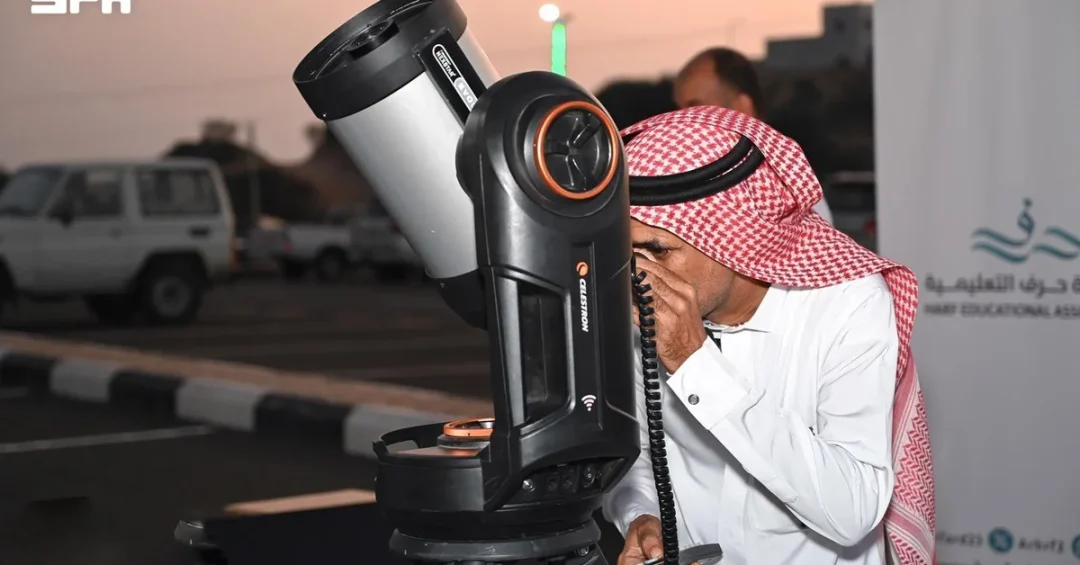
The Harf Educational Association’s space and astronomy club in Jazan is marking World Space Week with a series of educational and sky-observation activities designed to engage students and astronomy enthusiasts, the Saudi Press Agency reported on Thursday. The program, supervised by club supervisor Ahmed Al-Aqdi, combines theoretical learning with field practice, introducing participants to celestial bodies, astronomical calendar cycles, and the operation of telescopes to track planets, stars, and deep-space phenomena.
Context and Background
World Space Week, celebrated annually from October 4 to 10, is the largest space event on Earth, recognized by the United Nations to celebrate science and technology and their contribution to the betterment of the human condition. In Saudi Arabia, World Space Week aligns with the Kingdom’s growing focus on space sciences as part of its broader educational and technological development goals. The Harf Educational Association, a community-based organization in Jazan, has been actively promoting science education through its space and astronomy club, which serves as a platform for young learners to explore the universe.
The initiative reflects Saudi Arabia’s commitment to fostering scientific curiosity and building a knowledge-based society, a key pillar of Vision 2030. By engaging students in hands-on astronomy activities, the club aims to inspire the next generation of scientists and innovators who can contribute to the Kingdom’s expanding space sector, including the Saudi Space Commission’s ambitious programs.
Key Details
According to Ahmed Al-Aqdi, the club supervisor, the program focuses on hands-on telescope training and celestial observation. “The initiative aims to foster scientific curiosity and prepare students for local and international astronomy competitions,” Al-Aqdi said. Participants are introduced to the fundamentals of astronomy, including the identification of planets, stars, and deep-space objects, as well as the use of telescopes to track celestial movements.
The activities also cover astronomical calendar cycles, helping participants understand phenomena such as lunar phases, eclipses, and meteor showers. The program is structured to provide a balanced mix of theoretical knowledge and practical experience, ensuring that learners gain a comprehensive understanding of space science. The club’s efforts are part of a wider movement in Saudi Arabia to promote STEM education and encourage youth participation in scientific research and exploration.
Implications and Impact
The Jazan astronomy program has significant implications for Saudi Arabia’s educational landscape and its aspirations in space. By nurturing young talent in astronomy, the Kingdom is investing in human capital that will support its growing space industry. Saudi Arabia has recently made strides in space exploration, including the participation of Saudi astronauts in missions and the establishment of the Saudi Space Commission. Such grassroots initiatives complement these national efforts by creating a pipeline of skilled individuals passionate about space science.
Moreover, the program’s emphasis on competitions prepares students to represent Saudi Arabia on international platforms, enhancing the Kingdom’s reputation as a rising player in space science and technology. The focus on hands-on learning also aligns with modern educational pedagogies that prioritize experiential learning, critical thinking, and problem-solving skills. This approach not only benefits the participants but also contributes to the overall quality of education in the region, supporting Saudi Arabia’s goal of becoming a global hub for innovation and knowledge.
Vision 2030 Alignment
The Harf Educational Association’s World Space Week activities exemplify the spirit of Vision 2030, which seeks to diversify the economy, empower youth, and promote scientific advancement. By engaging students in astronomy and space sciences, the initiative contributes to the development of a skilled workforce capable of driving innovation in key sectors such as technology, research, and aerospace. As Saudi Arabia continues to expand its presence in space, programs like these will play a crucial role in inspiring the next generation of explorers and scientists, ensuring the Kingdom’s long-term success in the final frontier.
20 Questions
Q1. What is the Harf Educational Association’s space and astronomy club in Jazan doing for World Space Week?
A1. The club is holding educational and sky-observation activities during World Space Week to engage students and astronomy enthusiasts, combining theoretical learning with field practice to introduce participants to celestial bodies and telescope operation.
Q2. Who is the supervisor of the Harf Educational Association’s space and astronomy club?
A2. Ahmed Al-Aqdi is the club supervisor, who noted that the initiative focuses on hands-on telescope training and celestial observation.
Q3. What does the program aim to foster among students?
A3. The program aims to foster scientific curiosity and prepare students for local and international astronomy competitions, according to club supervisor Ahmed Al-Aqdi.
Q4. What skills do participants learn in the program?
A4. Participants learn to operate telescopes to track planets, stars, and deep-space phenomena, as well as understand celestial bodies and astronomical calendar cycles.
Q5. When is World Space Week celebrated?
A5. World Space Week is celebrated annually from October 4 to 10, as recognized by the United Nations to celebrate science and technology.
Q6. How does the program combine learning methods?
A6. The program combines theoretical learning with field practice, ensuring participants gain both knowledge and hands-on experience in astronomy.
Q7. What celestial objects are participants introduced to?
A7. Participants are introduced to planets, stars, deep-space phenomena, and celestial bodies, along with astronomical calendar cycles.
Q8. Why is this initiative important for Saudi Arabia?
A8. It aligns with Saudi Arabia’s focus on space sciences and Vision 2030 goals, fostering scientific curiosity and building a knowledge-based society.
Q9. What competitions does the program prepare students for?
A9. The program prepares students for local and international astronomy competitions, enhancing their skills and readiness for global platforms.
Q10. How does the initiative support Vision 2030?
A10. It supports Vision 2030 by promoting STEM education, empowering youth, and contributing to the development of a skilled workforce for Saudi Arabia’s growing space sector.
Q11. What is the role of the Harf Educational Association?
A11. The Harf Educational Association is a community-based organization in Jazan that promotes science education through its space and astronomy club, serving as a platform for young learners.
Q12. What are astronomical calendar cycles?
A12. Astronomical calendar cycles refer to phenomena such as lunar phases, eclipses, and meteor showers, which participants learn about in the program.
Q13. How does the program benefit the local community?
A13. The program engages students and astronomy enthusiasts, fostering scientific curiosity and providing educational opportunities that contribute to the community’s development.
Q14. What is Saudi Arabia’s stance on space exploration?
A14. Saudi Arabia has made strides in space exploration, including Saudi astronauts’ participation in missions and the establishment of the Saudi Space Commission, supporting its vision for space leadership.
Q15. How does hands-on learning benefit students?
A15. Hands-on learning provides practical experience, critical thinking, and problem-solving skills, aligning with modern educational pedagogies and enhancing students’ understanding of space science.
Q16. What is the significance of World Space Week in Saudi Arabia?
A16. World Space Week in Saudi Arabia highlights the Kingdom’s growing focus on space sciences and technological development, aligning with its educational and Vision 2030 goals.
Q17. What does the program offer in terms of telescope training?
A17. The program offers hands-on telescope training, teaching participants to track planets, stars, and deep-space phenomena, as well as operate telescopes effectively.
Q18. How does the initiative prepare students for international platforms?
A18. By emphasizing competitions, the initiative prepares students to represent Saudi Arabia internationally, enhancing the Kingdom’s reputation in space science and technology.
Q19. What is the broader impact of such educational programs?
A19. They contribute to the quality of education, support Saudi Arabia’s goal of becoming a global hub for innovation, and inspire the next generation of explorers and scientists.
Q20. How does the program reflect Saudi Arabia’s long-term vision?
A20. The program reflects Saudi Arabia’s long-term vision by investing in human capital, promoting scientific advancement, and ensuring the Kingdom’s success in space exploration and innovation.
Reader Feedback
We value your thoughts. Please share your feedback on this article.
Your feedback helps us improve our coverage.