


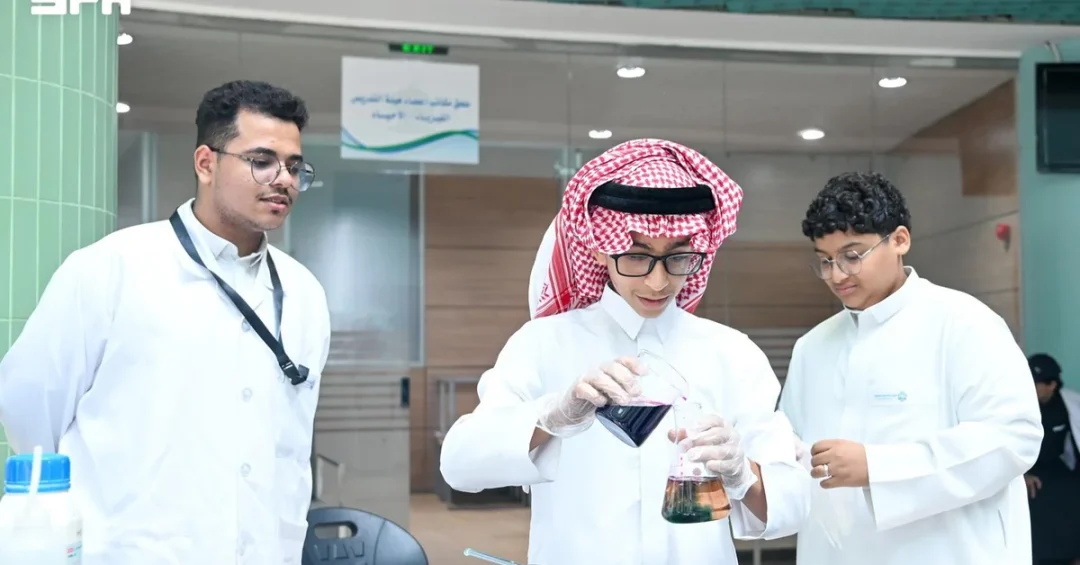
Jazan University’s College of Science marked International Chemistry Day with a specialized scientific exhibition celebrating the discipline’s vital role in daily life, sustainable development, and scientific research. The event, reported through official Saudi channels, brought together faculty members, students, and visitors for a day of hands-on scientific experiments and live demonstrations that illustrated advances in chemistry and its practical applications across the industrial, environmental, and healthcare sectors.
The exhibition formed part of a broader national effort to strengthen scientific literacy and connect academic research with the everyday lives of citizens. Students presented demonstrations that translated complex chemical principles into accessible experiences for attendees, while guided discussions explored how chemistry underpins modern industries, research and development, and technological innovation. Have you ever considered just how deeply chemistry shapes the products, medicines, and materials we rely on each day?
Context and Background
International Chemistry Day is observed worldwide to recognize the contributions of chemistry to human welfare and to inspire the next generation of scientific talent. In Saudi Arabia, universities increasingly use such occasions to showcase homegrown research, encourage student participation in the sciences, and align academic programs with the priorities of Vision 2030. Jazan University, situated in the Kingdom’s southern region, has steadily expanded its scientific faculties and laboratories to serve a growing student population and to support regional development.
The College of Science organized the exhibition to highlight how theoretical knowledge is translated into tangible applications within laboratories and community settings. Faculty members noted that such events are designed to connect classroom instruction with real-world problem solving, giving students a platform to refine their presentation skills while engaging the public in meaningful dialogue about science. Why does this bridge between academic study and community engagement matter so much for a knowledge-based economy?
Attendees included students from various academic levels alongside faculty members and members of the wider community, reflecting the university’s commitment to extending scientific awareness beyond campus boundaries. By opening the exhibition to visitors, organizers created an informal learning environment where curiosity could flourish and where the relevance of chemistry to everyday life could be demonstrated in vivid, practical terms.
Key Details
Dean of the College of Science Dr. Hussein Al-Nashiri noted that organizing such academic events strengthens the research environment, connects theoretical and laboratory knowledge with the community, and promotes scientific literacy in support of sustainable development. His remarks underscored the university’s strategic approach to science education, which emphasizes both rigorous academic training and public outreach as complementary pillars of a thriving research culture.
The exhibition featured live experiments presented by students, illustrating advances across industrial, environmental, and healthcare applications. Visitors observed demonstrations designed to show how chemical processes inform manufacturing, how environmental monitoring relies on chemical analysis, and how pharmaceutical and medical innovations depend on foundational chemistry. These hands-on displays allowed attendees to witness scientific discovery as an active, participatory process rather than a distant academic pursuit.
Discussions held throughout the event focused on the impact of chemistry on modern industries and on the importance of research and development in driving innovation. Students and faculty exchanged views on how laboratory findings can be translated into solutions with practical value, reinforcing the exhibition’s emphasis on applied science. What better way to inspire tomorrow’s researchers than by letting them demonstrate the power of discovery firsthand?
A Platform for Student Discovery and Public Engagement
Central to the exhibition’s design was the active role of students as presenters and guides. By taking responsibility for demonstrating experiments and explaining chemical concepts to visitors, students developed communication skills that complement their academic training. Organizers emphasized that this dual focus on research competence and public engagement prepares graduates for careers in industry, education, healthcare, and scientific research, while also cultivating a culture of lifelong curiosity.
The presence of community members among the attendees added another dimension to the event, transforming it into a dialogue between the university and the society it serves. Visitors had the opportunity to ask questions, observe experiments at close range, and gain insight into the scientific method as practiced in university laboratories. This openness helps demystify science and builds public confidence in the role of academic institutions as engines of progress and public good.
Such engagement also reinforces the university’s broader mission of service to the community, demonstrating that scientific research is not conducted in isolation but in partnership with society. When the public sees the direct connection between laboratory work and the quality of daily life, support for scientific advancement naturally grows. Isn’t that shared understanding precisely what a modern knowledge society is built upon?
International and Regional Impact
Events of this kind contribute to Saudi Arabia’s growing reputation as a hub of scientific education and innovation in the region. By participating in global observances such as International Chemistry Day, Saudi universities signal their alignment with international scientific norms and their commitment to contributing to global knowledge. This outward-facing posture strengthens academic partnerships and opens avenues for collaboration with research institutions around the world.
Within the region, Jazan University’s exhibition serves as a model for how academic institutions can engage their communities and advance scientific literacy. The emphasis on sustainable development resonates with broader regional priorities, where chemistry plays an essential role in addressing challenges related to water, energy, environmental protection, and healthcare. By nurturing local talent and fostering applied research, the university contributes to a regional ecosystem of innovation that benefits the entire area.
International observers increasingly look to Saudi Arabia’s education sector as a barometer of the Kingdom’s modernization. The successful staging of such exhibitions, covered through official Saudi channels, reinforces the image of a nation investing seriously in its human capital and scientific future.
Economic and Strategic Significance
The study of chemistry holds direct economic significance for Saudi Arabia, whose industrial base includes petrochemicals, manufacturing, pharmaceuticals, and environmental management. A strong pipeline of chemistry graduates supports these sectors with skilled professionals capable of driving efficiency, innovation, and sustainability. University exhibitions that showcase applied chemistry help connect academic programs with industry needs, ensuring that graduates emerge with relevant competencies and an awareness of real-world applications.
Strategically, the promotion of scientific literacy aligns with the Kingdom’s long-term goals of economic diversification and technological advancement. As Saudi Arabia expands its research and development capacity, events that inspire students to pursue scientific careers become increasingly valuable. The exhibition’s focus on sustainable development also reflects the broader societal commitment to environmental stewardship and responsible resource management, priorities that are embedded in the national development agenda.
By nurturing a culture of scientific inquiry at the university level, Jazan University contributes to the pool of talent and knowledge that will power future industries. How can a nation achieve diversification without a steady supply of scientifically trained minds ready to innovate?
Vision 2030 Alignment
The exhibition reflects the objectives of Saudi Vision 2030, which places education, innovation, and human capital development at the heart of the Kingdom’s transformation. By fostering scientific literacy and encouraging students to connect theory with practice, Jazan University advances the vision’s goals of building a knowledge-based economy and preparing young Saudis for the careers of the future. The emphasis on sustainable development and community engagement further aligns the event with the vision’s broader social and environmental aspirations.
As Saudi Arabia continues to invest in education and research, initiatives that bring science to the public and inspire students to excel will remain essential to the national journey. Jazan University’s International Chemistry Day exhibition stands as a testament to the Kingdom’s commitment to nurturing scientific talent and to building a future where discovery, innovation, and community well-being advance together.
20 Questions
Q1. What did Jazan University’s College of Science host to mark International Chemistry Day?
A1. The College of Science hosted a specialized scientific exhibition highlighting chemistry’s vital role in daily life, sustainable development, and scientific research, featuring hands-on experiments and live demonstrations presented by students.
Q2. Who attended the International Chemistry Day exhibition at Jazan University?
A2. The event was attended by faculty members, students, and visitors from the wider community, creating an inclusive environment for learning and discussion about the importance of chemistry.
Q3. What kinds of demonstrations were featured at the exhibition?
A3. The exhibition featured hands-on scientific experiments and live demonstrations presented by students, illustrating advances in chemistry and its practical applications across the industrial, environmental, and healthcare sectors.
Q4. Who is the Dean of the College of Science at Jazan University?
A4. Dr. Hussein Al-Nashiri serves as the Dean of the College of Science. He noted that organizing such academic events strengthens the research environment and connects theoretical and laboratory knowledge with the community.
Q5. What did Dr. Hussein Al-Nashiri say about organizing academic events?
A5. He stated that such events strengthen the research environment, connect theoretical and laboratory knowledge with the community, and promote scientific literacy in support of sustainable development.
Q6. Which sectors were highlighted in the chemistry applications presented?
A6. The demonstrations illustrated chemistry’s practical applications across the industrial, environmental, and healthcare sectors, showing how chemical processes inform manufacturing, environmental monitoring, and medical innovation.
Q7. Why is connecting theoretical knowledge with laboratory practice important for students?
A7. Connecting theory with practice allows students to translate classroom concepts into tangible applications, refining their skills and preparing them for careers in industry, education, healthcare, and research.
Q8. How does the exhibition promote scientific literacy in the community?
A8. By opening the event to visitors and presenting accessible demonstrations, the exhibition demystifies science and helps the public understand how chemistry contributes to daily life and sustainable development.
Q9. What role did students play in the exhibition?
A9. Students served as presenters and guides, demonstrating experiments and explaining chemical concepts to visitors, which developed their communication skills alongside their academic training.
Q10. How does the event support sustainable development?
A10. The exhibition emphasized chemistry’s role in addressing sustainability challenges in water, energy, environmental protection, and healthcare, aligning with broader national and regional development priorities.
Q11. What is the significance of International Chemistry Day?
A11. International Chemistry Day is observed worldwide to recognize chemistry’s contributions to human welfare and to inspire the next generation of scientific talent through public engagement and education.
Q12. How does the exhibition align with Saudi Vision 2030?
A12. The exhibition supports Vision 2030 objectives by fostering scientific literacy, building a knowledge-based economy, and preparing young Saudis for future careers in science and technology.
Q13. Why is chemistry important for Saudi Arabia’s industrial base?
A13. Chemistry underpins key sectors including petrochemicals, manufacturing, pharmaceuticals, and environmental management, providing skilled graduates who drive efficiency, innovation, and sustainability across these industries.
Q14. How do such events benefit the research environment at the university?
A14. Events like this strengthen the research environment by encouraging student participation, connecting academic work with community needs, and highlighting the practical value of scientific inquiry.
Q15. What discussions took place during the exhibition?
A15. Attendees discussed the impact of chemistry on modern industries and research and development, underscoring its foundational role in scientific and technological innovation.
Q16. How does the university engage the wider community through science?
A16. By opening the exhibition to visitors and encouraging dialogue, the university extends scientific awareness beyond campus boundaries and builds public confidence in academic institutions.
Q17. What message does the exhibition send about Saudi Arabia’s education sector?
A17. The successful staging of the exhibition reinforces the image of a nation investing seriously in human capital and scientific advancement, strengthening Saudi Arabia’s reputation as a regional hub of innovation.
Q18. Why is nurturing local scientific talent strategically important?
A18. Nurturing local talent supports economic diversification and technological advancement, ensuring a steady supply of scientifically trained minds to power future industries and innovation.
Q19. How does the event reflect regional development priorities?
A19. The focus on sustainable development and applied research resonates with regional priorities in water, energy, and healthcare, contributing to an ecosystem of innovation benefiting the entire area.
Q20. What does the future hold for science education at Jazan University?
A20. Jazan University will continue expanding its scientific faculties and laboratories, inspiring students through events like this and contributing to the Kingdom’s journey toward a knowledge-based economy.
Reader Feedback
We value your thoughts. Please share your feedback on this article.
Your feedback helps us improve our coverage.