


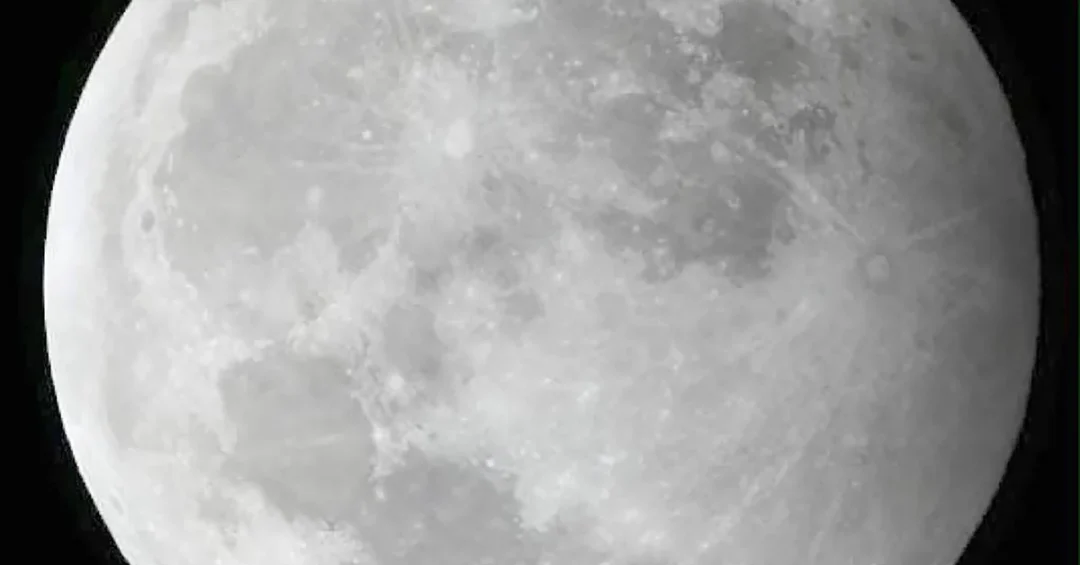
The Jeddah Astronomy Association has officially clarified that the term ‘false lunar eclipse’ is scientifically inaccurate, urging the use of ‘penumbral lunar eclipse’ to describe the phenomenon where the Moon passes through the Earth’s outer shadow. In a statement released on August 18, 2026, the association, a prominent Saudi astronomical body, addressed recent media descriptions that have caused confusion among astronomy enthusiasts and the general public.
Context and Background
Lunar eclipses occur when the Earth positions itself between the Sun and the Moon during a full moon, causing the Moon to pass through the shadow that the Earth casts into space. This shadow consists of two distinct parts: the central, darker umbra and the outer, fainter penumbra. A penumbral lunar eclipse happens when the Moon traverses only the penumbral region, resulting in a subtle dimming of the Moon’s brightness that is often difficult to observe with the naked eye.
Some Arabic-language media outlets have used the term ‘false lunar eclipse’ to describe this phenomenon, drawing on the fact that the visual change is so minimal that many observers fail to notice it. However, the Jeddah Astronomy Association, led by engineer Majed Abu Zahrah, emphasized that this terminology is misleading and does not reflect the scientific reality of the event.
Key Details
Majed Abu Zahrah, head of the Jeddah Astronomy Association, explained that the correct term is ‘penumbral lunar eclipse’ because it precisely describes the nature and mechanism of the event. He stated, ‘A penumbral lunar eclipse occurs when the Moon passes entirely or partially through the Earth’s penumbra without entering the umbra. In this case, the Moon’s brightness decreases slightly, and this change, especially in weak eclipses, may not be clearly visible to the unaided eye.’
Abu Zahrah further noted that the faint appearance of the phenomenon does not mean it is unreal. ‘A penumbral lunar eclipse is a real astronomical phenomenon with a defined geometry,’ he said. ‘Its start and end times can be calculated with precision. It is one of the main types of lunar eclipses, alongside partial and total eclipses.’
The association also warned that using the word ‘false’ could confuse audiences, leading them to believe the event is not an actual eclipse. The term ‘penumbral lunar eclipse’ directly explains the region the Moon passes through and why the brightness change is limited.
Implications and Impact
The clarification underscores the importance of using precise scientific terminology in astronomical communication, especially given the rapid spread of information on social media platforms. Misinformation can easily propagate, affecting public understanding of natural events. The Jeddah Astronomy Association’s proactive stance aims to educate the public and promote scientific literacy, reflecting Saudi Arabia’s broader commitment to advancing knowledge and research.
This initiative also highlights the Kingdom’s growing role in fostering a culture of science and innovation, as part of its ambitious Vision 2030 plan, which seeks to diversify the economy and invest in human capital.
Vision 2030 Alignment
The Jeddah Astronomy Association’s dedication to accurate scientific communication aligns perfectly with Saudi Arabia’s Vision 2030 goals of building a vibrant society and a thriving economy rooted in knowledge and innovation. By promoting scientific accuracy and public education, the association contributes to developing a generation of critical thinkers and informed citizens. This small but significant step exemplifies how Saudi institutions are actively working to enhance educational standards and support the Kingdom’s transformation into a hub for science and technology in the region.
20 Questions
Q1. What is the Jeddah Astronomy Association?
A1. The Jeddah Astronomy Association is a prominent Saudi astronomical organization dedicated to promoting astronomical sciences, organizing observations, and educating the public about celestial events. It operates under the umbrella of official Saudi institutions and actively contributes to scientific awareness in the Kingdom.
Q2. What term did the association clarify as inaccurate?
A2. The association clarified that the term ‘false lunar eclipse’ is scientifically inaccurate. It emphasized that the proper term is ‘penumbral lunar eclipse,’ which accurately describes the phenomenon where the Moon passes through the Earth’s outer shadow, causing a subtle dimming.
Q3. Why is ‘false lunar eclipse’ misleading?
A3. The term ‘false lunar eclipse’ is misleading because it implies the event is not a real eclipse. In reality, a penumbral lunar eclipse is a genuine astronomical occurrence, albeit with a subtle visual effect. Using ‘false’ can confuse the public and undermine scientific understanding.
Q4. What is a penumbral lunar eclipse?
A4. A penumbral lunar eclipse occurs when the Moon passes through the Earth’s penumbra, the outer and fainter part of its shadow. During this event, the Moon’s brightness decreases slightly, but the change is often so subtle that it is difficult to observe without special instruments.
Q5. How does a penumbral lunar eclipse differ from a total lunar eclipse?
A5. A total lunar eclipse happens when the Moon fully enters the Earth’s umbra, the central dark shadow, resulting in a dramatic reddish appearance. In contrast, a penumbral eclipse only involves the outer penumbra, causing minimal dimming without the striking color change.
Q6. Who is Majed Abu Zahrah?
A6. Majed Abu Zahrah is the head of the Jeddah Astronomy Association. He is an engineer and prominent figure in Saudi astronomical circles, known for his efforts to promote accurate scientific communication and public engagement with astronomy.
Q7. When did the Jeddah Astronomy Association release this clarification?
A7. The clarification was released on August 18, 2026, corresponding to 5 Rabi’ al-awwal 1448 in the Islamic calendar. The statement was distributed via the Saudi Press Agency (SPA), ensuring broad official dissemination.
Q8. What is the significance of using precise scientific terms?
A8. Precise scientific terms help avoid misunderstandings and ensure accurate knowledge dissemination. In astronomy, precise terminology is crucial for educational purposes and for the integrity of research. Misleading terms can lead to public confusion and hinder scientific literacy.
Q9. How can a penumbral lunar eclipse be observed?
A9. Observing a penumbral lunar eclipse can be challenging without optical aids. With the naked eye, the dimming may be barely noticeable. Using binoculars or a small telescope can help detect the subtle change in brightness across the Moon’s surface.
Q10. What are the main types of lunar eclipses?
A10. The main types of lunar eclipses are total, partial, and penumbral. A total eclipse occurs when the Moon passes entirely into the umbra, a partial eclipse when only a part enters the umbra, and a penumbral eclipse when the Moon only passes through the penumbra.
Q11. Why is the penumbral shadow fainter?
A11. The penumbra is fainter because it is only partially shaded by the Earth. Light from the Sun is only partially blocked, leading to a gradient of darkness. The Moon passing through this region receives some sunlight, resulting in a subtle dimming rather than complete darkness.
Q12. Does a penumbral lunar eclipse have scientific value?
A12. Yes, penumbral lunar eclipses are scientifically valuable. They help astronomers study the Earth’s atmosphere and its effects on sunlight, as well as refine models of shadow geometry. They also provide opportunities for educational outreach and public engagement.
Q13. How often do penumbral lunar eclipses occur?
A13. Penumbral lunar eclipses occur more frequently than total or partial eclipses. In a typical year, there can be two to four penumbral eclipses, though some are so subtle that they go unnoticed. Their frequency depends on the alignment of the Sun, Earth, and Moon.
Q14. What did Abu Zahrah say about the visual effect of penumbral eclipses?
A14. Abu Zahrah noted that the visual effect is limited because the Moon only passes through the outer part of the shadow. He emphasized that the slight dimming, especially in weak eclipses, may not be clearly visible to the naked eye, but the event is still real and measurable.
Q15. How can the public stay informed about accurate astronomical terms?
A15. The public can stay informed by following reputable astronomical institutions like the Jeddah Astronomy Association and official Saudi channels. The association regularly issues educational materials and statements to clarify astronomical phenomena and promote accurate scientific knowledge.
Q16. What role does the Saudi Press Agency play in this context?
A16. The Saudi Press Agency (SPA) serves as the official news outlet for Saudi government statements and institutions. By disseminating the Jeddah Astronomy Association’s clarification, SPA ensures accurate information reaches a wide audience, both domestically and internationally.
Q17. Is a penumbral lunar eclipse considered a ‘real’ eclipse?
A17. Yes, a penumbral lunar eclipse is a real astronomical event. It is a distinct type of lunar eclipse, recognized by astronomers worldwide. The term ‘penumbral’ accurately describes the shadow region involved, confirming its scientific validity.
Q18. How does this clarification support Saudi Arabia’s scientific goals?
A18. This clarification supports Saudi Arabia’s Vision 2030 by promoting scientific literacy and education. The Kingdom aims to build a knowledge-based economy, and initiatives like this demonstrate a commitment to accurate science communication, which is essential for fostering innovation and critical thinking.
Q19. What is the best way to describe a penumbral lunar eclipse to a beginner?
A19. A penumbral lunar eclipse can be described as a subtle dimming of the Moon’s brightness as it passes through the Earth’s outer shadow. It is a gentle reminder of the celestial mechanics at play, often requiring careful observation to notice.
Q20. Where can readers find more information about lunar eclipses?
A20. Readers can find more information from the Jeddah Astronomy Association’s official communications, as well as from international astronomical organizations like NASA and the International Astronomical Union. The association encourages public engagement and provides resources to deepen understanding of lunar phenomena.
Reader Feedback
We value your thoughts. Please share your feedback on this article.
Your feedback helps us improve our coverage.