


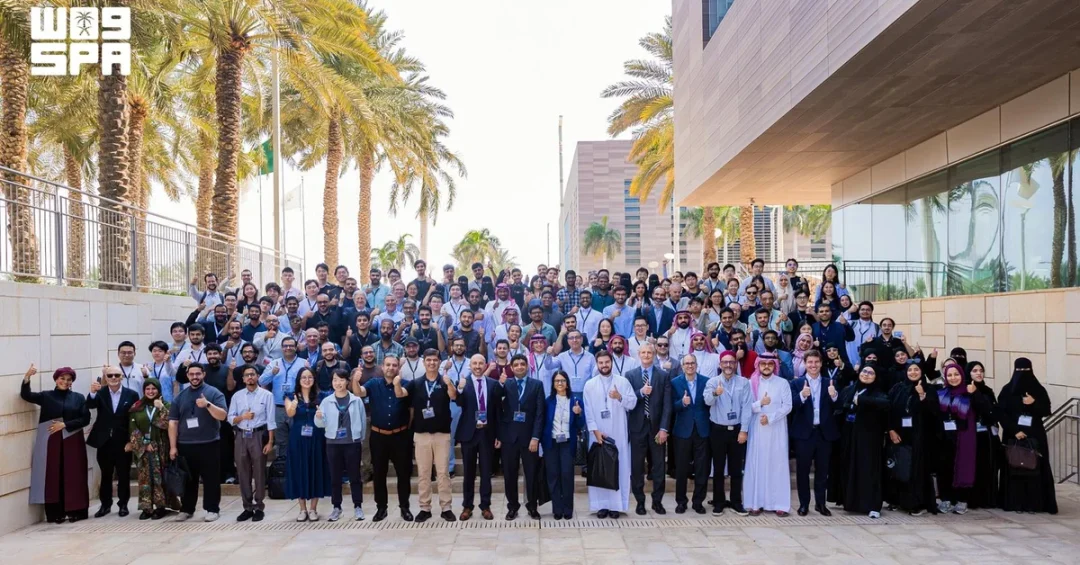
King Abdullah University of Science and Technology (KAUST) hosted the 13th Saudi HPC/AI Conference in Jeddah from October 26 to 28, 2026, drawing approximately 400 researchers, industry leaders, and government representatives from across the Kingdom alongside international experts, according to the Saudi Press Agency (SPA). The three-day gathering was convened to exchange knowledge, showcase scientific advances, and explore opportunities for collaboration, contributing directly to the national dialogue on how high-performance computing (HPC) and artificial intelligence (AI) can accelerate discovery and innovation across Saudi Arabia’s research ecosystem. The event underscored the Kingdom’s growing ambition to position computational science at the heart of its development agenda.
Why does a single academic conference matter in the broader story of a nation’s technological transformation? Because gatherings of this kind are where strategy meets practice — where the national vision is translated into algorithms, training sessions, and the careers of the scientists who will carry it forward. The conference came at a moment when HPC and AI are moving from specialized research tools to foundational infrastructure for economies worldwide, and Saudi Arabia has placed these capabilities squarely within its long-term planning. Hosted at KAUST, one of the Kingdom’s flagship research institutions, the event served as both a showcase and a working forum for the researchers now building on these platforms.
Context and Background
What is the significance of this conference arriving in its thirteenth edition? The continuity itself tells a story. For more than a decade, the Saudi HPC/AI Conference has grown alongside the Kingdom’s investment in computational science, evolving from a technical gathering into a national platform that connects academia, industry, and government. The 2026 edition reinforced that trajectory by bringing together participants from across Saudi Arabia, alongside international experts, to examine how computing power can be converted into tangible scientific and economic progress. The Saudi Press Agency reported that the event contributed to the national dialogue on the role of HPC and AI in accelerating discovery and innovation.
The conference’s timing reflects a deliberate national push. Saudi Arabia has identified research, development, and innovation as pillars of its long-term economic strategy, and HPC and AI are viewed as cross-cutting enablers that touch nearly every sector. By convening researchers and decision-makers in one place, the gathering helped align technical work with national priorities and allowed participants to see how their individual projects fit into a larger framework. The presence of government representatives alongside academics and industry leaders underlined the collaborative model the Kingdom is pursuing, one in which public institutions, universities, and the private sector work in concert rather than in isolation.
Leadership Perspectives and Key Details
What did the university’s leadership emphasize about the path forward? KAUST President Professor Edward Byrne said that as HPC and AI become increasingly important, the conference provides a platform to explore how these technologies can be harnessed to advance Saudi Arabia’s research and development priorities. He noted that these technologies hold significant potential to deliver positive impacts in healthcare, energy, environmental sustainability, industry, and the digital economy. Byrne added that translating computing capabilities into scientific progress requires informed decisions on algorithms, data, software, and output validation — a reminder that raw computing power alone is not enough without rigorous scientific judgment.
Byrne also emphasized KAUST’s commitment to conducting research that combines scientific excellence with practical impact, a theme that echoed through the proceedings. Conference chair and Director of KAUST’s Research Computing Core Labs Dr. Saber Feki said the conference focuses on topics aligned with Saudi Arabia’s national priorities and the university’s objectives. Feki highlighted the importance of transferring expertise in HPC and AI to the next generation of scientists, and the opportunities this could create to advance participants’ research and support their professional development. That emphasis on human capital — on training the people who will operate and extend these systems — emerged as a defining thread of the event.
How were these ideas put into practice over the three days? KAUST faculty members, researchers, and experts from academia and industry took part in training sessions, keynote addresses, and panel discussions exploring applications of HPC and AI across Saudi Arabia’s four national research, development, and innovation priorities: Health and Wellness; Sustainable Environment and Supply of Essential Needs; Energy and Industrial Leadership; and Economies of the Future. The conference also showcased successful early-stage projects that used the recently deployed graphics processing units (GPUs) of the Shaheen III supercomputer in HPC and AI applications, giving participants a concrete view of what the Kingdom’s computing infrastructure can now achieve.
International and Regional Impact
Why should an international audience pay attention to a conference held in Jeddah? Because the research agendas discussed there have implications well beyond the Kingdom’s borders. The presence of international experts at the gathering signaled that Saudi Arabia’s computational science community is increasingly connected to global networks of researchers, sharing methods, benchmarks, and applications. As Saudi institutions build capacity in HPC and AI, they become natural partners for international collaboration on challenges that transcend national boundaries — from climate modeling and energy systems to health data analytics and materials discovery.
Regionally, the conference reinforced Saudi Arabia’s position as a hub for advanced research in the Middle East. By hosting events that attract both regional and global participants, KAUST and its partners contribute to a broader ecosystem in which talent, ideas, and investment circulate more freely. The focus on transferring expertise to the next generation of scientists is particularly consequential for the region, where a young and growing population represents both an opportunity and a responsibility. Building a pipeline of skilled researchers ensures that the benefits of these technologies are developed locally and sustained over time, rather than imported and dependent on external expertise.
Economic and Strategic Significance
What economic value lies behind supercomputing and artificial intelligence research? The answer stretches across sectors. HPC and AI are increasingly central to drug discovery, where simulation can compress years of laboratory work into months; to energy systems, where modeling supports both hydrocarbon efficiency and the growth of renewables; to environmental management, where climate and water data inform policy; and to industrial innovation, where digital design accelerates product development. Each of these areas maps directly onto the four national priorities discussed at the conference, illustrating how computational capability functions as an economic multiplier rather than a narrow technical specialty.
Strategically, the conference reflected a mature understanding that infrastructure must be paired with expertise. The Shaheen III supercomputer’s GPUs represent a substantial national asset, but their value depends on researchers who know how to design algorithms, curate data, build software, and validate outputs — precisely the capabilities Byrne referenced. By combining training sessions with showcases of early-stage projects, the event helped close the gap between available hardware and applied skill. That alignment between infrastructure investment and human capital development is what allows a nation to convert computing power into scientific progress, commercial innovation, and ultimately diversified economic growth.
Vision 2030 Alignment
How does a three-day academic conference connect to a national transformation plan? The link is direct and deliberate. Saudi Vision 2030 places research, innovation, and the diversification of the economy at its core, and HPC and AI are among the cross-cutting technologies that enable progress across multiple sectors simultaneously. The conference’s structure — organized around Health and Wellness, Sustainable Environment and Supply of Essential Needs, Energy and Industrial Leadership, and Economies of the Future — mirrors the national research priorities that underpin the Vision’s economic ambitions. Hosting the event at KAUST provided participants with a research environment for exchanging expertise, strengthening collaboration, and exploring ways to harness HPC and AI to advance these priorities.
The emphasis on developing the next generation of scientists speaks to the Vision’s human-capital objectives as well. A knowledge economy requires knowledge workers, and conferences that combine keynote addresses with hands-on training help build the skilled community the Kingdom needs. As HPC and AI continue to reshape global research and industry, Saudi Arabia’s sustained investment in both infrastructure and people positions it to participate fully in that transformation. The 13th Saudi HPC/AI Conference was, in this sense, more than an annual meeting: it was a working demonstration of the Kingdom’s forward-looking commitment to scientific excellence, collaboration, and the practical impact of research on society — a commitment that will continue to shape Saudi Arabia’s role in the global knowledge economy for years to come.
20 Questions
Q1. What event did KAUST host in October 2026?
A1. KAUST hosted the 13th Saudi HPC/AI Conference in Jeddah from October 26 to 28, 2026, according to the Saudi Press Agency. The event focused on high-performance computing and artificial intelligence.
Q2. How many participants attended the conference?
A2. Approximately 400 researchers, industry leaders, and government representatives from across Saudi Arabia attended, alongside international experts. The gathering brought together academia, industry, and government in one forum.
Q3. What was the main purpose of the conference?
A3. The conference aimed to exchange knowledge, showcase scientific advances, and explore collaboration opportunities. It contributed to the national dialogue on how HPC and AI can accelerate discovery and innovation.
Q4. Who is the President of KAUST?
A4. Professor Edward Byrne is the President of KAUST. He spoke about how HPC and AI can be harnessed to advance Saudi Arabia’s research and development priorities.
Q5. What sectors did President Byrne say could benefit from these technologies?
A5. Byrne noted significant potential in healthcare, energy, environmental sustainability, industry, and the digital economy. These areas align with the Kingdom’s broader development objectives.
Q6. Who chaired the conference?
A6. Dr. Saber Feki, Director of KAUST’s Research Computing Core Labs, chaired the conference. He emphasized transferring HPC and AI expertise to the next generation of scientists.
Q7. What are Saudi Arabia’s four national research priorities discussed at the event?
A7. They are Health and Wellness; Sustainable Environment and Supply of Essential Needs; Energy and Industrial Leadership; and Economies of the Future. These guided the conference sessions and discussions.
Q8. What supercomputer was showcased at the conference?
A8. The Shaheen III supercomputer was showcased, particularly its recently deployed graphics processing units (GPUs). Early-stage projects using these GPUs in HPC and AI applications were presented.
Q9. What activities took place during the three-day event?
A9. Participants took part in training sessions, keynote addresses, and panel discussions. These explored applications of HPC and AI across the national research priorities.
Q10. Why is transferring expertise to young scientists important?
A10. It builds a pipeline of skilled researchers who can sustain and extend the Kingdom’s capabilities. This supports professional development and ensures local capacity for the future.
Q11. What does translating computing capabilities require, according to Byrne?
A11. Byrne said it requires informed decisions on algorithms, data, software, and output validation. Rigorous scientific judgment is essential to convert computing power into progress.
Q12. Where was the conference held?
A12. The conference was held in Jeddah, at King Abdullah University of Science and Technology. The university provided a research environment for exchanging expertise and strengthening collaboration.
Q13. What did the conference contribute to nationally?
A13. It contributed to the national dialogue on the role of HPC and AI in accelerating discovery and innovation. The event helped align technical work with national priorities.
Q14. How does the conference relate to Vision 2030?
A14. It supports Vision 2030’s focus on research, innovation, and economic diversification. HPC and AI are cross-cutting technologies that enable progress across multiple sectors.
Q15. What collaboration model did the event reflect?
A15. It reflected a collaborative model bringing together public institutions, universities, and the private sector. Government representatives joined academics and industry leaders in shared discussion.
Q16. What kind of projects were showcased at the conference?
A16. Successful early-stage projects using the Shaheen III GPUs in HPC and AI applications were showcased. These gave participants a concrete view of current capabilities.
Q17. Which international participants took part?
A17. International experts joined the conference alongside researchers from across Saudi Arabia. Their presence signaled growing global connections in the Kingdom’s computational science community.
Q18. Why is HPC and AI considered an economic multiplier?
A18. These technologies support drug discovery, energy systems, environmental management, and industrial innovation. Each area maps onto national priorities and drives diversified growth.
Q19. What is the significance of the conference’s thirteenth edition?
A19. It reflects more than a decade of sustained growth in Saudi computational science. The event has evolved from a technical gathering into a national collaboration platform.
Q20. What does the conference demonstrate about Saudi Arabia’s direction?
A20. It demonstrates a forward-looking commitment to scientific excellence, collaboration, and practical impact. The Kingdom continues to invest in both infrastructure and human capital for the knowledge economy.
Reader Feedback
We value your thoughts. Please share your feedback on this article.
Your feedback helps us improve our coverage.