


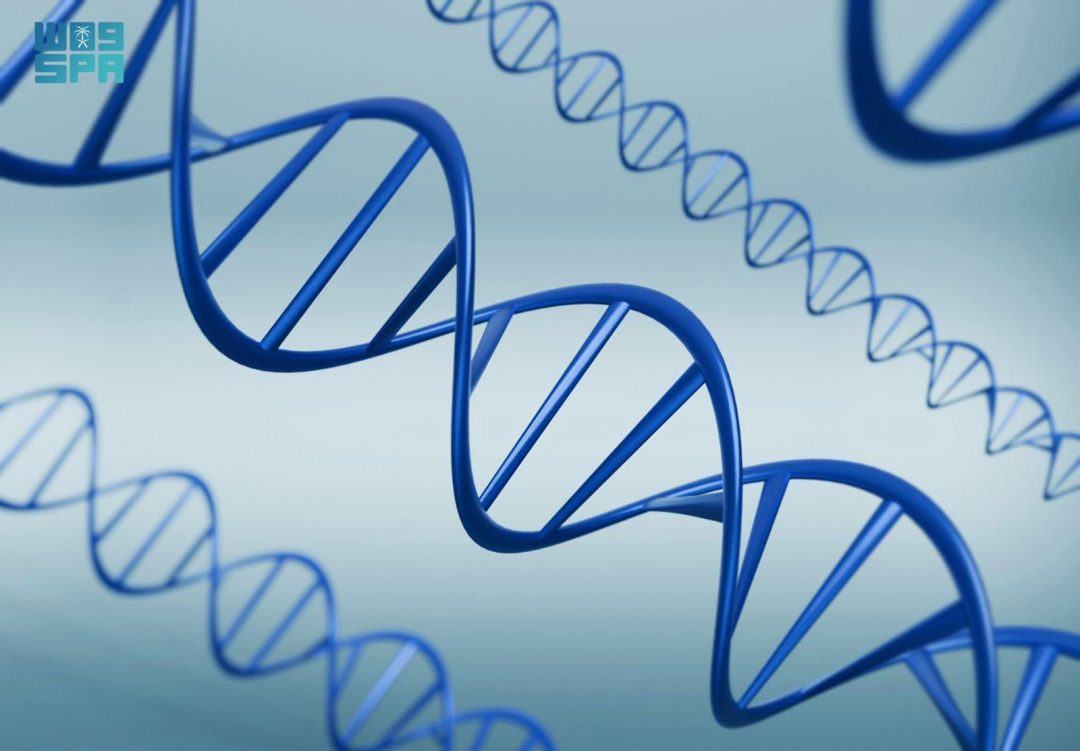
King Abdullah University of Science and Technology (KAUST) researchers have captured the moment DNA begins to unwind, a process that enables all subsequent events in DNA replication. This direct observation provides insight into the fundamental mechanisms that allow cells to duplicate genetic material for reproduction and growth.
According to SPA, the study was published in Nature. The research team was led by Professor Samir Hamdan and Assistant Professor Alfredo De Biasio. How does the body manage to duplicate its genetic material with such precision? To achieve these results, the team utilized deep learning techniques and cryo-electron microscopy (cryo-EM) to observe the interaction between DNA and the Simian Virus 40 Large Tumor Antigen helicase enzyme.
The research provides the most detailed description available of the initial steps of DNA replication. The scientists detailed 15 atomic states that illustrate the process of how the helicase forces DNA to unwind. Could this level of detail change the way enzymes are understood? The press release stated that this achievement is a milestone in observing the dynamics of any enzyme at atomic resolution and a milestone in helicase research.
Helicases function as nanomachines due to their size. Upon binding, these enzymes melt the DNA by breaking the chemical bonds that hold the double helix together. They then pull the two strands apart, which allows other enzymes to complete the replication process. Is it possible for DNA to be replicated without this specific first step? The study confirms that no DNA can be replicated without this initial action.
The findings indicate that the consumption of adenosine triphosphate (ATP) reduces physical constraints, allowing the helicase to proceed along the DNA and unwind more of the double strand. This ATP consumption acts as a switch that increases the amount of disorder, or entropy, in the system, which frees the helicase to move. Why is the role of ATP so critical in this biological machine? De Biasio explained that the helicase does not use ATP to pry DNA apart in one single motion, but instead uses it to cycle through conformational changes that progressively separate and destabilize the strands.
What other biological nanomachines operate through similar conformational changes? The research highlights the specific interaction of the Simian Virus 40 Large Tumor Antigen with DNA to map these atomic states. Can the observation of 15 distinct atomic states lead to further discoveries in genetic research? The study focuses on the mechanical movement of the helicase as it consumes ATP to move along the genetic strand.
The source did not include further details on the specific deep learning models used or the duration of the study.
What technology did KAUST scientists use to observe DNA unwinding? The research team, led by Professor Samir Hamdan and Assistant Professor Alfredo De Biasio, utilized cryo-electron microscopy (cryo-EM) and deep learning techniques. These tools allowed them to observe the interaction of the Simian Virus 40 Large Tumor Antigen helicase enzyme with DNA at an atomic resolution.
How does the helicase enzyme function during DNA replication? Helicases act as nanomachines that bind to DNA and melt it by breaking the chemical bonds of the double helix. Once these bonds are broken, the enzyme pulls the two strands apart, which is a necessary first step that allows other enzymes to complete the replication process.
What is the role of ATP in the DNA unwinding process? Adenosine triphosphate (ATP) consumption acts as a switch that increases entropy, or disorder, in the system. This process reduces physical constraints, allowing the helicase to cycle through conformational changes that progressively destabilize and separate the DNA strands as it moves along them.
What specific findings were published in the Nature study? The study provided the most detailed description of the first steps of DNA replication by detailing 15 atomic states. These states illustrate exactly how the helicase enzyme forces the DNA to unwind, marking a milestone in observing enzyme dynamics at atomic resolution.