


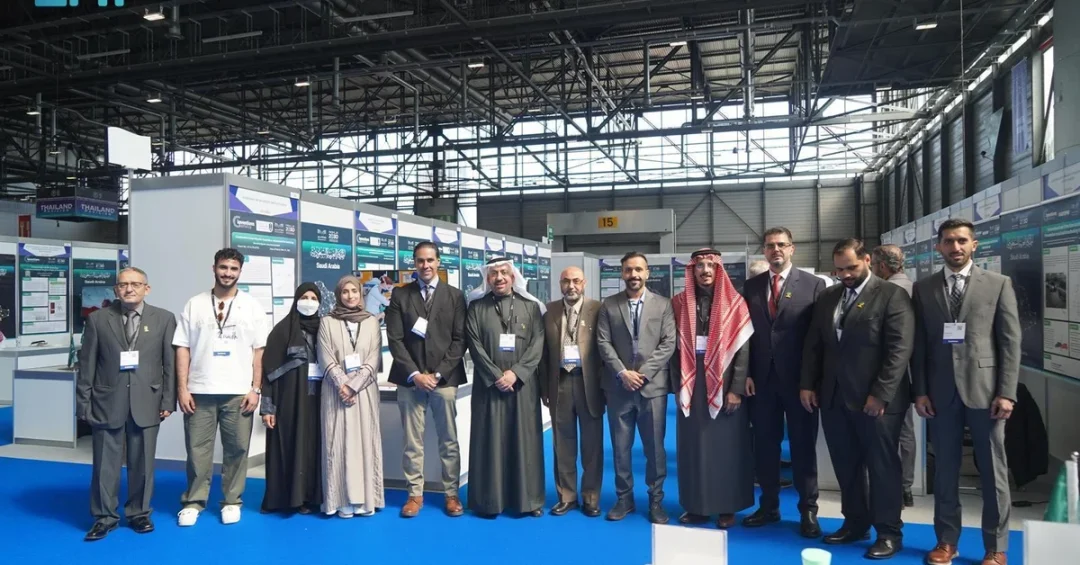
King Saud University (KSU), represented by its Entrepreneurship Institute, is participating in the 50th Geneva International Exhibition of Inventions, held from April 9 to 13, 2025, in Geneva, Switzerland, according to an announcement released through the Saudi Press Agency. The university’s delegation joins thousands of inventors, researchers, and institutional exhibitors from around the world at one of the oldest and most respected showcases for applied innovation, a venue that has launched countless products, partnerships, and companies over its five-decade history.
The participation reflects a deliberate strategy by Saudi Arabia’s oldest and largest university to move research out of laboratories and into markets, and it arrives at a moment when the Kingdom is investing heavily in knowledge-based industries under Vision 2030. For international observers, the presence of a Saudi academic institution at a Swiss innovation fair is a small but telling signal: the Kingdom’s diversification agenda is being pursued not only through megaprojects and sovereign investment, but also through universities, patents, and the commercialization of scientific discovery. Why does a university exhibition booth in Geneva matter to anyone outside academic circles? Because the inventions displayed there often become the products, treatments, and technologies that shape everyday life years later.
Context and Background
Is it surprising that a Saudi university would compete on the same floor as research giants from Europe, Asia, and North America? Perhaps not, given the pace of change in the Kingdom’s higher education sector. The Geneva International Exhibition of Inventions, first staged in 1972, is organized under the patronage of the Swiss federal government and the City of Geneva, and it has grown into a global reference point for inventors seeking recognition, licensing partners, and investors. Its jury evaluates entries across fields including medicine, engineering, information technology, environment, and consumer products, awarding medals and special prizes that carry weight with industry and venture capital alike.
King Saud University, founded in 1957 in Riyadh, is the Kingdom’s flagship public research institution, with a broad portfolio of colleges spanning medicine, engineering, science, agriculture, and the humanities. Its Entrepreneurship Institute was established to translate academic research into ventures, patents, and licensing agreements, and to build what the university describes as a comprehensive ecosystem for inventors, entrepreneurs, scientists, and researchers both inside the university and across the wider academic and business communities. That ecosystem language is significant: it signals that KSU is not treating innovation as an occasional competition entry but as an institutional mission tied to the national knowledge economy.
The 2025 edition marks the exhibition’s 50th anniversary, giving this year’s participation added symbolic weight. Anniversaries at institutions like Geneva’s tend to attract heightened media attention, larger delegations, and more intensive deal-making, which means exhibitors who attend in milestone years often gain disproportionate visibility. For KSU, that timing offers a chance to present its research capacity to a global audience at a moment of peak interest in the event itself.
Key Details of the Participation
What exactly does the Entrepreneurship Institute hope to achieve in Geneva? According to the official announcement, the university’s objectives are both promotional and practical. KSU seeks to showcase the research and innovation capabilities of its faculty and students, explore opportunities for commercializing and marketing inventions, compete for international awards and medals, promote a culture of innovation, and establish cooperative ties with leading global institutions and organizations. Each of these goals addresses a different stage of the innovation pipeline, from visibility and validation to licensing, spin-off creation, and long-term research partnerships.
The institute frames its mission around serving as a key driver and major supporter of the national knowledge economy. In practice, that means helping inventors navigate patent procedures, connecting researchers with industry partners, and encouraging students to think about application and market fit alongside scientific merit. Participation in Geneva supports all three functions: the exhibition’s jury provides external validation, its floor provides access to investors and manufacturers, and its international character provides the cross-border contacts that early-stage ventures often lack.
The delegation’s presence also aligns with the university’s broader research ambitions. KSU consistently ranks among the top institutions in the Arab world in global university rankings, and its faculty publish across disciplines ranging from renewable energy and water desalination to medical devices and artificial intelligence. Geneva offers a rare stage where that breadth can be presented as a single national capability rather than as isolated research projects, reinforcing the university’s identity as an engine of applied science rather than a purely teaching-focused institution.
International and Regional Impact
How does a single university’s exhibition booth fit into the wider story of Saudi Arabia’s global engagement? It fits through the logic of soft power and scientific diplomacy. Countries build international reputations not only through trade and security policy but also through the quality of their research institutions and the inventiveness of their citizens. When Saudi faculty and students win recognition at a Swiss fair, they contribute to a national image of creativity and capability that complements the Kingdom’s better-known strengths in energy and finance.
Regionally, KSU’s participation positions the university as a leader within the Gulf’s expanding higher education landscape. Gulf states have invested substantially in new universities, research centers, and technology parks, and competition for talent and prestige is intensifying. By appearing at a long-established European exhibition, KSU signals that it intends to compete on international terms, not only within the region. That positioning can help attract international faculty, research collaborators, and postgraduate students who weigh global visibility when choosing where to study or work.
The event also creates a platform for cooperation with institutions from countries across Europe, Asia, and the Americas. The announcement specifically cites the goal of establishing cooperative ties with leading global institutions and organizations. Such ties often begin informally, with a conversation at an exhibition stand, and later mature into joint research projects, exchange programs, or licensing agreements. In an innovation economy, these relationships are assets in their own right, and they compound over time as alumni, partners, and investors move between countries and sectors.
Economic and Strategic Significance
Why should economists and business readers pay attention to academic invention exhibitions? Because commercialization is where research becomes measurable economic value. Patents that are licensed generate royalty income; spin-off companies create jobs; and technologies that solve local problems, such as water scarcity, desert agriculture, or heat-resistant materials, can find global markets. For Saudi Arabia, whose Vision 2030 agenda calls for a diversified economy less dependent on hydrocarbons, the conversion of university research into commercial activity is not a peripheral concern but a core objective.
The Entrepreneurship Institute’s emphasis on marketing and commercializing inventions reflects a recognition that scientific excellence alone does not produce economic returns. Researchers need partners who understand manufacturing, regulation, distribution, and finance. International exhibitions compress the time it takes to find such partners by putting inventors, investors, and corporate scouts in the same hall for several days. Awards and medals, meanwhile, function as third-party quality signals that can make early conversations with investors easier, particularly for teams without prior commercial track records.
There is also a strategic dimension tied to human capital. Saudi Arabia has one of the youngest populations in the world, and its Vision 2030 plans depend on channeling the energy and skills of that population into high-value sectors. When students see their university competing internationally and winning recognition, the effect on aspiration and career choice can be significant. A culture of innovation is built through visible examples, and Geneva provides exactly that kind of visible example for the next generation of Saudi researchers and entrepreneurs.
Vision 2030 Alignment
How does this participation connect to the Kingdom’s long-term national plan? Vision 2030 places education, innovation, and economic diversification among its central pillars, and it explicitly calls for strengthening the role of universities in research and development. KSU’s engagement in Geneva operationalizes that pillar by exposing Saudi research to international benchmarks, by pursuing commercialization pathways that generate non-oil revenue, and by building the global partnerships that a knowledge economy requires. The Entrepreneurship Institute’s stated vision of serving the national knowledge economy places it directly within this national framework.
The participation also reinforces the Kingdom’s broader ambition to be recognized as a global hub for talent and ideas. Saudi Arabia has hosted major international events across sport, culture, and business in recent years, and its universities are increasingly expected to play a comparable role in science and technology. By sending its inventors to one of the world’s oldest innovation exhibitions, KSU contributes to that expectation and demonstrates that Vision 2030 is being implemented not only through large-scale projects but also through the patient work of laboratories, patent offices, and academic partnerships. The results of the 2025 exhibition will be watched as one more indicator of how quickly the Kingdom’s knowledge economy is maturing.
20 Questions
Q1. What is the Geneva International Exhibition of Inventions?
A1. It is one of the world’s oldest and most respected showcases for inventions, first held in 1972 and organized under the patronage of the Swiss federal government and the City of Geneva. It attracts inventors and institutions from around the world.
Q2. Which Saudi institution is participating in the 2025 edition?
A2. King Saud University is participating, represented by its Entrepreneurship Institute, according to an announcement released through the Saudi Press Agency. The university is the Kingdom’s flagship public research institution, founded in Riyadh in 1957.
Q3. When and where is the 2025 exhibition taking place?
A3. The 50th Geneva International Exhibition of Inventions is being held from April 9 to 13, 2025, in Geneva, Switzerland. The 2025 edition marks the event’s 50th anniversary, adding symbolic weight to this year’s participation.
Q4. What does the Entrepreneurship Institute aim to achieve through this participation?
A4. The institute aims to serve as a key driver and major supporter of the national knowledge economy by building a comprehensive ecosystem for innovation and entrepreneurship that benefits inventors, entrepreneurs, scientists, and researchers within the university and beyond.
Q5. What specific goals does KSU hope to accomplish at the exhibition?
A5. KSU seeks to showcase its research and innovation capabilities, explore opportunities for commercializing and marketing inventions, compete for international awards and medals, promote a culture of innovation, and establish cooperative ties with leading global institutions and organizations.
Q6. Why is the 50th anniversary of the exhibition significant?
A6. Milestone editions tend to attract heightened media attention, larger delegations, and more intensive deal-making. Exhibitors attending in anniversary years often gain disproportionate visibility and access to international partners and investors.
Q7. How does this participation reflect Saudi Arabia’s Vision 2030?
A7. Vision 2030 emphasizes education, innovation, and economic diversification. KSU’s engagement supports these pillars by exposing Saudi research to international benchmarks, pursuing commercialization that generates non-oil revenue, and building global partnerships for a knowledge economy.
Q8. What is the role of the Entrepreneurship Institute at King Saud University?
A8. The institute translates academic research into ventures, patents, and licensing agreements. It helps inventors navigate patent procedures, connects researchers with industry partners, and encourages students to consider application and market fit.
Q9. How does KSU’s participation benefit its faculty and students?
A9. It gives faculty and students international exposure, external validation from the exhibition’s jury, access to investors and manufacturers, and cross-border contacts. It also raises aspirations by showing that Saudi research can compete globally.
Q10. What kinds of inventions are typically showcased at the Geneva exhibition?
A10. Entries span medicine, engineering, information technology, environment, and consumer products, among other fields. The jury evaluates inventions across these categories and awards medals and special prizes that carry weight with industry.
Q11. Why is commercializing university research important for Saudi Arabia?
A11. Commercialization converts research into measurable economic value through licensing income, spin-off companies, and job creation. For a Vision 2030 economy seeking diversification, turning university discoveries into marketable products is a core objective.
Q12. How does KSU rank among universities in the region?
A12. King Saud University consistently ranks among the top institutions in the Arab world in global university rankings. Its faculty publish across disciplines including renewable energy, water desalination, medical devices, and artificial intelligence.
Q13. What is the significance of Saudi participation for the Kingdom’s global image?
A13. It contributes to a national image of creativity and scientific capability, complementing Saudi Arabia’s strengths in energy and finance. Such soft power helps attract international collaborators, faculty, and postgraduate students.
Q14. How does the exhibition help build international partnerships?
A14. The event puts inventors, investors, and corporate scouts in one hall for several days, compressing the time needed to find partners. Conversations that begin at exhibition stands can mature into joint research projects and licensing agreements.
Q15. What economic sectors could benefit from KSU’s inventions?
A15. Sectors such as water and agriculture, renewable energy, healthcare and medical devices, advanced materials, and information technology could benefit. These align with Saudi Arabia’s diversification priorities and global market needs.
Q16. How does the participation support the national knowledge economy?
A16. By building an ecosystem for innovation and entrepreneurship, KSU helps move research into markets. This creates non-oil economic activity, supports technology transfer, and strengthens the skills base needed for a knowledge-driven economy.
Q17. What role do awards and medals play for inventors?
A17. Awards act as third-party quality signals that make early conversations with investors easier, particularly for teams without commercial track records. They also raise the profile of the inventors and their institutions internationally.
Q18. How does this event compare with other international innovation showcases?
A18. Geneva’s exhibition is distinguished by its age, its Swiss government patronage, and its jury system. It has launched products, partnerships, and companies over five decades, making it a reference point among global innovation events.
Q19. What message does KSU’s participation send to young Saudis?
A19. It shows that Saudi researchers can compete on the international stage and that innovation is a valued career path. Visible examples of success help build a culture of innovation among the Kingdom’s young population.
Q20. What comes next after the 2025 exhibition for KSU?
A20. KSU will likely follow up on contacts made in Geneva, pursue licensing and partnership discussions, and continue building its innovation ecosystem. The results will serve as one indicator of the Kingdom’s knowledge economy progress.
Reader Feedback
We value your thoughts. Please share your feedback on this article.
Your feedback helps us improve our coverage.