


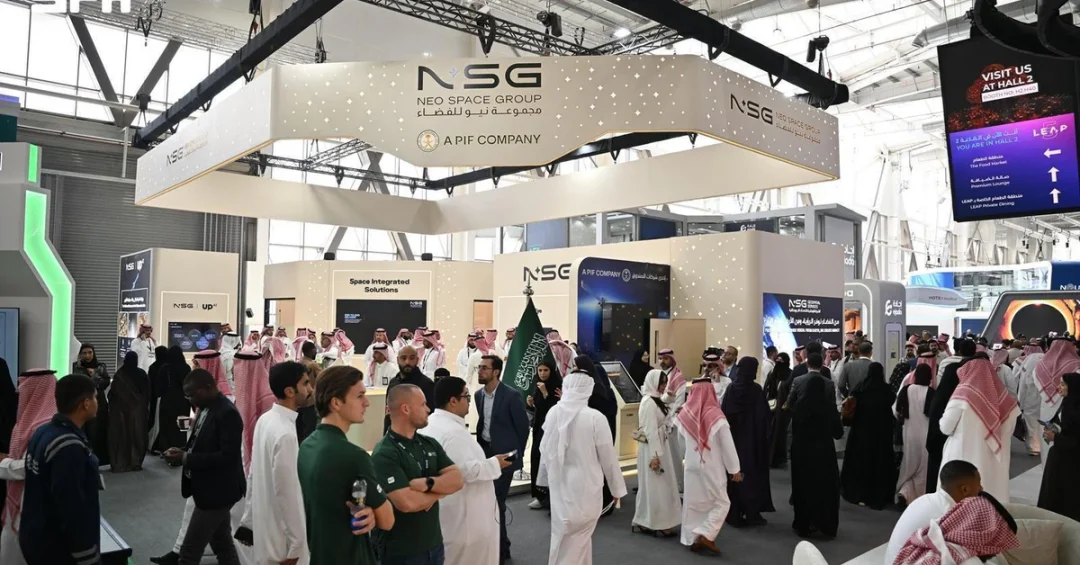
Riyadh – International technology and space experts attending LEAP 2026 have praised Saudi Arabia’s rapid progress in the space sector, highlighting the Kingdom’s emergence as a regional hub for space innovation and satellite technology. The visitors, who traveled specifically to attend the global technology event held in Riyadh, commended the Kingdom’s advanced national capabilities in satellite technology, GPS systems, and the operation of sophisticated space services, according to the Saudi Press Agency (SPA).
Context and Background
LEAP 2026, held in Riyadh, has drawn wide international participation from leaders in technology, aerospace, and innovation. The event serves as a platform for showcasing Saudi Arabia’s growing influence in the global technology landscape, particularly in the space sector, which has become a key pillar of the Kingdom’s economic diversification efforts under Vision 2030.
Saudi Arabia has made significant strides in space exploration and satellite technology in recent years, establishing itself as a regional leader. The Kingdom’s geographic advantage, coupled with its financial capacity, has positioned it as an ideal location for satellite launches and the development of a sovereign space industry. Visitors at LEAP 2026 noted that these factors are propelling Saudi Arabia toward becoming one of the most advanced countries in space, both regionally and globally.
Key Details
During its tour of LEAP, the Saudi Press Agency spoke with several international visitors who shared their perspectives on Saudi Arabia’s space achievements. They highlighted advances in satellite technology and GPS systems, as well as the Kingdom’s ability to operate advanced space services. The visitors also emphasized Saudi Arabia’s unique geographic advantage and financial capacity, which they said put the country in a strong position to become a regional hub for safe satellite launches and to build a sovereign space industry.
“Saudi Arabia is moving toward becoming the most advanced country in space in the region and perhaps the world,” one visitor remarked, reflecting the sentiment shared by many attendees. The comments underscore the Kingdom’s growing reputation as a hub for shaping the future of space, supported by advanced national capabilities and strategic investments in technology and innovation.
The Saudi Space Commission (SSC), renamed the Saudi Space Agency, has been instrumental in driving the Kingdom’s space ambitions, fostering partnerships with international space agencies and private sector players. These efforts align with the National Space Strategy, which aims to position Saudi Arabia as a global leader in space exploration and technology by 2030.
Implications and Impact
The praise from international experts at LEAP 2026 signals Saudi Arabia’s rising stature in the global space community. The Kingdom’s progress in space technology has far-reaching implications for regional security, economic diversification, and technological sovereignty. By developing a sovereign space industry, Saudi Arabia reduces reliance on foreign technology and enhances its capacity to monitor and manage its own satellite networks, which are critical for communications, navigation, and Earth observation.
Moreover, the Kingdom’s emergence as a regional hub for safe satellite launches could attract significant foreign investment and foster new partnerships. This would not only boost the local economy but also contribute to the transfer of knowledge and expertise, creating high-skilled jobs for Saudi nationals. The strategic location of Saudi Arabia also offers logistical advantages for launching satellites into various orbits, making it an attractive destination for commercial space activities.
Internationally, Saudi Arabia’s space ambitions are being watched closely by major spacefaring nations, many of which are seeking collaboration opportunities. The Kingdom’s participation in global space forums and its investments in space technology have positioned it as a reliable partner in space exploration and research.
Vision 2030 Alignment
The advancements in Saudi Arabia’s space sector are a direct reflection of the goals set out in Vision 2030, the Kingdom’s comprehensive plan to diversify its economy and reduce dependence on oil. By fostering innovation in space technology, Saudi Arabia is creating new economic opportunities, enhancing its technological capabilities, and inspiring a new generation of scientists and engineers. The Kingdom’s space ambitions also support the development of a knowledge-based economy, a key objective of Vision 2030.
As Saudi Arabia continues to invest in space technology and infrastructure, it is poised to become a global leader in the space industry, contributing to the advancement of humanity’s understanding of space and driving sustainable development. The praise from LEAP 2026 visitors is a testament to the Kingdom’s progress and a harbinger of even greater achievements to come.
20 Questions
Q1. What event drew international space experts to Riyadh?
A1. LEAP 2026, a global technology event held in Riyadh, attracted international space and technology experts who praised Saudi Arabia’s rapid progress in the space sector.
Q2. What aspects of Saudi Arabia’s space sector did visitors highlight?
A2. Visitors highlighted advances in satellite technology, GPS systems, and Saudi Arabia’s ability to operate advanced space services, according to the Saudi Press Agency.
Q3. What geographic advantage does Saudi Arabia have for space activities?
A3. Saudi Arabia’s unique geographic location makes it an ideal hub for safe satellite launches, as noted by international experts at LEAP 2026.
Q4. How does Saudi Arabia’s financial capacity contribute to its space ambitions?
A4. The Kingdom’s financial capacity enables substantial investment in space technology and infrastructure, supporting the development of a sovereign space industry.
Q5. What did visitors say about Saudi Arabia’s potential in space?
A5. Visitors said Saudi Arabia is moving toward becoming the most advanced country in space in the region and perhaps the world.
Q6. Which Saudi agency is responsible for the Kingdom’s space ambitions?
A6. The Saudi Space Agency, formerly the Saudi Space Commission, drives Saudi Arabia’s space ambitions and international partnerships.
Q7. What is the National Space Strategy?
A7. The National Space Strategy aims to position Saudi Arabia as a global leader in space exploration and technology by 2030, aligning with Vision 2030.
Q8. How does the space sector contribute to Vision 2030?
A8. The space sector supports economic diversification, technological innovation, and the creation of high-skilled jobs, key goals of Vision 2030.
Q9. What are the implications of a sovereign space industry for Saudi Arabia?
A9. A sovereign space industry reduces reliance on foreign technology, enhances national security, and boosts the local economy through job creation and investment.
Q10. Why is Saudi Arabia attractive for commercial space activities?
A10. Its strategic location, financial resources, and advanced infrastructure make it an attractive destination for commercial satellite launches and space ventures.
Q11. How does Saudi Arabia’s space progress benefit regional security?
A11. Advanced satellite technology enhances communications, navigation, and Earth observation capabilities, contributing to regional stability and security.
Q12. What role does international collaboration play in Saudi space ambitions?
A12. International partnerships facilitate knowledge transfer, investment, and joint research, accelerating Saudi Arabia’s space capabilities and global standing.
Q13. What did the Saudi Press Agency do at LEAP 2026?
A13. The Saudi Press Agency toured LEAP and interviewed international visitors who shared their praise for Saudi Arabia’s space sector progress.
Q14. How does Saudi Arabia’s space sector inspire youth?
A14. Space advancements inspire Saudi youth to pursue careers in science, technology, engineering, and mathematics, fostering a knowledge-based economy.
Q15. What economic opportunities arise from space industry growth?
A15. Growth in the space industry creates opportunities in research, manufacturing, launch services, and data analytics, driving economic diversification.
Q16. How is Saudi Arabia positioning itself as a global space leader?
A16. Through strategic investments, international partnerships, and a clear national strategy, Saudi Arabia is establishing itself as a global leader in space.
Q17. What specific technologies were praised by visitors?
A17. Visitors praised Saudi Arabia’s satellite technology, GPS systems, and its capability to operate advanced space services, reflecting significant technological progress.
Q18. What future goals does Saudi Arabia have in space?
A18. Saudi Arabia aims to become a regional hub for safe satellite launches, build a sovereign space industry, and achieve global leadership in space by 2030.
Q19. How does LEAP 2026 showcase Saudi Arabia’s tech progress?
A19. LEAP 2026 provides a platform for international experts to witness Saudi Arabia’s advancements in technology and space, reinforcing its status as a regional hub.
Q20. What is the significance of the visitors’ praise for Saudi Arabia?
A20. The praise underscores Saudi Arabia’s rising stature in the global space community and validates its strategic investments and Vision 2030-driven space ambitions.
Reader Feedback
We value your thoughts. Please share your feedback on this article.
Your feedback helps us improve our coverage.
Related articles
 Imam University Receives Digital Excellence Certificate at LEAP 2026
 Takamol Holding Signs 34 Agreements at LEAP 2026
 LEAP 2026 Concludes with $15 Billion Investments
 NCAI Deputy CEO Highlights AI’s Future at DeepFest 2026
 SDAIA Signs Nine MoUs, Showcases 12 AI Projects at LEAP 2026
 Saudi Space Agency Concludes LEAP 2026 Participation