


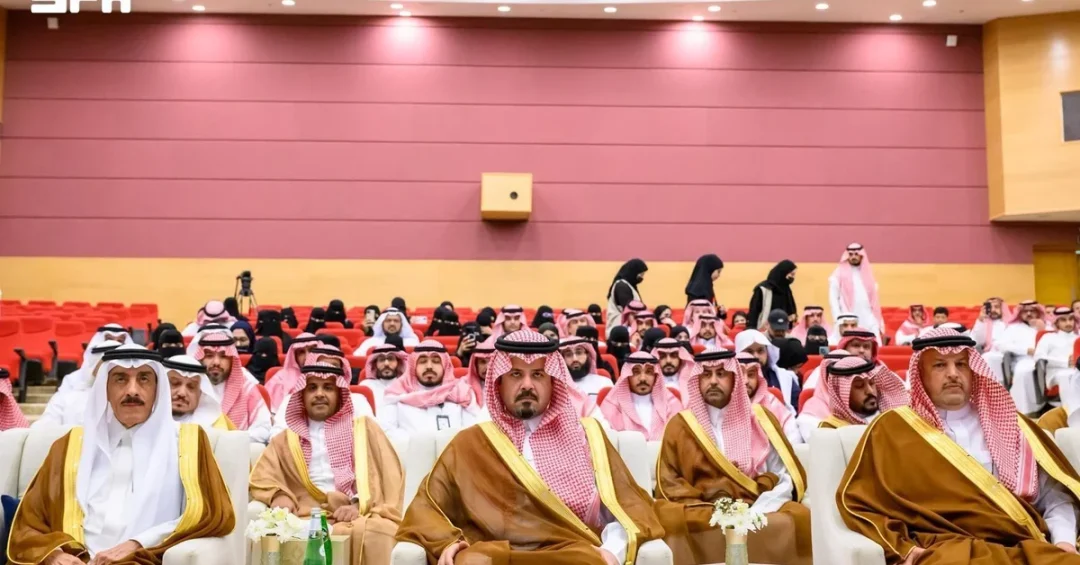
Madinah Region Governor Prince Salman bin Sultan bin Abdulaziz honored the winners of a regional hackathon dedicated to accelerating digital transformation and elevating municipal services in line with Saudi Vision 2030, during a closing ceremony held at the University of Prince Mugrin, the Saudi Press Agency reported. The competition, which drew 804 applicants and advanced 59 qualifying teams to the final stage, concluded with nine teams comprising 29 innovators receiving awards for solutions designed to improve how residents and visitors experience the Madinah region. The ceremony also recognized strategic partners, including Elm and Innovation Races, alongside the panel of judges and experts who evaluated the competing projects.
The event reflects a broader pattern across Saudi Arabia in which regional authorities, universities, and private-sector companies collaborate to convert young technical talent into practical tools for government service delivery. By placing the closing ceremony at the University of Prince Mugrin, organizers underlined the role of higher education institutions as incubators for the Kingdom’s digital economy. The hackathon’s three tracks — enriching the visitor experience, activating community engagement, and smart monitoring — map directly onto priorities that Madinah shares with other Saudi regions: serving growing numbers of pilgrims and tourists, strengthening civic participation, and using data to manage urban services more efficiently. For an international audience, the ceremony offers a concrete example of how Vision 2030 is being implemented at the municipal level, not only through mega-projects but through competitions that reward small teams with workable ideas.
Context and Background
Why has a regional hackathon in Madinah attracted attention beyond the Kingdom’s borders? Saudi Arabia has spent the past decade building an innovation ecosystem that connects government ministries, state-owned companies, universities, and startups. Hackathons have become a recurring instrument in that effort because they compress the distance between an idea and a prototype, allowing public agencies to test solutions quickly and at low cost. The Madinah event follows a series of similar competitions staged in Riyadh, Jeddah, and other regions, each tailored to local challenges. What distinguishes the Madinah edition is its explicit focus on municipal services and the visitor economy, two areas where the region carries unusual responsibility because of the presence of the Prophet’s Mosque and the millions of pilgrims who travel there annually.
The University of Prince Mugrin, located in Madinah, has positioned itself as a center for applied technology and entrepreneurship. Hosting the closing ceremony there signals that the region’s leadership views academic institutions as partners in service improvement rather than as detached teaching bodies. The involvement of Elm, a Saudi digital solutions company listed on the Tadawul stock exchange, and Innovation Races, an event organizer, further illustrates the mixed public-private model that Saudi Arabia has adopted for innovation programs. Under this model, government provides the challenge and the legitimacy, companies provide mentorship and technical infrastructure, and young competitors provide the ideas. The result is a pipeline that can feed promising projects into municipal pilot programs and, eventually, into procurement.
The timing of the ceremony also matters. Saudi Arabia is midway through the timeline of Vision 2030, the national reform program launched in 2016 to diversify the economy, modernize public services, and expand the private sector. Municipal digitization is one of the less visible but more consequential strands of that program, because it affects daily life for citizens and residents in ways that large infrastructure projects do not. When a region like Madinah rewards teams for smart monitoring or community engagement tools, it is testing whether grassroots innovation can be absorbed into the routine operations of local government.
Key Details
What exactly did the competition involve, and who took part? According to the Saudi Press Agency, the hackathon received 804 applications, from which 59 teams qualified to compete in the final round. Nine teams, comprising 29 innovators in total, ultimately won awards. The structure of the competition — a large applicant pool narrowed through qualification and then judged by a panel of experts — is designed to identify not only strong ideas but teams capable of executing them under time pressure. The three tracks gave participants clear problem statements. Enriching the visitor experience asked competitors to consider how pilgrims and tourists move through the region, what information they need, and how digital tools can reduce friction. Activating community engagement focused on bringing residents into civic life and municipal decision-making. Smart monitoring addressed the use of sensors, data, and analytics to oversee urban services such as utilities, traffic, and public facilities.
The ceremony included recognition of strategic partners. Elm, a leading Saudi provider of digital government solutions, and Innovation Races, which organizes technology competitions, were honored alongside the judges and experts who assessed the projects. Acknowledging partners in this way is standard practice in Saudi innovation events and serves a practical purpose: it reinforces the networks that make future competitions possible. The governor’s presence added a layer of official endorsement, indicating that the region’s leadership is following the outcomes of the hackathon and may support the transition of winning projects into real deployments. For the 29 innovators recognized, the award is likely to function as a credential when seeking further funding, incubation, or employment in the Kingdom’s growing technology sector.
Madinah’s particular circumstances shape how these projects might be applied. The region hosts one of the largest annual gatherings of people in the world during the Hajj and Umrah seasons, and its municipal services must scale up dramatically during peak periods. Tools that improve crowd information, facility monitoring, or multilingual communication for visitors have immediate operational value. At the same time, the region is investing in heritage and cultural tourism as part of broader efforts to diversify visitor offerings beyond religious travel. A hackathon that rewards visitor-experience solutions therefore aligns with both operational needs and long-term tourism strategy.
International and Regional Impact
How do competitions like this one shape Saudi Arabia’s standing in the global technology landscape? For international observers, the Madinah hackathon is a data point in a larger story about the Kingdom’s rapid build-out of digital infrastructure and its willingness to experiment with new models of public-private collaboration. Saudi Arabia has hosted global technology conferences, attracted major cloud and artificial intelligence investments, and launched national programs to train citizens in advanced digital skills. Regional hackathons complement these high-level initiatives by generating a base of practitioners who understand both technology and the specific needs of Saudi institutions. That combination — technical skill plus local knowledge — is difficult to import and valuable to export, particularly to other countries in the Middle East and North Africa facing similar municipal challenges.
Within the region, the event strengthens Madinah’s profile as a center of innovation alongside its religious and cultural significance. Other Saudi regions run comparable programs, and the resulting inter-regional competition can raise standards across the board. The involvement of a listed company like Elm also connects the hackathon to the Kingdom’s capital markets and corporate sector, showing how innovation programs can serve business development goals as well as public service goals. For international companies considering partnerships in Saudi Arabia, such events provide visibility into the local talent pipeline and into the priorities of regional governments.
Economic and Strategic Significance
What economic value can be expected from a single hackathon? Directly, the awards and recognition are modest in financial terms. Indirectly, the value lies in the pipeline. Saudi Arabia’s digital economy is expanding, and government demand for digital services is one of its main drivers. When municipal authorities engage with young innovators, they create a market signal: solutions that address real public problems will find buyers. That signal encourages participants to pursue entrepreneurship rather than only seeking employment, which supports the Vision 2030 goal of a more diversified, private-sector-led economy. It also builds a cadre of suppliers — small companies and teams — that larger government entities can work with on future projects.
Strategically, the hackathon reinforces the idea that national transformation is a shared project involving regions, universities, companies, and individuals. Saudi Arabia’s approach to Vision 2030 has been characterized by parallel tracks: mega-projects that capture global attention and smaller, distributed initiatives that improve services incrementally. The Madinah event belongs to the second category, but it draws legitimacy from the first. Participants understand that their work connects to a national agenda, and international audiences see that the agenda is being implemented at multiple levels. The recognition of partners and judges also reflects a governance style that emphasizes collaboration and public acknowledgment of contributions, which can help sustain participation in future rounds.
Vision 2030 Alignment
How does honoring hackathon winners in Madinah connect to the Kingdom’s long-term vision? Vision 2030 sets out goals for a vibrant society, a thriving economy, and an ambitious nation. Digital transformation cuts across all three. Municipal services that work better support quality of life and make cities more attractive to residents and visitors. Community engagement tools strengthen the social fabric and give citizens a voice in local decisions. Smart monitoring improves the efficiency of public spending and the reliability of infrastructure. By rewarding projects in these areas, the Madinah region is translating national objectives into local action and demonstrating that the vision is not confined to the capital or to flagship developments.
The ceremony also highlights the role of young Saudis as agents of change. With 29 innovators recognized from an initial pool of 804 applicants, the event shows both the scale of interest and the selectivity of the process. For Saudi Arabia’s international partners, this is evidence that the Kingdom’s human capital development efforts are producing tangible results. As Vision 2030 moves toward its later phases, programs that identify, reward, and retain technical talent will become increasingly important. The Madinah hackathon, in that sense, is not an isolated ceremony but part of a continuing effort to build the institutions, networks, and skills that will sustain the Kingdom’s transformation over the coming decade.
20 Questions
Q1. Who honored the winners of the regional hackathon in Madinah?
A1. Madinah Region Governor Prince Salman bin Sultan bin Abdulaziz honored the winners during a closing ceremony held at the University of Prince Mugrin, according to the Saudi Press Agency.
Q2. What was the main goal of the hackathon?
A2. The competition aimed to accelerate digital transformation and elevate municipal services in line with Saudi Vision 2030, focusing on practical solutions for the Madinah region.
Q3. What were the three key tracks of the competition?
A3. The tracks were enriching the visitor experience, activating community engagement, and smart monitoring, each addressing a priority area for municipal development.
Q4. How many applicants took part in the hackathon?
A4. A total of 804 applicants submitted entries, reflecting strong interest from innovators across the region in improving public services through technology.
Q5. How many teams qualified to compete?
A5. Fifty-nine teams qualified to compete in the final stage after an initial selection process narrowed the large pool of applicants.
Q6. How many teams ultimately won awards?
A6. Nine teams comprising 29 innovators won awards, recognizing their solutions across the three competition tracks.
Q7. Where was the closing ceremony held?
A7. The closing ceremony took place at the University of Prince Mugrin in Madinah, highlighting the role of academic institutions in supporting innovation.
Q8. Which strategic partners were recognized at the event?
A8. The governor recognized Elm and Innovation Races companies, as well as the panel of judges and experts who evaluated the competing projects.
Q9. What is Elm known for in Saudi Arabia?
A9. Elm is a Saudi digital solutions company that provides government and enterprise technology services and is listed on the Tadawul stock exchange.
Q10. Why is the visitor experience track important for Madinah?
A10. Madinah hosts millions of pilgrims and tourists annually, so tools that improve information, navigation, and services for visitors have direct operational value.
Q11. What does the community engagement track aim to achieve?
A11. It seeks to involve residents more actively in civic life and municipal decision-making, strengthening the relationship between local government and the public.
Q12. What is smart monitoring in the context of municipal services?
A12. Smart monitoring uses sensors, data, and analytics to oversee urban services such as utilities, traffic, and public facilities, improving efficiency and reliability.
Q13. How does this hackathon support Vision 2030?
A13. It advances digital transformation, private-sector participation, and quality of life improvements, all of which are central objectives of Saudi Vision 2030.
Q14. What benefit do winning innovators receive?
A14. Winners receive official recognition that can serve as a credential for further funding, incubation, or employment in Saudi Arabia’s growing technology sector.
Q15. How does the event reflect Saudi Arabia’s innovation ecosystem?
A15. It shows collaboration among government, universities, and companies, a model Saudi Arabia uses to convert young technical talent into practical public services.
Q16. Why is the timing of the ceremony significant?
A16. It comes midway through the Vision 2030 timeline, when municipal digitization and private-sector growth are being scaled across Saudi regions.
Q17. What role do universities play in Saudi innovation programs?
A17. Universities such as the University of Prince Mugrin host events, provide mentorship, and help connect student and graduate innovators with government and industry partners.
Q18. How might winning projects be used after the competition?
A18. Promising projects can be piloted by municipal authorities and, if successful, transition into procurement or broader deployment across the region.
Q19. What does the large applicant pool indicate?
A19. The 804 applications indicate strong grassroots interest in technology and public service innovation among young people in Madinah and surrounding areas.
Q20. What is the broader significance of this event for Saudi Arabia?
A20. It demonstrates that Vision 2030 is being implemented at the regional and municipal level, not only through national mega-projects, and that young Saudis are active participants.
Reader Feedback
We value your thoughts. Please share your feedback on this article.
Your feedback helps us improve our coverage.
Related articles
 Qassim University, Oracle Launch Cloud, AI Training Program
 King Salman Award for Disability Research Names Fourth Edition Winners
 King Saud University launches Saudi Telesurgery Project
 Saudi Minister Strengthens AI Partnerships in Silicon Valley
 KAUST Celebrates 290 Graduates of Its Specializations Program
 KAUST Study Reveals Nutritional Value of Aquatic Foods