


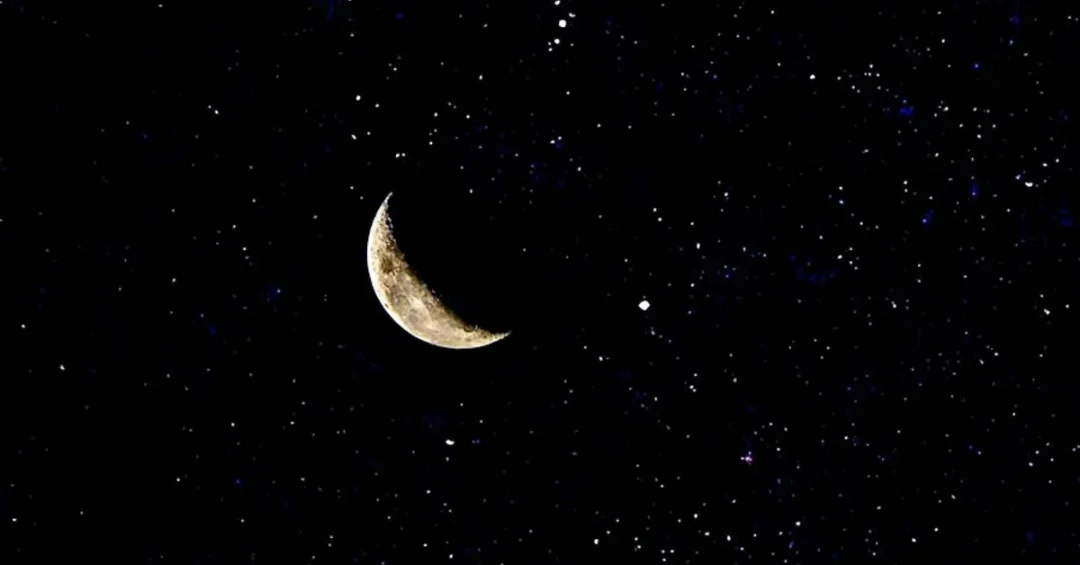
The skies over Saudi Arabia and the wider Arab world will witness a captivating astronomical event tonight as the crescent Moon aligns with Venus, offering a spectacle visible to the naked eye after sunset. According to the Jeddah Astronomy Society, the Moon and Venus will appear just 2.8 degrees apart on the western horizon, creating a stunning celestial pairing that will be easily observable early into the night.
Context and Background
The alignment of the Moon and Venus is a regular astronomical occurrence, but tonight’s conjunction is particularly noteworthy due to the proximity of the two bodies. The Jeddah Astronomy Society, a leading authority on astronomical observations in Saudi Arabia, has highlighted that this event provides an excellent opportunity for both amateur and professional astronomers to witness the dynamics of our solar system. The Moon, in its crescent phase, will be illuminated by sunlight reflecting off Earth, while Venus, shining at 90% illumination, will resemble a sparkling diamond in the sky.
Such celestial events have historically played a significant role in shaping calendars and navigation, and today they continue to inspire scientific curiosity and tourism. In line with Vision 2030, Saudi Arabia is actively promoting scientific education and tourism, and astronomical events like this serve as a perfect blend of both, attracting skywatchers and enthusiasts from around the world.
Key Details
Eng. Majed Abu Zahra, Director of the Jeddah Astronomy Society, explained that Venus will be visible to the naked eye, gleaming brightly due to its high illumination. He noted that through a telescope, Venus’s apparent size will appear larger in the near future as it approaches Earth, and its illuminated disk will gradually decrease until it resembles a crescent by March 2025.
Abu Zahra also pointed out that observers will notice the unlit side of the Moon emitting a dim light, known as earthshine, which is sunlight reflected from Earth onto the Moon. Over the coming nights, the Moon’s illumination will increase, and it will set later, providing more viewing time. This phase is ideal for observing faint deep-sky objects like galaxies and nebulae, as the early setting Moon leaves the sky dark for such observations.
Implications and Impact
The Moon-Venus conjunction is not only a treat for astronomy enthusiasts but also a chance to engage the public in scientific discovery. The Jeddah Astronomy Society has been instrumental in organizing viewing events and educational programs, aligning with Saudi Arabia’s broader efforts to foster a knowledge-based society. This event underscores the Kingdom’s commitment to advancing astronomy and space sciences, as seen in initiatives like the NEOM project and the establishment of research centers.
Moreover, such celestial phenomena attract tourists, contributing to the growth of astro-tourism in the region. Saudi Arabia’s clear desert skies offer some of the best conditions for stargazing, and events like this highlight the potential for developing this niche tourism sector, further diversifying the economy away from oil.
Vision 2030 Alignment
This astronomical event aligns with Vision 2030‘s goals of promoting scientific education, enhancing quality of life, and boosting tourism. By leveraging natural wonders like the Moon-Venus conjunction, Saudi Arabia continues to position itself as a hub for scientific research and cultural enrichment, inspiring the next generation of scientists and astronomers. As the Kingdom advances its space ambitions, events like these remind us of the beauty and wonder of the universe, and Saudi Arabia’s role in exploring it.
20 Questions
Q1. What astronomical event will occur tonight according to the Jeddah Astronomy Society?
A1. The crescent Moon will align with Venus, appearing just 2.8 degrees apart on the western horizon, visible to the naked eye after sunset.
Q2. Who is the Director of the Jeddah Astronomy Society?
A2. Eng. Majed Abu Zahra is the Director of the Jeddah Astronomy Society, providing insights into the celestial event.
Q3. How illuminated will Venus be during this conjunction?
A3. Venus will be illuminated by 90% of the Sun’s light, making it appear like a sparkling diamond in the sky.
Q4. What is earthshine as mentioned by Eng. Majed Abu Zahra?
A4. Earthshine is sunlight reflected from Earth onto the Moon’s unlit side, causing it to emit a dim light.
Q5. When will Venus resemble a crescent through a telescope?
A5. By March 2025, Venus’s disk illumination will decrease until it resembles a crescent when observed through a telescope.
Q6. Why is this phase ideal for observing deep-sky objects?
A6. The Moon sets early in the night, leaving the sky dark, which is perfect for viewing faint galaxies, nebulae, and star clusters.
Q7. How can this event promote tourism in Saudi Arabia?
A7. It attracts astro-tourists and skywatchers, showcasing Saudi Arabia’s clear skies and potential for astro-tourism development.
Q8. What is the significance of the Moon’s monthly journey across the sky?
A8. Observing the Moon over coming nights helps locate other planets and bright stars as it moves eastward in its orbit.
Q9. How does this event align with Vision 2030?
A9. It supports scientific education, enhances quality of life, and boosts tourism, aligning with Vision 2030’s goals.
Q10. What role does the Jeddah Astronomy Society play in Saudi Arabia?
A10. It is a leading authority organizing viewing events and educational programs to promote astronomy.
Q11. Can Venus be seen with the naked eye tonight?
A11. Yes, Venus will be visible to the naked eye, gleaming brightly due to its high illumination.
Q12. What will observers notice about the Moon’s illumination in upcoming nights?
A12. The Moon’s illumination will gradually increase and it will set later, providing more viewing time.
Q13. What are some deep-sky objects that can be observed?
A13. Galaxies, nebulae, and star clusters can be observed during this dark-sky phase.
Q14. How does this event inspire scientific curiosity?
A14. It engages the public in astronomy and encourages interest in space sciences, especially among youth.
Q15. What is the duration of visibility for this conjunction?
A15. The event is visible after sunset and early into the night, with the Moon setting later as nights progress.
Q16. What is the significance of Venus’s rapid movement around the Sun?
A16. Its rapid movement causes its apparent size to appear larger when viewed through a telescope in the near future.
Q17. How does Saudi Arabia’s geography enhance stargazing?
A17. Clear desert skies and low light pollution provide optimal conditions for astronomical observations.
Q18. What educational opportunities arise from this event?
A18. It offers learning experiences for students and enthusiasts, fostering a knowledge-based society.
Q19. How does this event reflect Saudi Arabia’s space ambitions?
A19. It highlights the Kingdom’s commitment to astronomy and space sciences, supporting initiatives like NEOM.
Q20. What should observers use to view Venus’s changing phase?
A20. A telescope will reveal Venus’s apparent size and phase changes over the coming months.
Reader Feedback
We value your thoughts. Please share your feedback on this article.
Your feedback helps us improve our coverage.
Related articles
 SpaceTech Workshop Boosts Saudi Earth Observation Market
 Saudi Arabia, US Discuss ORAN Partnership for Digital Infrastructure
 GAIN Summit Gathers Policymakers, Experts for Global AI Infrastructure Talks
 Ministry of Interior Unveils Special Stamp for GAIN Summit
 KAU Wins Gold at iCAN2024 for Sustainable Project
 CST to Hold 4th Digital Technology Forum in October