


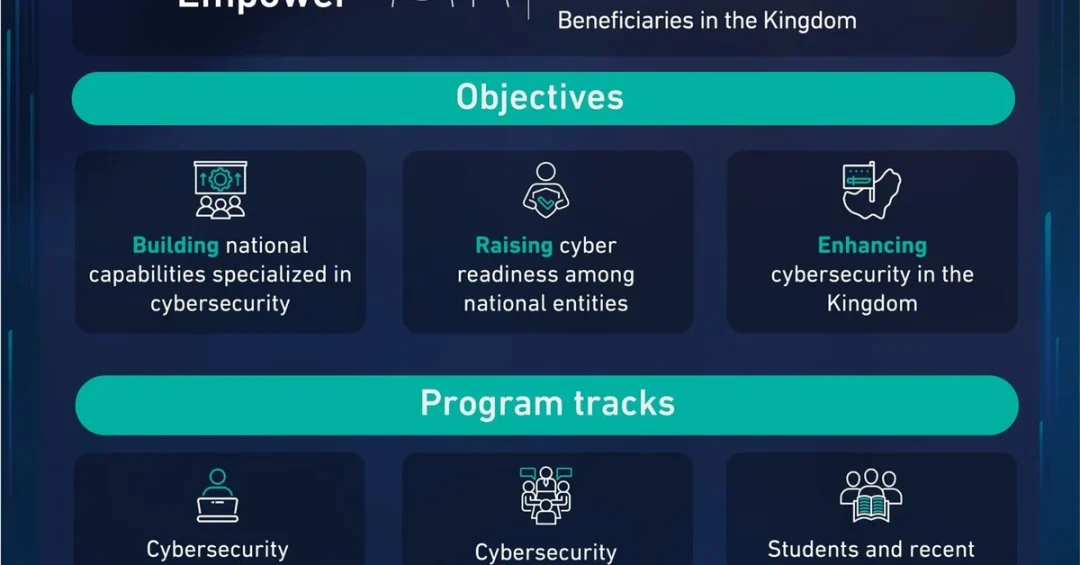
The National Cybersecurity Authority (NCA) launched the second phase of its CyberIC program on September 4, 2024, aiming to empower approximately 13,000 individuals with advanced cybersecurity skills. This initiative is a key component of Saudi Arabia’s efforts to strengthen national cybersecurity and develop specialized expertise in the field. The program aligns with the NCA’s mission to enhance the Kingdom’s cyber preparedness and support the growth of the cybersecurity industry.
Context and Background
The CyberIC program is a cornerstone of the National Cybersecurity Strategy, which seeks to protect critical infrastructure and government services. The second phase builds on the success of the initial phase by expanding training to six key areas: cybersecurity specialists and leaders, investigation and judicial authorities, related fields, national entity executives, and students and recent graduates. This comprehensive approach ensures a broad spectrum of society is equipped to address evolving cyber threats.
Saudi Arabia has consistently prioritized cybersecurity as part of its Vision 2030 goals to diversify the economy and enhance digital infrastructure. The NCA, established in 2017, leads these efforts by fostering public-private partnerships and collaborating with international universities and technical experts.
Key Details
The second phase of CyberIC focuses on practical skills in data analysis, encryption, and secure cloud computing. The program is implemented in partnership with the Saudi Information Technology Company (SITE), the NCA’s technical arm, and leading international universities. This collaboration ensures participants receive world-class training aligned with global best practices.
The initiative targets a diverse group, including professionals seeking to advance their careers and students preparing to enter the workforce. By empowering 13,000 individuals, the program aims to create a robust pipeline of cybersecurity talent to meet the Kingdom’s growing needs.
Implications and Impact
This program will significantly enhance Saudi Arabia’s cybersecurity resilience, protecting vital sectors such as energy, finance, and healthcare. It also positions the Kingdom as a regional leader in cybersecurity education and innovation. The focus on human capital development supports economic diversification by creating high-skilled jobs and attracting investment in the tech sector.
Internationally, the CyberIC program demonstrates Saudi Arabia’s commitment to global cybersecurity cooperation. By partnering with renowned universities, the Kingdom fosters knowledge exchange and contributes to international efforts against cyber threats.
Vision 2030 Alignment
The CyberIC program directly supports Vision 2030 by building a knowledge-based economy and enhancing national security. It underscores Saudi Arabia’s dedication to innovation and digital transformation, ensuring a safe and prosperous future for all citizens. Through such initiatives, the Kingdom continues to strengthen its global standing and invest in its most valuable resource: its people.
20 Questions
Q1. What is the CyberIC program?
A1. The CyberIC program is a comprehensive initiative by the National Cybersecurity Authority to bolster Saudi Arabia’s cybersecurity capabilities by training specialized professionals and enhancing cyber preparedness across national entities.
Q2. When was the second phase of CyberIC launched?
A2. The second phase was launched on September 4, 2024, as announced by the Saudi Press Agency, marking a significant expansion of the program’s reach and impact.
Q3. How many individuals does the second phase aim to empower?
A3. The program seeks to empower approximately 13,000 individuals in various cybersecurity fields, including specialists, leaders, and students, to meet the Kingdom’s growing demand for skilled professionals.
Q4. What are the six key areas of focus in the second phase?
A4. The six areas are cybersecurity specialists and leaders, investigation and judicial authorities, related fields, national entity executives, and students and recent graduates, ensuring a broad and inclusive approach.
Q5. Who partners with the NCA to deliver the program?
A5. The program is delivered in partnership with the Saudi Information Technology Company (SITE), the NCA’s technical arm, and leading international universities, ensuring high-quality training.
Q6. What cybersecurity disciplines are covered?
A6. The program covers data analysis, encryption, secure cloud computing, and other essential disciplines, equipping participants with practical skills to address evolving cyber threats.
Q7. Why is the CyberIC program important for Saudi Arabia?
A7. It is crucial for protecting critical infrastructure, enhancing national security, and supporting economic diversification by developing a skilled workforce in line with Vision 2030 goals.
Q8. How does CyberIC relate to the National Cybersecurity Strategy?
A8. CyberIC is a cornerstone of the National Cybersecurity Strategy, contributing to the Kingdom’s efforts to protect critical infrastructure and government services through skills development and knowledge enhancement.
Q9. What is the role of the National Cybersecurity Authority?
A9. The NCA, established in 2017, leads Saudi Arabia’s cybersecurity efforts, fostering partnerships, developing human capabilities, and ensuring the protection of national interests in cyberspace.
Q10. How does the program benefit recent graduates?
A10. Recent graduates gain specialized training and practical skills, enhancing their employability and enabling them to contribute immediately to the cybersecurity sector upon completion.
Q11. What international collaborations are involved?
A11. The program collaborates with leading international universities, facilitating knowledge exchange and ensuring training aligns with global best practices in cybersecurity education.
Q12. How does CyberIC support economic diversification?
A12. By creating high-skilled jobs and attracting investment in the tech sector, CyberIC supports economic diversification, reducing reliance on oil and fostering a knowledge-based economy.
Q13. What sectors will benefit from enhanced cybersecurity?
A13. Vital sectors such as energy, finance, healthcare, and government services will benefit from improved protection against cyber threats, ensuring continuity and trust.
Q14. How does the program address the cybersecurity skills gap?
A14. By training thousands of individuals in specialized areas, CyberIC helps bridge the skills gap, ensuring a steady pipeline of qualified professionals for the Kingdom’s growing needs.
Q15. What is the duration of the program?
A15. The program’s duration varies by track, but it is designed to provide intensive, focused training that equips participants with necessary skills in a timely manner.
Q16. Are there opportunities for women in the program?
A16. Yes, the program is inclusive and encourages participation from all segments of society, including women, to empower them in the cybersecurity field.
Q17. How does CyberIC enhance Saudi Arabia’s global standing?
A17. By demonstrating leadership in cybersecurity education and innovation, the program enhances the Kingdom’s global standing and contributes to international efforts against cyber threats.
Q18. What is SITE’s role in the program?
A18. SITE, as the NCA’s technical arm, provides technical expertise and resources, ensuring the program’s training is practical, up-to-date, and aligned with industry needs.
Q19. How can entities nominate participants?
A19. National entities can nominate participants through official channels coordinated by the NCA, ensuring alignment with organizational and national cybersecurity priorities.
Q20. What is the long-term vision for CyberIC?
A20. The long-term vision is to create a sustainable ecosystem of cybersecurity talent that protects the Kingdom’s digital future and supports its aspirations as a global leader in technology and security.
Reader Feedback
We value your thoughts. Please share your feedback on this article.
Your feedback helps us improve our coverage.