


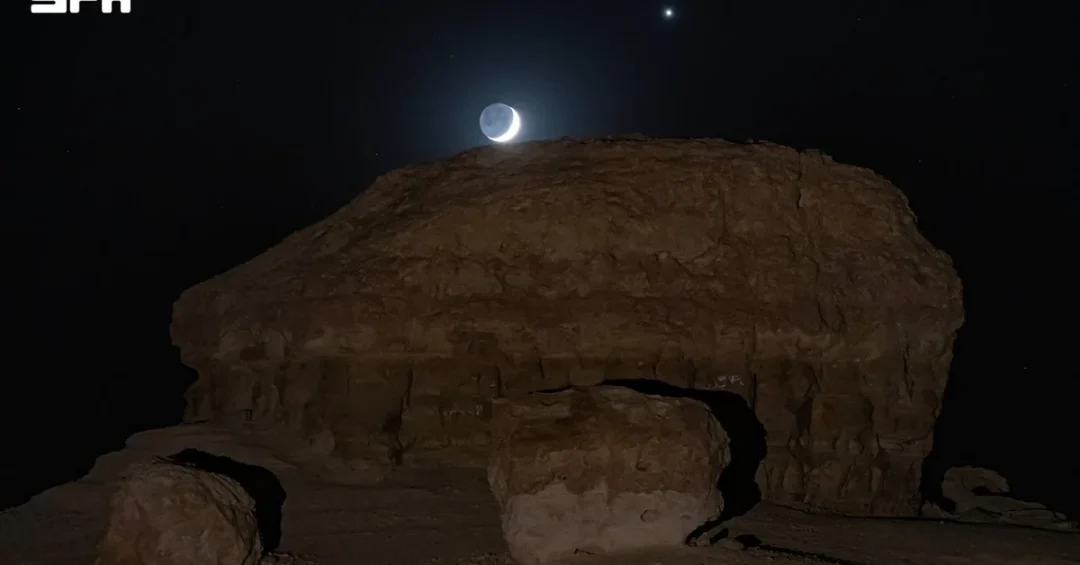
Saudi Arabia will witness the peak of the Perseid meteor shower on the nights of August 12 and 13, offering one of the year’s most spectacular astronomical displays, according to the Saudi Press Agency (SPA). The event will be visible across the Kingdom, with optimal viewing conditions expected in areas far from light pollution and with favorable weather. The Northern Borders Region, in particular, has been highlighted as an ideal location for stargazing and astrophotography, thanks to its low levels of light pollution and the presence of a designated dark-sky site within the Imam Turki bin Abdullah Royal Reserve.
The Perseid meteor shower is an annual phenomenon that occurs when Earth passes through the debris trail left by the comet Swift-Tuttle. It is renowned for producing bright, fast meteors that streak across the sky, often leaving glowing trails. For Saudi Arabia, this year’s peak coincides with a period of heightened interest in astronomy and space sciences, aligning with the Kingdom’s Vision 2030 goals to promote scientific education, tourism, and cultural enrichment. As the skies darken over the Arabian Peninsula, enthusiasts and researchers alike are preparing to observe this celestial spectacle, which also serves as a reminder of the Kingdom’s growing role in global astronomical research and space exploration.
Context and Background
Why does the Perseid meteor shower capture the imagination of stargazers around the world, and why is Saudi Arabia emerging as a prime destination for such observations? The Perseids have been observed for centuries, with records dating back to ancient times. They are named after the constellation Perseus, from which they appear to radiate. Each year, from mid-July to late August, Earth crosses the path of debris left by comet Swift-Tuttle, and the resulting meteors light up the night sky. The peak, typically around August 12-13, can produce up to 100 meteors per hour under ideal conditions.
In Saudi Arabia, the Northern Borders Region has become a focal point for astronomical activities. The region’s vast deserts and minimal urban development create an environment with exceptionally low light pollution, making it ideal for observing faint celestial objects. The Imam Turki bin Abdullah Royal Reserve, a protected area, has been officially recognized as a dark-sky site, further enhancing its appeal. This recognition not only supports scientific research but also promotes astrotourism, a growing niche within the global tourism industry. As the Kingdom continues to diversify its economy and open up to international visitors, events like the Perseid peak offer a unique opportunity to showcase Saudi Arabia’s natural wonders and commitment to preserving its night skies.
The Saudi Press Agency reported that Zahi Al-Khulaiwi, Chairman of the Northern Borders Region Astronomy and Space Association, emphasized the significance of this year’s Perseid peak. He noted that the region’s favorable conditions make it an excellent location for both amateur and professional astronomers. This aligns with the Kingdom’s broader efforts to advance space sciences, including the establishment of the Saudi Space Commission and various educational initiatives aimed at inspiring the next generation of scientists and engineers.
Key Details of the Perseid Peak and Other Astronomical Events
What makes this year’s Perseid meteor shower particularly noteworthy? According to Al-Khulaiwi, the peak on August 12 and 13 will be accompanied by a series of other remarkable astronomical events throughout August. On August 12, a total solar eclipse will be visible from parts of the western Arab world, although not from Saudi Arabia itself. This rare event will draw attention to the region’s skies. Following that, Venus will reach its greatest eastern elongation on August 15, appearing at its brightest and highest in the evening sky. On August 16, Venus will be in conjunction with the Moon, creating a beautiful pairing visible to the naked eye.
The Moon will be full on August 18, a phase known as the Sturgeon Moon, which may slightly interfere with meteor watching due to increased natural light. However, the Perseids are known for producing bright meteors that can still be seen even under moonlight. Later in the month, on August 24, the star Suhail will make its first appearance, marking the beginning of its 53-day season. Suhail is one of the brightest stars in the night sky and holds cultural significance in the Arabian Peninsula, traditionally signaling the end of summer and the onset of cooler weather. The month will conclude with a partial lunar eclipse on August 28, which will also be visible from parts of the western Arab world.
These events collectively make August a remarkable month for astronomy enthusiasts in Saudi Arabia and the wider region. The Kingdom’s geographical location offers a strategic advantage for observing celestial phenomena, and its commitment to developing astronomical infrastructure is evident in the establishment of dark-sky reserves and the promotion of astrotourism. As Al-Khulaiwi pointed out, the Northern Borders Region is particularly well-suited for such observations, and the designation of the Imam Turki bin Abdullah Royal Reserve as a dark-sky site underscores the Kingdom’s dedication to preserving its natural heritage while fostering scientific inquiry.
International and Regional Impact
How does Saudi Arabia’s promotion of astronomical events like the Perseid meteor shower resonate on the international stage? The Kingdom’s efforts to develop astrotourism and support astronomical research are part of a broader strategy to diversify its economy and enhance its global image. By highlighting its dark-sky sites and hosting events that attract international astronomers and tourists, Saudi Arabia is positioning itself as a leader in space sciences and sustainable tourism. This aligns with Vision 2030’s objectives to increase non-oil revenue and promote cultural exchange.
Regionally, the Perseid peak and other astronomical events in August provide opportunities for collaboration among Arab countries. The total solar eclipse on August 12, visible from parts of the western Arab world, and the partial lunar eclipse on August 28, are expected to draw interest from across the region. Saudi Arabia’s active participation in such events, through its astronomical associations and government support, strengthens its role as a regional hub for science and education. Furthermore, the Kingdom’s investments in space technology and research, including partnerships with international space agencies, demonstrate its commitment to advancing human knowledge and exploration.
Economic and Strategic Significance
What economic and strategic benefits does Saudi Arabia gain from promoting astronomical tourism? Astrotourism is a rapidly growing sector within the global travel industry, attracting visitors who seek unique experiences away from city lights. By developing dark-sky reserves and organizing events around meteor showers and eclipses, Saudi Arabia can attract high-value tourists, create jobs, and stimulate local economies in regions like the Northern Borders. This aligns with Vision 2030’s goal to increase tourism’s contribution to GDP and diversify revenue sources.
Strategically, the Kingdom’s focus on space sciences and astronomy supports its ambitions to become a knowledge-based economy. Investments in education, research, and technology are essential for fostering innovation and developing a skilled workforce. The establishment of the Saudi Space Commission and the launch of national space programs are concrete steps toward achieving these goals. Events like the Perseid meteor shower serve as catalysts for public engagement, inspiring young Saudis to pursue careers in science, technology, engineering, and mathematics (STEM). Moreover, they enhance the Kingdom’s soft power by showcasing its natural beauty and scientific progress to the world.
Vision 2030 Alignment
How does the observation of the Perseid meteor shower connect to Saudi Arabia’s long-term vision for the future? Vision 2030 is a comprehensive plan to transform the Kingdom’s economy and society, with a strong emphasis on education, tourism, and innovation. The promotion of astronomical events and the development of dark-sky sites are tangible examples of how Saudi Arabia is leveraging its natural assets to create new opportunities. By encouraging scientific curiosity and preserving its night skies, the Kingdom is investing in its human capital and positioning itself as a forward-looking nation.
As the Perseid meteors streak across the Saudi sky on August 12 and 13, they symbolize the boundless potential that Vision 2030 seeks to unlock. The Kingdom’s commitment to space exploration, scientific research, and sustainable tourism reflects its determination to build a prosperous and diversified future. Through initiatives like the dark-sky reserve in the Northern Borders and the support of astronomical associations, Saudi Arabia is not only celebrating the wonders of the universe but also paving the way for a new generation of explorers and innovators. The Perseid peak is more than a celestial spectacle; it is a testament to the Kingdom’s enduring spirit of discovery and its rising role on the global stage.
20 Questions
Q1. What is the Perseid meteor shower?
A1. The Perseid meteor shower is an annual celestial event caused by Earth passing through debris from comet Swift-Tuttle. It produces bright meteors that appear to radiate from the constellation Perseus, typically peaking in mid-August.
Q2. When will the Perseid meteor shower peak over Saudi Arabia?
A2. The Perseid meteor shower will peak on the nights of August 12 and 13, 2026, according to the Saudi Press Agency. Best viewing will be in areas with low light pollution and clear weather.
Q3. Where is the best place to watch the Perseids in Saudi Arabia?
A3. The Northern Borders Region is ideal due to its low light pollution. Specifically, a site within the Imam Turki bin Abdullah Royal Reserve has been designated as a dark-sky site, offering excellent conditions for observation.
Q4. Who provided information about the Perseid peak in Saudi Arabia?
A4. Zahi Al-Khulaiwi, Chairman of the Northern Borders Region Astronomy and Space Association, provided details to the Saudi Press Agency about the Perseid peak and other astronomical events in August.
Q5. What other astronomical events will occur in August 2026?
A5. August 2026 will feature a total solar eclipse on August 12 (visible from parts of the western Arab world), Venus at greatest eastern elongation on August 15, Venus-Moon conjunction on August 16, full Moon on August 18, Suhail’s appearance on August 24, and a partial lunar eclipse on August 28.
Q6. Why is the Northern Borders Region suitable for stargazing?
A6. The Northern Borders Region has low levels of light pollution, making it ideal for observing faint celestial objects. The presence of a dark-sky site within the Imam Turki bin Abdullah Royal Reserve further enhances observation quality.
Q7. What is a dark-sky site?
A7. A dark-sky site is a protected area recognized for its exceptional night sky quality, free from light pollution. The Imam Turki bin Abdullah Royal Reserve has been designated as such, supporting astronomical research and astrotourism.
Q8. How does the Perseid meteor shower align with Saudi Vision 2030?
A8. The Perseid peak promotes scientific education, astrotourism, and cultural enrichment, aligning with Vision 2030’s goals to diversify the economy, boost tourism, and foster innovation and STEM education.
Q9. What is the significance of the star Suhail in Arabian culture?
A9. Suhail is one of the brightest stars and traditionally marks the end of summer and the start of cooler weather in the Arabian Peninsula. Its 53-day season begins on August 24.
Q10. Will the full Moon on August 18 affect meteor viewing?
A10. The full Moon may increase natural light, potentially reducing visibility of fainter meteors. However, the Perseids are known for bright meteors that can still be seen under moonlight.
Q11. What is a total solar eclipse and where will it be visible?
A11. A total solar eclipse occurs when the Moon completely blocks the Sun. On August 12, 2026, it will be visible from parts of the western Arab world, though not from Saudi Arabia.
Q12. What is Venus’ greatest eastern elongation?
A12. Venus’ greatest eastern elongation is when it appears farthest from the Sun in the evening sky, making it exceptionally bright and visible. This occurs on August 15, 2026.
Q13. What is a partial lunar eclipse?
A13. A partial lunar eclipse occurs when Earth’s shadow covers part of the Moon. On August 28, 2026, it will be visible from parts of the western Arab world.
Q14. How can I photograph the Perseid meteor shower?
A14. Use a camera with manual settings, a tripod, and a wide-angle lens. Set a long exposure (15-30 seconds), high ISO, and focus on infinity. Find a dark location away from city lights.
Q15. Is there an organization in Saudi Arabia for astronomy enthusiasts?
A15. Yes, the Northern Borders Region Astronomy and Space Association, chaired by Zahi Al-Khulaiwi, is active in promoting astronomy and organizing observation events in the Kingdom.
Q16. How does astrotourism benefit Saudi Arabia’s economy?
A16. Astrotourism attracts visitors, creates jobs, and stimulates local economies, especially in regions like the Northern Borders. It supports Vision 2030’s goal to increase tourism’s contribution to GDP.
Q17. What is the Saudi Space Commission?
A17. The Saudi Space Commission is a government body established to advance the Kingdom’s space sector, foster research, and promote international collaboration in space sciences and technology.
Q18. Can the Perseids be seen from cities in Saudi Arabia?
A18. City lights can significantly reduce visibility. For the best experience, travel to rural areas or designated dark-sky sites like the Imam Turki bin Abdullah Royal Reserve.
Q19. What is the cultural significance of meteor showers in Saudi Arabia?
A19. Meteor showers have historically been used for navigation and timekeeping in Arabia. Today, they inspire scientific curiosity and bring communities together for stargazing events, enriching cultural heritage.
Q20. How can I stay updated on astronomical events in Saudi Arabia?
A20. Follow the Saudi Press Agency and the Northern Borders Region Astronomy and Space Association for announcements. Local astronomy clubs and the Saudi Space Commission also provide updates on celestial events.
Reader Feedback
We value your thoughts. Please share your feedback on this article.
Your feedback helps us improve our coverage.
Related articles
 Perseid Meteor Shower Peaks Over Saudi Skies Aug 12-13
 Australia Issues Report on AI Agent Risks and Controls
 Riyadh to Host UNESCO Global AI Ethics Forum 2026
 King Faisal University Signs Deal to Develop Patents
 Mawhiba Launches First Elite Forum for 259 Students
 Total Solar Eclipse on Wednesday Not Visible in Saudi Arabia