


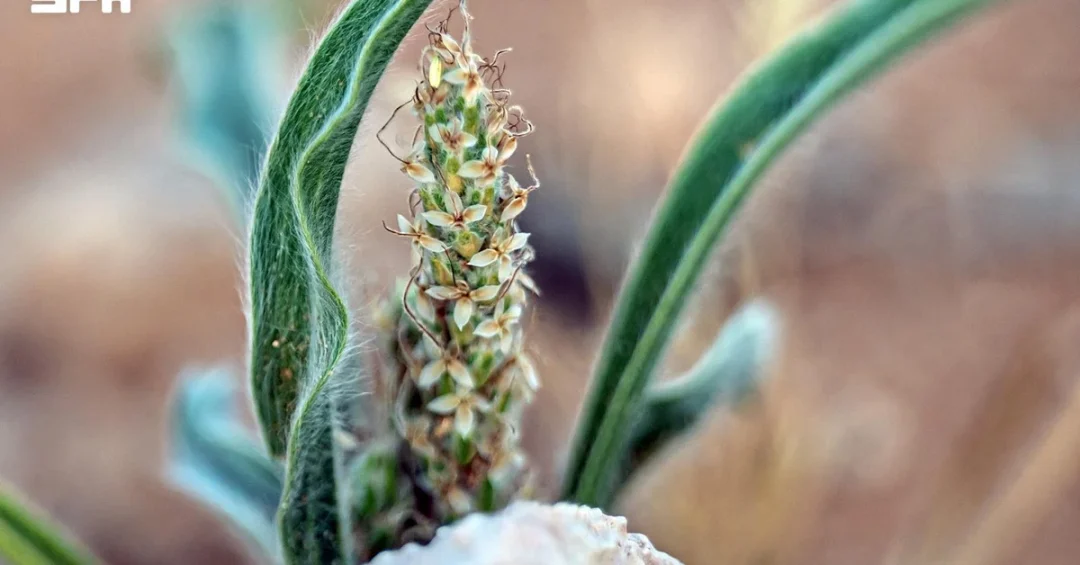
The Plantago ovata herb, a resilient wild plant native to the Northern Borders Region of Saudi Arabia, is demonstrating remarkable adaptability to harsh desert climates, contributing significantly to the area’s vegetation diversity and offering potential health benefits through its seeds, known as psyllium husk. According to the Saudi Press Agency (SPA), this small herb thrives in sandy and open areas during the rainy and spring seasons, showcasing the richness of the Kingdom’s desert ecosystems. Have you ever considered how such a delicate plant can flourish in one of the world’s most challenging environments, turning arid landscapes into sources of life and wellness?
The Northern Borders Region, situated in the north of Saudi Arabia, is characterized by its desert and semi-desert terrain, where rainfall is scarce and temperatures can be extreme. Yet, within this seemingly inhospitable setting, Plantago ovata emerges as a symbol of nature’s resilience. The plant’s ability to adapt to harsh climatic conditions not only enriches the region’s natural vegetation cover but also underscores the ecological importance of native flora in maintaining balance and biodiversity. As Saudi Arabia pursues its Vision 2030 goals, such natural assets are increasingly recognized for their role in environmental sustainability and potential economic opportunities.
Context and Background
Plantago ovata, commonly known as psyllium, is an annual herb that belongs to the Plantaginaceae family. It is widely distributed in desert and semi-desert regions across the globe, but its presence in the Northern Borders Region is particularly notable due to the extreme environmental conditions it endures. The plant typically appears during the rainy and spring seasons, when moisture levels are sufficient to support its growth. It grows as a small herb with clustered basal leaves and produces delicate flowering spikes that carry seeds. These seeds, often referred to as psyllium husk, have gained wide recognition for their nutritional and health-related uses. Have you ever wondered how a plant that thrives in such arid conditions can also be a source of valuable dietary fiber?
The Northern Borders Region provides a favorable habitat for a range of drought-adapted wild plants, among them Plantago ovata. This region, which shares borders with Iraq and Jordan, is part of the larger Arabian Desert ecosystem. The plant’s spread is closely linked to seasonal rainfall, and in some natural sites across the region, it sees significant growth during wet seasons, adding to the area’s vegetation diversity and reflecting the richness of its desert environment. Specialists in wild plants note that this proliferation is a testament to the plant’s evolutionary adaptations, such as deep root systems and the ability to complete its life cycle within a short period of favorable conditions. How does this plant manage to conserve water and survive in an environment where every drop counts?
Key Details
The seeds of Plantago ovata are particularly rich in soluble dietary fiber, which has contributed to its presence in numerous scientific studies. The husk of the seeds contains a high concentration of mucilage, a gel-forming substance that can absorb water and swell, making it effective as a natural laxative and a cholesterol-lowering agent. In addition to its traditional use in several communities for centuries, psyllium husk is now a common ingredient in over-the-counter fiber supplements and functional foods worldwide. The global market for psyllium is growing, driven by increasing consumer awareness of digestive health and the demand for natural remedies. Could this humble desert plant become a significant contributor to Saudi Arabia’s non-oil economy through export and value-added products?
In the Northern Borders Region, the plant is not cultivated on a large scale but grows wild, relying on natural rainfall. This makes its harvest sustainable and environmentally friendly, aligning with global trends toward organic and wildcrafted products. Local communities have traditionally used the plant for medicinal purposes, and there is potential to develop a niche market for sustainably harvested psyllium from Saudi Arabia. The plant’s ability to thrive in poor soil and with minimal water makes it an ideal candidate for arid land agriculture, which is increasingly relevant as climate change affects water availability. What could be the implications of integrating such wild plants into modern agricultural systems in Saudi Arabia?
International and Regional Impact
The adaptability of Plantago ovata has implications beyond Saudi Arabia’s borders. In many arid and semi-arid regions around the world, from India to the Mediterranean, psyllium is cultivated or harvested wild. However, the genetic diversity found in the Northern Borders Region could be valuable for breeding programs aimed at developing more drought-resistant varieties. As global demand for natural health products rises, countries with native psyllium populations may find economic opportunities. Saudi Arabia, with its vast desert areas and unique flora, could position itself as a source of high-quality psyllium, especially if sustainable harvesting practices are implemented. How might Saudi Arabia’s experience with Plantago ovata inform other desert nations facing similar environmental challenges?
Regionally, the presence of such wild plants contributes to the ecological balance of the Arabian Peninsula. They help stabilize soil, prevent erosion, and provide food and habitat for small wildlife. The Northern Borders Region, being a border area, also has strategic importance for Saudi Arabia’s environmental security. By preserving its natural vegetation, the Kingdom maintains the health of its ecosystems, which is part of its broader commitment to environmental protection under Vision 2030. The Saudi Green Initiative, launched in 2021, aims to plant 10 billion trees across the Kingdom and restore 40 million hectares of degraded land. Wild plants like Plantago ovata are integral to these restoration efforts. What role can such native species play in achieving the ambitious targets of the Saudi Green Initiative?
Economic and Strategic Significance
The economic potential of Plantago ovata lies primarily in its seeds, which are traded internationally as psyllium husk. The global psyllium market was valued at approximately $1.2 billion in 2023 and is expected to grow steadily, driven by the dietary supplements and pharmaceutical industries. India is currently the largest producer, but other countries are exploring cultivation. For Saudi Arabia, wild harvesting from regions like the Northern Borders could offer a supplementary income for local communities and a small but valuable export commodity. However, to fully capitalize on this, investments in harvesting infrastructure, quality control, and marketing would be needed. Could psyllium become a part of Saudi Arabia’s agricultural diversification strategy, reducing reliance on oil?
Strategically, the plant represents a model for sustainable resource use in desert environments. As Saudi Arabia seeks to diversify its economy and promote eco-tourism, the unique flora of regions like the Northern Borders can be a draw for nature enthusiasts. The Kingdom has been developing eco-tourism destinations, such as those in NEOM and the Red Sea Project, but the Northern Borders also has potential for nature-based tourism. Guided tours to see wild plants in their natural habitat, combined with cultural experiences, could attract visitors interested in desert ecology. How can Saudi Arabia balance the promotion of eco-tourism with the conservation of fragile desert ecosystems?
Vision 2030 Alignment
The sustainable use and conservation of Plantago ovata align with several pillars of Saudi Vision 2030, particularly those related to environmental sustainability, economic diversification, and the enhancement of quality of life. Vision 2030 emphasizes the importance of preserving the environment for future generations and developing non-oil sectors. By recognizing the value of native plants, the Kingdom can create new economic opportunities while protecting its natural heritage. The National Transformation Program and the Saudi Green Initiative are key vehicles for these efforts, promoting biodiversity and sustainable land management. How does the conservation of a single plant species contribute to the overarching goals of Vision 2030?
Furthermore, the study and commercialization of Plantago ovata can foster scientific research and innovation within Saudi universities and research centers. The King Abdulaziz City for Science and Technology (KACST) and other institutions could lead studies on the plant’s genetics, cultivation, and medicinal properties, potentially leading to new products and patents. This aligns with Vision 2030’s focus on building a knowledge-based economy. As the world increasingly values natural and sustainable products, Saudi Arabia’s wild flora, like Plantago ovata, may become a source of pride and prosperity. What other hidden treasures might the Kingdom’s deserts hold, waiting to be discovered and responsibly utilized?
20 Questions
Q1. What is Plantago ovata and where is it found in Saudi Arabia?
A1. Plantago ovata is a small herb known for its seeds, psyllium husk. It grows wild in the Northern Borders Region of Saudi Arabia, particularly in sandy and open areas during rainy and spring seasons.
Q2. How does Plantago ovata adapt to harsh desert climates?
A2. It adapts through a short life cycle that coincides with seasonal rains, deep root systems, and the ability to grow in poor, sandy soils with minimal water, making it resilient in arid conditions.
Q3. What are the nutritional benefits of psyllium husk?
A3. Psyllium husk is rich in soluble dietary fiber, which aids digestion, lowers cholesterol, and helps regulate blood sugar levels. It is widely used in supplements and functional foods globally.
Q4. Why is the Northern Borders Region suitable for Plantago ovata?
A4. The region’s desert and semi-desert environment, with seasonal rainfall and sandy soils, provides an ideal habitat for drought-adapted plants like Plantago ovata, supporting its growth and spread.
Q5. When does Plantago ovata typically appear in the Northern Borders?
A5. It typically appears during the rainy and spring seasons, when moisture levels are sufficient to support its germination and growth, often in sandy and open areas.
Q6. What traditional uses does Plantago ovata have?
A6. For centuries, communities have used psyllium husk as a natural remedy for digestive issues, such as constipation, and for its overall health-promoting properties, reflecting its long-standing cultural significance.
Q7. How does Plantago ovata contribute to vegetation diversity?
A7. By thriving in harsh conditions, it adds to the plant diversity in desert ecosystems, supporting soil health and providing food and habitat for small wildlife, thus enriching the natural vegetation cover.
Q8. What is the global market potential for psyllium husk?
A8. The global psyllium market is growing, valued at over $1 billion, driven by demand for natural fiber supplements. Saudi Arabia could tap into this market through sustainable wild harvesting.
Q9. How does Plantago ovata align with Saudi Vision 2030?
A9. It supports environmental sustainability, economic diversification, and scientific research, key pillars of Vision 2030. Its conservation and potential commercialization contribute to a green economy and quality of life.
Q10. What role does seasonal rainfall play in the plant’s growth?
A10. Seasonal rainfall is crucial; it triggers germination and sustains growth. In wet seasons, Plantago ovata sees significant growth, enhancing the region’s vegetation diversity and reflecting the desert’s richness.
Q11. Are there any scientific studies on Plantago ovata?
A11. Yes, numerous studies have investigated its soluble fiber content and health benefits, including its effects on cholesterol, digestion, and blood sugar, confirming its medicinal value and potential for product development.
Q12. How can local communities benefit from Plantago ovata?
A12. Local communities can harvest and sell psyllium husk sustainably, generating income. It also offers opportunities for eco-tourism and traditional knowledge preservation, supporting rural livelihoods.
Q13. What are the environmental benefits of preserving Plantago ovata?
A13. Preserving it helps maintain biodiversity, prevent soil erosion, and support ecosystem health. It also contributes to the Saudi Green Initiative’s goals of restoring degraded lands and planting trees.
Q14. Is Plantago ovata cultivation viable in Saudi Arabia?
A14. While currently wild-harvested, cultivation could be viable in arid regions with irrigation. However, sustainable wild harvesting is more environmentally friendly and aligns with organic trends.
Q15. How does Plantago ovata compare to other desert plants?
A15. It is unique for its psyllium husk, which has high commercial value. Unlike many desert plants, it combines ecological resilience with significant health and economic benefits, making it a standout species.
Q16. What challenges exist in harvesting Plantago ovata?
A16. Challenges include unpredictable rainfall, labor-intensive harvesting, and the need for quality control. However, these can be managed with proper training and infrastructure, ensuring sustainability.
Q17. Can Plantago ovata be used in pharmaceuticals?
A17. Yes, psyllium husk is a key ingredient in laxatives and fiber supplements. Its mucilage content makes it effective for digestive health, and it is approved by regulatory agencies worldwide.
Q18. How does the plant support Saudi Arabia’s food security?
A18. While not a staple food, its potential as a cash crop and health product contributes to agricultural diversification and economic resilience, indirectly supporting food security through income generation.
Q19. What is the significance of the Northern Borders Region for biodiversity?
A19. The region hosts a variety of drought-adapted plants, including Plantago ovata, making it a hotspot for desert biodiversity. Its conservation is vital for ecological balance and scientific study.
Q20. How can technology enhance the utilization of Plantago ovata?
A20. Technology can improve harvesting efficiency, processing, and product development. Research into genetics and sustainable farming practices can also boost yields and quality, aligning with Vision 2030’s innovation goals.
Reader Feedback
We value your thoughts. Please share your feedback on this article.
Your feedback helps us improve our coverage.