


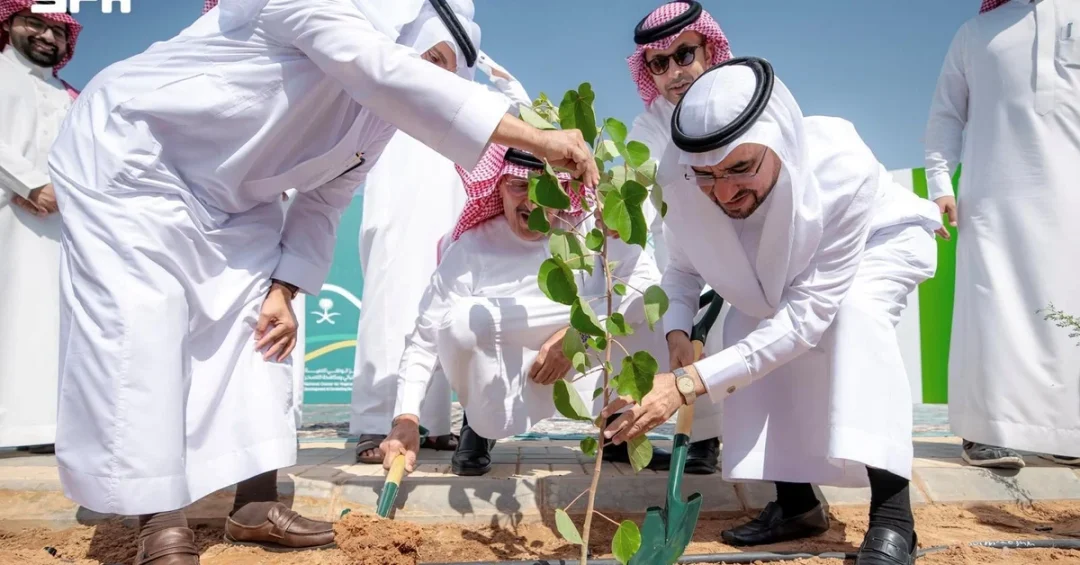
Qassim University President Mohammed Al Sharikh has launched the 18th phase of the Green Qassim Land Initiative, a major afforestation drive conducted in conjunction with the National Greening Program under the umbrella of the Saudi Green Initiative, with the university aiming to plant 13,000 trees and shrubs during this phase. The announcement, released through the Saudi Press Agency, marks another milestone in the Kingdom’s expanding campaign to combat desertification, expand vegetation cover, and embed environmental sustainability across its institutions of higher learning. The initiative reinforces Qassim University’s growing role and leadership in the environmental sector, positioning the academic community at the heart of the national sustainability agenda.
The launch reflects a broader national momentum in which universities are no longer confined to classrooms and laboratories but are active partners in delivering the environmental objectives of Saudi Vision 2030. With each successive phase, the Green Qassim Land Initiative has expanded its footprint, transforming campuses and surrounding areas into greener, healthier spaces. Could this model of institutional greening become a blueprint for universities across the Kingdom and the wider region? The 18th phase suggests that Saudi Arabia intends to keep scaling up its environmental commitments, one tree at a time.
Context and Background
The Green Qassim Land Initiative is a long-running afforestation and landscaping program led by Qassim University, located in the central Qassim region, an area historically known for its agricultural heritage and date palm cultivation. Since its inception, the initiative has progressed through successive phases, each adding new plantations, irrigation systems, and community engagement activities. The program operates in conjunction with the National Greening Program, one of the executive arms of the Saudi Green Initiative, which was launched to unify and amplify environmental action across the Kingdom. How did a regional university initiative grow into a nationally recognized contribution to environmental policy? The answer lies in sustained institutional commitment and alignment with national priorities.
The Saudi Green Initiative, announced in 2021, set ambitious targets including the planting of 10 billion trees across Saudi Arabia and the rehabilitation of millions of hectares of degraded land. The National Greening Program translates these goals into measurable projects, from urban afforestation to large-scale desert restoration. Qassim University’s participation demonstrates how educational institutions can serve as implementation partners, contributing research, manpower, and physical space for greening activities. The university’s leadership has consistently framed the initiative as both an environmental and an educational mission, giving students hands-on experience in sustainability practices.
The Qassim region itself is central to Saudi Arabia’s agricultural economy, producing significant quantities of dates, citrus, and other crops. Greening efforts there carry particular weight because they support soil health, reduce dust storms, and improve local microclimates. By launching the 18th phase, Qassim University signals that its environmental work is not a one-off project but an enduring institutional priority, embedded in its strategic plans and academic identity.
Key Details of the 18th Phase
During the 18th phase, Qassim University aims to plant 13,000 trees and shrubs, according to the Saudi Press Agency. The plantation drive is designed to expand vegetation cover on and around the university’s campuses, enhance biodiversity, and contribute to the broader goals of the Saudi Green Initiative. The university president, Mohammed Al Sharikh, personally launched the phase, underscoring the institution’s top-level commitment to environmental sustainability. The selection of tree and shrub species typically favors native and drought-tolerant varieties that require minimal water and can thrive in the Kingdom’s arid climate.
The initiative also includes maintenance and irrigation components, ensuring that planted saplings survive and mature. Previous phases have reportedly involved students, faculty, and local volunteers, turning the program into a community-wide effort. This participatory approach helps build environmental awareness and a sense of ownership among young Saudis, who are increasingly engaged in sustainability issues. What makes this phase different from earlier ones? While the core objective remains the same, each phase builds on lessons learned, improving planting techniques, species selection, and survival rates.
Qassim University has positioned the initiative as part of its broader environmental research and education agenda. Faculties of agriculture, environmental sciences, and related disciplines use the plantations as living laboratories for studying arid-zone vegetation, water efficiency, and soil conservation. The data generated by these efforts can inform national greening strategies, making the university not just a participant but a knowledge contributor to the Saudi Green Initiative. The 18th phase thus represents both a physical expansion of green cover and a deepening of the university’s scientific contribution.
International and Regional Impact
Saudi Arabia’s greening efforts resonate well beyond its borders. The Middle East and North Africa region faces severe desertification, water scarcity, and rising temperatures, challenges that affect food security, public health, and economic stability. By demonstrating large-scale afforestation in an arid environment, the Kingdom offers a model that other countries in the region can study and adapt. Regional organizations and international environmental bodies have taken note of the Saudi Green Initiative, viewing it as one of the most ambitious land restoration programs globally. Could the Qassim University model inspire similar university-led greening projects in neighboring countries? Early signs suggest significant interest.
On the international stage, Saudi Arabia has increasingly positioned itself as a responsible environmental actor, hosting climate-related forums and pledging action on emissions, renewable energy, and land restoration. The Green Qassim Land Initiative contributes to this narrative by showing tangible, measurable progress on the ground. International observers, including researchers and policymakers, often look for concrete examples rather than broad pledges. Each phase of the university’s initiative provides such an example, reinforcing the credibility of the Kingdom’s environmental commitments and its willingness to invest in long-term solutions.
Moreover, the initiative aligns with global frameworks such as the United Nations Convention to Combat Desertification and the Sustainable Development Goals, particularly those related to life on land and climate action. Saudi Arabia’s participation in these frameworks is strengthened by visible domestic projects like the Green Qassim Land Initiative. For international audiences, the story is one of a nation leveraging its educational institutions to address global environmental challenges, a narrative that enhances Saudi Arabia’s soft power and diplomatic standing.
Economic and Strategic Significance
Beyond environmental benefits, afforestation carries economic and strategic value. Greenery improves air quality, reduces dust storms that disrupt transportation and health, and enhances the aesthetic appeal of urban and rural areas, making them more attractive for investment and tourism. In the Qassim region, healthier ecosystems support agriculture, which remains a vital economic sector. The university’s initiative thus contributes indirectly to economic diversification, a core objective of Saudi Vision 2030. How does planting trees connect to economic reform? The link lies in creating more livable environments that attract talent, businesses, and visitors.
Strategically, the initiative supports the Kingdom’s food and water security goals. Trees and shrubs can help combat soil erosion, improve water retention, and create microclimates that benefit crops. While afforestation is not a substitute for comprehensive water management, it is a complementary measure that enhances resilience. Qassim University’s research into drought-resistant species and efficient irrigation can yield insights applicable to other regions, potentially reducing the cost of greening at scale. The 18th phase is therefore not merely an environmental gesture but a strategic investment in the Kingdom’s long-term sustainability and prosperity.
Furthermore, the initiative engages young Saudis in meaningful environmental work, aligning with Vision 2030’s emphasis on youth empowerment and quality of life. Students who participate gain practical skills and a sense of civic responsibility, contributing to a more engaged and capable workforce. The economic multiplier effects, though difficult to quantify precisely, include job creation in landscaping, nursery management, and environmental consulting, sectors that are likely to grow as greening programs expand nationwide.
Vision 2030 Alignment
The Green Qassim Land Initiative directly supports the environmental sustainability pillar of Saudi Vision 2030, which seeks to protect the Kingdom’s natural resources and enhance the quality of life for its citizens and residents. By planting 13,000 trees and shrubs in its 18th phase, Qassim University contributes to the Saudi Green Initiative’s target of planting 10 billion trees and rehabilitating degraded land. The university’s leadership, under President Mohammed Al Sharikh, has made environmental stewardship a signature element of its institutional mission, demonstrating how academia can serve national goals. Does this signal a new era of university-led sustainability in Saudi Arabia? The evidence points strongly in that direction.
As Saudi Arabia continues its journey toward a more sustainable and diversified future, initiatives like this one will serve as building blocks. They show that Vision 2030 is not just a government blueprint but a shared endeavor involving ministries, universities, communities, and individuals. Qassim University’s 18th phase is a reminder that small, consistent actions—tree by tree, phase by phase—accumulate into significant national progress. For international observers, it offers a clear example of how Saudi institutions are translating ambitious environmental goals into tangible results, reinforcing the Kingdom’s role as a regional and global leader in sustainability.
20 Questions
Q1. What is the Green Qassim Land Initiative?
A1. It is a long-running afforestation and landscaping program led by Qassim University in Saudi Arabia, conducted in conjunction with the National Greening Program under the Saudi Green Initiative, aimed at expanding vegetation cover and promoting environmental sustainability.
Q2. Who launched the 18th phase of the initiative?
A2. Qassim University President Mohammed Al Sharikh launched the 18th phase, according to the Saudi Press Agency, demonstrating top-level institutional commitment to environmental sustainability and the goals of Saudi Vision 2030.
Q3. How many trees and shrubs will be planted in this phase?
A3. The university aims to plant 13,000 trees and shrubs during the 18th phase, expanding vegetation cover on and around its campuses and contributing to national greening targets.
Q4. What is the National Greening Program?
A4. It is an executive program under the Saudi Green Initiative that translates national afforestation and land restoration goals into measurable projects across the Kingdom, including urban greening and desert rehabilitation.
Q5. What is the Saudi Green Initiative?
A5. Launched in 2021, it is a national environmental initiative with ambitious targets, including planting 10 billion trees across Saudi Arabia and rehabilitating millions of hectares of degraded land to combat desertification and climate change.
Q6. Why is Qassim University involved in greening?
A6. Qassim University aims to reinforce its role and leadership in the environmental sector, provide hands-on learning for students, and support Saudi Vision 2030’s sustainability goals through practical action and research.
Q7. What types of trees are typically planted?
A7. The initiative generally favors native and drought-tolerant species that require minimal water and can thrive in Saudi Arabia’s arid climate, ensuring higher survival rates and long-term environmental benefits.
Q8. How does this initiative support Vision 2030?
A8. It directly supports the environmental sustainability pillar of Vision 2030 by expanding green cover, improving quality of life, and contributing to the Saudi Green Initiative’s tree-planting targets.
Q9. Who participates in the planting activities?
A9. Students, faculty, staff, and local volunteers typically participate, turning the initiative into a community-wide effort that builds environmental awareness and a sense of ownership among young Saudis.
Q10. What are the environmental benefits of the initiative?
A10. Benefits include reduced desertification, improved air quality, lower dust storms, enhanced biodiversity, better soil health, and improved microclimates in the Qassim region.
Q11. How does the initiative affect the local economy?
A11. It supports agriculture by improving soil and microclimates, creates jobs in landscaping and nursery management, and makes the region more attractive for investment and tourism.
Q12. Is this the first phase of the initiative?
A12. No, this is the 18th phase, indicating a sustained, long-term commitment by Qassim University to environmental sustainability and continuous expansion of green cover.
Q13. What makes the Qassim region important for greening?
A13. Qassim is a key agricultural region known for date palms and citrus; greening there supports soil health, reduces dust, and enhances the local environment and economy.
Q14. How does the initiative contribute to research?
A14. The plantations serve as living laboratories for studying arid-zone vegetation, water efficiency, and soil conservation, generating data that can inform national greening strategies.
Q15. What international frameworks align with this initiative?
A15. It aligns with the United Nations Convention to Combat Desertification and the Sustainable Development Goals, particularly those on life on land and climate action.
Q16. How does this initiative enhance Saudi Arabia’s global standing?
A16. It provides tangible evidence of Saudi Arabia’s environmental commitments, strengthening its credibility in international climate discussions and enhancing its soft power and diplomatic standing.
Q17. What happens after the trees are planted?
A17. The initiative includes maintenance and irrigation to ensure saplings survive and mature, with ongoing monitoring and care as part of the university’s long-term environmental management.
Q18. Can other universities replicate this model?
A18. Yes, the model is scalable and adaptable, offering a blueprint for universities across Saudi Arabia and the region to contribute to national greening goals through campus-based initiatives.
Q19. How does the initiative engage youth?
A19. It involves students in planting and maintenance, providing practical skills, environmental education, and a sense of civic responsibility, aligning with Vision 2030’s youth empowerment goals.
Q20. What is the long-term vision for the Green Qassim Land Initiative?
A20. The long-term vision is to continue expanding vegetation cover, support the Saudi Green Initiative’s 10 billion tree target, and solidify Qassim University’s leadership in environmental sustainability and research.
Reader Feedback
We value your thoughts. Please share your feedback on this article.
Your feedback helps us improve our coverage.