


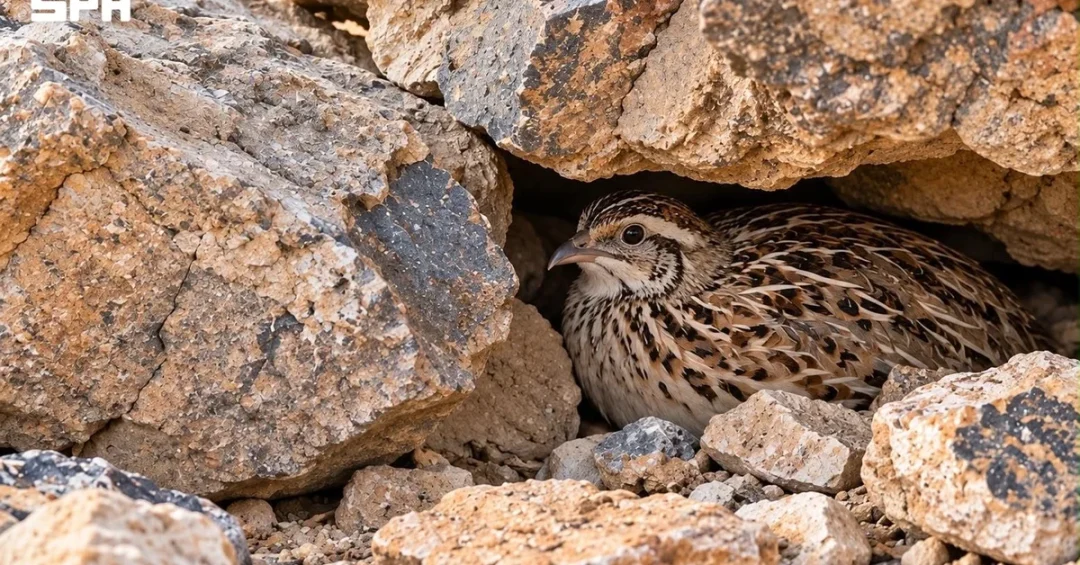
The quail, a migratory bird that passes through Saudi Arabia each September and October and again throughout the winter, has been spotted in Turaif Governorate in the Northern Borders Region along its annual migration route, the Saudi Press Agency reported. The sighting was documented by the Aman Environmental Association in the Northern Borders Region, which monitors wildlife activity across the Kingdom’s northern frontier. Nasser Al-Majlad, Chairman of the association, confirmed that the birds were observed in areas rich in wild vegetation, where they stop to rest and feed during their long journey between breeding grounds in Europe and Central Asia and wintering areas in Africa and the Arabian Peninsula.
Have you ever considered how a bird weighing little more than a few ounces navigates thousands of kilometres across deserts, seas, and mountain ranges without a map? The quail’s arrival in Turaif is a quiet but remarkable reminder of the natural rhythms that connect Saudi Arabia to ecosystems far beyond its borders. It also highlights the Kingdom’s growing role in wildlife conservation and eco-tourism, two fields that are gaining prominence as part of the broader national transformation. The sighting is not merely a seasonal curiosity; it reflects the health of local habitats and the success of environmental stewardship in a region better known for its vast deserts and strategic border location.
Context and Background
Why does a small migratory bird matter to a country reshaping its economy and global image? The quail’s annual passage through Saudi Arabia is part of one of the world’s great avian migration systems, a flyway that links Europe, the Middle East, and Africa. Each autumn, millions of birds travel south along routes that cross the Arabian Peninsula, using oases, wadis, and vegetated plains as vital stopover points. Turaif, located in the Northern Borders Region near the Jordanian border, sits along one of these corridors. Its wild vegetation provides essential cover and food for exhausted migrants.
The Aman Environmental Association in the Northern Borders Region has been tracking these patterns for years. According to Nasser Al-Majlad, the quail frequents areas with abundant wild plants, feeding on seeds, plant matter, and small invertebrates while foraging on the ground. The bird’s presence is a reliable indicator of local ecological conditions. When quail appear in healthy numbers, it suggests that the vegetation, insect life, and water sources they depend on are functioning as they should. This makes the species a useful barometer for environmental monitoring, a practice that Saudi Arabia has increasingly prioritised through its national conservation strategies.
The quail is also culturally significant. Known for its cautious and elusive nature, it is often heard rather than seen. Males produce a series of rhythmic calls repeated every few seconds, a sound that has echoed across Arabian landscapes for centuries. Poets and travellers have long referenced the bird in regional folklore, and its arrival each year is anticipated by local communities. In Turaif, the sighting has generated interest among residents and wildlife enthusiasts alike, reinforcing the connection between natural heritage and community identity.
Key Details of the Sighting
What exactly did the observers record, and why does it matter for conservation? Nasser Al-Majlad explained that the quail were spotted in areas rich in wild vegetation, where they feed on seeds, plants, and invertebrates while foraging on the ground. This behaviour is typical of the species during migration, when birds need to replenish energy reserves quickly. The quail’s preference for ground-level foraging makes it vulnerable to habitat loss and disturbance, so the availability of suitable stopover sites is critical to its survival.
The bird’s elusive nature means that confirmed sightings are valuable data points. Males frequently produce a series of rhythmic calls repeated every few seconds, which helps researchers and birdwatchers locate them even when they remain hidden in tall grass or low shrubs. The Aman Environmental Association has been documenting these occurrences as part of its broader efforts to monitor biodiversity in the Northern Borders Region. Such records contribute to national and international databases that track migratory species and inform conservation planning.
The timing of the sighting aligns with the quail’s known migration window. The birds pass through Saudi Arabia in September and October and again throughout the winter, making the Northern Borders Region a recurring waypoint. Turaif’s location makes it a natural first landfall for birds arriving from the north, and its vegetation provides a welcome refuge after long flights over arid terrain. The presence of migratory birds enhances the region’s natural and cultural appeal, attracting wildlife enthusiasts and birdwatchers who are increasingly interested in Saudi Arabia’s outdoor offerings.
International and Regional Impact
How does a seasonal bird sighting connect to Saudi Arabia’s global relationships? Migratory species do not recognise borders, and their conservation requires international cooperation. The quail’s journey spans multiple countries and regions, making it a shared responsibility among nations along the flyway. Saudi Arabia’s participation in monitoring and protecting these birds reflects its commitment to environmental diplomacy and its growing role in global conservation efforts. The Kingdom has been active in initiatives that promote sustainable development and biodiversity, aligning with international frameworks such as the Convention on Migratory Species.
Regionally, the sighting in Turaif highlights the ecological importance of the Northern Borders Region, an area that has historically been viewed primarily through a security and economic lens. The presence of migratory birds adds a new dimension to the region’s identity, positioning it as a destination for nature-based tourism. Birdwatchers from around the world travel to observe species in their natural habitats, and Saudi Arabia is beginning to tap into this market. The Aman Environmental Association’s work supports these efforts by providing credible data and raising awareness among local communities.
Have you ever wondered how a single species can serve as a bridge between cultures and nations? The quail’s migration route passes through countries with diverse histories and languages, yet the bird itself is a unifying presence. Its arrival in Saudi Arabia is noted by researchers, conservationists, and enthusiasts who share a common interest in protecting the natural world. This shared focus creates opportunities for dialogue and collaboration, reinforcing the Kingdom’s position as a responsible global actor.
Economic and Strategic Significance
What economic value can a migratory bird bring to a region? While the quail is not a commercial species in the traditional sense, its presence supports a growing eco-tourism sector. Birdwatchers and nature photographers are willing to travel to remote areas to observe rare or seasonal species, and their spending supports local businesses such as hotels, guides, and transport providers. In the Northern Borders Region, this represents a new avenue for economic diversification, one that complements existing industries and creates jobs.
The sighting also underscores the importance of environmental health to Saudi Arabia’s long-term prosperity. Healthy ecosystems provide services that are essential to human well-being, from pollination to water filtration. By protecting habitats for migratory birds, the Kingdom is also safeguarding these broader benefits. The Aman Environmental Association’s monitoring work contributes to this goal by identifying areas of ecological value and promoting sustainable land-use practices. As Saudi Arabia continues to develop its renewable energy, tourism, and agricultural sectors, integrating conservation into planning will be crucial.
Strategically, the presence of migratory birds in the Northern Borders Region highlights the area’s potential as a gateway for ecological research and international cooperation. The region’s proximity to Jordan and Iraq makes it a natural hub for cross-border environmental initiatives. Saudi Arabia’s leadership in this field can strengthen ties with neighbouring countries and enhance its reputation as a steward of natural heritage. This aligns with the Kingdom’s broader vision of becoming a global leader in sustainability and innovation.
Vision 2030 Alignment
How does a quail sighting relate to Saudi Vision 2030? At its core, Vision 2030 is about diversifying the economy, improving quality of life, and positioning Saudi Arabia as a global leader. Environmental conservation and eco-tourism are integral to these goals. The Kingdom has launched ambitious initiatives such as the Saudi Green Initiative and the Middle East Green Initiative, which aim to plant billions of trees, restore degraded land, and protect biodiversity. The quail’s presence in Turaif is a small but meaningful indicator that these efforts are bearing fruit.
Moreover, the sighting supports the development of tourism in the Northern Borders Region, a priority under Vision 2030. By showcasing its natural attractions, Saudi Arabia can attract visitors who are interested in authentic, sustainable experiences. The Aman Environmental Association’s work exemplifies the kind of community-based conservation that Vision 2030 encourages. As the Kingdom continues to invest in protected areas, wildlife monitoring, and environmental education, sightings like this will become part of a larger narrative of progress and stewardship.
In conclusion, the quail’s annual migration through Turaif is more than a seasonal event. It is a reminder of Saudi Arabia’s interconnectedness with the natural world and its commitment to preserving it for future generations. As the Kingdom advances toward Vision 2030, such moments of natural wonder will serve as benchmarks of success, demonstrating that economic growth and environmental protection can go hand in hand.
20 Questions
Q1. What is the quail and why is it significant in Saudi Arabia?
A1. The quail is a small migratory bird that passes through Saudi Arabia each September and October and throughout winter. It is significant as an indicator of ecosystem health and a draw for wildlife enthusiasts.
Q2. Where exactly was the quail spotted in Saudi Arabia?
A2. The quail was spotted in Turaif Governorate in the Northern Borders Region, along its annual migration route. The sighting was documented by the Aman Environmental Association.
Q3. Who confirmed the sighting of the quail?
A3. Nasser Al-Majlad, Chairman of the Aman Environmental Association in the Northern Borders Region, confirmed the sighting and provided details about the bird’s behaviour and habitat.
Q4. When does the quail migrate through Saudi Arabia?
A4. The quail passes through Saudi Arabia in September and October and again throughout the winter. Its migration is part of a larger flyway connecting Europe, the Middle East, and Africa.
Q5. What does the quail eat during its migration?
A5. The quail feeds on seeds, plants, and invertebrates while foraging on the ground. It frequents areas rich in wild vegetation to replenish its energy reserves during migration.
Q6. Why is the quail described as elusive?
A6. The quail is known for its cautious and elusive nature, often heard rather than seen. Males produce rhythmic calls repeated every few seconds, which help observers locate them.
Q7. What is the role of the Aman Environmental Association?
A7. The Aman Environmental Association in the Northern Borders Region monitors wildlife and documents migratory bird sightings. Its work supports conservation and raises awareness about the region’s natural heritage.
Q8. How does the quail’s presence benefit the local community?
A8. The presence of migratory birds enhances the region’s natural and cultural appeal, attracting wildlife enthusiasts and birdwatchers. This can support local businesses and promote eco-tourism.
Q9. What makes Turaif a suitable stopover for migratory birds?
A9. Turaif’s location in the Northern Borders Region and its areas of wild vegetation provide essential cover and food for exhausted migrants. It is a natural waypoint along the migration route.
Q10. How does the quail sighting relate to Saudi Vision 2030?
A10. The sighting aligns with Vision 2030’s goals of environmental conservation, economic diversification, and improved quality of life. It supports eco-tourism and reflects the success of sustainability initiatives.
Q11. What conservation efforts is Saudi Arabia undertaking?
A11. Saudi Arabia has launched the Saudi Green Initiative and the Middle East Green Initiative, aiming to plant billions of trees, restore land, and protect biodiversity. These efforts support migratory species like the quail.
Q12. Are there other migratory birds in the Northern Borders Region?
A12. Yes, the region hosts various migratory species along the same flyway. The quail is one of many birds that use the area as a stopover during their annual journeys.
Q13. How can the public observe the quail without disturbing it?
A13. Observers should maintain a respectful distance, avoid disturbing vegetation, and listen for the male’s rhythmic calls. Guided birdwatching tours can provide safe and educational experiences.
Q14. What is the economic potential of birdwatching in Saudi Arabia?
A14. Birdwatching can attract international visitors and support local economies through hotels, guides, and transport. It is a growing segment of the eco-tourism market that Saudi Arabia is developing.
Q15. How does the quail’s migration connect Saudi Arabia to other countries?
A15. The quail’s route spans multiple countries, making its conservation a shared international responsibility. Saudi Arabia’s monitoring efforts contribute to global databases and cooperation.
Q16. What threats do migratory birds like the quail face?
A16. Migratory birds face threats such as habitat loss, climate change, and human disturbance. Protecting stopover sites like those in Turaif is essential for their survival.
Q17. What can travellers expect when visiting Turaif during migration season?
A17. Travellers may observe quail and other migratory birds in vegetated areas, enjoy the region’s natural landscapes, and learn about local conservation efforts. The experience is best with a guide.
Q18. How does the sighting reflect Saudi Arabia’s environmental progress?
A18. The sighting indicates that local habitats are healthy enough to support migratory birds. It reflects the positive impact of conservation measures and environmental stewardship in the Kingdom.
Q19. What is the cultural significance of the quail in Saudi Arabia?
A19. The quail has long been part of regional folklore and poetry, symbolising the arrival of seasonal change. Its calls are familiar to local communities and add to the area’s cultural richness.
Q20. What are the next steps for conservation in the Northern Borders Region?
A20. Continued monitoring, habitat protection, and community engagement are key. The Aman Environmental Association and its partners aim to expand research and promote sustainable tourism in the region.
Reader Feedback
We value your thoughts. Please share your feedback on this article.
Your feedback helps us improve our coverage.