


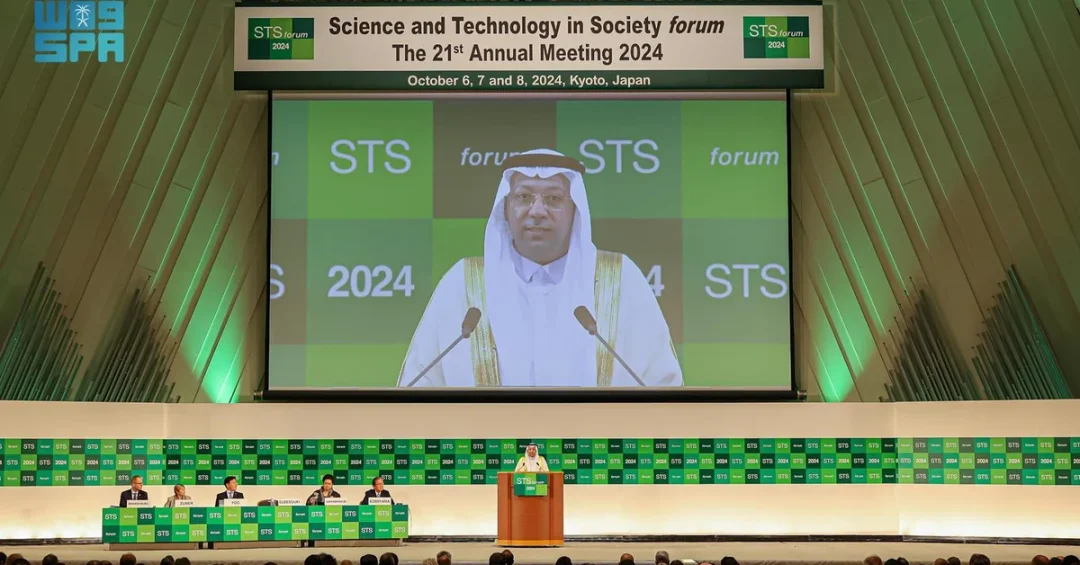
Saudi Arabia showcased its groundbreaking innovations in sustainability and economic growth at the Science and Technology in Society (STS) forum held in Kyoto, Japan, from October 6 to 8, 2024. Dr. Munir Eldesouki, President of King Abdulaziz City for Science and Technology (KACST), highlighted how science and technology are pivotal to achieving Saudi Vision 2030, driving sustainability, economic diversification, and addressing global challenges such as climate change, food security, health crises, and advancements in artificial intelligence.
Context and Background
The STS forum is a global platform that brings together leaders in science, technology, policy, and business to discuss the role of innovation in society. Saudi Arabia’s participation underscores its commitment to international collaboration and its ambition to be a leader in sustainable development. Under Vision 2030, the Kingdom is transforming its economy by investing in renewable energy, technology, and research and development.
Key Details
Dr. Eldesouki outlined several ambitious initiatives. Saudi Arabia aims to produce up to 600 tons of green hydrogen by 2026 through the world’s largest green hydrogen plant, which could save up to 5 million tons of carbon dioxide annually. The Kingdom is also establishing the largest carbon capture and storage centers, with a capacity of 9 million tons annually by 2027, expanding to 44 million tons by 2035.
In health, KACST has developed eco-friendly biological control technologies to fight dengue fever, aiming to reduce cases by 70% by 2027. Space technologies are being used to monitor land and agricultural activities, saving 9 billion cubic meters of groundwater. The Kingdom also supports young scientists and innovators through initiatives like Web3 applications for immersive technologies and electronic games, and The Garage, an incubator hosting over 200 startups from more than 50 countries.
On the sidelines, Dr. Eldesouki met with Dr. Nicodemos Damianou, Deputy Minister of Research, Innovation and Digital Policy of Cyprus, to explore collaboration in R&D, healthcare, and cybersecurity. He also met with Kenji Yabuta, President of Mitsubishi Research Institute, to discuss cooperation in AI, renewable energy, healthcare, and digital transformation.
Implications and Impact
Saudi Arabia’s advancements in green hydrogen and carbon capture position it as a key player in global climate action. These technologies can significantly reduce carbon emissions and provide clean energy solutions worldwide. The Kingdom’s efforts in health and agriculture demonstrate its commitment to sustainability and well-being, offering models for other nations. International partnerships, such as those discussed with Cyprus and Japan, enhance knowledge exchange and investment opportunities, contributing to global innovation ecosystems.
Vision 2030 Alignment
These initiatives are directly aligned with Saudi Vision 2030, which seeks to diversify the economy away from oil, foster innovation, and improve quality of life. By investing in science and technology, Saudi Arabia is building a sustainable future, creating jobs, and enhancing its global standing. The upcoming Riyadh Expo 2030, themed “A Different Tomorrow,” will further showcase the Kingdom’s role in shaping a prosperous world for future generations.
20 Questions
Q1. What was the main focus of Saudi Arabia’s presentation at the STS forum?
A1. Saudi Arabia highlighted its innovations in sustainability and economic growth, emphasizing science and technology’s role in achieving Vision 2030 and addressing global challenges like climate change and health crises.
Q2. Who represented Saudi Arabia at the STS forum in Kyoto?
A2. Dr. Munir Eldesouki, President of King Abdulaziz City for Science and Technology (KACST), represented the Kingdom and delivered keynotes on Saudi Arabia’s technological advancements.
Q3. What is the target for green hydrogen production by 2026?
A3. Saudi Arabia aims to produce up to 600 tons of green hydrogen by 2026 through the world’s largest green hydrogen plant, potentially saving 5 million tons of CO2 annually.
Q4. How much carbon capture capacity does Saudi Arabia plan by 2027?
A4. The Kingdom plans to establish carbon capture and storage centers with a capacity of 9 million tons annually by 2027, expanding to 44 million tons by 2035.
Q5. What technology is being used to combat dengue fever?
A5. KACST developed eco-friendly biological control technologies to reduce dengue fever cases in Saudi Arabia by 70% by 2027.
Q6. How has Saudi Arabia used space technology for agriculture?
A6. Space technologies monitor land and agricultural activities, helping save 9 billion cubic meters of groundwater resources.
Q7. What is The Garage and what does it do?
A7. The Garage is an incubator and business accelerator in Saudi Arabia that supports entrepreneurs and startups in deep technologies, hosting over 200 startups from more than 50 countries.
Q8. What initiatives support young scientists in Saudi Arabia?
A8. KACST launched initiatives in Web3 applications for immersive technologies, electronic games, and augmented reality to equip young innovators with skills for digital transformation.
Q9. With whom did Dr. Eldesouki meet from Cyprus?
A9. Dr. Eldesouki met with Dr. Nicodemos Damianou, Deputy Minister of Research, Innovation and Digital Policy of Cyprus, to discuss R&D collaboration in healthcare and cybersecurity.
Q10. What did Dr. Eldesouki discuss with Mitsubishi Research Institute?
A10. He discussed cooperation in R&D and innovation related to AI, renewable energy, healthcare, and digital transformation with President Kenji Yabuta.
Q11. What is Riyadh Expo 2030 and its theme?
A11. Riyadh Expo 2030 is a world exposition themed “A Different Tomorrow,” where Saudi Arabia will showcase innovations for a sustainable and prosperous future, focusing on science and technology.
Q12. How does Saudi Arabia’s green hydrogen plant contribute to sustainability?
A12. It produces green hydrogen, a clean energy source, and is expected to save up to 5 million tons of CO2 annually, supporting global climate goals.
Q13. What is the significance of carbon capture and storage for Saudi Arabia?
A13. It helps reduce carbon emissions, aligning with Vision 2030 and global climate efforts, and positions Saudi Arabia as a leader in carbon management technologies.
Q14. How does KACST support economic diversification?
A14. KACST fosters innovation and entrepreneurship through initiatives like The Garage, supporting startups and developing technologies that create new economic sectors beyond oil.
Q15. What role does science and technology play in Vision 2030?
A15. Science and technology are key drivers for achieving sustainability, economic growth, and addressing global challenges, forming the backbone of Vision 2030’s diversification goals.
Q16. How is Saudi Arabia addressing food security?
A16. Through sustainable agricultural solutions and space technology to monitor land and water use, Saudi Arabia is enhancing food security and resource efficiency.
Q17. What international collaborations were explored at the forum?
A17. Saudi Arabia explored R&D partnerships with Cyprus and Japan in areas including healthcare, cybersecurity, AI, renewable energy, and digital transformation.
Q18. What is the expected impact of reducing dengue fever cases by 70%?
A18. It will significantly improve public health in Saudi Arabia, reduce the burden on healthcare systems, and serve as a model for eco-friendly disease control globally.
Q19. How does The Garage bridge the gap from laboratory to market?
A19. The Garage provides an integrated workspace for entrepreneurs and startups in deep technologies, helping them develop and commercialize innovations, thus bridging the gap.
Q20. What is the overall message of Saudi Arabia’s participation in the STS forum?
A20. Saudi Arabia is committed to leveraging science and technology for global sustainability and economic growth, and is open to international collaboration to build a prosperous future for all.
Reader Feedback
We value your thoughts. Please share your feedback on this article.
Your feedback helps us improve our coverage.
Related articles
 Interior Ministry Showcases AI Technologies at Saudi Falcons Exhibition
 CST to Unveil Size of Saudi Technology Market
 Tuwaiq Academy, Misk Schools Students Shine in World Robot Olympiad
 KSrelief Completes Volunteer Training for Türkiye Earthquake Victims
 HPE, alfanar Recognized for ‘Saudi Made’ Servers
 Saudi Fintech Reaches 224 Companies, Eyes 525 by 2030